
 Worksheets
DNA
Total questions: 41
Worksheet time: 37mins
Name
Class
Date
1.
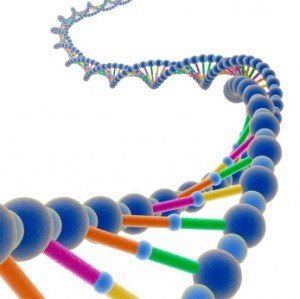
Which of the following best describes a DNA molecule?
a)
double helix
b)
contains ribose
c)
made of amino acids
d)
contains Uracil
2.
Which of the following units are repeatedly joined together to form a strand of DNA?
a)
amino acids
b)
nucleotides
c)
fatty acids
d)
polysaccharides
3.

In a molecule of double-stranded DNA, the amount of Adenine present is always equal to the amount of
a)
cytosine
b)
guanine
c)
thymine
d)
uracil
4.
Adenine bonds with ______________.
a)
Guanine
b)
Thymine
c)
Cytosine
d)
Adenine
5.
Guanine bonds with ______________.
a)
Adenine
b)
Guanine
c)
Cytosine
d)
Thymine
6.
Which 2 molecules form the sides (backbone) of the DNA ladder?
a)
deoxyribose sugar and adenine
b)
deoxyribose sugar and a hydrogen bond
c)
deoxyribose sugar and the nucleus
d)
deoxyribose sugar and phosphate
7.
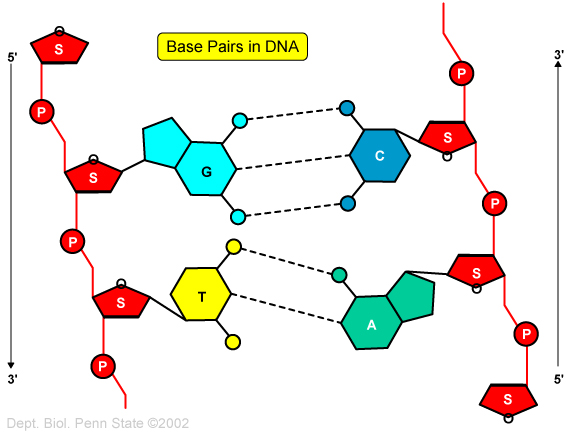
Nitrogenous bases are joined by which type of bond?
a)
polar bonds
b)
ionic bonds
c)
covalent bonds
d)
hydrogen bonds
8.
After examining the DNA of different organisms, which of the following did Erwin Chargaff conclude about the four conclude about the four bases?!?
a)
A pairs with T and C pairs with G
b)
A pairs with G and C pairs with T
c)
none of these
9.
Which of the following is a base that is NOT contained in DNA?
a)
Adenine
b)
Thymine
c)
Uracil
d)
Guanine
10.
What does DNA stand for?
a)
Ribonucleic Acid
b)
Deoxyribonucleic Acid
c)
Both of these
d)
None of these
11.

How did Franklin contribute to the discovery of DNA?
a)
took the best X-ray of DNA
b)
is credited with discovering the structure of DNA
c)
worked with bacteriaphages
d)
won the nobel peace prize
12.
What two scientists discovered the structure of DNA and won the nobel peace prize?
a)
Johnson and Johnson
b)
Rosalind Franklin and Eistein
c)
Watson and Holmes
d)
Watson and Crick
13.

Who is responsible for producing this image (taken by X-ray chrystallography)?
a)
Francis Crick
b)
James Watson
c)
Rosalind Franklin
d)
Watson and Crick
14.
Which sequence of DNA bases would pair with this partial strand
ATG TGA CAG
ATG TGA CAG
a)
ATG TGA CAG
b)
TAC ACT GTC
c)
GTA AGT GAC
d)
CAT TCA CTG
15.
Which of the following units are repeatedly joined together to form a strand of DNA?
a)
amino acids
b)
nucleotides
c)
fatty acids
d)
polysaccharides
16.
In a molecule of double-stranded DNA, the amount of Adenine present is always equal to the amount of
a)
cytosine
b)
guanine
c)
thymine
d)
uracil
17.
Adenine bonds with ______________.
a)
Guanine
b)
Thymine
c)
Cytosine
d)
Adenine
18.
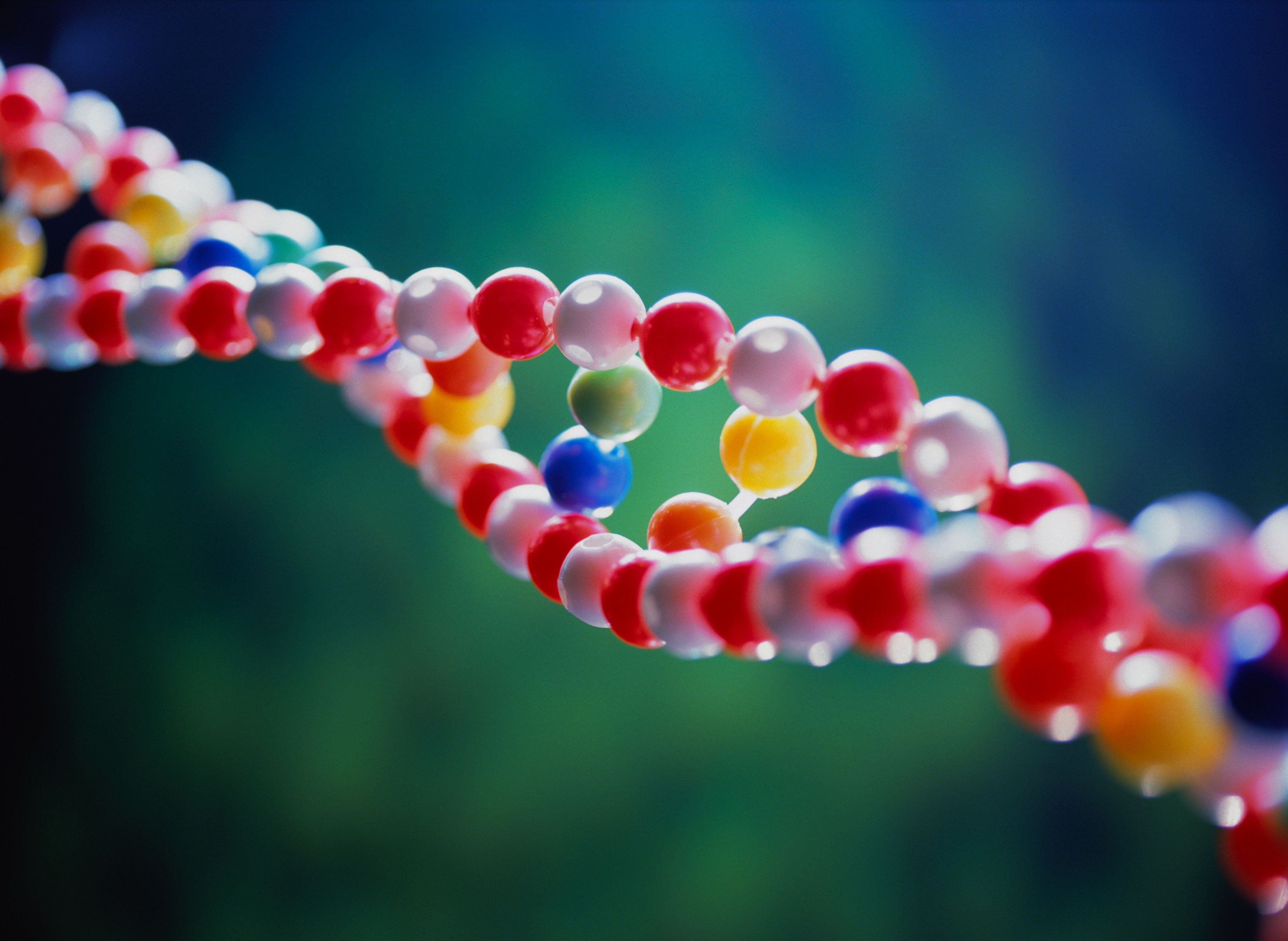
Why is DNA important?
a)
it is very small and very complicated
b)
it's in everything
c)
it serves as the blueprint for traits of all living things
d)
because we eat it every day for energy
19.
Which 2 molecules form the sides (backbone) of the DNA ladder?
a)
deoxyribose sugar and adenine
b)
deoxyribose sugar and a hydrogen bond
c)
deoxyribose sugar and the nucleus
d)
deoxyribose sugar and phosphate
20.
Which organelle is DNA usually found in?
a)
cell membrane
b)
vacuole
c)
chloroplast
d)
nucleus
21.
Nitrogenous bases are joined by which type of bond?
a)
polar bonds
b)
ionic bonds
c)
covalent bonds
d)
hydrogen bonds
22.

Who used x-ray diffraction to get the exact three-dimensional structure of the DNA molecule? (Ultimately,the first scientist to view and confirm the three-dimensional shape of DNA.)
a)
Crick
b)
Watson
c)
Franklin
d)
Griffith
23.

Who stole x-ray images from Rosland Franklin to confirm the sugar, phosphate, and base combination called double helix. To which received a Nobel Prize in 1962.
a)
Mullins
b)
Watson & Crick
c)
Hershey & Chase
d)
Sanger
24.
If Chargaff found that a sample of DNA has 20% ADENINE, how much GUANINE would he have determined to be there?
a)
30%
b)
20%
c)
80%
d)
60%
25.
What was Watson and Crick's main scientific accomplishment?
a)
Building the first accurate model of DNA
b)
Isolating strains of pneumonia causing bacteria
c)
Determining base pairing rules
d)
Discovering the process of genetic transformation
26.
What did Erwin Chargaff conclude from his experiments?
a)
Nitrogen bases are held together by peptide bonds
b)
A and T, C and G always occur in equal amounts
c)
Proteins are the carriers of genetic information
d)
C and G rarely occur in eukaryotic organisms
27.

Who was responsible for the experiment depicted by the image?
a)
Friedrich (Fritz) Miescher
b)
Watson and Crick
c)
Frederick Griffith
d)
Rosalind Franklin
28.

Who was responsible for the experiment depicted by the image/data table?
a)
Oswald Avery, et. al.
b)
Watson and Crick
c)
Erwin Chargaff
d)
Rosalind Franklin
29.

Who was responsible for the model shown?
a)
Oswald Avery, et. al.
b)
Watson and Crick
c)
Erwin Chargaff
d)
Linus Pauling
30.
Which enzyme has the job of unzipping the double helix?
a)
Helicase
b)
Polymerase
c)
Ligase
d)
Primerase
31.
If a strand reads:
3' A A A T T T C 5'
The matching strand would read...
3' A A A T T T C 5'
The matching strand would read...
a)
5' T T T A A A G 3'
b)
3' T T T A A A G 5'
c)
5' A A A T T T C 3'
d)
3' U U U A A A G 5'
32.

This picture is illustrating the ____ nature of DNA.
a)
anti-parallel
b)
deoxyribosic
c)
helical
d)
radioactive
33.
3' and 5' refer to...
a)
How effectively the helicase works
b)
What direction the nucleotides are pointing
c)
Where the RNA primer attaches
d)
Okazaki's famous experiment
34.
The enzyme that splits open the DNA creates what's called a fork - where the DNA separates into the lagging strand and the ______ strand.
a)
leading
b)
leveraging
c)
Okazaki
d)
ligase
35.
Polymerase is able to replicate the new DNA ______ along the leading strand.
a)
continuously
b)
only in short fragments
c)
very slowly
d)
prokaryotically
36.
A DNA nucleotide contains all of the following, except...
a)
Deoxyribose
b)
Phosphate group
c)
Nitrogenous base
d)
Cholesterol
37.
Place the following in sequential order
1. Recoil
2. Straightens the double helix
3. Breaks Hydrogen bonds
4. Adds Free nucleotides
1. Recoil
2. Straightens the double helix
3. Breaks Hydrogen bonds
4. Adds Free nucleotides
a)
1, 2, 3, 4
b)
3, 4, 2, 1
c)
3, 2, 4, 1
d)
2, 3, 4, 1
38.
Why does DNA replicate?
a)
To create another copy for the new cell
b)
To create a duplicate copy in case the original gets damaged
c)
To create a new copy to replace the damaged original
39.
DNA replication results in
a)
2 completely new DNA molecules
b)
2 DNA molecules that each contain a strand of the original
c)
1 new DNA molecule and 1 old
d)
1 new molecule of DNA
40.
Which enzyme is responsible for adding the free nucleotides to the replicating DNA?
a)
DNA Helicase
b)
DNA Ligase
c)
DNA polyermase
d)
RNA Polymerase
41.
Which is the first step?
a)
DNA Helicase unwinds original DNA strand
b)
RNA Primase lays down RNA primer for new nucleotide bases.
c)
DNA polymerase builds new strands by bring in new nucleotide bases.
d)
Ligase knits together fragments on lagging strand
100 %

