
 Worksheets
Population Dynamics
Total questions: 25
Worksheet time: 18mins
Name
Class
Date
1.
Exponential growth occurs when a population....
a)
exceeds the habitat’s carrying capacity.
b)
is competing with another species.
c)
grows increasingly faster.
d)
breeds with another species.
2.
What factor describes when populations increase because animals are moving into a population?
a)
Emigration
b)
Limiting Factors
c)
Immigration
d)
Exponential Growth
3.
What factor describes when populations decrease because animals are moving out of a population?
a)
Emigration
b)
Limiting Factors
c)
Immigration
d)
Exponential Growth
4.

What does the graph represent?
a)
Emigration
b)
Exponential growth
c)
Immigration
d)
Logistic Growth
5.
A population is...
a)
A group of one species in one area
b)
Multiple species that live in one area
c)
All of the living and nonliving things in an area
d)
None of these
6.

Which kind of dispersion is #1?
a)
clumped
b)
random
c)
uniform
7.
What will happen to the population when the death rate is larger than the birth rate?
a)
grow
b)
shrink
c)
stay the same
d)
None of these
8.
What will happen to the population when the birth rate is larger than the death rate?
a)
grow
b)
shrink
c)
stay the same
9.

When a population grows past the ecosystem's carrying capacity, what happens to the population?
a)
Continues to grow
b)
The population starts to die off to return to carrying capcity
c)
The population will go extinct due to lack of resources
d)
The population grows then finds a new carrying capacity
10.
Number of individuals per unit area.
a)
population density
b)
dispersion
c)
biotic potential
d)
carrying capacity
11.
"Deaths caused by disease" is an example of a ___________________________ population regulator.
a)
density independent
b)
limiting resource
c)
density dependent
d)
mutualistic
12.
An example of indirect competition for resources is _______________________.
a)
limiting resource
b)
population density
c)
territory
d)
biotic factors
13.
Food, water, sunlight, shelter, and space are resources that are often __________.
a)
limiting factors
b)
wet
c)
messy
d)
found in rocks
14.

Cattle egrets forage (feed) in fields among cattle. The egret gets easy access to flying insects stirred up by the cattle, and the cattle don't care if they are there or not.
a)
mutualism
b)
commensalism
c)
competition
d)
parasitism
15.
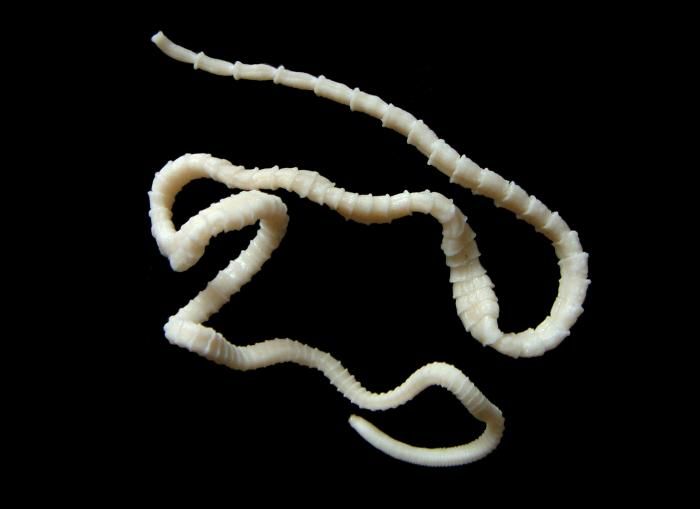
A tapeworm and a cat have this type of relationship.
a)
mutualism
b)
parasitism
c)
commensalism
d)
competition
16.
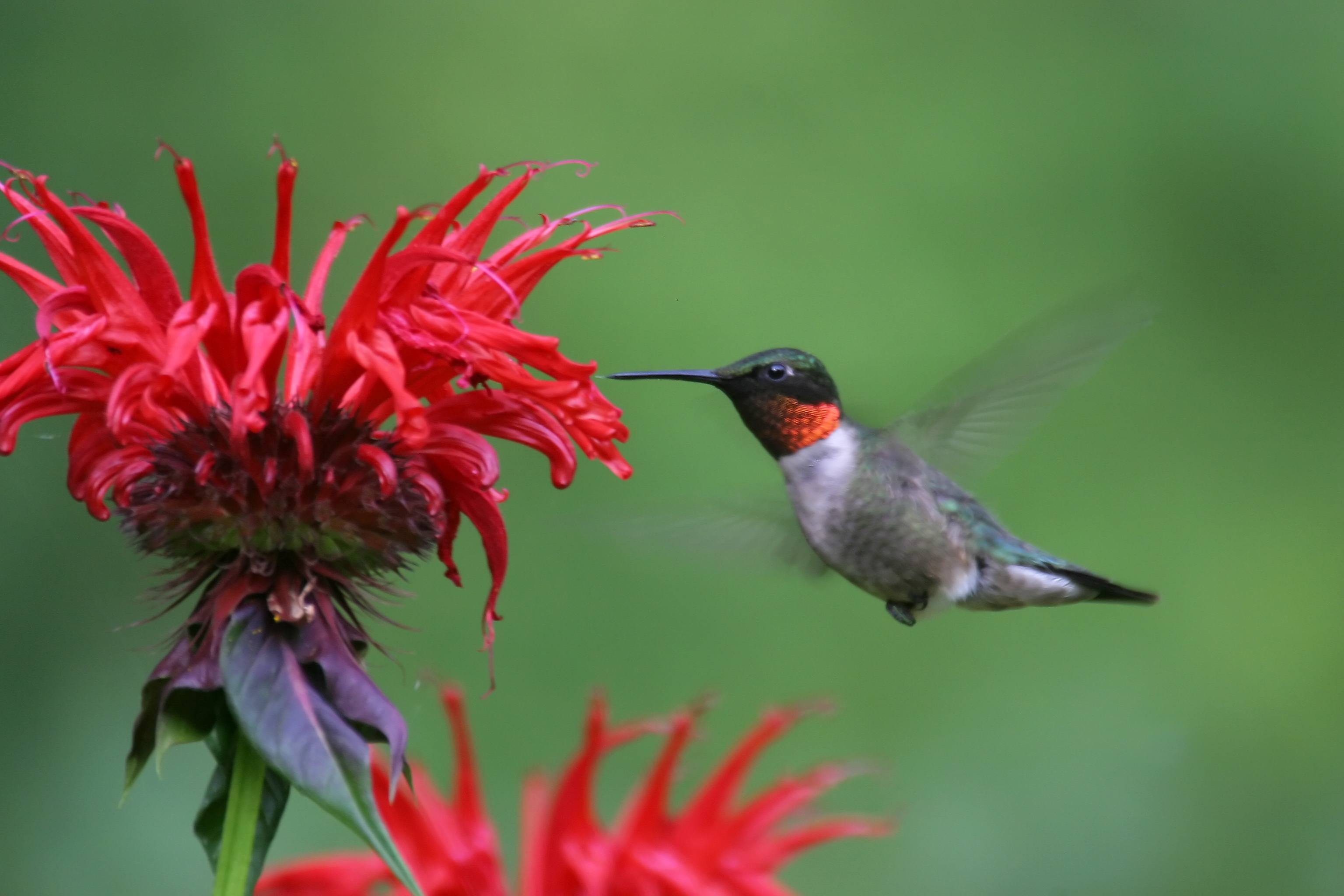
What type of symbiosis? Hummingbirds feed on nectar from flowers. The flowers are pollinated by hummingbirds as they move from flower to flower.
a)
commensalism
b)
mutualism
c)
parasitism
d)
predation
17.
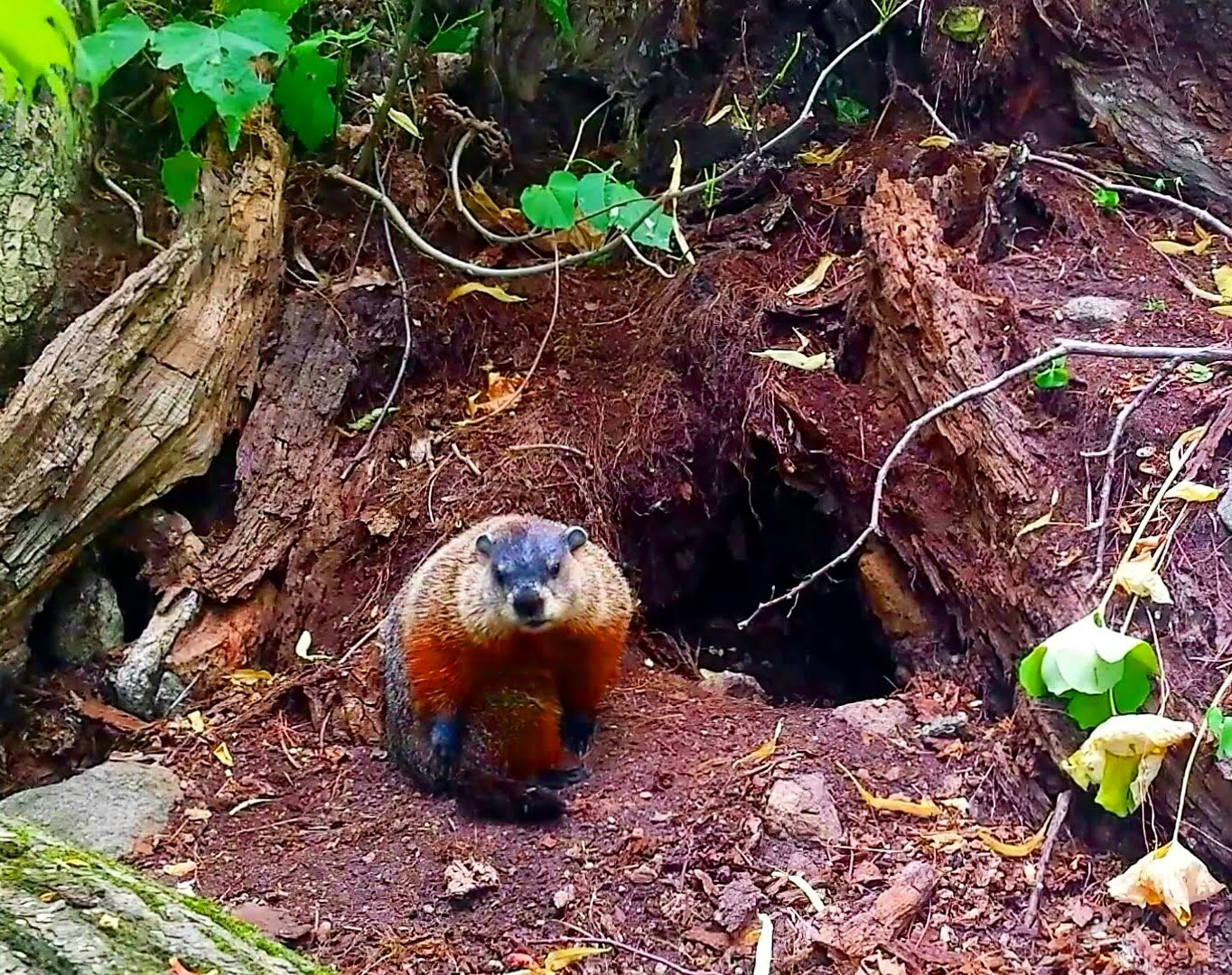
What type of symbiosis? Skunks often live in burrows that have been dug and abandoned by woodchucks.
a)
commensalism
b)
mutualism
c)
parasitism
d)
predation
18.
Which symbols best describe parasitism?
a)
+,+
b)
+,-
c)
+,0
d)
-,0
19.
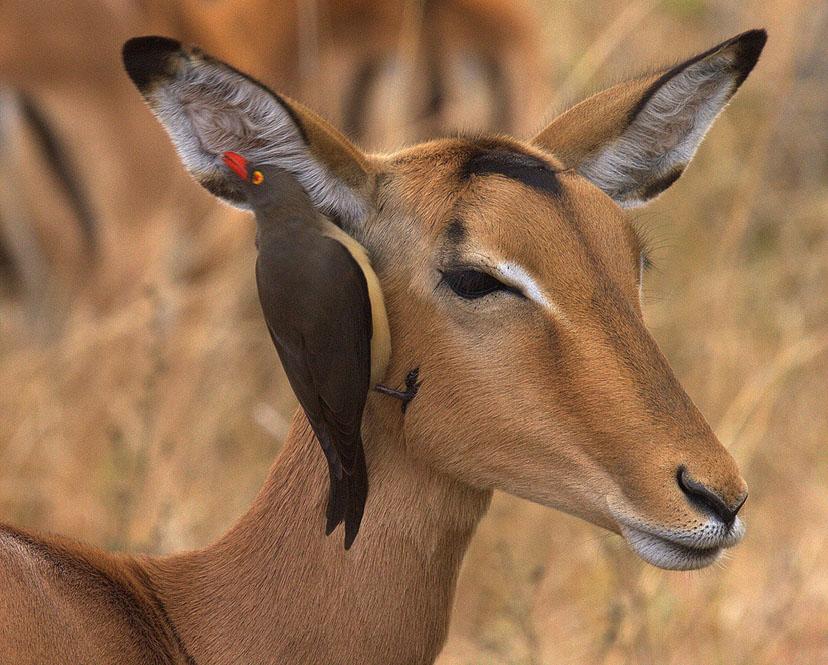
Red-billed oxpeckers are birds that often feed on parasites that infest impala. This is an example of _______.
a)
commensalism
b)
mutualism
c)
neutralism
d)
competition
20.
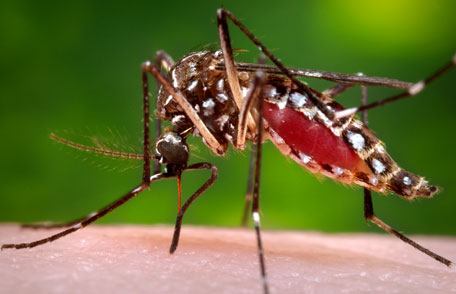
When a mosquito bites you, you are the __________ and the mosquito is the ____________.
a)
host, hostess
b)
parasite, host
c)
host, parasite
d)
prey, predator
21.

Aphids are tiny insects that live on and eat the leaves of plants, removing vital nutrients from the plants.
a)
Predation
b)
Parasitism
c)
Commensalism
d)
Mutualism
22.
Different species are most likely to compete for resources in an ecosystem if both species attempt to –
a)
occupy the same niche.
b)
successfully reproduce.
c)
live in different habitats.
d)
find different food sources.
23.
+, +
a)
mutualism
b)
commensalism
c)
parasitism
d)
competition
24.
+,0
a)
Mutualism
b)
Commensalism
c)
Parasitism
d)
Competition
25.
The unique ways an organism survives, obtains food and shelter, and avoids danger is known as _________.
a)
habitat
b)
carrying capacity
c)
biotic potential
d)
niche
100 %

