
 Worksheets
Classification, Cladogram, and History Of Life
Total questions: 45
Worksheet time: 48mins
Name
Class
Date
1.
Linnaeus developed binomial nomenclature, a ___- ____ naming system.
a)
1-part
b)
2-part
c)
3-part
2.
Scientific names have two parts, ___ and ____.
a)
domain, kingdom
b)
kingdom, species
c)
genus, species
d)
C3PO, R2D2
3.
Scientific names are useful instead of common names because they ____.
a)
refer to a single species
b)
are the same throughout the world
c)
both options are correct
4.
Panthera concolor belongs to which species name?
a)
Panthera
b)
concolor
c)
Mountain Lion
d)
Eukarya
5.
Traditional classification uses ___________ to organize species.
a)
physical features
b)
derived characters
c)
DNA analysis
d)
imaginaiton
6.
The three domains are:
a)
Eukarya, Bacteria, Archaea
b)
Plant, Animal, Protist
c)
Bacteria, Plant, Animal
d)
philosophy, psychology, sociology
7.

The two most closely related organisms are
a)
hagfish and chimp
b)
perch and mouse
c)
salamander and bird
d)
mouse and chimp
8.
All plant cells have chloroplasts, this makes them a ___________ in evolutionary classification.
a)
acquired trait
b)
derived character
c)
conincidence
d)
physical feature
9.
Which probably existed first?
a)
RNA
b)
DNA
10.
How has the atmosphere changed from Earth's early atmosphere to today's atmosphere?
a)
more oxygen, cooler now
b)
more carbon, cooler now
c)
more oxygen, warmer now
d)
more water vapor now
11.
Which came first? Photosynthesis or Free Oxygen in the Atmosphere
a)
photosynthesis
b)
free oxygen
12.
Which came first? Eukaryotas or Sexual Reproduction?
a)
Eukaryotes
b)
Sexual Reproduction
13.
The theory that mitochondria and chloroplasts were once ancient prokaryotic is called
a)
endosymbiotic theory
b)
seed theory
c)
primordial soup
d)
origin of life
14.
Pattern of evolution in which 2 Species that evolve in the same place at the same time
a)
co evolution
b)
convergent evolution
c)
punctuated equilirbium
d)
adaptive radiation
15.
Pattern of evolution in which one species fills many ecological niches and becomes many different species.
a)
co evolution
b)
convergent evolution
c)
punctuated equilirbium
d)
adaptive radiation
16.
Pattern of evolution in which periods of relative calm are followed by periods of rapid development.
a)
co evolution
b)
convergent evolution
c)
punctuated equilirbium
d)
adaptive radiation
17.
Pattern of evolution in which two species that are unrelated develop similar features.
a)
co evolution
b)
convergent evolution
c)
punctuated equilirbium
d)
adaptive radiation
18.

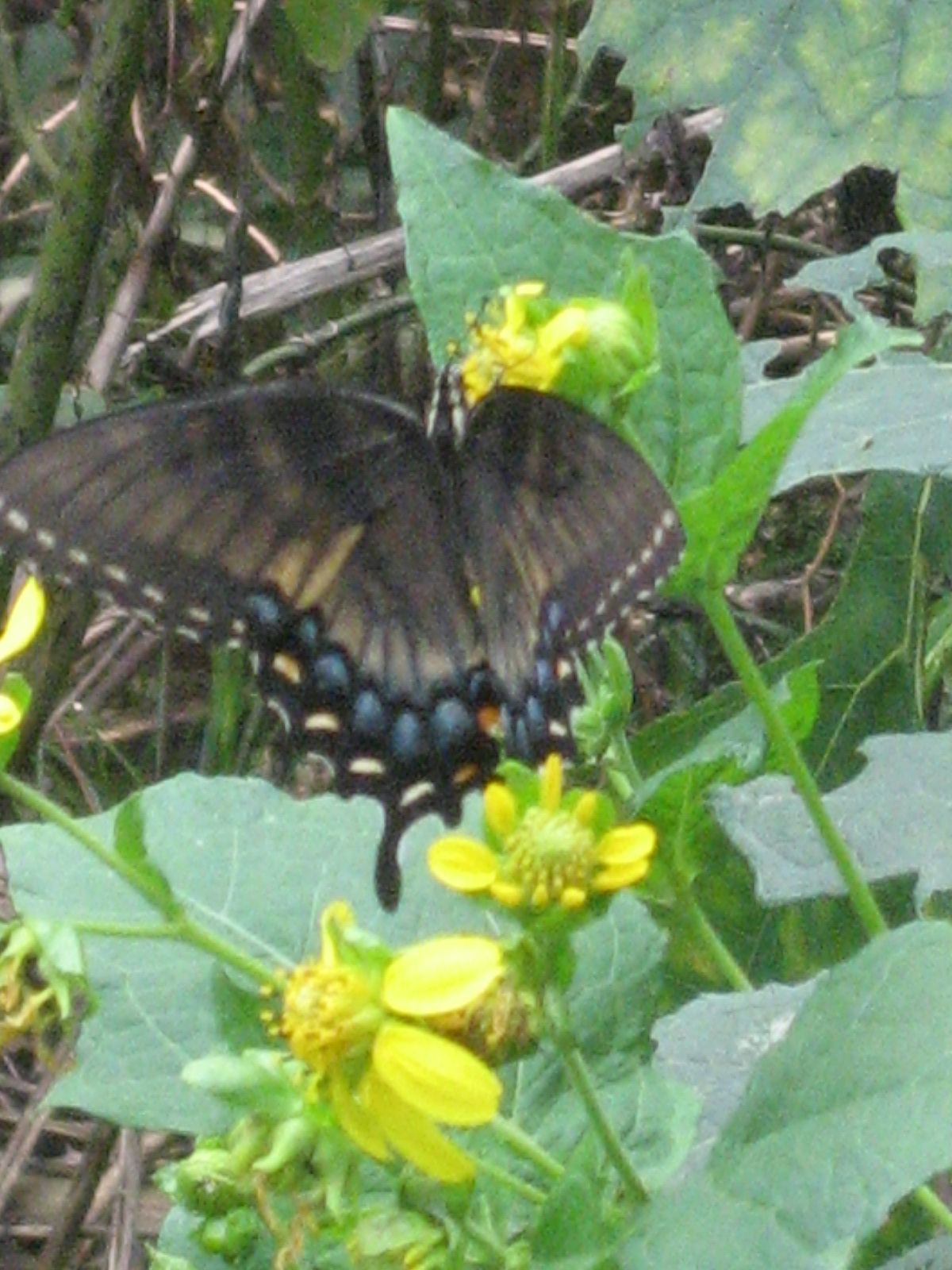
Identify the insect and the step.
a)
Dragonfly
b)
Fruit Fly
c)
Black Fly
d)
Housefly
19.
Tigers, Jellyfish, Gorillas and Sponges are all part of kingdom _______.
a)
Animalia
b)
Plantae
c)
Fungi
d)
Bacteria
20.
Which kingdom is autotrophic AND has a cell wall?
a)
Bacteria
b)
Fungi
c)
Plantae
d)
Protista
21.

You would find mushrooms in which kingdom?
a)
Plantae
b)
Protists
c)
Fungi
d)
Animalia
22.

Which kingdom do humans belong to?
a)
Plantae
b)
Fungi
c)
Animalia
d)
Protista
23.
The scientific name for an organism is made from the:
a)
class and family name
b)
genus and species name
c)
domain and kingdom name
d)
kingdom and phylum name
24.
Term given to describe the 2 name naming system is:
a)
dichotmous key
b)
binomial nomenclature
c)
2 scientific names
d)
binomial key
25.
The 8 levels of classification, most broad to most specific.
a)
Domain, Genus, Family, Order, Class, Phylum, Kingdom, Species
b)
Domain, Species, Kingdom, Genus, Phylum, Family, Class, Order
c)
Domain, Kingdom, Phylum, Class, Order, Family, Genus, Species
d)
Order, Kingdom, Species, Domain, Phylum, Family, Class, Genus
26.

An illustration and a dichotomous key are given. What is the correct classification for this organism?
a)
Class Insecta
b)
Order Amblygygi
c)
Order Araneae
d)
Order Scorpiones
27.

A dichotomous key for trees is provided. Hikers found a tree that has large brown cones and single sharp needles. What species of tree have the hikers found?
a)
Juniper
b)
Pine
c)
Spruce
d)
Fir
28.
Which of the following organisms are MOST closely related?
a)
organisms that share a domain
b)
organisms that share a family
c)
organisms that share a genus
d)
organisms that share an order
29.

A labeled diagram of a fiddler crab is provided. Which of the following is an accurate observation of the structures of a fiddler crab? Fiddler crabs have -
a)
five pairs of walking legs on each side.
b)
an enlarged propodus on both front legs.
c)
a pair of eyes on stalks at the top of the body.
d)
two pairs or chelipeds for a total of four.
30.
What step do we always start with when using dichotomous keys?
a)
1
b)
2
c)
3
d)
4
31.
Cladograms are constructed by grouping organisms together based on their____________ characteristics.
a)
shared
b)
different
c)
similar
d)
opposite
32.
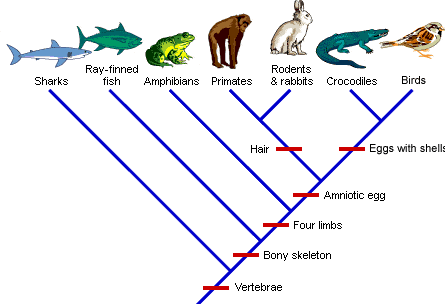
According to this cladogram, sharks are MOST closely related to which organism?
a)
Amphibians
b)
Ray finned fish
c)
Crocodiles
d)
Birds
33.
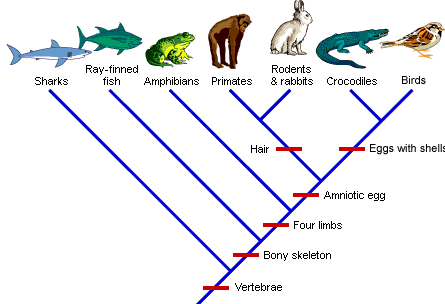
Which two orgainsms have hair?
a)
Sharks & Ray Finned Fish
b)
Primates & Rodents
c)
Birds & Crocodiles
d)
Rabbits & Birds
34.

According to this cladogram, birds are LEAST related to:
a)
Amphibians
b)
Sharks
c)
Ray Finned Fish
d)
Crocodiles
35.

On the cladogram, which organism is the closest relative of the human?
a)
Frog
b)
Hare
c)
Caiman
d)
Parrot
36.

Which trait do only humans have, according to the cladogram?
a)
jaws
b)
mammary glands & hair
c)
terrestrial during all life stages
d)
bipedal & opposable thumbs
37.
Scientist theorize that oxygen buildup in the atmosphere resulted from _________________ .
a)
respiration
b)
photosynthesis
c)
chemosynthesis
d)
rock weathering
38.
What were Earth's first living organisms?
a)
Photosynthetic eukaryotes
b)
Photosynthetic prokaryotes
c)
Anaerobic prokaryotes
d)
Anaerobic eukaryotes
39.
Which of the following statements about the effect of early organisms on Earth’s environment is true?
a)
The first photosynthetic organisms caused Earth to cool as they converted oxygen to carbon dioxide.
b)
The first photosynthetic organisms caused Earth to cool as they converted carbon dioxide to oxygen.
c)
The first photosynthetic organisms caused Earth to heat as they converted oxygen to carbon dioxide.
d)
The first photosynthetic organisms caused Earth to heat as they converted carbon dioxide to oxygen.
40.
In the past, mass extinctions encouraged the rapid evolution of surviving species
a)
by changing developmental genes.
b)
by making new habitats available to them.
c)
because they killed all organisms that had coevolved.
d)
because they spared all organisms that had evolved convergently.
41.
A pattern in which species experience long, stable periods interrupted by brief periods of rapid evolutionary change is called
a)
convergent evolution
b)
coevolution
c)
adaptive radiation
d)
punctuated equilibrium
42.
A single species that has evolved into several different forms that live in different ways has undergone
a)
adaptive radiation
b)
coevolution
c)
punctuated equilibrium
d)
mass extinction
43.
The process by which two species evolve in response to changes in each other over time is called
a)
convergent evolution
b)
coevolution
c)
adaptive radiation
d)
punctuated equilibrium
44.
Earth’s early atmosphere was primarily composed of
a)
oxygen and water vapor.
b)
carbon dioxide, water vapor, and nitrogen.
c)
oxygen and carbon monoxide.
d)
hydrogen cyanide and carbon monoxide.
45.
The endosymbiotic theory proposes that mitochondria in eukaryotic cells arose from
a)
endosymbiotic eukaryotes that metabolized oxygen.
b)
endosymbiotic eukaryotes that were photosynthetic.
c)
endosymbiotic prokaryotes that metabolized oxygen.
d)
endosymbiotic prokaryotes that were photosynthetic.
100 %

