
 Worksheets
Animal Science Review
Total questions: 33
Worksheet time: 42mins
Name
Class
Date
1.
Reptiles are
a)
Cold-blooded vertebrates
b)
Cold-blooded invertebrates
c)
Warm-blooded vertebrates
d)
Cold-blooded invertebrates
2.
Recently, a family of bobcats moved into an area with a large rabbit population. What changes may occur in the ecosystem?
a)
The rabbit population may increase
b)
The rabbit population may decrease
c)
The rabbit population may increase first, then decrease
d)
The rabbit population will remain the same
3.
A population of mice lives in a barn community. A cat population has just joined the community. What will happen?
a)
Mouse and cat populations both go up?
b)
Mouse and cat populations both go down
c)
Mouse population goes down as cat population goes up
d)
Mouse population goes up as cat population goes down
4.
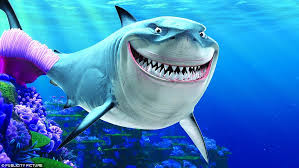
I am a...
a)
Fishivore
b)
Omnivore
c)
Carnivore
d)
Herbivore
5.

__________ is an organism that only eats plants for energy.
a)
Carnivore
b)
Herbivore
c)
Omnivore
d)
Terivore
6.

__________ is an organism that only eats meat for energy.
a)
Omnivore
b)
Borivore
c)
Herbivore
d)
Carnivore
7.

__________ is an organism that eats BOTH plants and animals for energy.
a)
Omnivore
b)
Darnivore
c)
Carnivore
d)
Herbiovre
8.

Bears eat fish, insects, plants, seeds, nuts and young elk. They are called __________.
a)
Franivore
b)
Carnivore
c)
Herbivore
d)
Omnivore
9.

Elephants only eat leaves, fruit, nuts and grass. They are called __________.
a)
Omnivore
b)
Fortivore
c)
Herbivore
d)
Carnivore
10.

A living organism that puts materials from dead plants and animals back to the soil is called a ____________?
a)
carnivore
b)
decomposer
c)
herbivore
d)
omnivore
11.
Which is an example of a decomposer?
a)
a hawk
b)
a mouse
c)
a flower
d)
a mushroom
12.

Rose
a)
Decomposer
b)
Consumer
c)
Producer
13.

Seaweed
a)
Producer
b)
Consumer
c)
Decomposer
14.

Mushroom
a)
Decomposer
b)
Producer
c)
Consumer
15.

Bumblebee
a)
Producer
b)
Decomposer
c)
Consumer
16.

I have a soft-body, a hard shell, and live on land and water. What am I?
a)
Mollusk
b)
Arthropod
c)
Echinoderm
d)
Cnidarian
17.

I am spiny, have a water vascular system with tube feet, radial symmetry, and am called a brittle star.
a)
Mullosk
b)
Arthropod
c)
Echinoderm
d)
Cnidarian
18.

The organism shown is an example of a(n)
a)
mollusk
b)
cnidarian
c)
sponge
d)
echinoderm
19.
What is an invertebrate?
a)
An animal with a backbone
b)
a mammal
c)
An animal without a backbone
d)
birds
20.
Which of the following is an example of an arthropod?
a)
squid
b)
crab
c)
earth worm
d)
sea star
21.
Birds are _______ blooded
a)
Warm
b)
Cold
22.
Mammals are animals that
a)
Don't have a backbone
b)
Have live young
c)
Lay eggs
23.

A student discovers an arachnid with a segmented abdomen, long legs, and a tail with no stinger. The student uses the dichotomous key below to identify it. Which arachnid has the student found?
a)
Whip Scorpion
b)
Wind Scorpion
c)
Daddy long legs
d)
Scorpion
24.

An illustration and a dichotomous key are given. What is the correct classification for this organism?
a)
Class Insecta
b)
Order Amblygygi
c)
Order Araneae
d)
Order Scorpiones
25.
What step do we always start with when using dichotomous keys?
a)
1
b)
2
c)
3
d)
4
26.

What is a dichotomous key used for in science?
a)
To organize biomes
b)
Classify organisms
c)
Identify bacteria only
d)
None of these
27.
Amphibians breathe through their _____.
a)
Ears
b)
Nose
c)
Mouth
d)
Skin
28.
Which is NOT a kind of amphibian?
a)
Toad
b)
Turtle
c)
Frog
d)
Newt
29.
A snake is a....
a)
Fish
b)
Amphibian
c)
Reptile
d)
Both Fish & Reptiles
30.
Frogs, toads, and salamanders are all examples of which class?
a)
Amphibians
b)
Reptiles
c)
Birds
d)
Mammals
31.
A bat, cat, and rat are in which vertebrate group?
a)
amphibian
b)
reptile
c)
bird
d)
mammal
32.
Which class of vertebrates feeds milk to its young?
a)
amphibians
b)
fish
c)
mammals
d)
reptiles
33.
Which animal have lightweight, hollow bones?
a)
reptile
b)
birds
c)
fish
d)
amphibian
100 %

