
 Worksheets
2nd Period Sexual and Asexual Reproduction Test
Total questions: 50
Worksheet time: 36mins
Name
Class
Date
1.
Why does sexual reproduction result in more genetic diversity than asexual reproduction?
a)
Traits from two parents are combined.
b)
More organisms reproduce this way.
c)
Offspring grow in different environments.
d)
Offspring come from identical parents.
2.
Organisms that reproduce asexually generally have offspring that are
a)
unicellular.
b)
multicellular.
c)
genetically varied.
d)
genetically identical.
3.
A plant that has traits identical to the parent plant provides evidence that the plant
a)
resulted from sexual reproduction.
b)
resulted from asexual reproduction.
c)
will develop many seeds.
d)
will have large leaves.
4.
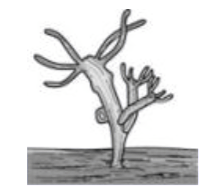
Many invertebrate animals, such as the hydra, reproduce asexually. What form of reproduction in this stage of the life cycle of the hydra is shown in the diagram?
a)
binary fission
b)
budding
c)
fragmentation
d)
vegetation propagation
5.
A child’s sex is determined by the sex chromosomes of which person?
a)
grandfather
b)
grandmother
c)
mother
d)
father
6.
Daffodils are plants that can perform both asexual and sexual reproduction. How does a daffodil population benefit more by reproducing sexually than asexually?
a)
It can reproduce more rapidly.
b)
It can adapt faster to its environment.
c)
It can increase the diversity of inherited traits.
d)
It can eliminate unfavorable traits from the gene pool.
7.
What types of cells are found only in organisms that reproduce sexually?
a)
blood cells
b)
neurons
c)
skin cells
d)
gametes
8.
Which of the following is a part of the process of sexual reproduction?
a)
budding
b)
regeneration
c)
pollination
d)
fragmentation
9.
Which is the greatest benefit of sexual reproduction?
a)
capable of reproducing by meiosis
b)
ability to reproduce without a mate
c)
ability to produce genetically different offspring
d)
capable of producing offspring genetically identical to parent
10.
In order to grow two of the exact same plants, a person would reproduce them asexually because the
a)
genetic diversity is greater.
b)
offspring would be genetically identical.
c)
recessive traits would emerge.
d)
negative traits are suppressed.
11.
When an egg and sperm form an embryo, the offspring that is formed will have genetic traits that are
a)
inherited from only one parent.
b)
created by the environment.
c)
passed on from two parents.
d)
learned from siblings.
12.
Requires two parents
a)
sexual
b)
asexual
13.
Requires only one parent
a)
sexual
b)
asexual
14.
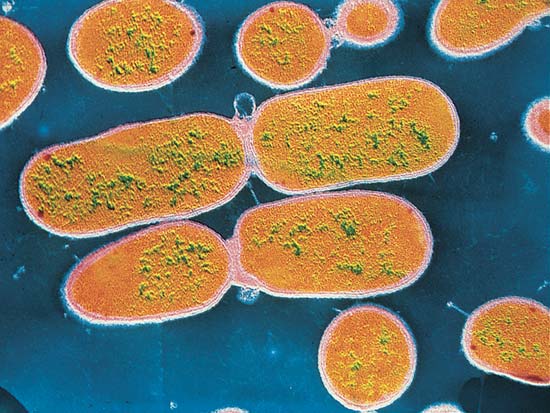
The offspring from asexually reproduced organisms are?
a)
Different than their parents
b)
Identical to parents
c)
Like a combination from both parents
d)
A different species
15.

Prokaryotes (bacteria) reproduce asexually via -
a)
spore formation
b)
bud creation
c)
vegetative propagation
d)
binary fission
16.

All of the offspring of an organism have the same genetic material, which is identical to the parent organism. From this, we can conclude that this organism -
a)
makes its own food
b)
is unicellular
c)
live in a marine habitat
d)
reproduces asexually
17.

When comparing the offspring of sexually and asexually reproducing organisms, we would expect the genetic material (DNA) of the sexually reproducing organism to -
a)
contain fewer mutations
b)
be lesser in quantity
c)
be simpler overall
d)
show more variation
18.
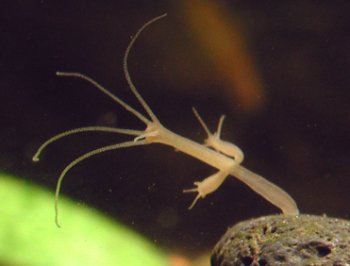
This is when a new organism grows by cell division on the body of its parent. The bud, or offspring is identical to the parent. The bud, when large enough, can break off of the parent and live on its own. Examples of this include yeast, hydra and potatoes.
a)
Regeneration
b)
Vegetative propagation
c)
Fission
d)
Budding
19.
What are some of the facts about asexual reproduction?
a)
Takes only one mate to reproduce and takes a longer time to reproduce
b)
Takes a shorter amount of time to reproduce and it takes two mates to reproduce
c)
Reproduces diverse offspring and takes a longer time to reproduce
d)
Takes only one mate to reproduce and takes a shorter time to reproduce
20.
Which of the following is a disadvantage for sexual reproduction?
a)
a lot of time and energy is required for making gametes and finding mates
b)
offspring can be produced more quickly than by asexual means
c)
the genetic diversity makes organisms respond differently to environmental changes
d)
the offspring are genetically different
21.
Is budding an example of asexual or sexual reproduction?
a)
sexual
b)
both
c)
asexual
d)
neither
22.
Which reproduction does diverse offspring come from?
a)
Asexual reproduction
b)
Sexual reproduction
c)
Both asexual and sexual reproduction
d)
Asexual offspring
23.
What are some of the facts about sexual reproduction?
a)
Takes two mates to reproduce and takes a longer time to reproduce
b)
Takes one mate to reproduce and takes a shorter amount of time to reproduce
c)
Takes two mates to reproduce and takes a shorter amount of time to reproduce
d)
Takes one mate to reproduce and takes a shorter amount of time to reproduce
24.

An asexual offspring needs:
a)
Fertilization
b)
Some fertilization
c)
Wings to fly
d)
No fertilization
25.
This produces 2 identical cells.
a)
mitosis
b)
meiosis
26.
1. Asexual Reproduction
a)
a. reproduction in which the sex cells from two parents unite to produce offspring
b)
b. reproduction that does not involve the union of sex cells
27.
3. What type of asexual reproduction grow from a part of a parent plant?
a)
a. fission
b)
b. budding
c)
c. spores
d)
d. vegetative
28.
4. What type of asexual reproduction involves a new organism growing by mitosis and cell division?
a)
a. binary
b)
b. budding
c)
c. spores
d)
d. vegetative
29.
5. What type of asexual reproduction has specialized cells that can survive harsh conditions for a long period of time?
a)
a. binary
b)
b. budding
c)
c. spores
d)
d. vegetative
30.
6. Runners, tubers, and plantlets are examples of what type of asexual reproduction.
a)
a. binary
b)
b. budding
c)
c. spores
d)
d. vegetative
31.
7. Yeasts, hydra, and cactus are examples of what kind of asexual reproduction.
a)
a. binary
b)
b. budding
c)
c. spores
d)
d. vegetative
32.
8. Bacteria is an example of what type of asexual reproduction.
a)
a. fission
b)
b. budding
c)
c. spores
d)
d. vegetative
33.
9. Dandelions are an example of this type of asexual reproduction.
a)
a. binary
b)
b. budding
c)
c. spores
d)
d. vegetative
34.
9. Dandelions are an example of this type of asexual reproduction.
a)
a. binary
b)
b. budding
c)
c. spores
d)
d. vegetative
35.
When a starfish grows a new body off a broken arm, what kind of reproduction is this?
a)
Sexual
b)
Differentiation
c)
Asexual
d)
Specialization
36.
Which statement best describes sexual reproduction?
a)
Cell division happens where one cell produces two exact copies
b)
Reproduction happens very quickly
c)
Only one parent needed
d)
Fertilization of an egg by a sperm
37.
Where does an off spring get its traits in asexual reproduction?
a)
From both parents
b)
From only one parent
c)
From neither parent
d)
There are no traits handed down
38.

What statement can you make about the spider plant pictured
a)
It uses sexual reproduction
b)
It gets its traits from two different plants
c)
It will not be able to produce offspring
d)
It contains genes only form the larger plant
39.
If a organism divides into two new organisms what is this an example of?
a)
Asexual reproduction
b)
Sexual reproduction
c)
Cloning
d)
Budding
40.
This is when uniform offspring grow from a part of a parent plant. Parent plants sends out runners. Where the runner touches the ground, roots can grow. A new plant is produced even if the runner is broken apart Each new plant is uniform and identical to the parent.
a)
Vegetative propagation
b)
Regeneration
c)
Budding
d)
Fission
41.
This is when a new organism grows by mitosis and cell division on the body of its parent. The bud, or offspring is identical to the parent. The bud, when large enough, can break off of the parent and live on its own.
Examples of this include yeast, hydra and cactus
Examples of this include yeast, hydra and cactus
a)
Regeneration
b)
Vegetative propagation
c)
Fission
d)
Budding
42.
What is organized DNA called?
a)
Genes
b)
Deoxyribonucleic Acid
c)
Chromosomes
d)
Nucleus
43.

The genetic material of an offspring of sexually reproducing organisms is best described as–
a)
identical to that of the other offspring
b)
a copy of the genetic material of the mother
c)
a copy of the genetic material of the father
d)
genes from both parents, in unique combinations
44.

How many parents does asexual reproduction involve?
a)
one
b)
two
c)
three
d)
four
45.
Single-celled organelles that do not have a nucleus or membrane-bound internal structures are called-
a)
organelles
b)
prokaryotes
c)
eukaryotes
d)
autotrophs
46.
How many parents does asexual reproduction involve?
a)
one
b)
two
c)
three
d)
four
47.
Prokaryotes reproduce asexually through-
a)
spore formation
b)
vegetative propagation
c)
binary fission
d)
budding
48.
What is a disadvantage of asexual reproduction?
a)
New species of organisms cannot come into being.
b)
The offspring does not multiply rapidly.
c)
The offspring does not live for long.
d)
All of these
49.
Which of the following describes the main advantages of sexual reproduction?
a)
requires lots of time/energy
b)
no new gene combos can arise
c)
diversity
d)
looks identical to the parent
50.
This type of asexual reproduction regrows part of an animal (ex: hydra, planaria, crabs)
a)
binary fission
b)
budding
c)
regeneration
d)
parthenogenesis
100 %

