
Font size
S
M
L
XL
 Worksheets
Civil Rights 1945-1970
Total questions: 121
Worksheet time: 1hrs 18mins
Name
Class
Date
1.

Brown v. Board of Education was famous because the court ruled that it is illegal
a)
allow children to work.
b)
to pay black people less than white people.
c)
to return a slave.
d)
to segregate schools.
2.

After the Civil Rights Act of 1964 was passed, it was no longer legal to
a)
let African Americans ride the bus.
b)
deny someone of a job because of their race.
c)
fire someone for not doing their job.
d)
kick someone out of the military.
3.
Court case that created "Separate-but-equal" doctrine.
a)
Sweatt v. Painter
b)
Brown v. Board of Education
c)
Plessy v. Ferguson
d)
Mendez v. Kirby ISD
4.
Nonviolent protest, where protesters occupied space in order to protest segregation.
a)
Sit-In
b)
Freedom Rides
c)
Selma March
d)
Filibuster
5.

What are Jim Crow Laws?
a)
Laws that placed freedom limitations on nonwhite people
b)
Laws that made all people work together towards a common goal
6.

Which US president signed the Voting Rights Act of 1965?
a)
Lyndon B. Johnson
b)
John F. Kennedy
7.

The federal law outlawing literacy tests, poll taxes, and other requirements that made it difficult for southern blacks to exercise their right for suffrage
a)
Civil Rights Act of 1964
b)
Voting Rights Act of 1965
8.

Person who was killed on April 4, 1968, while standing on the balcony outside his hotel room at Lorraine Motel in Memphis, Tennessee after trying to help black sanitation workers receive better working conditions
a)
Martin Luther King, Jr.
b)
Robert Kennedy
9.

Black nationalist leader who for awhile was a spokesman for the Nation of Islam; talked about black freedom “by any means necessary;” was assassinated on February 21, 1965, in NYC by Nation of Islam members
a)
Malcolm X
b)
Martin Luther King, Jr.
10.
Who was arrested for refusing to give up their seat on a bus?
a)
Charlayne Hunter
b)
Harriet Tubman
c)
Rosa Parks
d)
Rebecca L. Felton
11.

_______________ wrote "I Have a Dream" and delivered it to thousands in Washington, DC.
a)
Harry Belafonte
b)
Barack Obama
c)
Martin Luther King, Jr.
d)
Jesse Jackson
12.
In 1964, Martin received the _____________ for peace.
a)
Nobel Prize
b)
Oscar Award
13.
People who protest to call attention to a cause, like civil rights
a)
activist
b)
actor
c)
reporter
d)
scholar
14.
A form of nonviolent protest where people stop buying a product?
a)
march
b)
boycott
c)
sit in
d)
activist
15.

Court case that ruled that segregated schools are inherently unequal, ending the separate but equal doctrine.
a)
Plessy v. Ferguson
b)
Brown v. Board of Education
c)
Sweatt v. Painter
d)
Delgado v. Bastrop ISD
16.

Which lawyer worked with the NAACP on the Brown v. Board of Education case?
a)
Rosa Parks
b)
James Farmer
c)
Jackie Robinson
d)
Thurgood Marshall
17.

Which Amendment states that anyone born in the United States is a citizen?
a)
14th
b)
15th
c)
16th
d)
13th
18.
What amendment did Brown vs. Board of Education refer to?
a)
13th
b)
14th
c)
15th
d)
16th
19.

The Chicano movement was called_________
a)
A Way to Freedom
b)
El Movimiento
c)
El Desperado
d)
La Libertad
20.

In what year did Brown vs Board of Education occur?
a)
1952
b)
1953
c)
1954
d)
1955
21.
What was the name of the Chicano Political Party?
a)
Black Panthers
b)
Raza Unida Party
c)
Las Panteras
d)
None of these
22.
When did the Chicano movement occur?
a)
1940s
b)
1950s
c)
1960s
d)
1970s
23.
What form of protest did MLK believe in?
a)
Nonviolent Resistance
b)
Sabotage
c)
Violent Rebellion
d)
Military Overthrow of government
24.
What historic event in New York helped cause the Civil Rights Movement?
a)
Draft Riots
b)
Harlem Renaissance
c)
Tin Pan Alley
d)
Poetry Clubs
25.
What was a fee for voting called?
a)
Voter's Chip
b)
Poll Tax
c)
Literacy Test
d)
Pay to Play
26.
What law banned employer discrimination?
a)
Voting Rights Act
b)
Civil Rights Act
c)
Poll Tax Act
d)
24th Amendment
27.
Who believed in violent resistance for black rights?
a)
MLK
b)
Rosa Parks
c)
Billy Graham
d)
Malcolm X
28.
Court decision that created “separate but equal”?
a)
Plessy v Ferguson
b)
Texas v Hernandez
c)
Brown v Board
d)
Sanford v Dole
29.
Court decision that ended segregation of schools?
a)
Brown v Board
b)
Blessy v Ferguson
30.
What law banned voter discrimination through literacy tests and other ways?
a)
24th Amendment
b)
Voting Rights Act
c)
Civil Rights Act
d)
EEOC Act
31.
What case said when under arrest officers had to read people their rights
a)
Brown v Bard
b)
Miranda v. Arizona
c)
Plessy v Ferguson
d)
Hernandez v Texas
32.
Rights that officers read to you when you are under arrest are called?
a)
Brown Call
b)
Miranda Rights
c)
14th Amendment Rights
d)
EEOC
33.
Separation of schools into white and black?
a)
Division
b)
Isolation
c)
Apartheid
d)
Segregation
34.
First black congresswoman?
a)
Rosa Parks
b)
Ida Wells
c)
Shirley Chisolm
35.
Pushed for the creation of the NAACP?
a)
WEB Dubouis
b)
Booker T Washington
36.
Pushed for education of blacks after the end of slavery? Vocational Skills
a)
Booker T Washington
b)
Ida Wells
c)
WEB Dubouis
37.
Which of the following groups was intended to benefit the most from the Great Society programs?
a)
Minorities and the poor
b)
White, middle-class families
c)
Farmers and laborers
d)
Businessmen
38.
This created the Job Corps, VISTA, and Project Head Start in an effort to fight the “war on poverty”
a)
Civil Rights Act
b)
Economic Opportunity Act
c)
Pendleton Service Act
d)
Warren Court
39.
These provided free or low-cost medical insurance to welfare recipients and most Americans age 65 and over.
a)
Civil Rights Services
b)
Privatization of Medicine
c)
Medicare and Medicaid
d)
Equal Insurance Policy (EIP)
40.
Which program was started to provide financial assistance for medical bills to anyone 65 years old or older?
a)
Social Security
b)
Project Head Start
c)
Medicare
d)
Medicaid
41.
What kind of society did President Lyndon B. Johnson envision when he created the Great Society programs?
a)
one that ensured access to justice, education, decent housing, and health care for all Americans
b)
on that emphasized that all people are equal only in the eyes of God
c)
one in which extremism in the defense of liberty is encouraged
d)
one that made separate schools for black and white children truly equal
42.
Which statement best describes the Cuban Missile Crisis?
a)
The Soviets let the Cuban government borrow their missiles to scare the US.
b)
The US took actions after discovering Soviet missiles in Cuba
c)
The US gave Cuba missiles to use against the Soviets.
d)
Cuba threatened to place an embargo on the US.
43.

Read this sentence below. How is this a departure from typical Cold War rhetoric?
In language very different than his inaugural address, President Kennedy told Americans in June 1963, “For, in the final analysis, our most basic common link is that we all inhabit this small planet. We all breathe the same air. We all cherish our children’s future. And we are all mortal."
In language very different than his inaugural address, President Kennedy told Americans in June 1963, “For, in the final analysis, our most basic common link is that we all inhabit this small planet. We all breathe the same air. We all cherish our children’s future. And we are all mortal."
a)
JFK was concerned with his own children's well-being more than his responsibility as president to take care of the people
b)
JFK is terrified of nuclear warfare, and he is desperately trying to convince Americans for First strike capacity
c)
JFK is pointing out our similarities as human beings with the Soviets as a way to increase American popularity overseas
d)
JFK is attempting to reduce the hostilities with the Soviets by essentially suggesting that we are no different than our counterparts
44.
He lost the 1960 presidential election
a)
Lyndon Johnson
b)
Fidel Castro
c)
Richard Nixon
d)
Dwight D. Eisenhower
45.
Because Kennedy was elected by such a slim margin, he lacked a popolar ______________
a)
recession
b)
opinion
c)
reapportionment
d)
mandate
46.
The _________________ is a program in which the assistance of U.S. volunteers is offered to the developing nations in Asia, Africa, and Latin America.
a)
Fair Deal
b)
Economic Opportunity Act
c)
Peace Corp
d)
Great Society
47.
What is the constitution of the United States?
a)
A journal article
b)
a letter written to Thurgood Marshall
c)
a plan for the government of the united states
48.
Marshall was one of the lawyers who helped a little girl go to school in Topeka, Kansas?
a)
True
b)
False
49.
Thurgood Marshall became _______.
a)
a president of the United States.
b)
a principal in a school who fought racism.
c)
the first African American on the Supreme Court.
d)
one of the authors of the constitution.
50.
Why didn't Thurgood attend the University of Maryland's Law school?
a)
It was too far from his home.
b)
He didn't want to go to law school.
c)
They didn't allow African Americans to attend.
d)
His father didn't want him to go there.
51.
What is Thurgood Marshall best known for being?
a)
The first African American lawyer.
b)
The first African American Supreme Court judge.
c)
The first African American voter.
d)
The first African American college student.
52.
Marshall took the case "Brown vs. the Board of Education" to the Supreme Court and won. What were the results of this success?
a)
It gave Linda Brown the freedom to attend the school close to her home.
b)
It showed that "separate but equal" was not truly equal.
c)
It ended all segregation in public schools.
d)
All answers are correct.
53.

Which amendment guaranteed the right to vote for black men?
a)
13th Amendment
b)
14th Amendment
c)
15th Amendment
d)
16th Amendment
54.
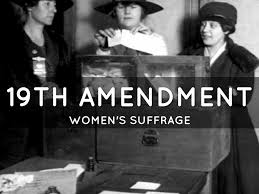
Which amendment guarantees women the right to vote?
a)
1st Amendment
b)
4th Amendment
c)
19th Amendment
d)
12th Amendment
55.

Which Amendment prohibits charging a person a poll tax before they vote?
a)
Amendment 24
b)
Amendment 4
c)
Amendment 10
d)
Amendment 1
56.

Which amendment gave people 18+ the right to vote?
a)
Amendment 1
b)
Amendment 26
c)
Amendment 5
d)
Amendment 9
57.

Which amendment protects you from being searched without a warrant?
a)
First Amendment
b)
Second Amendment
c)
Third Amendment
d)
Fourth Amendment
58.

Which amendment gives you due process? This means everyone must follow the law. You cannot be brought to trial twice for the same crime. You do not need to tell on yourself.
a)
Fifth Amendment
b)
Sixth Amendment
c)
Seventh Amendment
d)
Eight Amedment
59.
All male citizens have the right to vote regardless of race. Which amendment is this?
a)
15th
b)
3rd
c)
26th
d)
14th
60.
Every person born or naturalized in the US is a citizen. Which amendment is this?
a)
12th
b)
22nd
c)
15th
d)
14th
61.
No search and seizure without a warrant and probable cause. Which amendment is this?
a)
1st
b)
2nd
c)
3rd
d)
4th
62.
Ban of poll tax as a qualification to vote. Which amendment is this?
a)
23rd
b)
18th
c)
10th
d)
24th
63.
Slavery is abolished. Which amendment is this?
a)
13th
b)
15th
c)
24th
d)
19th
64.
Voting age changed from 21 years old to 18 years old. Which amendment is this?
a)
25th
b)
14th
c)
26th
d)
12th
65.
You have the right to a lawyer. Which amendment is this?
a)
5th
b)
6th
c)
7th
d)
8th
66.
No excessive bail and cruel and unusual punishment.
a)
5th
b)
6th
c)
7th
d)
8th
67.
1. What is the central idea of Martin Luther King’s speech?
a)
Non-violence is best, but sometimes violence needs to be used.
b)
Non-violence is the only way to achieve equal rights.
c)
Violence is necessary to get what you want.
d)
People should be content with what they have.
68.
When King says he is here to "dramatize a shameful condition", he means that
a)
he is going to exaggerate the situation
b)
he is here to bring attention to the horrors of discrimination and inequality
c)
he will be using dramatic language to illustrate the issues of racism
d)
he is going to use a skit to present his message
69.
Who did Martin Luther King, Jr. and other black leaders support during the 1960 Presidential election?
a)
Barack Obama
b)
Jimmy Carter
c)
John F. Kennedy
d)
Franklin D. Roosevelt
70.
Who assassinated Martin Luther King Jr.?
a)
Lee Harvey Oswald
b)
John Wayne Gacy
c)
James Earl Ray
d)
John Hinkley Jr.
71.
Where did MLK deliver his iconic "I have a dream" speech?
a)
Dallas
b)
Chicago
c)
Washington
d)
Atlanta
72.
Why was Martin Luther King arrested and put in jail?
a)
He refused to pay income taxes.
b)
The U.S. President felt threatened by his actions.
c)
He participated in illegal fundraising.
d)
He instructed people to disobey unjust laws.
73.
Who's teaching inspired King's philosophy of nonviolence?
a)
Abraham Lincoln
b)
Thomas Jefferson
c)
Mahatma Ghandi
d)
Aristotle
74.
This case advocated free speech in the schools in the form of an anti-war protest
a)
Tinker vs. Des Moines
b)
Gideon vs. Wainwright
c)
Mapp vs. Ohio
75.
This case said the courts had to provide lawyers for those who can't afford one
a)
US vs. Nixon
b)
Bush vs. Gore
c)
Gideon vs. Wainwright
76.
This case guaranteed certain rights for individuals being arrested
a)
Marbury vs. Madison
b)
Tinker vs. Des Moines
Tinker vs. Des Moines
Tinker vs. Des Moines
c)
Hazelwoodvs. Kuhlmeier
d)
Miranda vs. Arizona
77.
This decision allowed for women to have abortions
a)
Roe vs. Wade
b)
District of Columbia vs. Heller
78.
This case established the policy of judicial review
a)
Brown vs. Board of Education
b)
Tinker vs. Des Moines
c)
Marbury vs. Madison
79.
Which case said that segregation based on national origin was unconstitutional?
a)
Morgan v. Virginia
b)
Mendez v. Westminster
c)
Sweatt v. Painter
d)
Brown v. Board of Education
80.
Which case required the University of Texas to admit African students to its previously all-white law school?
a)
Morgan v. Virginia
b)
Mendez v. Westminster
c)
Sweatt v. Painter
d)
Brown v. Board of Education
81.
Why was Rosa Parks arrested again?
a)
Sitting in the front of a bus
b)
Failing to pay the fine from her first arrest
c)
Refusing to ride the bus
d)
Protesting in public
82.
How did the Supreme Court respond to the bus boycott?
a)
Ended bus segregation in Montgomery
b)
Established separate buses for Black people
c)
Ordered an end to the boycott
d)
They did not respond.
83.
Who were the little rock nine?
a)
5 white men
b)
9 african american students
c)
5 white women
d)
preachers
84.
Who ordered the silent protest of the Montgomery Bus Boycott?
a)
Rosa Parks
b)
Malcolm X
c)
Martin Luther King Jr.
d)
Abraham Lincoln
85.
What effect did the Boycott have on the economy of Montgomery, Alabama?
a)
gained the bus company's riders
b)
it hurt the bus company causing riots and other things
86.
Going without food to make a point.
a)
fast
b)
march
c)
strike
d)
boycott
87.
A person who goes from place to place in search of work.
a)
justice
b)
march
c)
migrant worker
d)
slavery
88.
Equal treatment under the law.
a)
freedom of expression
b)
justice
c)
protest
d)
boycott
89.
An organized walk taken by a group of people to make a point.
a)
labor union
b)
march
c)
strike
d)
protest
90.
An organization of workers who work together for better pay and conditions.
a)
organizer
b)
citizen
c)
boycott
d)
labor union
91.
What did Gandhi and MLK Jr. teach Chavez?
a)
Violence is the answer to any problem.
b)
Problems can be solved through nonviolent protests.
c)
Money will solve everyone's problems.
d)
None of the above.
92.
An official member of a country.
a)
migrant worker
b)
strike
c)
citizen
d)
protest
93.
Malcolm's protests were more....
a)
violent
b)
peaceful
94.
Malcolm got into the religion of Islam while in....
a)
A Party
b)
Prison
c)
A Meeting
95.
Protests such as marches, sit-ins, and boycotts
a)
Violent Protest
b)
Non-violent Protest
96.
Which group believed that equality could not be given, but had to be seized by a powerful, organized Black community.
a)
Nation of Islam
b)
Black Power Movement
c)
NAACP
d)
Black Panthers
97.
The separation of the races that could be done by African Americans returning to Africa, or the US government providing them with land
a)
Black Segregation
b)
Black Separatism
98.
Riots in Los Angeles that resulted in violence between African Americans and whites. Led to the death of 34 people and the arrest of over 1,000 people.
a)
LA Riots
b)
Watts Riots
c)
City Riots
d)
Warts Riots
99.
Women in the 1950's
a)
Were expected to take care of children, the house, and their husbands.
b)
Were expected not to work, and if they did it was for less pay and until they have kids
c)
Went to college to work in traditionally feminine jobs, such as education
d)
All of the above.
100.
She wrote the Feminine Mystique
a)
Delores Huerta
b)
Betty Friedan
c)
Gloria Steinem
d)
Phyllis Schlafly
101.
What organization, the idea of Betty Friedan, reflected the diverse goals for the modern feminist movement?
a)
National Women's Party
b)
Women for Tomorrow
c)
Equal Rights Organization
d)
National Organization for Women
102.

When was Title IX first put into action (used).
a)
2000
b)
1927
c)
1972
d)
1954
103.

Who was the President when Title IX was coming into action?
a)
Richard Nixon
b)
George Washington
c)
Lyndon B. Johnson
d)
Gerald Ford
104.

What is Title IX
a)
A Law allowing males to have the same opportunities as females
b)
A Law allowing women to have the same opportunities as males
c)
A law
d)
Title IX doesn't exsist
105.
What did Homer Plessy do that got him arrested?
a)
Sat in the white only part of the bus.
b)
Took a seat in the white only car of a train.
c)
Sat at a white only section of a lunch counter.
d)
All of the above
106.
What southern state was Plessy in?
a)
Louisiana
b)
Texas
c)
Georgia
d)
Alabama
107.
Plessy and those who worked with him were trying to challenge
a)
the Brown v. Board of Education case
b)
Segregation and the Jim Crow laws
c)
Reconstruction
d)
equal pay for equal work
108.
What was the result of the case?
a)
The Supreme Court ruled in favor of Plessy saying segregation was illegal.
b)
The Supreme Court never made a ruling.
c)
The Supreme Court ruled that segregation was legal.
d)
Plessy never took the case to the Supreme Court.
109.
What famous phrase came out of the Plessy case?
a)
"Separate but equal"
b)
"Give me liberty or give me death."
c)
"May the force be with you."
d)
"I'll be back."
110.
1920s Poet and novelist
a)
Langston Hughes
b)
Marcus Garvey
c)
William Jennings Bryan
d)
Glenn Curtiss
111.
Leader of the Back-to-Africa Movement
a)
Marcus Garvey
b)
Langston Hughes
c)
F. Scott Fitzgerald
d)
Clarence Darrow
112.
African American poet and writer during the Harlem Renaissance.
a)
Langston Hughes
b)
Marcus Garvey
c)
Charles Lindbergh
d)
F. Scott Fitzgerald
113.
First Hispanic appointed to Supreme Court
a)
Sonia Sotomayor
b)
Dolores Huerta
c)
Carrie Nation
d)
Jane Addams
114.
Cesar Chavez and Dolores Huerta formed one group that fought for the farmworkers.
a)
True
b)
False
115.
Dolores Huerta became the first woman to lead such an important union which was the United Farm Workers.
a)
True
b)
False
116.
How did Dolores Huerta show she was a good citizen?
a)
She boycotted.
b)
She helped farm workers.
c)
She volunteers for Habitat for Humanity.
117.
What did the book Feminine Mystique by Betty Friedan do?
a)
Strengthened Family Values
b)
Defeated Equal Rights Movement
c)
Energized New Women's Movement
d)
Reinforced Women's Traditional roles
118.
What group used violence to fight police brutality?
a)
Black Panthers
b)
Southern Christian Leadership Conference
c)
Student Nonviolent Coordinating Committee
d)
Mississippi Freedom Democratic Party
119.
Who was a founder of the United Farm Workers organization?
a)
Antonia Coello Novello
b)
Sandra Cisneros
c)
Dolores Huerta
d)
Anna Escobedo Cabral
120.
Who was Cesar Chavez fighting for?
a)
African Americans
b)
Farm Workers
c)
Children
d)
Women
121.
Who was the Defense Attorney in Brown v. Board of Education?
a)
Barry Goldwater
b)
Billy Graham
c)
Sandra Day O'Conner
d)
Thurgood Marshall
Reset

