
 Worksheets
SSA Review 3
Total questions: 50
Worksheet time: 40mins
Name
Class
Date
1.

In which type of fault does the hanging wall get pushed up?
a)
Normal
b)
Reverse
c)
Strike-slip
2.
Which type of stress pulls rock apart?
a)
Tension
b)
Compression
c)
Shearing
3.

Which type of stress pushes rock together?
a)
Tension
b)
Shearing
c)
Compresssion
4.

Which type of stress pushes rock together?
a)
Tension
b)
Shearing
c)
Compresssion
5.

Which type of stress do rocks slide side by side?
a)
Tension
b)
Shearing
c)
Compression
6.

The rock below is grainy and has layers. What type of rock is it?
a)
Sedimentary
b)
Intrusive Igneous
c)
Extrusive Igneous
d)
Metamorphic
7.

The rock below has wavy layered bands, but is hard and contains crystals. It results from a transformation of a pre-existing rock that is subjected to very high heat and pressure, which cause obvious physical and/or chemical changes.What type of rock is it?
a)
Sedimentary
b)
Intrusive Igneous
c)
Extrusive Igneous
d)
Metamorphic
8.

The type of rock shown forms by crystallizing below Earth's surface. The slow cooling that occurs there allows large crystals to form. What type of rock is it?
a)
Sedimentary
b)
Intrusive Igenous
c)
Extrusive Igneous
d)
Metamorphic
9.

The type of rock shown forms when magma reaches the Earth's surface, erupts, and cools quickly to form small crystals. Some cool so quickly that they form an amorphous glass. What type of rock is it?
a)
Sedimentary
b)
Intrusive Igenous
c)
Extrusive Igneous
d)
Metamorphic
10.
What type of rock is shown?
a)
Sedimentary
b)
Intrusive Igneous
c)
Extrusive Igneous
d)
Metamorphic
11.

The statue below is damaged and has holes in it due to acid rain. This is an example of
a)
Physical Weathering
b)
Chemical Weathering
c)
Erosion
d)
Deposition
12.
Water freezes in the crack of a rock and breaks it apart. This is an example of
a)
Physical Weathering
b)
Chemical Weathering
c)
Erosion
d)
Deposition
13.
In order for a metamorphic rock to form, _______ is/are needed.
a)
Pressure
b)
Heat
c)
Heat and Pressure
d)
Weathering
14.
In order for a sedimentary rock to form _______ is needed.
a)
Pressure
b)
Heat
c)
Heat and Pressure
d)
Melting
15.
The ___________ is the thinnest layer of the earth.
a)
Inner Core
b)
Crust
c)
Mantle
d)
Outer Core
16.
The ___________ is the most liquid/fluid layer of the earth.
a)
Inner Core
b)
Outer Core
c)
Crust
d)
Mantle
17.
The __________________ is the body's command center, and consists of the brain, spinal cord, and nerves that bring information to and from the brain.
a)
digestive system
b)
nervous system
c)
muscular system
d)
ears
18.
The ______________________ consists of the heart, a large network of blood vessels, and blood.
a)
skeletal system
b)
nervous system
c)
muscular system
d)
cardiovascular system
19.
The _________________ and cardiovascular systems work together to deliver oxygen to cells and carry away carbon dioxide, a waste product.
a)
respiratory system
b)
nervous system
c)
digestive system
d)
circulatory system
20.
The _________________ gives the body its shape and supports and protects the internal organs.
a)
urinary system
b)
skeletal system
c)
lympthatic/immune system
d)
endocrine system
21.
The _______________ consists of three types: cardiac, smooth, and skeletal. Along with the skeletal system, this system makes movement possible.
a)
muscular system
b)
skin
c)
mouth/teeth
d)
reproductive system
22.
The main function of the _________________ is to break down food into chemicals that provide energy and nutrients to the body.
a)
stomach
b)
digestive system
c)
respiratory system
d)
eyes
23.
The _________________ includes two kidneys that filter waste from the blood and a bladder that holds urine.
a)
endocrine system
b)
urinary system
c)
cardiovascular system
d)
nervous system
24.
The _________________ consists of organs and small glands working to produce hormones, or chemical messages, that are released to regulate body functions.
a)
reproductive system
b)
lymphatic/immune system
c)
endocrine system
d)
digestive system
25.
The _____________ protects everything inside the body and serves as a barrier for keeping out bacteria and viruses.
a)
mouth/teeth
b)
digestive system
c)
skin
d)
respiratory system
26.
The ________________ is a network of vessels that collects fluids and traps bacteria and viruses to protect the body from disease. It also produces and stores infection-fighting cells.
a)
lymphatic/immune system
b)
skeletal system
c)
urinary system
d)
cardiovascular system
27.
The _________________ consists of a group of organs that work together to allow for the creation of new life.
a)
integumentary system
b)
endocrine system
c)
reproduction system
d)
eyes
28.
Digestion begins in the _____________.
a)
eyes
b)
digestive system
c)
urinary system
d)
mouth/teeth
29.
What organ/structure exchanges oxygen and carbon dioxide in the lungs?
a)
bronchi
b)
alveoli
c)
diaphragm
d)
trachea
30.
The passageway that is shared by both the digestive and respiratory system is the....
a)
larynx
b)
pharynx
c)
trachea
d)
nose
31.
Muscular tube that connects the mouth to the stomach
a)
Epiglottis
b)
Peristalsis
c)
Stomach
d)
Esophagus
32.
Nutrients are taken out of the food and sent to the bloodstream here through this organ.
a)
large intestine
b)
liver
c)
small intestine
d)
stomach
33.

What is tube that is also known as your wind pipe?
a)
esophogus
b)
bronchi
c)
trachea
d)
alveoli
34.
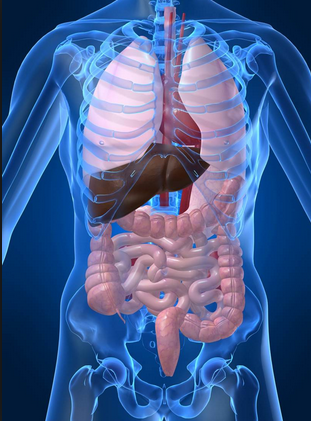
The bladder is where excrement stays until it is ready to leave the body.
a)
True
b)
False
35.
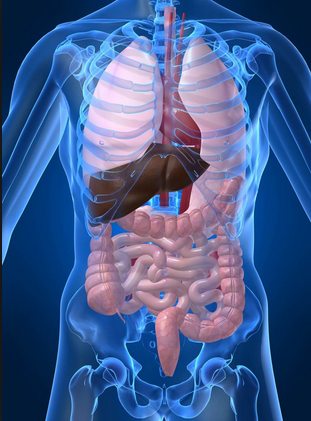
Saliva is a fluid that helps with digestion.
a)
True
b)
False
36.
This organ brings in oxygen and releases carbon dioxide.
a)
heart
b)
lungs
c)
rib cage
d)
obliques
37.
Tissues join together to form:
a)
cells
b)
organs
c)
organ systems
d)
organisms
38.
The basic unit of structure and function in the human body is the
a)
organ
b)
organ system
c)
cell
d)
tissue
39.
This type of tissue contracts and shortens, making body parts move.
a)
epithelial
b)
connective
c)
nerve
d)
muscle
40.
What is the function of the kidneys in the excretory/urinary system?
a)
store urine before it is eliminated from the body.
b)
break down food into smaller pieces through chemical digestion
c)
filter blood of cellular waste material as a result of cellular respiration
d)
control thoughts, voluntary actions, and other sensations of the five senses.
41.
Flap of skin that covers the opening to the windpipe during swallowing
a)
Stomach
b)
Trachea
c)
Pancreas
d)
Epiglottis
42.
Your food gets tossed around here and broken down with gastric juices/acids.
a)
brain
b)
esophagus
c)
liver
d)
stomach
43.

The two main branches from the trachea (one to each lung)
a)
bronchi
b)
alveoli
c)
capillaries
d)
trachea
44.

What is the function of the bronchi?
a)
Transport air from nose to lungs
b)
Transport air from trachea to lungs
c)
Transport air from lungs to alveoli
d)
Transport air from alveoli to blood
45.

The air sacs (in the lungs) that are covered with capillaries where gas exchange (oxygen/carbon dioxide) takes place are called ____________.
a)
bronchi
b)
lungs
c)
oxygen
d)
alveoli
46.
What is a group of similar cells that work together?
a)
Tissue
b)
Organ
c)
Cell group
d)
Organ system
47.
Which is a function of your skin?
a)
Cleans the blood
b)
Breaks down food particles
c)
Absorbs oxygen and releases carbon dioxide
d)
It's the first line of defense for your immune system
48.
What carries oxygen and nutrients to your cells?
a)
Water
b)
Carbon Dioxide
c)
Blood
d)
Plasma
49.
When exercising, your heart rate increases because your body
a)
Needs more Oxygen
b)
Needs more Carbon Dioxide
c)
Needs to create waste
d)
Needs to fight disease
50.
Which systems work together to remove waste?
a)
Urinary, muscular, skeletal
b)
Urinary, digestive, excretory
c)
Urinary, nervous, endocrine
d)
Urinary, lymphatic, nervous
100 %

