
 Worksheets
Fossils Review
Total questions: 28
Worksheet time: 54mins
Name
Class
Date
1.

What type of fossil is this?
a)
Mold
b)
Cast
c)
Carbon Film
d)
Trace fossil
2.
Fossils are usually found in
a)
igneous rock
b)
extrusions
c)
intrusions
d)
sedimentary rock
3.
Which statement is true about the fossil record?
a)
It is a record of all living things
b)
It shows how our climate has remained the same over time
c)
It provides evidence for history of life on Earth
d)
It does not support the theory of evolution
4.
Scientists who study fossils are called
a)
Geologists
b)
Paleontologists
c)
Fossil Scientists
d)
Meteorologists
5.
Fossils of fish are found under land where cows now live. What does this tell you?
a)
the fish were dropped their by flying birds
b)
this land was once under the ocean
c)
farmers fed the fish to the cows
d)
fish used to live on land
6.
Which animal part would MOST LIKELY form a fossil?
a)
fur
b)
lung
c)
bone
d)
muscle
7.

What type of fossil is this?
a)
Trace fossil
b)
Mold
c)
Cast
d)
Carbon film
8.

What type of fossil fills a mold, and is a model of the actual organism?
a)
cast
b)
trace
c)
carbon imprint
9.
What is hardened tree sap?
a)
coprolites
b)
index fossils
c)
gastroliths
d)
amber
10.
What happens when a group of animals become extinct?
a)
All of its members have died.
b)
Only a few of its members are still living.
c)
The animals can no longer lay eggs.
d)
All of its members move to another place.
11.
A fossil animal has a mouth full of sharp, pointed teeth. What can you infer about the animal?
a)
the animal ate fruits and vegetables
b)
the animal ate meat
c)
the animal did not live on land
d)
the animal is closely related to a shark
12.
Which of these must happen first for a fossil to form?
a)
a plant or animal is covered by sediment
b)
sediments fill a mold and form a cast
c)
a plant or animal is eaten
d)
sediments are pressed together and harden
13.
The relative age of rock layers tells us that the deeper we dig, _______.
a)
the younger the rocks get
b)
the smellier the rocks get
c)
the harder the rocks get
d)
the older the rocks get
14.

According to the law of superposition, which layer is the youngest?
a)
A
b)
B
c)
C
15.
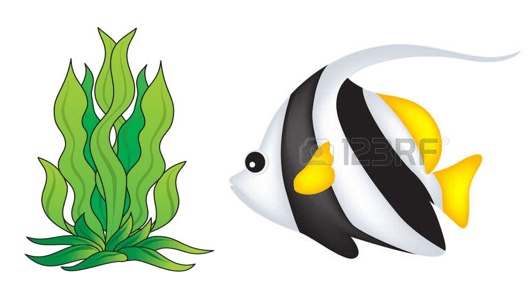
Suppose both of these living things die on the same day. Which one is more likely to become a fossil? EXPLAIN your answer!
a)
The plant because it is bigger.
b)
The fish because it has more hard parts than the plant.
c)
The plant because it is green.
d)
The fish because it has gills.
16.
What replaces the wood of a once-living tree to form petrified wood?
a)
amber
b)
a cast
c)
a mold
d)
minerals
17.
Which of the following describes a group of living things that is no longer living.
a)
fossil
b)
extinct
c)
mold
d)
cast
18.

These are dinosaur footprints. What is this a example of?
a)
All of the below!!!!!
b)
index fossil
c)
permineralized remains
d)
trace fossil
19.

What type of fossil is this?
a)
preservation of actual remains
b)
replacement of mineral matter
c)
molds,casts,imprints
20.

What type of fossil is this?
a)
preservation of actual remains
b)
replacement of mineral matter
c)
molds,casts,imprints
21.
The Law of Superposition helps scientists to determine what?
a)
The absolute age of rock layers
b)
The age of fossils
c)
The relative age of rock layers
d)
the super powers of rocks
22.

According to the law of superposition, the oldest fossils are found
a)
At the top of the rock layers
b)
Near the bottom of the rock layers
c)
In the middle of the rock layers
d)
Somewhat near the surface
23.

Which rock layer in the diagram seems to be the oldest?
a)
F
b)
E
c)
B
d)
A
24.
What is an adaptation?
a)
A feature or behavior that helps an animal survive.
b)
The food that an animal eats.
c)
How energy moves in a food web.
d)
How animals evolve throughout time.
25.
How do adaptations help animals?
a)
to hide from predators
b)
to hunt for food
c)
to survive in their habitats
d)
All of these are correct
26.
What are some things that can cause an animal to become endangered or extinct?
a)
habitat loss
b)
disease
c)
climate change
d)
all of the above
27.
What would a bird's foot look like if it spent its time in the water?
a)
Sharp talons and claws
b)
Short stubby toes
c)
Webbing between the toes
d)
Long graceful fingers
28.
What scientist is famous for studying natural selection and developed a theory called "survival of the fittest?"
a)
Bill Nye
b)
Albert Einstein
c)
Charles Darwin
d)
Isaac Newton
100 %

