
 Worksheets
Crisis War & Recovery
Total questions: 33
Worksheet time: 32mins
Name
Class
Date
1.
Which of the following is ONE of the territories gained by the US after the Spanish-American War?
a)
the Dominican Republic
b)
Haiti
c)
the Philippines
d)
Jamaica
2.
The Open Door Policy expanded international trade in which country?
a)
the Philippines
b)
Mexico
c)
China
d)
Cuba
3.
Which of the following statements is true about the Treaty of Versailles?
a)
It created the United Nations
b)
It was favorable to Germany
c)
It punished Germany
d)
It punished Russia
4.
Which of the following MOST contributed to the mass production of automobiles in the early twentieth century?
a)
the introduction of Ford's assembly line
b)
an increase in the number of immigrant workers
c)
the increased competition with foreign nations
d)
the increase in factory workers; pay
5.
One of the reasons that many Americans were supportive of the Spanish-American War is that they had been exposed to pro-war sentiments in newspapers that often exaggerated the severity of the situation that existed in Cuba. Which term best describes this type of journalism?
a)
yellow journalism
b)
investigative reporting
c)
watchdog journalism
d)
muchraking
6.
Which event contributed to the outbreak of the Spanish-American War?
a)
the construction of the Panama Canal
b)
the sinking of the Lusitania
c)
the border dispute between Venezuela and British Guiana
d)
the sinking of the USS Maine
7.
Germany was harshly penalized and embittered at the end of World War 1 by
a)
the Geneva Convention
b)
the Treaty of Paris
c)
the United Nations
d)
the Treaty of Versailles
8.
What was Hawaii's primary export to the United States?
a)
sugar cane
b)
cotton
c)
fish
d)
corn
9.
_________ was assassinated by a group of extreme Serbian nationalists on June 28, 1914, an event that acted as a trigger to the fighting in World War I.
a)
Joseph Stalin
b)
Benito Mussolini
c)
Franz Ferdinand
d)
Francisco Franco
10.
During World War 1, public outrage in the US against the Germans swept the nation following
a)
the assassination of Archduke Franz Ferdinand
b)
the sinking of the British ocean liner Lusitania
c)
the bombing of Pearl Harbor
d)
the German invasion of Poland
11.
The changing role of women in 1920s America was embodied by the image of
a)
the flapper
b)
the homemaker
c)
Rosie the Riveter
d)
the Gibson Girl
12.
The Treaty of Versailles forced _______ to accept total responsibility for the start of the World War I, pay huge reparations, and give over vast amounts of territory.
a)
Russia
b)
Italy
c)
Germany
d)
Japan
13.
What was the goal of the League of Nations?
a)
to maintain world peace
b)
to serve as an international court
c)
to finance new industries
d)
to promote American economic interests
14.
The 1920s was an era of...
a)
slow economic growth, limited prosperity, and little social change.
b)
economic hardship, radical politics, and intense involvement in world affairs.
c)
extreme economic growth, big social changes, and political conservatism.
d)
increased government participation in business and extremely liberal politics.
15.
The _______ , created after World War I, was ineffectual in preventing World War II due to its lack of real power.
a)
North Atlantic Treaty Organization
b)
United Nations
c)
League of Nations
d)
European Union
16.
What is the type of sensational reporting where writers exaggerated or even invented stories?
a)
muckraking
b)
yellow journalism
c)
journalism
d)
reporting
17.

What policy is this cartoon about?
a)
US promoted equal trading access for all world powers in China
b)
US hegemony in Japan following the Meiji Restoration
c)
US control of the Mallaca Straits to the dismay of the UK, Germany and Russia
d)
Hawaiian annexation in the McKinley administration following the removal of Queen Liliuokalani
18.
The United States acquired Alaska from
a)
Spain
b)
Great Britain
c)
Japan
d)
Russia
19.
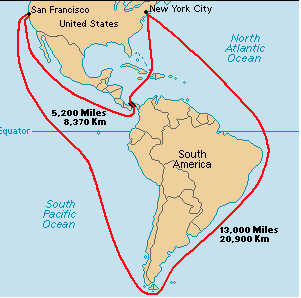
What does this map support?
a)
US fought the Spanish navy in Atlantic and Pacific
b)
Spanish-American War led to new US territories
c)
America became a colonial power in South America by surrounding it
d)
Panama Canal is critical to US trade
20.

Where is this event taking place?
a)
Maine
b)
Cuba
c)
Spain
d)
Hawaii
21.
The US used the Open Door policy in ___.
a)
Japan
b)
Hawaii
c)
Panama
d)
China
22.
In __, American businessman had great interest in the large sugar plantations. It was annexed into the US in 1898.
a)
Japan
b)
Hawaii
c)
Panama
d)
China
23.
For what reason did the US imperialize?
a)
to gain raw materials
b)
to create military bases around the globe
c)
to develop markets to sell goods
d)
all of these
24.
The "spark" that was an immediate cause of World War I was
a)
The sinking of the Lusitania
b)
The assassination of Archduke Franz Ferdinand
c)
Increased nationalism
d)
The Zimmerman Telegram
25.
During World War I, the Central Powers were
a)
Germany, Italy, and Japan
b)
Britain, France, and Russia
c)
Germany, Britain, and France
d)
Germany, Austria - Hungary, and the Ottoman Empire
26.
The Zimmerman Telegram can best be described by which of the following?
a)
Great Britain promised the U.S. that they would help them gain territories in Europe
b)
Mexico vowed to help the U.S. and the Allies in World War I
c)
Germany asked Mexico to declare war on the U.S. to regain lost territories
d)
Russia withdrew from the war due to the revolution that was occurring in the country
27.

Who was the President of the United States during WWI?
a)
Woodrow Wilson
b)
Grover Cleveland
c)
Teddy Roosevelt
d)
Franklin D. Roosevelt
28.
In addition to the U.S., the Allies included:
a)
Great Britain, France, and Russia
b)
Great Britain, France, and Austria Hungary
c)
Germany, Russia, Great Britain
d)
Ottoman Empire, Germany, Russia
29.
Which document punished Germany after World War I?
a)
Treaty of Versailles
b)
Yalta Agreement
c)
Roosevelt Corollary
d)
Fourteen Points
30.
What was the name of the British passenger boat that was sunk by German U-Boats?
a)
U.S.S. Maine
b)
Lusitania
c)
U.S.S. Admiral
d)
the Titanic
31.
The U.S. entered World War I in
a)
1918
b)
1914
c)
1917
d)
1920
32.
This group of immigrants was primary target of propaganda and faced discrimination on the home front
a)
Austrian-Americans
b)
Mexican-Americans
c)
African-Americans
d)
German-Americans
33.
An agreement between two or more countries to give other people help if needed is
a)
a treaty
b)
an alliance
c)
a partnership
d)
a friendship
100 %

