
 Worksheets
weathering
Total questions: 50
Worksheet time: 27mins
Name
Class
Date
1.
The process by which water, ice, wind or gravity moves weathered rock and soil from one place to another.
a)
weathering
b)
erosion
c)
deposition
d)
dumptruck
2.
This type of weathering occurs when rock is physically broken down into smaller pieces of rock.
a)
mechanical weathering
b)
chemical weathering
c)
erosion weathering
d)
biological weathering
3.
This type of weathering occurs when rocks weaken then break down due to chemical changes in the composition of the rock.
a)
mechanical weathering
b)
chemical weathering
c)
erosion weathering
d)
deposition
4.
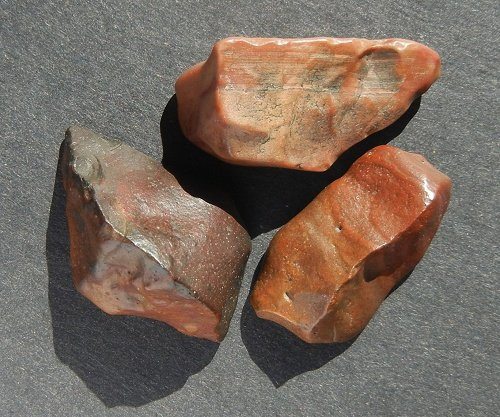
These rocks were made smooth by wind blowing smaller rock particles across their surface. This is an example of:
a)
ice wedging
b)
chemical weathering
c)
acid rain
d)
abrasion
5.

These rocks were broken apart from the continuous freeze/thaw of water in the cracks of the rocks. This is an example of:
a)
ice wedging
b)
acid rain
c)
permeability
d)
abrasion
6.

This rock may chemically weather easily because is has many spaces or holes in it that allow water to seep through it, meaning it is:
a)
permeable
b)
abrasive
c)
erosion
d)
unchangable
7.
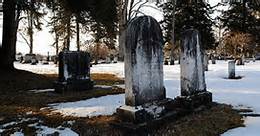
These gravestones have slowly broken down and turned a blackish color due to the action of:
a)
ice wedging
b)
abrasion
c)
acid rain
d)
mechanical weathering
8.
How might a weathered mountain appear different than an unweathered mountain?
a)
Weathered mountain would be taller.
b)
Weathered mountain would be rounder and less jagged.
c)
Weathered mountain would be more jagged and less rounded.
d)
Weathered mountain would have no trees.
9.
How is mechanical weathering different from chemical weathering?
a)
Chemical weathering happens over much shorter time frame than mechanical weathering.
b)
Chemical weathering changes the chemical composition of rocks; mechanical weathering does not.
c)
Chemical weathering occurs only in tropical climates; mechanical weathering occurs only in cool climates.
d)
Chemical weathering occurs only in the mountains; mechanical weathering occurs only on flat land.
10.
Weeds growing into the cracks in a sidewalk and the sidewalk begins to crumble, or lichens breaking down a rock is an example of:
a)
mechanical weathering
b)
chemical weathering
c)
biological weathering
d)
erosion weathering
11.
Potholes forming in the road after a cold winter is an example of:
a)
mechanical weathering
b)
chemical weathering
c)
biological weathering
d)
erosion weathering
12.
A metal statue slowly turning green after years of being outside is an example of:
a)
mechanical weathering
b)
chemical weathering
c)
biological weathering
d)
erosion weathering
13.
Rocks along a riverbed that are smoothed from continuously moving water and sediment rubbing against them is an example of:
a)
mechanical weathering
b)
chemical weathering
c)
biological weathering
d)
erosion weathering
14.
A piece of sandstone changing color (from brown to rusty red) from exposure to water and air is an example of:
a)
mechanical weathering
b)
chemical weathering
c)
biological weathering
d)
erosion weathering
15.
The formation of large cracks in the face of a mountain from ice wedging is an example of:
a)
mechanical weathering
b)
chemical weathering
c)
biological weathering
d)
erosion weathering
16.
Acid rain wearing away the face of a marble gravestone or statue is an example of?
a)
mechanical weathering
b)
chemical weathering
c)
biological weathering
d)
erosion weathering
17.
Exposure to rain and oxygen causes the metal minerals in rocks to rust and fall apart. This is an example of:
a)
Deposition
b)
Oxidation
c)
Dissolution
d)
Hydration
18.
Lichens (small green plants) growing on a large boulder release enzymes and other acids that slowly break the rock apart. This is an example of:
a)
mechanical weathering
b)
chemical weathering
c)
deposition
d)
erosion
19.
The formation of stalactites and stalagmites in a cave as water mixed with carbon dioxide creates carbonic acid, which dissolves away the limestone, is an example of:
a)
mechanical weathering
b)
chemical weathering
c)
biological weathering
d)
erosion weathering
20.
The natural chemical or physical processes that breaks down rock on Earth's surface.
a)
weathering
b)
erosion
c)
deposition
d)
jackhammering
21.

What is mechanical weathering?
a)
Process through which rocks are physically broken into smaller pieces.
b)
Rocks are broken down through chemical changes.
c)
Rocks are worn away from acid in plant roots.
d)
Rocks broken down by machinery.
22.
The process that breaks down rocks and other materials on Earth's surface is called
a)
weathering
b)
erosion
c)
soil conservation
d)
decomposition
23.

The diagrams shows a rock with water trapped in the cracks during the day and at night.
Which statement best explains why this process results in weathering?
Which statement best explains why this process results in weathering?
a)
frozen water acts as a solute
b)
water expands when it freezes
c)
the mass of water increases when it freezes
d)
frozen water dissolves most types of rock
24.
Rust that forms on rocks or metal because of extended exposure to oxygen is what example of chemical weathering?
a)
carbon dioxide (carbonic acid)
b)
acid rain
c)
oxidation
d)
living organisms
25.
This type of weathering occurs when rocks weaken then break down due to chemical changes in the composition of the rock.
a)
mechanical weathering
b)
chemical weathering
c)
erosion weathering
d)
deposition
26.
How might a weathered mountain appear different than an unweathered mountain?
a)
Weathered mountain would be taller.
b)
Weathered mountain would be rounder and less jagged.
c)
Weathered mountain would be more jagged and less rounded.
d)
Weathered mountain would have no trees.
27.
This type of weathering occurs when rock is physically broken down into smaller pieces of rock.
a)
mechanical weathering
b)
chemical weathering
c)
erosion weathering
d)
deposition
28.
Which of the following is an example of chemical weathering?
a)
Acid rain dissolving limestone
b)
roots breaking into concrete
c)
paper being ripped
d)
Water running over rocks
29.
Waves dropping sand on the beach is called?
a)
Weathering
b)
Erosion
c)
Deposition
d)
Acid rain
30.
Water getting into cracks, freezing, and breaking the rocks or pavement apart is called?
a)
Weathering
b)
Erosion
c)
Deposition
d)
Acid rain
31.
A mudslide flowing down a steep hill is called?
a)
Weathering
b)
Erosion
c)
Deposition
d)
Acid rain
32.
The process of carrying away weathered bits of rocks is called
a)
weathering
b)
erosion
c)
deposition
d)
Acid rain
33.
The process of moving weathered rock and depositing it in another location is called?
a)
weathering
b)
erosion
c)
deposition
d)
Acid rain
34.
The process of slowly breaking rocks into smaller pieces is called
a)
weathering
b)
erosion
c)
deposition
d)
Acid rain
35.
What is the process that picks up and moves weathered rocks?
a)
deposition
b)
landslide
c)
weathering
d)
erosion
36.

During chemical weathering, what can happen to the type of rock that has undergone chemical weathering?
a)
a new rock is produced that is larger than the original rock
b)
a new rock is produced that is the same as the original rock
c)
a new rock is produced that is different from the original rock
d)
no new rock is created - it is just smaller in size
37.

The statue of liberty is made of copper. It was originally brown but has since turned green. This is probably due to _______.
a)
Oxidation
b)
Acid Rain
c)
Carbon Dioxide
d)
Humans
38.

Oxygen is very strongly chemically reactive. The most familiar type of this reaction is when iron reacts with oxygen to create rust. A chemical reaction that takes place when oxygen reacts with another element is called.
a)
Oxidation
b)
Carbon Dioxide
c)
Nitrogen
d)
Neon
39.
Acid rain is most likely to cause...
a)
deposition
b)
dissolution
c)
chemical weathering
d)
mechanical weathering
40.

How do plants weather rocks?
a)
during photosynthesis
b)
when roots grow into cracks of rocks and expand the rock
c)
when the plant moves water from the roots to the leaves
41.
The process by which water, ice, wind or gravity moves weathered rock and soil from one place to another.
a)
weathering
b)
erosion
c)
deposition
d)
dumptruck
42.
Lichens (small green plants) growing on a large boulder release enzymes and other acids that slowly break the rock apart. This is an example of:
a)
mechanical weathering
b)
chemical weathering
c)
oxidation
d)
deposition
43.
The disintegration, or breakdown of rock material is
a)
Weathering
b)
Exfoliation
c)
Hydrolysis
d)
Oxidation
44.
Process by which rock is dissolved in water
a)
Hydrolysis
b)
Oxidation
c)
Solution
d)
Chemical Weathering
45.
Breakdown of rock as a result of chemical reactions
a)
Frost Wedging
b)
Chemical Weathering
c)
Mechanical Weathering
d)
Biological Weathering
46.
Laying down of sediment that has been transported by a medium such as wind, water, or ice is known as
a)
Deposition
b)
Oxidation
c)
Dissolution
d)
Hydration
47.
Rock breaks apart in layers that are parallel to the earth's surface
a)
Exfoliation
b)
Oxidation
c)
Hydration
d)
Dissolution
48.
Rock breakdown caused by expansion of ice in cracks and joints
a)
Dissolution
b)
Oxidation
c)
Frost Wedging
d)
Deposition
49.
Attachment of water molecules to crystalline structure of a rock, causing expansion and weakness
a)
Deposition
b)
Hydration
c)
Dissolution
d)
Hydrolysis
50.
Process by which rock is dissolved in water
a)
Deposition
b)
Hydrolysis
c)
Hydration
d)
Solution
100 %

