
 Worksheets
Natural disasters & Human Impact
Total questions: 40
Worksheet time: 24mins
Name
Class
Date
1.
Water evaporating off of plants is called _________.
a)
precipitation
b)
condensation
c)
evaporation
d)
transpiration
2.
What is the sun's role in the water cycle?
a)
It evaporates water
b)
It causes precipitation
c)
It attracts water molecules
d)
It has no role
3.
A _______ is the water that rises from the ground to the surface.
a)
water table
b)
spring
c)
aquifer
d)
porous
4.
The water table is the _____ level of water underground.
a)
upper
b)
lower
5.
_________ is when water transforms from water vapor into liquid water. This forms clouds.
a)
condensation
b)
precipitation
c)
evaporation
d)
transpiration
6.
_________ is when water transforms from liquid to a gas (water vapor).
a)
condensation
b)
precipitation
c)
evaporation
d)
transpiration
7.
When water from the sky falls in the form of rain, hail, sleet or snow.
a)
condensation
b)
precipitation
c)
evaporation
d)
transpiration
8.
Which of the following natural disasters has strong winds?
a)
drought
b)
tornado
c)
volcanic eruption
d)
earthquake
9.
Which of the following natural disasters does NOT leave debris?
a)
hurricane
b)
tornado
c)
earthquake
d)
drought
10.
Which natural disaster is measured with the Richter scale?
a)
earthquake
b)
hurricane
c)
tornado
d)
volcanic eruption
11.

What is the center of a hurricane called?
a)
eyewall
b)
storm surge
c)
landfall
d)
discharge
12.
Which of the following is not a human impact on the ecosystem?
a)
Pollution
b)
Overfishing
c)
Flooding
d)
Fertilizer contaminating water
13.
What force causes water to move downhill in a watershed?
a)
gravity
b)
friction
c)
air resistance
d)
all of the above
14.
Water underground is called...
a)
Groundwater
b)
Surface water
15.
A plant or animal that is not native to a specific location and causes damage is called a(n) _________.
a)
invasive species
b)
pioneer species
c)
intrusive species
d)
primary species
16.
True or False: porous rock has holes in it.
a)
True
b)
False
17.
True or False: Aquifers are bodies of water found above ground.
a)
True
b)
False
18.
Does it use MORE water to take a bath or a shower?
a)
bath
b)
shower
19.
Where do we get our drinking water from here in Bryan?
a)
Rivers
b)
Lakes
c)
Ocean
d)
Aquifer
20.
When a source of pollution is identified, it's called _________.
a)
Point source contamination
b)
Non-point source contamination
21.
An invasive species is one that's _______ and causes _______.
a)
native; damage
b)
annoying; construction
c)
large; damage
d)
non-native; damage
22.
What is Point Source Pollution (PSP) ?
a)
When you cannot trace the direct source of pollution
b)
When you can trace the point of the source - "pipe to source"
23.
Why is gravity a factor in watersheds?
a)
it causes the water to flow away from a watershed
b)
it causes the water to flow down towards a watershed
24.
What is a watershed?
a)
Land that collects and channels water froma small body of water to a larger body of water
b)
the shape of the land determined by elevation
c)
A natural stream of water of considerable volume
d)
a river and all its tributaries
25.
We all live in a watershed.
a)
True
b)
False
26.
Which of the following can pollute water?
a)
Moss
b)
Pesticides
c)
Seaweed
d)
Fish
27.

The illustration provided shows a river and four cities on that river. When the water from the river was sampled at location X, it was determined to be polluted with various chemicals. What would be the most likely source for this pollution?
a)
City 1 and City 2
b)
City 2 and City 3
c)
City 3 and City 4
d)
City 1 and City 4
28.

Open spaces between soil particles that allow water to pass through
a)
Aquifer
b)
Well
c)
Pores
d)
Spores
29.

How are tsunamis generated?
a)
generated from earthquakes
b)
generated from tornadoes
c)
generated from crazy people
30.
Which storms have the strongest winds?
a)
hailstorms
b)
tornadoes
c)
earthquakes
d)
hurricanes
31.
Which of the following natural disasters have had the LEAST impact on TEXAS?
a)
hurricanes
b)
floods
c)
tornadoes
d)
earthquakes
32.
Where are hurricanes most likely to do the most damage?
a)
Near the coast
b)
In the forest
c)
In a desert
d)
On the North Pole
33.
What catastrophic event results in destruction along a narrow path?
a)
a volcanic eruption
b)
a tsunami
c)
a hurricane
d)
a tornado
34.
What catastrophic event can be caused by thunderstorms?
a)
a wildfire
b)
a tsunami
c)
a volcanic eruption
d)
a drought
35.
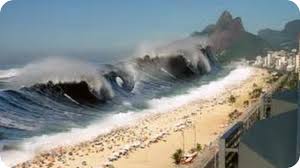
A long high sea wave caused by an underwater earthquake, landslide or underwater volcanic
a)
Typhoon
b)
Flood
c)
Tornado
d)
Tsunami
36.
Which natural disaster uses the Richter scale to measure strength?
a)
Earthquake
b)
Tornado
c)
Tsunami
d)
Hurricane
37.
Where do hurricanes form?
a)
In a river or stream
b)
Over the ocean
c)
At plate boundaries
d)
Under the Earth
38.

What is all the water that runs off the surface of the land and washes into rivers, streams, and other waterways called?
a)
Runoff
b)
Storm Drain
c)
Surface Water
d)
Tributary
39.
A watershed includes everything in its borders, including the land, plants, animals, and people.
a)
True
b)
False
40.
Human activity does not affect the watershed.
a)
True
b)
False
100 %

