
 Worksheets
SPACE
Total questions: 40
Worksheet time: 34mins
Name
Class
Date
1.

What type of Moon?
a)
New Moon
b)
Full Moon
c)
Crescent
d)
Quarter
2.
The only objects in our Universe that produces and emits its own light is
a)
Nebulas
b)
Comets
c)
Planets
d)
Stars
3.
What is an object that is so massive and dense that even light can not escape its gravity?
a)
Main-sequence
b)
black hole
c)
Apparent Magnitude
d)
Comet
4.
How many planets are in our solar system?
a)
1
b)
8
c)
9
d)
11
5.
The 4 inner planets of the solar system are...
a)
Rocky Planets
b)
Gas Giants
6.
The 4 outer planets of the solar system are...
a)
Rocky Planets
b)
Gas Giants
7.
The moon appears to change shape because of _____.
a)
the Moon's revolution around Earth
b)
the seasons of the year
c)
the movement of stars in they sky
d)
Earth's rotation on its axis
8.
What causes Earth's seasons?
a)
the tilt of Earth's axis
b)
Earth's rotation
c)
the revolution of the Moon
d)
Earth's distance from the Sun
9.
The rotation of Earth on its axis causes the pattern of _____.
a)
night and day
b)
constellations
c)
Earth's seasons
d)
the phases of the moon
10.
How are stars DIFFERENT from planets?
a)
Stars are solid and rocky.
b)
Stars are made of frozen gases.
c)
Stars do not move.
d)
Stars revolve around the Sun.
11.
How are planets and stars ALIKE?
a)
Both are similar in size.
b)
Both are made of hot gases.
c)
Both move in orbits around the Sun.
d)
Both look like points of light in the night sky
12.
It takes Earth _________ to make one complete rotation on its axis.
a)
24 hours
b)
365 days
c)
28 days
d)
24 days
13.
It takes Earth _____________ to make one revolution or orbit around the Sun.
a)
365 days
b)
365 hours
c)
28 days
d)
24 hours
14.
It takes about _____________ for the moon to go through all of its phases.
a)
28 days
b)
365 days
c)
24 hours
d)
24 days
15.
A large body made of gas or rock that orbits around a star.
a)
planet
b)
moon
c)
star
d)
super nova
16.
To increase or get bigger.
a)
Waxing
b)
Waning
17.
To decrease or get smaller
a)
waning
b)
waxing
18.
A rocky body that orbits around a planet.
a)
moon
b)
star
c)
axis
d)
Sun
19.
The largest planet in our solar system is
a)
Uranus
b)
Neptune
c)
Pluto
d)
Jupiter
20.

A small space rock that makes it into Earth’s surface without burning up is called a ...
a)
Meteor
b)
Meteoroid
c)
Asteroid
d)
Meteorite
21.
Which space object is larger?
a)
Asteroid
b)
Meteoroid
22.
Which choice shows the correct order of the planets?
a)
Mars, Venus, Earth, Mercury, Jupiter, Saturn, Uranus, Neptune
b)
Earth, Venus, Mars, Mercury, Jupiter, Saturn, Uranus, Pluto
c)
Mercury, Venus, Earth, Mars, Jupiter, Saturn, Uranus, Neptune
d)
Saturn, Venus, Mars, Mercury, Jupiter, Neptune Mercury, Uranus
23.
These objects that orbit the sun are nicknamed, "dirty snowballs."
a)
Comets
b)
Asteroids
c)
Meteors
d)
Meteroids
24.
Asteroids "hang out" in the Asteroid Belt between the planets of:
a)
Earth and Mars
b)
Mercury and Venus
c)
Saturn and Neptune
d)
Mars and Jupiter
25.
Huge chunks of rock and metal (some measuring miles wide) and are believed to be left-over pieces of planets and moons are called:
a)
Comets
b)
Meteors
c)
Asteroids
d)
Meteroids
26.

What type of Moon?
a)
New Moon
b)
Full Moon
c)
Crescent
d)
Quarter
27.
A blue star is?
a)
cold
b)
warm
c)
sad
d)
hot
28.
A yellow star is?
a)
hot
b)
medium
c)
cold
d)
light
29.
Our sun is a _____ star
a)
blue
b)
orange
c)
yellow
d)
red
30.
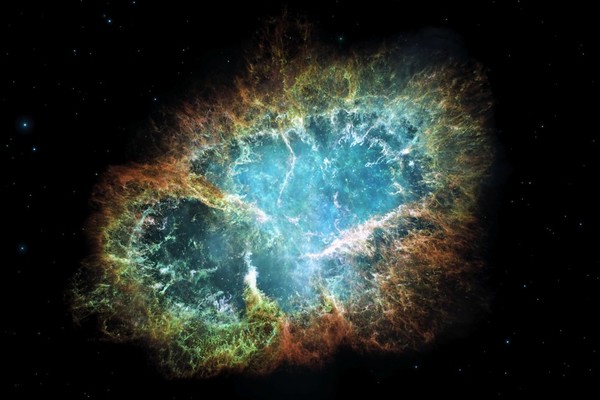
What is the name of the explosion at the death of a massive star?
a)
Supergiant
b)
Supernova
c)
Black Hole
d)
Nebula
31.
The sun and everything that revolves around it.
a)
solar system
b)
galaxy
c)
universe
d)
rotation
32.
The star at the center of our solar system.
a)
Sun
b)
moon
c)
orbit
d)
axis
33.
How many Earths will fit inside the sun?
a)
A little over 1 million
b)
1500
c)
A little over 2 million
d)
4 million
34.
When does a waning moon occur?
a)
just after a full moon
b)
just after a crescent moon
c)
when all of the Moon's near side is dark
d)
between a first-quarter moon and a new moon
35.

Objects made of ice, gas and dust and orbit our sun are called:
a)
Asteroids
b)
Comets
c)
Meteroids
d)
Meteors
36.

What type of Moon?
a)
New Moon
b)
Full Moon
c)
Cresent
d)
Quarter
37.
Our planets in the solar system orbit the:
a)
Moon
b)
Sun
c)
Sky
d)
Earth
38.
The color of the star tells us its
a)
composition
b)
Temperature
c)
Luminosity
d)
Mass
39.

What type of Moon?
a)
Full Moon
b)
Waxing Gibbous
c)
New Moon
d)
Waning Gibbous
40.
______________________ which orbits Jupiter, is the largest moon in our solar system.
a)
Titan
b)
Our moon
c)
Pluto
d)
Ganymede
100 %

