
 Worksheets
Earth's Spheres and Biomes
Total questions: 85
Worksheet time: 2hrs 34mins
Name
Class
Date
1.
All living things on earth are part of the....
a)
Biosphere
b)
Geosphere
c)
Hydrosphere
d)
Cryosphere
2.
The Geosphere is...
a)
All liquid water on Earth
b)
A 100km thick layer of gases
c)
frozen water on earth
d)
Earths entire solid body
3.
Bio =
a)
Science
b)
Math
c)
Earth
d)
Life
4.
Geo =
a)
Earth
b)
Sphere
c)
Life
d)
Water
5.
Hydro =
a)
Sphere
b)
Earth
c)
Life
d)
Water
6.
The thin envelope of gases forming Earth's outermost layer.
a)
Hemisphere
b)
Biosphere
c)
Atmosphere
d)
Hydrosphere
7.
Earth's metal core, solid middle layer, and outer rocky layer.
a)
Biosphere
b)
Geosphere
c)
Hydrosphere
d)
Atmosphere
8.
Which sphere of the Earth system includes tree, grasses, and squirrels?
a)
Atmosphere
b)
Geosphere
c)
Biosphere
d)
Hydrosphere
9.
The group of parts that work together as a whole.
a)
Constructive forces
b)
Biosphere
c)
Energy
d)
System
10.
The sphere that contains all of the earth's water.
a)
Atmosphere
b)
Biosphere
c)
Hydrosphere
d)
Geosphere
11.
The ability to do work.
a)
System
b)
Work release
c)
Plate techtonics
d)
Energy
12.
What is a main feature of plains?
a)
a low, shallow basin
b)
a gentle, gradual slope
c)
a flat, level surface
d)
a gentle, gradual slope
13.
Which biome is characterized by low temperatures and low amounts of rainfall?
a)
tundra
b)
desert
c)
temperate deciduous forest
d)
tropical rain forest
14.
Which biome covers most of the land mass near the Earth's equator?
a)
tundra
b)
desert
c)
grassland
d)
tropical rainforest
15.
Which biome, because of its climate, has the largest number of species of plants and animals?
a)
tundra
b)
desert
c)
tropical rainforest
d)
pine forest
16.
One characteristic feature of tundra is that only the surface thaws in the summer and refreezes in the winter, leaving a layer of permanently frozen subsoil. This characteristic is known as
a)
glaciation
b)
permafrost
c)
crystallization
d)
soilfrost
17.
Which type of trees is found in a temperate forest?
a)
deciduous
b)
evergreen
c)
ginko
d)
palm
18.
Which major biome is home to cacti, mesquite, white thorn, pack rats, small reptiles, and coyotes?
a)
desert
b)
taiga
c)
tundra
d)
grassland
19.
Which biome receives between 0 to 25 centimeters of rain per year, has a temperature range of 0 to 50 degrees Celsius, has poor soil, and is home to lizards, scorpions, and snakes?
a)
desert
b)
mountain
c)
taiga
d)
tundra
20.
Which biome contains large populations of grazing herbivores, few species of birds, and deep, rich soil?
a)
taiga
b)
tundra
c)
deciduous forest
d)
grassland
21.
This biome contains mostly spruce trees and Douglas firs, which are both evergreen. The winters are long and cold and the summers are short and rainy. The soil is very rich. Moose and elk live here. This biome is classified as a
a)
taiga
b)
tundra
c)
deciduous forest
d)
temperate forest
22.
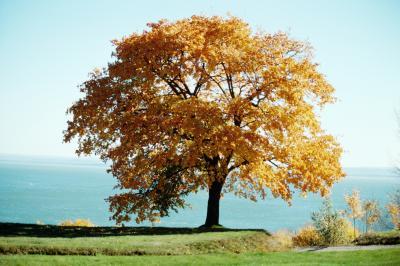
The biome known for trees with broad leaves that fall off the trees in the winter.
a)
Coniferous Forests
b)
Deciduous Forests
c)
Deserts
d)
Tropical Rain Forests
23.
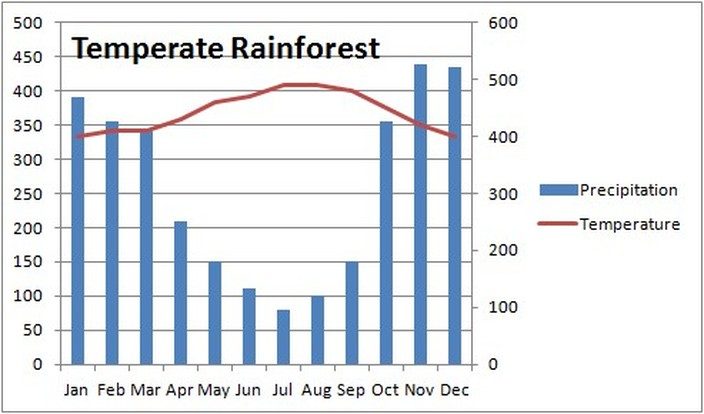
The most important abiotic factors when studying biomes are...
a)
Food and Water
b)
Water and Sunlight
c)
Temperature and Oxygen
d)
Water and Temperature
24.
The greatest biodiversity on earth is found in the __________ biome.
a)
taiga
b)
grassland
c)
temperate deciduous forest
d)
tropical rainforest
25.
Areas defined by their geographical location and ecological similarity are called?
a)
ecozones
b)
biotopes
c)
biomes
d)
biodomes
26.

Which biome is home to lions, zebras, wildebeests, giraffes, and elephants?
a)
Grasslands
b)
Tundra
c)
Rainforest
d)
Temperate Forest
27.
On what continent are these savanna grasslands?
a)
North America
b)
Asia
c)
Africa
d)
South America
28.
Abiotic factors are parts of the environment that are...
a)
Nonliving
b)
Living
c)
Populations
d)
Vegetation
29.
What term is given by scientists to the living parts of an ecosystem?
a)
Biotic Factors
b)
Abiotic Factors
c)
Community
d)
Population
30.
Which biome is hot all year with wet and dry seasons?
a)
tropical rainforest
b)
chaparral
c)
temperate grassland
d)
savanna
31.

What is this biome?
a)
Grassland
b)
Desert
32.

What is this biome?
a)
Desert
b)
Arctic Tundra
33.

What is this biome?
a)
Coniferous Forest
b)
Desert
34.
What is it called when animals move from one area to another.
a)
migrate
b)
vacation
35.
A camel has long eyelashes to keep out the sand.
a)
Structural
b)
Behavioural
36.

Cactus has spines instead of leaves. The spines reduces water loss through the stomata.
a)
Structural
b)
Behavioural
37.
Crocodile has strong powerful tail to swim easily in the water.
a)
Structural
b)
Behavioural
38.

Seeds has hooks to hook onto the animals’ fur.
a)
Structural
b)
Behavioural
39.
Flowers have bright petals to attract birds to pollinate them.
a)
Structural
b)
Behavioural
40.
Birds migrate (move to) a warmer place during winter.
a)
Structural
b)
Behavioural
41.

Penguins huddle close together to keep warm.
a)
Structural
b)
Behavioural
42.
A camel can go without water for a long time.
a)
Structural
b)
Behavioural
43.
Thorns
on a rose bush
a)
Physical Adaptation
b)
Behavioral Adaptation
44.
Wolves hunting in packs
a)
Physical Adaptation
b)
Behavioral Adaptation
45.
The hard shell on a turtle
a)
Physical Adaptation
b)
Behavioral Adaptation
46.
Bears
hibernating in the winter
a)
Physical Adaptation
b)
Behavioral Adaptation
47.
White
fur of an Arctic Fox
a)
Physical Adaptation
b)
Behavioral Adaptation
48.
Camouflage
may help an animal hide from___________________________.
a)
a. Predators ONLY
b)
b. Prey ONLY
c)
c. Predators AND prey
d)
d. Small animals only
49.
The
place where an organism lives is called its__________________________.
a)
a. Population
b)
b. Adaptation
c)
c. Habitat
d)
d. Shell
50.
The
coral snake is poisonous, but the scarlet king snake is not. The scarlet king snake looks similar to the
coral snake. This is an example of
_______________________.
a)
a. Camouflage
b)
b. Hibernation
c)
c. Migration
d)
d. Mimicry
51.
Large
antlers of a White Tail Deer
a)
Physical Adaptation
b)
Behavioral Adaptation
52.
Which organism would not be able to survive in a pond habitat?
a)
Fish
b)
Frog
c)
Cactus
d)
Water Lily
53.
Which organism would not be able to survive in a pond habitat?
a)
Fish
b)
Frog
c)
Cactus
d)
Water Lily
54.

Which of the organisms in the food chain are consumers?
a)
The hawk is the only consumer
b)
The flower is the only consumer
c)
The flower and the hawk are consumers
d)
The grasshopper, mouse, snake, and hawk are all consumers
55.
What are organisms that break down dead plants and animals called?
a)
Herbivores
b)
Producers
c)
Decomposers
d)
Plants and trees
56.
How do animals living in a polar region adapt to the cold temperatures?
a)
They stay inside
b)
They move to warmer climates
c)
They have thick fur and extra fat
d)
They do not survive
57.
Why do plants grow towards windows?
a)
The plant is responding to the light
b)
The plant is about to produce flowers
c)
The plant is not getting enough water
d)
The plant does not have a good root system
58.

A dog playing fetch is an example of?
a)
inherited trait
b)
learned behavior
59.

Having blue eyes like mom
a)
learned behavior
b)
inherited trait
60.

Riding a bike
a)
inherited trait
b)
learned behavior
61.

Having dark hair like dad
a)
learned behavior
b)
inherited trait
62.
Which is an example of a learned behavior?
a)
Blue eyes
b)
Being upset
c)
Speaking English
d)
A plant's roots growing in the ground
63.
Which is an example of an inherited trait?
a)
Reading
b)
Speaking Spanish
c)
Having stripes
d)
Throwing a baseball
64.

What is an inherited trait of a plant?
a)
The type of fruit it produces
b)
Growing in a pot
c)
Where the plant will grow
65.

If a parent cactus has spines, the offspring will have ______
a)
fruit
b)
spines
c)
leaves
d)
petals
66.
A ______ is a behavior that does not need to be learned.
a)
Need
b)
Energy
c)
Instinct
d)
Sunlight
67.

Dimples and freckles are both ________.
a)
learned behaviors
b)
inherited traits
c)
neither
68.
Physical traits or characteristics passed from parents to offspring are known as _________.
a)
learned behaviors
b)
chromosomes
c)
inherited traits
d)
genetics
69.
Behaviors you learn and develop over time; they can be determined by your environment are known as _________.
a)
inherited traits
b)
chromosomes
c)
genetics
d)
learned behaviors
70.
When animals exhibit inherit, natural behaviors such as migrating or hibernating, this behavior is known as _________.
a)
instinct
b)
inherited traits
c)
learned behaviors
d)
learned trait
71.
Which of these is an example of a learned behavior?
a)
a parrot saying hello
b)
a robin singing on a spring morning
c)
a penguin building a nest of pebbles
d)
a weaver bird building a hanging nest
72.
Which of these is an inherited trait?
a)
a person's height
b)
where a person lives
c)
a person's ability to write
d)
a person learning a new language
73.
What is NOT an example of an inherited TRAIT?
a)
eye color
b)
tongue rolling
c)
height
d)
speaking a language
74.
Which characteristic would most likely be inherited by a baby?
a)
brown hair
b)
crying a lot
c)
ability to jump high
d)
his ability to talk
75.
A dog rolls over and receives a treat. The dog rolls over again. This is an example of...
a)
learned behavior
b)
adaptive behavior
c)
inherited behavior
d)
instinctive behavior
76.
The following are inherited traits of humans EXCEPT...
a)
long hair
b)
blue eyes
c)
long eyelashes
d)
small dimples
77.
Which is an example of a learned characteristic?
a)
color of a dog's fur
b)
color blindness of a person
c)
the ability of a mouse to run a maze
d)
a person's ability to roll their tongue
78.
Which best explains why a child may look like his father, but is not able to play basketball as well as him?
a)
Physical characteristics are inherited, but the ability to shoot a basketball is not.
b)
The ability to shoot a basketball is inherited, but physical characteristics are not.
c)
The child chooses to look like his father, but he does not choose to play basketball.
d)
He hates playing basketball so he doesn't care if his dad can play.
79.
Which of the following is an inherited trait?
a)
Tara's red hair
b)
Ryan's bank account
c)
Betty's dancing skills
d)
Marco's excellent Spanish
80.
Which is a trait that people are born with?
a)
The dislike of certain foods
b)
The ability to play the piano
c)
The ability to roll your tongue
d)
The ability to speak a foreign language
81.
Red is a bloodhound with an excellent sense of smell. He can often e found hunting in the fields following a scent, but ever since he was sprayed by a skunk, he runs in the opposite direction when he smells one. He loves to go swimming. After being in the water, he shakes and rolls around on the grass to dry off. After a long day, he curls up in the corner for a nap.
Identify a learned behavior that Red displays.
Identify a learned behavior that Red displays.
a)
shaking water from his coat to dry off
b)
running from the skunk smell
c)
having an excellent sense of smell
d)
curling up for a nap
82.
The American Brown Bear is found throughout North America. With about 600,000 bears on our continent, they are a thriving species.
All of the following are inherited characteristics of the Black Bear EXCEPT -
All of the following are inherited characteristics of the Black Bear EXCEPT -
a)
hibernating in winter
b)
approaching humans in order to find food
c)
running up to 30 mph
d)
eating both plants and animals
83.
Two brothers are twins. They have many similar traits and are alike in many ways. Which trait did the brothers inherit from their parents?
a)
like eating the same things
b)
living in the house
c)
having the same hair color
d)
riding the same kin
84.
Which of the following is a learned behavior?
a)
bears having long fut to keep them warm
b)
spiders spinning webs
c)
a dog avoiding porcupines after a bad meeting
d)
beavers having long teeth to cut down trees
85.
Mrs. Dopslauf reads a book to her son.
a)
inherited trait
b)
learned behavior
100 %

