
 Worksheets
Science EOT Review #4
Total questions: 25
Worksheet time: 14mins
Name
Class
Date
1.

Sand Andreas Fault formed at this type of boundary-
a)
Transform Boundary
b)
Convergent Boundary
c)
Divergent Boundary
d)
Hot Spot
2.

Mid Ocean Ridge forms at type of boundary-
a)
Transform Boundary
b)
Convergent Boundary
c)
Divergent Boundary
d)
Hot Spot
3.
What causes the tectonic plates to move?
a)
convection of magma
b)
the earth's magnetic field
c)
the earth spinning
d)
earth's gravitational pull
4.

This is an example of -
a)
convergent
b)
divergent
c)
transform
5.

Who is the person credited with developing the theory of continental drift?
a)
Harry Hess
b)
Galileo
c)
Alfred Wegener
d)
Newton
6.

What is this a picture of?
a)
plate tectonics
b)
continental drift
c)
pangea
d)
glacier scaring
7.
How does fossil evidence support Wegener's hypothesis of continental drift?
a)
Similar fossils are found along continental margins that appear to join together.
b)
Fossils are found in areas where the present-day climate could not have supported the organisms that made the fossils.
c)
Similar fossils of giant, land-dwelling dinosaurs are found on continents separated by oceans.
d)
all of the above
8.
What is Pangaea?
a)
The name of a German Scientist
b)
the name of the supercontinent that existed millions of years ago
c)
another name for continental drift
d)
the name of an ancient fossil
9.
What is the name of the area where one crust slides underneath another
a)
no flex zone
b)
subduction zone
c)
transverse zone
d)
school zone
10.
Tectonic plates are constantly moving at different rates and in different directions.
a)
True
b)
False
11.
Who suggested the Continental Drift theory?
a)
Aldrin Weiner
b)
Alfred Wegener
c)
George Williams
d)
Dr Drift
12.
Approximately 70% of the world's composite volcanoes are located around the Pacific Ocean in a region called the ____________.
a)
Ring of Fire
b)
Volcano Ring
c)
Nucleus of Volcanoes
d)
Center of Fire
13.

The ____________ is a belt of volcanoes around the rim of the Pacific Ocean.
a)
island arc
b)
Ring of Fire
c)
caldera
d)
hot spot
14.
Whenever a subduction zone is formed a ______ is formed.
a)
Mountain
b)
Island Arc
c)
Rift
d)
Volcano
15.
A subduction zone is formed...
a)
when one tectonic plate sinks below another
b)
at every type of convergent plate boundary
c)
at every type of divergent plate boundary
d)
at transform boundaries
16.
Survival of the Fittest and Evolution were proposed by what scientist?
a)
Charles Darwin
b)
Albert Einstein
c)
Steven Hawking
d)
Isaac Newton
17.
What are the most studied animals in the galapagos?
a)
Finches
b)
Tortoises
c)
Turtles
d)
Lizards
18.
What is the advantage of having different shaped beaks?
a)
To look different from other species.
b)
To be able to eat the food readily available in the environment.
c)
To protect itself against predators.
d)
To protect itself against prey.
19.
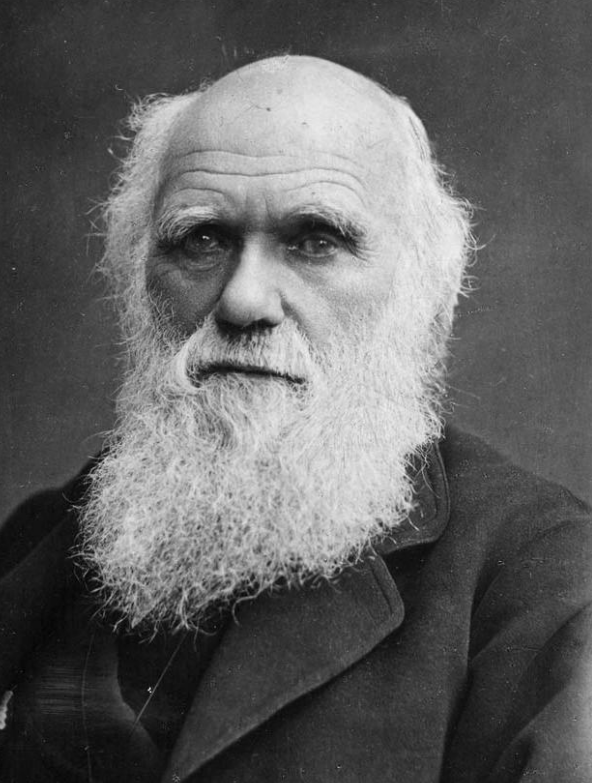
What did Charles darwin think about natural selection?
a)
organisms change their traits to the trait that will help them
b)
breeding 2 similar animals get the best traits
c)
breeding 2 animals with different traits give the best results
d)
organisms with better traits for their environment will survive and reproduce
20.
Which of the following describes what is meant by Natural Selection?
a)
An organism will survive no matter what its adaptations may be
b)
An organism with adaptations that do not allow it to reproduce as effectively as others will survive.
c)
An organism with adaptations that allow it to obtain resources and reproduce more effectively than others will survive.
d)
No organisms will survive.
21.
What are the evidences for Evolution?
a)
Fossil Records
b)
Embryology
c)
Similar body structure
d)
All the above
22.
Natural selection is when ____________ decides who survives and who doesn't
a)
nature
b)
humans
c)
animals
d)
years
23.
According to superposition, the fossils found in the lower layer of rocks are ________ than those found at higher layer
a)
older
b)
Same age
c)
Younger
d)
tougher
24.
The finches on the Galapagos island were similar in form except for variations of their beaks. Darwin observed that these variations were useful for:
a)
attracting a mate
b)
defending territory
c)
building nests
d)
gathering food
25.
Any change in heritable traits within a population over generations.
a)
Natural Selection
b)
Evolution
c)
Decent with Modification
d)
Adaptation
100 %

