
 Worksheets
Life Science Unit Test
Total questions: 72
Worksheet time: 39mins
Name
Class
Date
1.
Which is not true of the cell theory?
a)
All living organisms are composed of cells
b)
All cells have a nucleus, which acts like the brain of the cell
c)
All cells come from preexisting living cells
d)
The cell is the most basic part of a living organism
2.
Homeostasis in a cell is a way for a cell to stay
a)
balanced
b)
growing
c)
dividing
d)
protected
3.
Cell theory is important to what area of science?
a)
biology
b)
chemistry
c)
physics
d)
geology
4.
Where do cells come from?
a)
dead cells
b)
soil
c)
outer space
d)
other existing living cells
5.

What kind of cell is this?
a)
prokaryotic
b)
eukaryotic
6.

what kind of cell is this?
a)
prokaryotic
b)
eukaryotic
7.
What are the main differences between prokaryotic and eukaryotic cells?
a)
Prokaryotic and eukaryotic cells are the same
b)
Eukaryotic cells have a nucleoid and lack organelles
c)
Prokaryotic cells have a nucleoid and lack organelles
d)
Animal and plant cells are prokaryotic
8.
A single celled organism is ...
a)
a two celled living thing
b)
a one-celled living thing
c)
A thing that was once living
9.
What does the prefix multi in the workd multicellular tell you about the organism?
a)
It is composed of many cells
b)
It contains one cell
c)
It does not contain any cells
10.
What is true about asexual reproduction?
a)
Two parents pass on 100% of their DNA
b)
One parent passes on 50% of its DNA
c)
Two parents pass on 50% of their DNA
d)
One parent passes on 100% of its DNA
11.
The term heterotroph means...
a)
The organism cannot make its own food
b)
The organism makes its own food
c)
The organism does not need food
12.
Through what process do most autotrophs get their food?
a)
Wegmans
b)
Fruits/Veggies
c)
Photosynthesis
d)
Meat
13.
Slime and protozoe are considered
a)
eubacteria
b)
archaebacteria
c)
protista
d)
fungi
14.
Yeast, mushrooms, and ringworm are a type of
a)
Protista
b)
Plantae
c)
Animalia
d)
Fungi
15.
An example of a multicellular autotroph is
a)
A tree
b)
A dog
c)
Streptococcus
16.
An example of a multicellular, eukaryotic, heterotroph is...
a)
mold
b)
grass
c)
a human
17.
Which kingdoms are made up of prokaryotes?
a)
Eubacteria and Archaebacteria
b)
protists and fungi
c)
plantae and animalia
d)
prokaryotic and eukaryotic
18.
How many times larger is a eukaryotic cell than a prokaryotic cell?
a)
5x
b)
10x
c)
50x
d)
100x
19.
Which type of cell appeared first on earth?
a)
prokaryotic cells
b)
eukaryotic cells
c)
animal cells
d)
plant cells
20.
Prokaryotic cells do not have
a)
DNA
b)
Cell membrane
c)
Cytoplasm
d)
Nucleus
21.
Which type of cell has membrane bound organelles?
a)
prokaryotic cells
b)
bacteria cells
c)
eukaryotic cells
d)
e0coli bacterium
22.
Which of these structures do prokaryotes and eukaryotes share?
a)
nucleus
b)
cell wall
c)
organelles
d)
ribosomes
23.
prokaryotes were the first type of organism to evolve?
a)
true
b)
false
24.
Which kind of organisms contain prokaryotic cells?
a)
fungi
b)
animals
c)
plants
d)
bacteria
25.
the prefix eu and suffix kary indicate that eukaryotic cells have
a)
no nucleus
b)
a true nucleus
c)
before nucleus
d)
no kernel
26.
prokaryotic cells reproduce
a)
sexually
b)
asexually
27.
These cells have genetic material that is 50% from one parent and 50% from the other
a)
prokaryotic
b)
eukaryotic
28.
which of these organism are not prokaryotes?
a)
fungi
b)
e-coli
c)
streptococcus
d)
bacteria
29.
Which of these organisms are not eukaryotes?
a)
yeast
b)
algae
c)
fungi
d)
bacteria
30.
Which of these is not a eukaryotic kingdom?
a)
protists
b)
fungi
c)
bacteria
d)
animalia
31.
DNA is...
a)
The power that fuels the cell
b)
The genetic code of all organisms
c)
The brain of the cell
d)
The waste of the cell
32.
Genetic material is stored in the...
a)
nucleus
b)
mitochondria
c)
centrioles
d)
rough er
33.
Eukaryotic cells are
a)
plant
b)
animal
c)
both plant and animal
34.
the cell membrane is found in
a)
plant
b)
animal
c)
both plant and animal
35.
the cytoplasm is found in
a)
plant
b)
animal
c)
both plant and animal
36.
the mitochondrion is found in
a)
plant
b)
animal
c)
both plant and animal
37.
the vacuole is found in
a)
plant
b)
animal
c)
both plant and animal
38.
the chloroplast is found in
a)
plant
b)
animal
c)
both plant and animal
39.
the nucleus is found in
a)
plant
b)
animal
c)
both plant and animal
40.
the cell wall is found in
a)
plant
b)
animal
c)
both plant and animal
41.
Which of the following is not a difference between plant and animal cells
a)
cell wall
b)
vacuole size
c)
nucleus
d)
chloroplast
42.
This organelle takes food and turns it into ENERGY for plant and animal cells.
a)
Chloroplast
b)
Mitochondria
c)
Lysosome
d)
Ribosome
43.
The site of photosynthesis
a)
ribosome
b)
mitochondria
c)
chloroplast
d)
nucleus
44.
The ___________ is the basic unit of life
a)
organ
b)
cell
c)
atom
d)
tissue
45.
When many organ systems work together it can form...
a)
organ
b)
cells
c)
organ system
d)
organism
46.

This is a example of........
a)
organ system
b)
cells
c)
organ
d)
tissue
47.

This is a example of ........
a)
cell
b)
organ system
c)
organ
d)
tissue
48.

Directs all cell activities through the DNA located there.
a)
Lysosomes
b)
Nucleus
c)
ribosomes
d)
Mitochondria
49.
What is found in both plant and animal cells but is much larger in plant cells?
a)
Nucleus
b)
Mitochondria
c)
Chloroplast
d)
Vacuole
50.

I am the outer most layer of an animal cell. What am I?
a)
cell wall
b)
nucleus
c)
cell membrane
d)
cell skin
51.
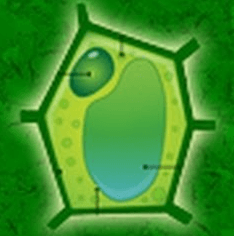
A rigid layer that lies outside the cell's membrane is...
a)
Cytoskeleton
b)
Cilia
c)
Cell Wall
d)
Flagella
52.
What organelle is called the "powerhouse" of a cell?
a)
Endoplasmic Reticulum
b)
Nucleus
c)
Mitochondria
d)
Nucleolus
53.
What is the gel-like substance inside of cells called?
a)
photoplasm
b)
photosynthesis
c)
cytoskeleton
d)
cytoplasm
54.
Main producer of ATP in all eukaryotes
a)
chloroplast
b)
mitochondria
c)
lysosome
d)
smooth er
55.

Chloroplasts carry out...
a)
Phagocytocis
b)
Phylocytosis
c)
Photosynthesis
d)
Respiration
56.
Stores food and water for the cell.
a)
Cytoplasm
b)
Cell Wall
c)
Vacuole
d)
Nucleus
57.
Controls what enters and leaves the cell
a)
Mitochondria
b)
Cell Membrane
c)
Cell Wall
d)
Nucleus
58.

What would happen to the plant cell without the chloroplasts?
a)
There wouldn't be an organelle that performs photosynthesis
b)
There wouldn't be an organelle that serves as the resevoir for water and waste
c)
There wouldn't be an organelle that regulates what comes in and out of the cell
d)
They wouldn't be an organelle that makes necesary proteins
59.

What do all of these organisms have in common?
a)
They all have uniform offspring
b)
They are all made of cells
c)
They possess the same features
d)
They have the same internal and external structures
60.

According to cell theory, where did this cell come from?
a)
another living cell
b)
energy from sun
c)
a multicellular organism
d)
the nonliving environment
61.

Robert Hooke, Anton van Leeuwenhoek, Theodor Schwann, Rudolf Virchow, and Matthias Schliden were all responsible for what theory?
a)
The Theory of Gravity
b)
The Theory of Relativity
c)
The Cell Theory
d)
The Theory of Continental Drift
62.
What tool do you use to view the cells?
a)
metric ruler
b)
centrifuge
c)
microscope
d)
pipette
63.
Which of the following is NOT a cell theory.
a)
All non-living things are made of cells
b)
All cells come from pre-existing cells
c)
Cells are the basic unit of structure and function of all living things
64.
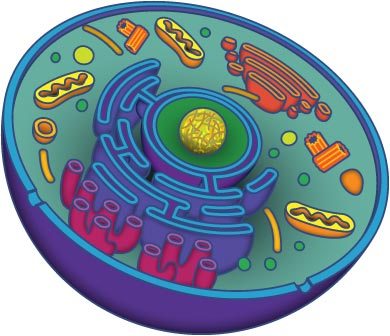
All living things are made up of...
a)
cells
b)
cell tissues
c)
organ
d)
organ systems
65.
Rocks are not living because
a)
they never move
b)
they aren't needed for humans
c)
they are not made of cells
d)
they don't break down
66.
An organism made of one cell is called
a)
unicellular
b)
multicellular
67.
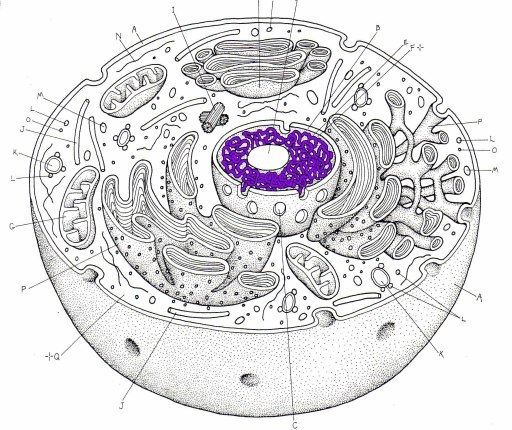
What kind of cell is this?
a)
Eukaryotic
b)
Prokaryotic
68.
Cells can only be seen with the help of a...
a)
hand lens
b)
magnifying glass
c)
3D glasses
d)
microscope
69.
Bacteria is what kind of cell?
a)
Eukaryotic
b)
Prokaryotic
70.
Plants and animal cells are examples of ___ cells
a)
prokaryotic cells
b)
eukaryotic cells
71.
Prokaryotes are unlike all other organisms in that their cells
a)
do not have a nucleus
b)
have organelles
c)
have cell walls
72.
All bacteria are harmful to humans
a)
True
b)
False
100 %

