
 Worksheets
Sci 8 Unit C REVIEW
Total questions: 179
Worksheet time: 2hrs 14mins

The inside of a spoon is the same as: (a)
This device will magnify objects:
convex lens
concave lens
prism
convex mirror
Which type of materials absorb or reflect all the light?
translucent
transparent
opaque
refracted
Which type of material transmits the most light?
Translucent
Transparent
Opaque
Mirror
Mike wants to put a window in his bathroom. Which type of material should he pick to allow light, but keep his privacy?
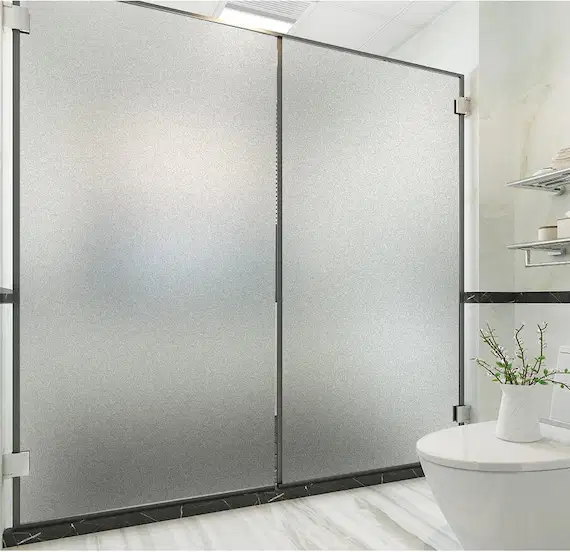
Frosted glass and wax paper are examples of materials that are ...
Transparent
Translucent
Clear
Opaque
A material that reflects or absorbs all light is...

What happens when parallel rays of light hit a smooth, shiny surface?
Diffuse Reflection
Diffraction
Absorption
Regular Reflection
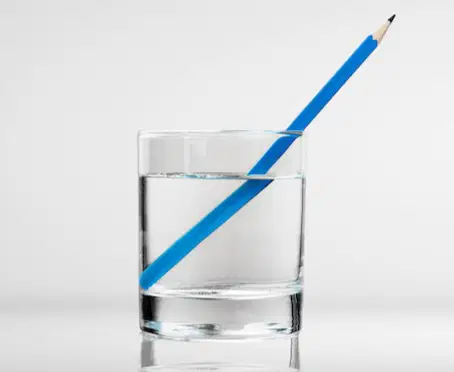
The bending of light rays as they enter a new optical medium is called...
Refraction
Absorption
Diffuse Reflection
Regular Reflection
What happens when light passes from air into water?
The light speeds up.
The light continues at the same speed.
The light slows down.
The light is absorbed.
A curved piece of glass or plastic that is used to refract light is called...
MIrror
Lens
Interface
Fibre optics
What instrument uses lenses or mirrors to collect and focus light from distant objects?
Microscope
Night Vision Scope
Telescope
Magnifying Glass
What occurs when parallel rays of light hit a rough or bumpy opaque surface?
Regular Reflection
Diffuse Reflection
Refraction
Transmission
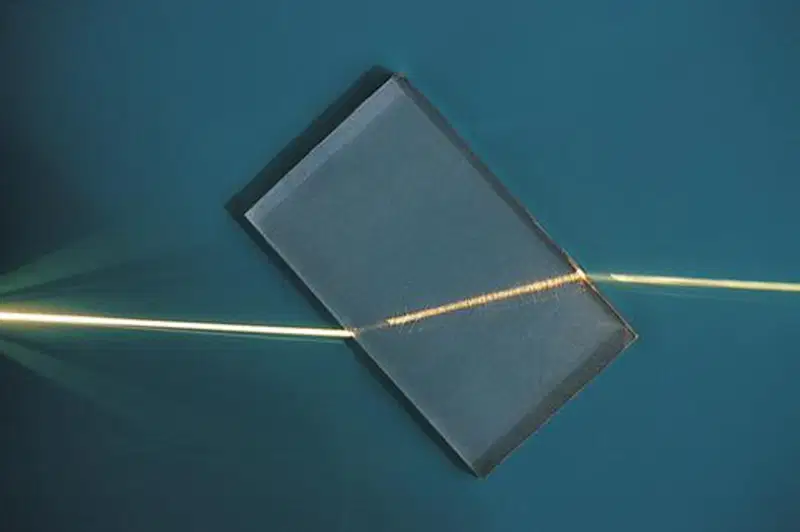
Light changing direction as it passes through one medium to another is...
Refraction
Reflection
Transmission
Interference


Which type of mirror is this?
Convex Mirror
Concave Mirror
Plane Mirror
Flat Mirror


A type of bending of light
A type of reflection of light

Look at the diagram.
Which is the label for the angle of refraction?


Which type of mirror is in the diagram?
What is the name of the perpendicular line that we use to measure angles in ray diagrams?
Incident ray
Reflected ray
Normal line
Interface
Angle of reflection = 30o
Angle of reflection = 60o
Angle of reflection = 120o
Angle of reflection = 0o
A concave lens creates a real image.
True
False

Convex mirrors cause light to spread out.
True
False
What is Farsightedness?
difficulty seeing objects that are close
difficulty seeing objects that are far away

Look at the diagram.
Which statement is true?
incidence angle is 10o
incidence angle is 80o
reflection angle is 10o
reflection angle is 90o

A surface that curves outward and causes light to spread out is a

An example of a convex mirror:
Cosmetic mirror
Passenger-side mirror on a car
Flashlight
Car headlights
Which is a similarity between a camera and the human eye
Both use a lens to focus the image.
Both use photosensitive areas to detect images.
Both can vary the amount of light entering through an opening.
All of these are correct
Which is the function of the Lens in an eye?

What is letter E in the picture?
Cornea
Lens
Iris
Optic nerve
The layer of photoreceptor cells that lines the back of the eye:
Iris
Lens
Retina
Pupil
Photoreceptors that only detect light are called...
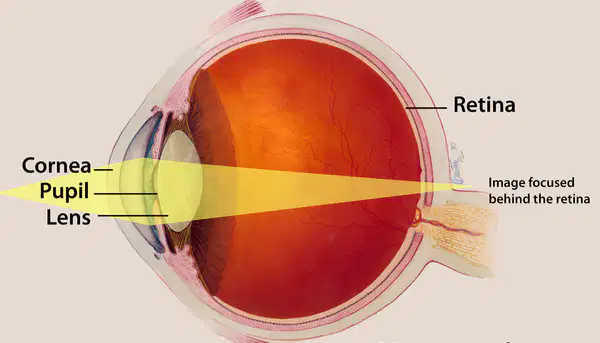
Light entering the eye is focused behind the retina instead of directly on it, and objects close to the eye look blurry
Near Sighted
Far Sighted
The front of the eye that is curved:
cone
cornea
iris
retina
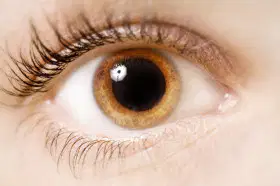
In low light, your pupil will be
The back of the eye that does not have photoreceptors:
pupil
optic nerve
cornea
iris


What type of telescope is pictured in this diagram?
reflector
refractor
binocular
Galileo

What type of telescope is displayed in this diagram?
Reflector
Refractor
Binocular
Mirrored
Which type of telescope uses a lens to collect light?
Refractor
Reflector
Microscopic
Which telescope collects light with a mirror?
Reflector
Refractor
Binocular
Why does your pupil dilate when you enter a dark room?


What type of lens is in a 'camera' eye?


Light only speeds up
Light only slows down
Light speed stays the same
Light can either slow down or speed up, depending on the density of the optical medium
This is a picture of
reflection
absorption
refraction
diffusion
In bright light, the pupil will
What is the function of cone cells?
to detect colours in dim light.
to detect secondary colours in dim light.
to detect colours in bright light.

Look at the diagram.
What is the label for part c of the eye diagram?
Pupil
Eyelid
Cornea
Lens
The speed of light is approximately
30,000 km/s
300,000 km/s
30,000 mi/ s
300,000 m/s
Which instrument only uses lenses to focus light?
Microscope
Telescope
The scientist that correctly discovered that white light was made up of all the colours of light was...
Archimedes
Newton
Euclid
al-Haytham
The scientist that tried to use reflected light as a weapon was ...
Archimedes
Newton
Euclid
Pythagoras
Which of the following is made of 2 telescopes joined together?
microscopes
telescopes
binoculars
prisms

This is a diagram of a
microscope
binocular
telescope
pinhole camera
Telescopes ______________ & ___________________ light.
magnify & collect
decrease & collect
magnify & diminish
reduce & disperse
Any device that uses light to allow humans to see an image is called:
a particle device
an optical device
a mechanical device
thermal device
Mixing red and blue light creates
magenta light
cyan light
white light
yellow light

When you look in the convex part of the spoon, your image is
inverted
upright
Why can you see most objects?
Light reflects off objects
Light is absorbed by objects
Light is bent by objects
Light is refracted by objects
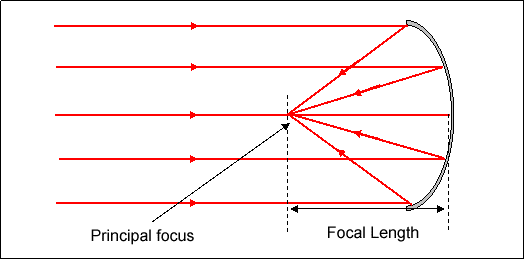
This is an example of a __________
Concave mirror
Convex lens
Plane mirror
Concave lens
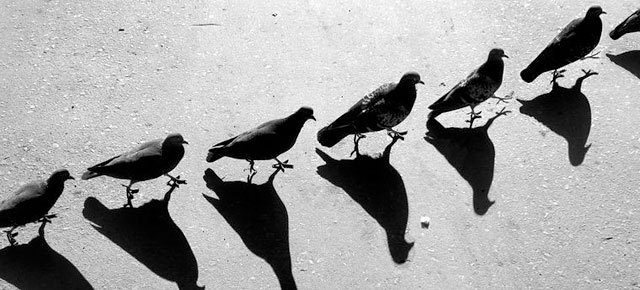
When no light rays transmit through an object ...
it creates a shadow
it becomes luminous
it becomes intense
it is translucent
What does a Convex Lens do when the object is close to the lens?
Make things appear bigger
Make things appear smaller
Make things closer
Make things move farther away

What kind of lens is shown?
Concave
Convex
Concord
Plane

Which type of mirror magnifies a close up image, like a cosmetic mirror.
Concave
Convex
Plane
Concave lenses __________ light rays.
reflect
converge
diverge
converge & diverge

An optical medium ...
transmits light.
reflects all light rays
is always opaque
is always very dense

This piece of paper is
translucent
transparent
opaque
Light has the lowest velocity in which medium?
flint glass n=1.70
barium glass n=1.60
crown glass n=1.523
water n=1.33
diamond n=2.45
diamond
water
flint glass
barium glass

As the distance from a light source increases, the intensity of light....
Increases
Decreases
Gets brighter
Gets more luminous
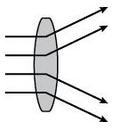
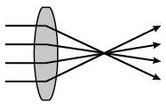
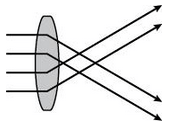
Which lens represents the path light takes through a diverging lens?


Which figure represents the path light takes through a converging lens?
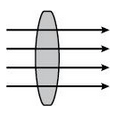

What type of lens creates the image seen in the eyeglasses?
convex
concave
reflection
plane
Which optical device bends light to a focal point?
convex lens
concave lens
plane mirror
convex mirror
Which of the following are uses for convex lenses? (Choose all that are correct)
Camera lens
Telescope lens
Microscope lens
Magnifying glass
Which of the following are uses for concave mirrors? (Choose all that are correct)
Cosmetic mirror
Flashlight
Car headlights
Telescope

The inverted image created in the picture is called the
(a)
The image created in the picture uses a (a) lens to produce the image.

What type of reflection is shown in this diagram?
Regular Reflection
Diffuse Reflection
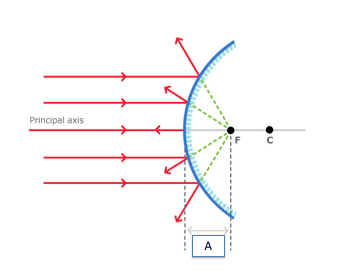
In the image, all the rays meet at F, What is F?
(a)
Real images
are always inverted
can be larger or smaller than the object
can be projected onto a screen
all the above
A dentist uses a small dental device to help magnify teeth in your mouth. What type of device is this?
a convex mirror
a concave mirror
a convex lens
a concave lens
difficulty seeing things that are close
difficulty seeing things that are far away

The image is an example of a (a) . It happens because cool and hot air have different (b)
As light passes from air into water it ________________________.
speeds up
continues at the same speed
slows down
forms a mirage

Which lens can produce a real image?
a
b

Which lens always produces an image that is upright?
a
b
to spread apart
to come together
What type of lens are in 'camera eyes'?
Concave
Convex
The iris is the coloured part of the eye
true
false
What is the function of the sensor in a digital camera?
stops the light hitting it.
detects light falling on it.
adjusts the amount of light that enters into camera.
what is the function of iris in the eye?
it detect colours.
it focuses the light.
it controls the size of pupil.
The image formed on the retina in a 'camera eye' is _____________
upright
inverted
Which part of the camera focuses light?
sensor
shutter
lens
The retina of the human eye has how many different types of specialized photoreceptor cells?
three
four
two
In humans, there are ___________ types of cone cells.
three
five
two
Shadows have sharp outlines because light travels in (a) lines
Select all of the objects that use a lens to focus.
pinhole camera
phone camera
your eye
microscope
A digital camera detects light using...
a retina
a lens
a flim
a CCD sensor

This diagram is showing that the leaf is _____________ .
Luminous
Transparent
Translucent
Opaque

The correct reflected ray is shown by letter ....
A
B
C
D
True or false?
Light can transmit through a translucent object.
true
false

Which object shows regular reflection?
dry asphalt road
wet asphalt road
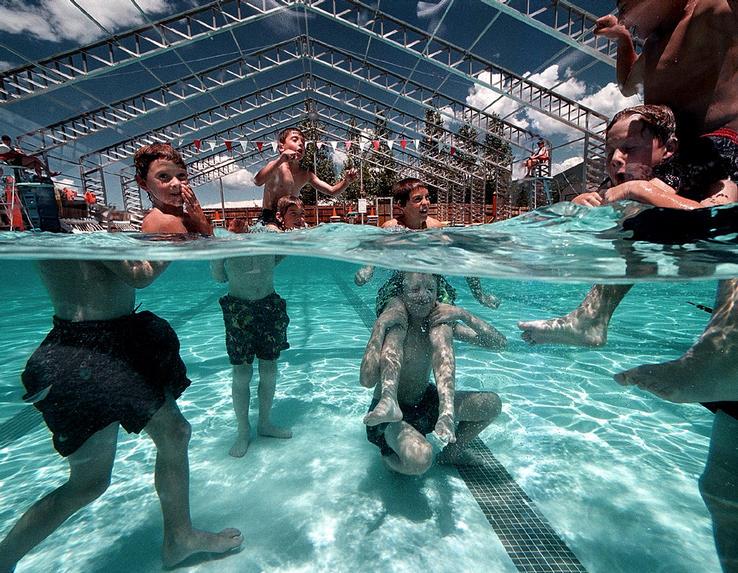

The opening through which light enters the eye
lens
cornea
pupil
receptor cell

Which animal does this eye belong to?
fly
fish
snake
cow
Eyes that are large, forward-facing and allow for excellent depth-perception will generally belong to which type of animal?
(a)
Predator
Prey
Which of the following animals has the most different types of cone cells?
human
bird
fish
octopus
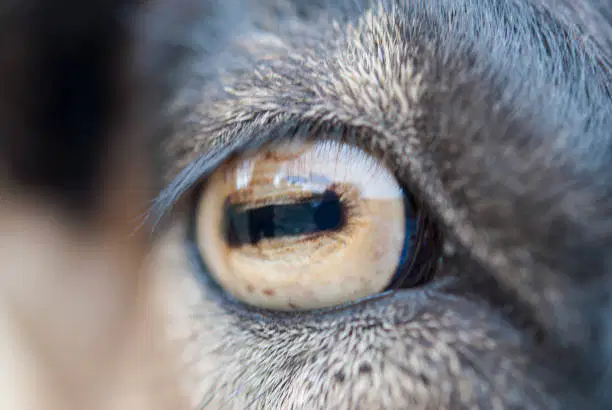
Eyes that have horizontal pupils will generally belong to which type of animal?
Predator
Prey

Eyes that have a round lens would belong to which type of animal?
human
goat
eagle
fish


The angle of reflection is
90 degrees
55 degrees
45 degrees
135 degrees
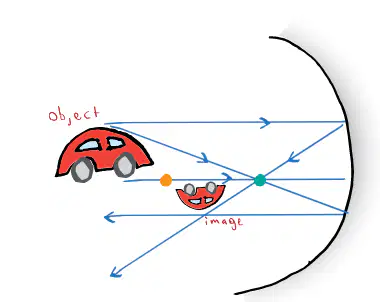
When using a concave mirror, where must the object be placed so that the image is inverted?
far from the mirror
very close to the mirror
between the focal point and the mirror
behind the mirror
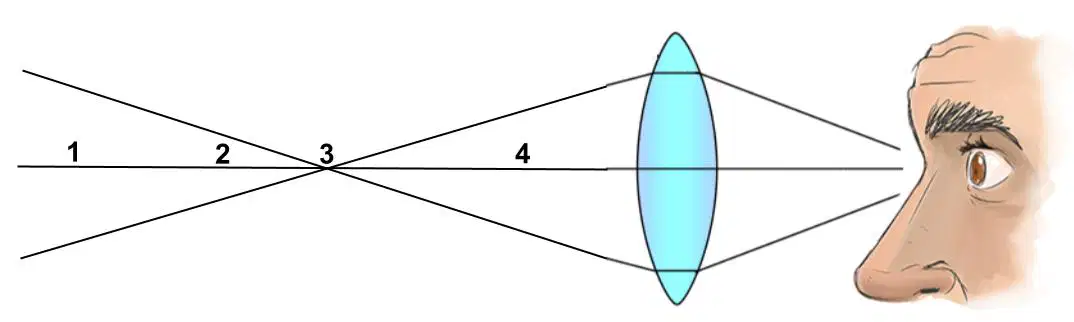
When looking through a magnifying glass, where must the object be placed so that the image is upright and enlarged?
1
2
3
4
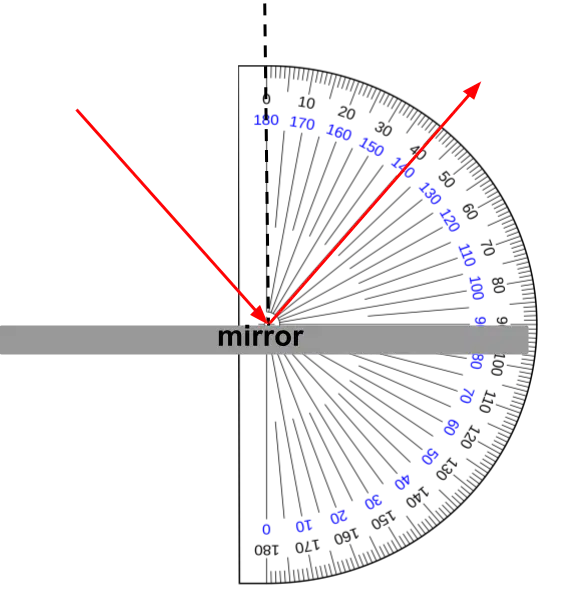
What is the angle of reflection in the ray diagram?
0 degree
45 degrees
90 degrees
140 degrees
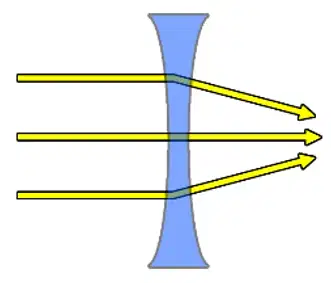
Is this ray diagram correct?
yes
no

Which of the following will refract light the most?
vacuum
water
glass

Angle 1 is called the angle of (a) .
The focal point lies behind the retina.
Farsightedness
Nearsightedness
Normal vision
The image focuses in front of the retina
Farsightedness
Nearsightedness
Normal vision
When looking at a far away object, ciliary muscles (a) and the lens becomes (b)
Which cells distinguish between black, white and shades of gray?
Cones
Rods
Optic Nerves
Iris
What colors of light do the cones detect?
Magenta, cyan and yellow
Red, yellow, and blue
Red, green and blue
Red, yellow and green
If a real image forms on the retina why don't we see the world upside down?
We do see the world upside down.
A virtual image forms on the retina not a real image.
Our brain automatically flips the image so we see the world right side up.
No one knows
Which part of the eye corresponds to the aperture of a camera?
iris
retina
lens
pupil
Which part of the eye corresponds to the diaphragm of a camera?
iris
retina
lens
pupil
Which figure represents the path light takes through a converging lens?
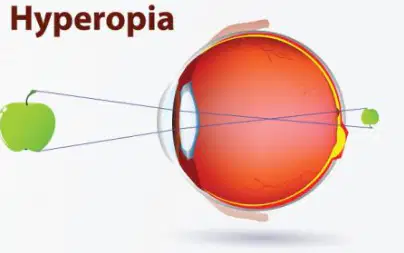
The eye in the diagram is (a)
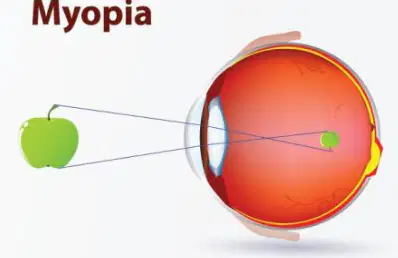
The eye in the diagram is (a)

