
 Worksheets
Cells PASS Review
Total questions: 33
Worksheet time: 45mins
Name
Class
Date
1.
This organelle takes food and turns it into ENERGY for plant and animal cells.
a)
Chloroplast
b)
Mitochondria
c)
Lysosome
d)
Ribosome
2.
The site of photosynthesis
a)
ribosome
b)
mitochondria
c)
chloroplast
d)
nucleus
3.
The ___________ is the basic unit of life
a)
organ
b)
cell
c)
atom
d)
tissue
4.
Which organelle is only found in a plant cell?
a)
nucleus
b)
chloroplast
c)
mitochondria
d)
cell membrane
5.

Directs all cell activities through the DNA located there.
a)
Lysosomes
b)
Nucleus
c)
ribosomes
d)
Mitochondria
6.
You might think of me as the trash collector, but recycler is maybe more accurate. What am I?
a)
mitochondria
b)
lysosome
c)
vacuole
d)
ribosome
7.
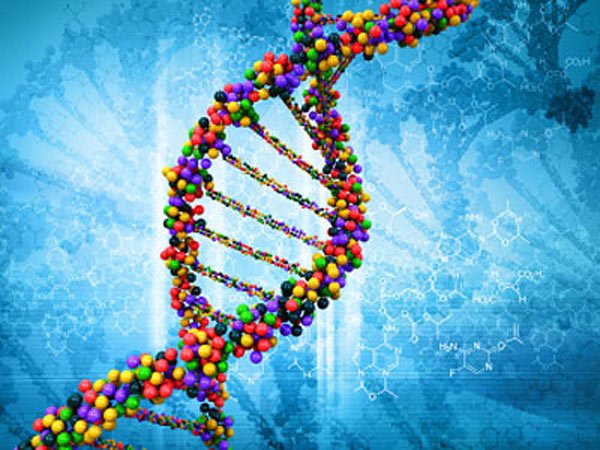
What is the name of the genetic material that is inside the nucleus?
a)
ER
b)
ATP
c)
YOLO
d)
DNA
8.

Which part of the cell is often called "the brain of the cell"?
a)
nuclear membrane
b)
endoplasmic reticulum
c)
nucleus
d)
mitochondria
9.
What is found in both plant and animal cells but is much larger in plant cells?
a)
Nucleus
b)
Mitochondria
c)
Chloroplast
d)
Vacuole
10.

I am the outer most layer of an animal cell. What am I?
a)
cell wall
b)
nucleus
c)
cell membrane
d)
cell skin
11.
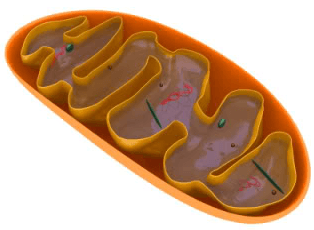
What are tiny organelles that convert glucose into ATP?
a)
Ribosomes
b)
Vesicles
c)
Cytoskeleton
d)
Mitochondria
12.
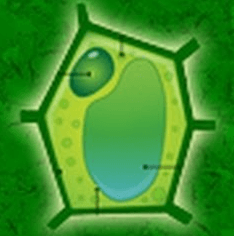
A rigid layer that lies outside the cell's membrane is...
a)
Cytoskeleton
b)
Cilia
c)
Cell Wall
d)
Flagella
13.
What organelle is called the "powerhouse" of a cell?
a)
Endoplasmic Reticulum
b)
Nucleus
c)
Mitochondria
d)
Nucleolus
14.
What organelle helps with cell digestion?
a)
Lysosomes
b)
Ribosomes
c)
Golgi Complex
d)
ER
15.
What is the gel-like substance inside of cells called?
a)
photoplasm
b)
photosynthesis
c)
cytoskeleton
d)
cytoplasm
16.

What do all of these organisms have in common?
a)
They all have uniform offspring
b)
They are all made of cells
c)
They possess the same features
d)
They have the same internal and external structures
17.
What do all of these organisms have in common?
a)
They all have uniform offspring
b)
They are all made of cells
c)
They possess the same features
d)
They have the same internal and external structures
18.
Which of the following is NOT a cell theory.
a)
All non-living things are made of cells
b)
All cells come from pre-existing cells
c)
Cells are the basic unit of structure and function of all living things
19.
Rocks are not living because
a)
they never move
b)
they aren't needed for humans
c)
they are not made of cells
d)
they don't break down
20.
An organism made of one cell is called
a)
unicellular
b)
multicellular
21.
Osmosis is the diffusion of _____ across a selectively permeable membrane.
a)
food
b)
air
c)
water
d)
oxygen
22.
What does selectively-permeable mean?
a)
Only certain substances are able to pass through
b)
Nothing is able to pass through
c)
Everything is able to pass through
d)
Substances can pass through only one side
23.

The picture shown here is an example of _________________.
a)
osmosis
b)
isotonic
c)
diffusion
d)
active transport
24.

The picture shown here is an example of _________________.
a)
isotonic
b)
diffusion
c)
osmosis
d)
active transport
25.
How do plants get energy?
a)
They absorb energy straight from the sun
b)
They use sun energy to make their own food
c)
They consume other organisms for energy
d)
They absorb energy from the soil
26.
In which organelle does photosynthesis occur?
a)
chloroplast
b)
mitochondrion
c)
cell wall
d)
cell membrane
27.
In which organelle does cellular respiration occur?
a)
chloroplast
b)
mitochondrion
c)
cell wall
d)
cell membrane
28.
What are the chemical reactants of photosynthesis?
a)
carbon dioxide and water
b)
glucose and oxygen
c)
sunlight
d)
ATP
29.
What are the chemical reactants of cellular respiration?
a)
carbon dioxide and water
b)
glucose and oxygen
c)
sunlight
d)
ATP
30.
Which of the following is not a characteristic of a Prokaryotic cell?
a)
unicellular
b)
floating DNA
c)
very small
d)
complex
31.
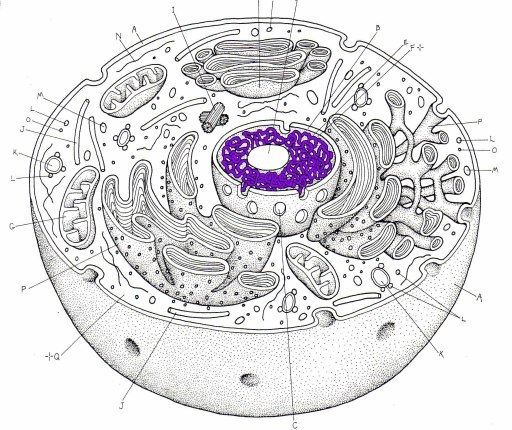
What kind of cell is this?
a)
Eukaryotic
b)
Prokaryotic
32.
What type of cell has a nucleus?
a)
eukaryotic
b)
prokaryotic
33.
Plants and animal cells are examples of ___ cells
a)
prokaryotic cells
b)
eukaryotic cells
100 %

