
NEW
Font size
S
M
L
XL
 Worksheets
NCFE Fronts, Storms and Predicting Weather
Total questions: 20
Worksheet time: 17mins
Name
Class
Date
1.

What conditions can lead to the formation of a hurricane?
a)
low-pressure over warm tropical ocean
b)
low-pressure system over artic tundra
c)
high-pressure over warm tropical ocean
d)
high-pressure system over hot, dry land
2.

When an air mass moves into a new location it brings
a)
changes in temperature and altitude.
b)
changes in temperature and humidity
c)
A changes in altitude and air pressure.
d)
A changes in humidity and energy.
3.

Which of the following is a violently rotating column of air in contact with the ground?
a)
hurricane
b)
tornado
c)
thunderstorm
d)
blizzard
4.

Which weather system is characterized by counter-clockwise movement of air and generally poor weather?
a)
cold front
b)
low pressure
c)
high pressure
d)
warm front
5.
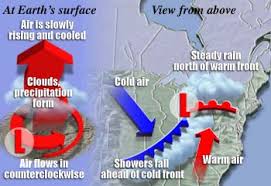
Which system results in rainy or stormy weather?
a)
high pressure
b)
low pressure
c)
hurricane
d)
weather system
6.

The uneven heating of the surface results in
a)
in seasons
b)
ocean currents
c)
differences in weather
d)
differences in organisms
7.
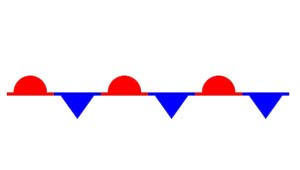
LABEL THE FOLLOWING FRONTS AND/OR WEATHER MAP SYMBOLS.
a)
warm front
b)
cold front
c)
stationary front
d)
occluded front
8.

Which BEST describes a front?
a)
a large mass of moving air
b)
a boundary between 2 air masses
c)
a high pressure system
d)
a low pressure system
9.

what type of cloud is shown?
a)
cumulus
b)
cirrus
c)
stratus
10.

what type of cloud is shown?
a)
cumulus
b)
cirrus
c)
stratus
11.

what type of cloud is shown?
a)
cumulus
b)
cirrus
c)
stratus
12.

LABEL THE FOLLOWING FRONTS AND/OR WEATHER MAP SYMBOLS.
a)
Warm Front
b)
Cold Front
c)
Stationary Front
d)
Occluded Front
13.

This is the symbol for which type of front?
a)
cold front
b)
warm front
c)
stationary front
d)
occluded front
14.

This is the symbol for which type of front?
a)
cold front
b)
warm front
c)
occluded front
d)
stationary front
15.
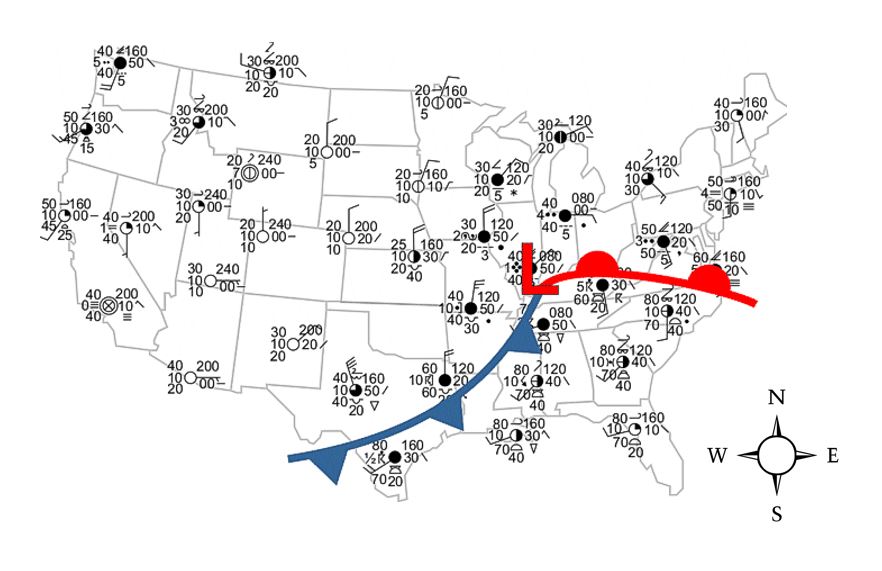
What direction is the cold front moving on the map?
a)
Southwest
b)
Northwest
c)
Southeast
d)
Northeast
16.
What characteristics are used to classify air masses?
a)
temperature and humidity
b)
pressure and temperature
c)
latitude and longitude
d)
wind speed and location
17.
What type of weather would a continental tropical air mass bring?
a)
dry and cold weather
b)
wet and cold weather
c)
dry and warm weather
d)
wet and warm weather
18.
Where would you find a tropical maritime air mass?
a)
over the ocean, near the equator
b)
over the ocean, near the poles
c)
over a continent, near the equator
d)
over a continent, near the poles
19.
The boundary between two air masses is called a/an -
a)
flood
b)
front
c)
climate
d)
storm
20.
A wet, cold air mass would be -
a)
maritime tropical
b)
maritime polar
c)
continental tropical
d)
continental polar
Reset

