
 Worksheets
Ch 9 Lesson 2: Greek City States
Total questions: 50
Worksheet time: 38mins
Name
Class
Date
1.
Athens' main rival was the city-state of
a)
Anatolia
b)
Marathon
c)
Sparta
d)
Thermopylae
2.
The Spartans conquered a neighboring area and forced its residents to become
a)
colonists
b)
slaves
c)
soldiers
d)
tyrants
3.
In Athens, education was designed to prepare boys to become good
a)
citizens
b)
sailors
c)
soldiers
d)
workers
4.
Women in Sparta were expected to be
a)
Beautiful
b)
Intelligent
c)
Quiet and obedient
d)
Emotionally and Physically Tough
5.
City-state of ancient Greece, NOTED FOR ITS DEMOCRATIC FORM OF GOVERNMENT
a)
Marathon
b)
Athens
c)
Sparta
d)
Crete
6.
City-state of Greece, NOTED FOR ITS MILITARISM AND EMPHASIS ON BEING PHYSICALLY STRONG
a)
Athens
b)
Sparta
c)
Marathon
d)
Crete
7.
Which city-state started training soldiers at age 7?
a)
Sparta
b)
Athens
c)
Both
d)
Neither
8.
Which city-state had women who had rights?
a)
Sparta
b)
Athens
c)
Both
d)
Neither
9.
Is this statement about Sparta, Athens or both of them: There are more slaves than citizens.
a)
Sparta
b)
Athens
c)
Both
d)
Neither
10.
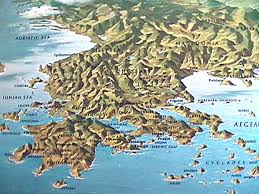
Why was communication difficult between communities in Ancient Greece?
a)
They did not have telephones
b)
Mountains and Water separated them
c)
communication was easy
d)
most people had horses
11.
Is this statement about Sparta, Athens or both of them: Participated in the Olympics.
a)
Sparta
b)
Athens
c)
Both
d)
Neither
12.
Is this statement about Sparta, Athens or both of them: The military controls the city state
a)
Sparta
b)
Athens
c)
Both
d)
Neither
13.
Is this statement about Sparta, Athens or both of them: Women could own land and run a business.
a)
Sparta
b)
Athens
c)
Both
d)
Neither
14.
Women did not play as big of a role in this city-state as they did the other.
a)
Sparta
b)
Athens
c)
Neither
d)
Both
15.
Which of the following is evidence that Spartan women had more rights than Athenian women?
a)
Spartan women could own their own property.
b)
Spartan women had the most influence in the home.
c)
Spartan women could speak at the Assembly.
d)
Spartan women served in the army until they were 60.
16.
In what ways were Greek gods and goddesses similar to humans?
a)
Greek gods and goddesses could die.
b)
Greek gods and goddesses lived in human cities.
c)
Greek gods and goddesses had their own religion.
d)
Greek gods and goddesses had human emotions.
17.
A myth is...
a)
a traditional story that explains the practices or beliefs of a people, or something in the natural world
b)
a government by the people
c)
an absolute ruler unrestrained by law
d)
a story meant to teach a lesson
18.
A government ruled by a king
a)
Oligarchy
b)
Monarchy
c)
Democracy
d)
Tyranny
19.
A government in which a small group has control
a)
Oligarchy (aristocracy)
b)
Monarchy
c)
Democracy
d)
Tyranny
20.
A government ruled by the people
a)
Oligarchy
b)
Democracy
c)
Monarchy
d)
Tyranny
21.
How were laws developed in a monarchy?
a)
The Assembly voted on them.
b)
The king made them.
c)
The aristocrats made them.
d)
There were no laws in a monarchy
22.
Which of the following best describes democracy in Athens?
a)
Citizens elected representatives to make decisions.
b)
Only free men could speak in the Assembly.
c)
Widows replaced their dead husbands in the Assembly.
d)
Citizens supported oligarchs, who made decisions.
23.
A(n) ____ is a group of people in an ancient Greek democracy with the power to pass laws.
a)
oligarch
b)
assembly
c)
monarch
d)
tyrant
24.
A(n) ____ is a single ruler, such as a king, queen, or emperor, who holds all the power in a country or empire.
a)
monarch (king/queen)
b)
citizen
c)
tyrant
d)
oligarch
25.
A(n) ____ is one of several people who rule a country or empire together, sharing the power.
a)
assembly
b)
oligarch (aristocrat)
c)
citizen
d)
tyrnat
26.
A(n) _____ is a member of a democracy, who has certain rights and responsibilities.
a)
tyrant
b)
assembly
c)
arisocrat
d)
citizen
27.
What type of government does the following list describe?
-There is one ruler.
-The ruler usually inherited power -The ruler passed on leadership to his son.
-There is one ruler.
-The ruler usually inherited power -The ruler passed on leadership to his son.
a)
Democracy
b)
Monarchy
c)
Oligarchy
d)
Tyranny
28.
A(n) _____ is a member of the most powerful class in ancient Greek society.
a)
oligarch
b)
aristocrat
c)
monarch
d)
citizen
29.

What form of government do these men represent?
a)
democracy
b)
monarchy
c)
oligarchy (aristocrascy)
d)
tyranny
30.
In Athens, only ____________ were considered citizens
a)
slaves and foreigners
b)
free men
c)
free men, born in Athens
d)
free men and women born in Athens
31.
The United States has a ____________ democracy (not on quiz, but will help for later)
a)
direct
b)
representative
c)
oppositional
d)
authoritarian
32.
Where was the Trojan War fought? (Hint**this place was invaded)
a)
Greece
b)
Mt. Olympus
c)
Delos
d)
Troy
33.
What was the cause of the Trojan War?
a)
The War between the Gods
b)
Duecalion's Flood
c)
The Judgement of Paris
d)
Pandora's Box
34.
Why was the Trojan War fought?
a)
Patroclus hated Menelaus
b)
Troy would not return Helen to Menelaus
c)
Odysseus challenged King Priam to a duel
d)
Achilles accidentally murdered a Trojan princess
35.
In what way did a boy’s life in Athens differ from a boy’s life in Sparta?
a)
Athenian boys went to school; Spartan boys served in the military
b)
Athenian boys studied combat; Spartan boys played sports.
c)
Athenian boys lived in barracks; Spartan boys lived at home.
d)
Athenian boys became citizens at 30; Spartan boys became citizens at 18.
36.
The Olympic games were created to honor Zeus
a)
True
b)
False
37.
Myths were used to explain seasonal changes
a)
True
b)
False
38.
The Greeks were polytheistic
a)
True
b)
False
39.
Who is the KING of the Greek gods?
a)
Zeus
b)
Hera
c)
Dionysus
d)
Apollo
40.
A Myth is:
a)
a traditonal story that explains the actons oF gods or heroes orthe origins of the elements of nature
b)
Imaginative language that is not meant to beinterpreted literally
c)
²he central idea, message, or purpose of a literary work.
41.

Which city-states was located on the Greek mainland?
a)
Sidon
b)
Giza
c)
Athens
d)
Sparta
42.

Which city-state was located on the Peloponnesian Peninsula in more Southern Greece?
a)
Sparta
b)
Athens
c)
Babylon
d)
Tyre
43.
What was the focus of society in the city-state Athens?
a)
beauty
b)
warfare
c)
education
d)
monotheism
44.
Use the bullets below:
-Mt. Olympus
-Pantheon of gods (the Olympians)
-our lives and events are controlled
-stories about heroes, creatures, and quests
Which religion is represented above?
-Mt. Olympus
-Pantheon of gods (the Olympians)
-our lives and events are controlled
-stories about heroes, creatures, and quests
Which religion is represented above?
a)
Judaism
b)
Roman Mythology
c)
Confucianism
d)
Greek Mythology
45.
The Greeks Mythology had how many chief gods?
a)
6
b)
10
c)
12
d)
24
46.

The Ancient Greeks were . . .
a)
buddhism
b)
christian
c)
polytheistic
d)
monotheistic
47.
Under the Greek definition of "citizen" who qualified for citizenship?
a)
everyone who lived in Greece
b)
free, native-born men who owned land
c)
wealthy women who owned land
d)
foreign-born men with land
48.

Democracy means ________?
(fill in the blank)
(fill in the blank)
a)
demonstration of government
b)
government with a king
c)
government run by a few wealthy leaders
d)
government by the people
49.
Which two geographical features made Greece isolated?
a)
deserts and mountains
b)
rivers and volcanos
c)
mountains and rivers
d)
mountains and seas
50.
Who won the Trojan War?
a)
Greece
b)
Troy
c)
Sparta
d)
Athens
100 %

