
 Worksheets
Ecosystems: Energy Flow
Total questions: 36
Worksheet time: 27mins
Name
Class
Date
1.

Which best describes what a food chain shows you?
a)
Energy flow through an ecosystem
b)
Food flowing through an ecosystem
c)
Consumers going into other consumers
d)
Who eats who
2.

What are plants called in a food chain?
a)
Producers
b)
Consumers
c)
Decomposers
d)
Scavengers
3.

What are animals called in a food chain?
a)
Producers
b)
Consumers
c)
Decomposers
d)
Plants
4.

What are the organisms that break down dead organisms?
a)
Producers
b)
Consumers
c)
Decomposers
d)
Organisms
5.

Where does the energy start in this food chain?
a)
Plant
b)
Sun
c)
Deer
d)
Wolf
6.

What is the role of a producer?
a)
Use sunlight to make food
b)
Gain energy from eating other organisms
c)
Keep other species from overpopulating
d)
Breaking down dead stuff
7.

What is the role of decomposers in a food chain?
a)
Use sunlight to make food
b)
Eat other organisms to gain energy
c)
Make the food for the whole food chain
d)
Break down dead organisms and add nutrients to the soil
8.

Which of these organisms would receive energy from the snake?
a)
Plant
b)
Rabbit
c)
Mouse
d)
Hawk
9.

Which type of consumer eats plants only?
a)
Herbivores
b)
Omnivores
c)
Carnivores
d)
Scavengers
10.

Which type of consumer eats meat only?
a)
Producers
b)
Herbivores
c)
Carnivores
d)
Omnivores
11.

Which type of consumer eats meat and plants?
a)
Herbivores
b)
Carnivores
c)
Omnivores
d)
Plants
12.

In a food chain, the first link (where the energy begins) is always:
a)
a primary consumer
b)
a decomposer
c)
a producer
d)
an omnivore
13.
Bacteria, fungi, and earthworms are examples of:
a)
scavengers
b)
predators
c)
prey
d)
decomposers
14.
In an energy pyramid, which part of the food chain has the largest population?
a)
primary consumer
b)
secondary consumer
c)
tertiary consumer
d)
producer
15.
The arrows in a food chain or web represents what?
a)
They point to the organism that is being eaten.
b)
It shows how sunlight flows within an ecosystem.
c)
They show what direction the energy is flowing between organisms.
d)
They represent how water is transferred within a habitat.
16.

What does a food web represent?
a)
All connections of energy flow throughout all organisms in a habitat.
b)
The specific ways that mutualism is carried out.
c)
A single pathway or energy flow between organisms.
d)
How carnivores get their food.
17.

An energy pyramid represents what?
a)
How much sunlight is available for the ecosystem to use.
b)
How much energy a particular organism needs.
c)
How much energy is needed to build a pyramid.
d)
The amount of energy available to the next 'feeder' in a food web.
18.
How much energy is available to be passed on to the next trophic level in an ecosystem?
a)
100%
b)
10%
c)
50%
d)
75%
19.
Why is there a limited amount of energy that can be passed on to the next feeding level?
a)
There is never enough sunlight available.
b)
Some ecosystems have limited resources.
c)
Organisms use some of the energy they get from eating.
d)
All the energy is available to be passed on.
20.

Why might an organism have more than one arrow coming from them in a food web?
a)
More than one organism may eat them.
b)
They may eat more than one other organism.
c)
This organism gets its energy from multiple sources.
d)
They have no resources available to them.
21.

The rabbit in this food web would be considered a:
a)
Decomposer
b)
Producer
c)
Secondary Consumer
d)
Primary Consumer
22.

The fox in this food web would be considered a:
a)
Tertiary Consumer
b)
Producer
c)
Secondary Consumer
d)
Primary Consumer
23.

The mouse in this food web would be considered a:
a)
Primary Consumer
b)
Producer
c)
Tertiary Consumer
d)
Secondary Consumer
24.
A relationship between two organisms in which one organism benefits and the other is unharmed...
a)
Mutualism
b)
Competition
c)
Parasitsm
d)
Commensalism
25.
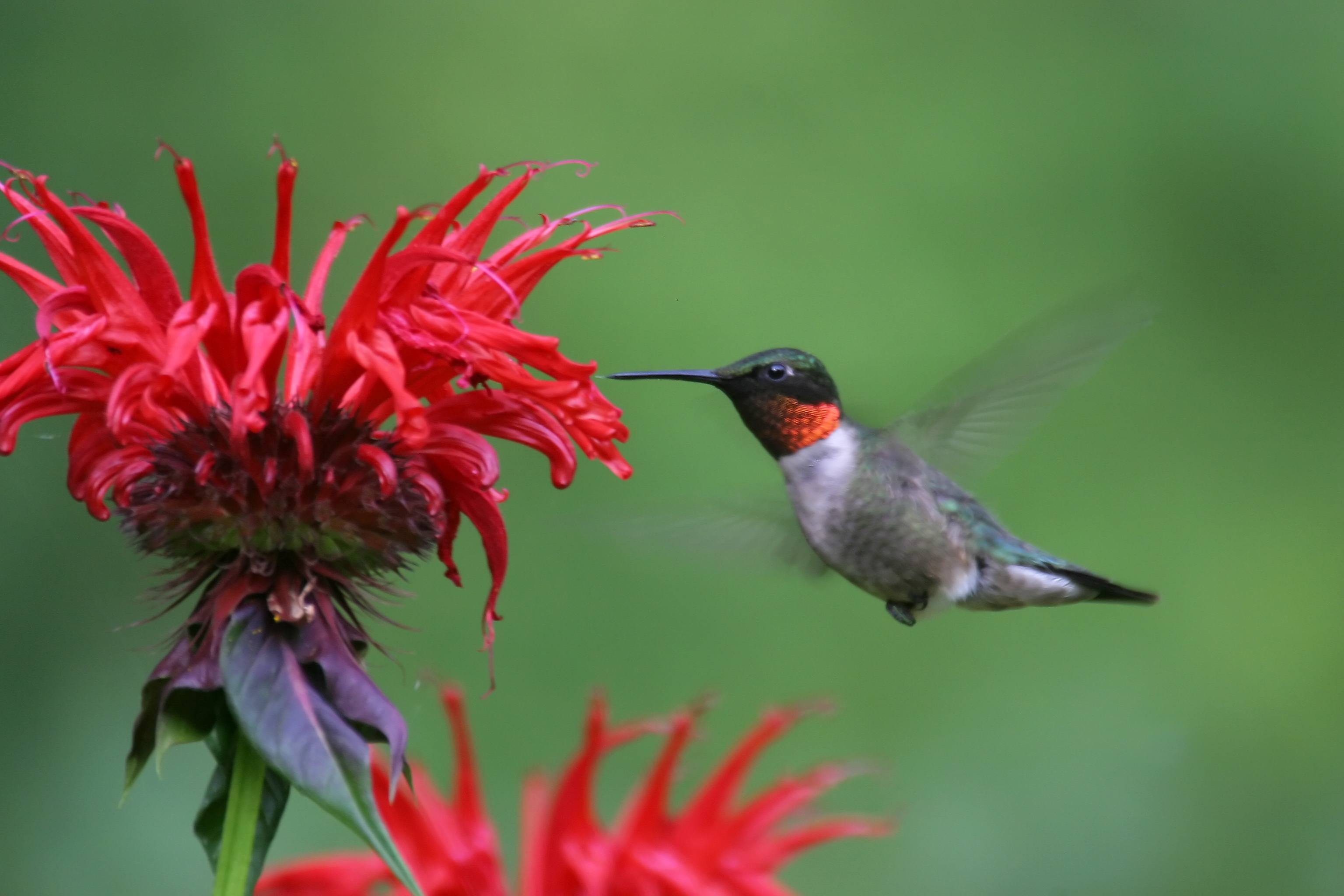
What type of symbiosis? Hummingbirds feed on nectar from flowers. The flowers are pollinated by hummingbirds as they move from flower to flower.
a)
commensalism
b)
mutualism
c)
parasitism
d)
predation
26.
A relationship between two organisms in which both organisms benefit.
a)
Mutualism
b)
Competition
c)
Parasitsm
d)
Commensalism
27.

Barnacles create home sites by attaching themselves to whales. This relationship neither harms nor benefits the whales.
a)
parasitism
b)
commensalism
c)
mutualism
28.

Yucca flowers are pollinated by yucca moths. The moths lay their eggs in the flowers where the larvae hatch and eat some of the developing seeds. Both species benefit.
a)
parasitism
b)
commensalism
c)
mutualism
29.

Mistletoe extracts water and nutrients from a spruce tree. The spruce tree is harmed.
a)
parasitism
b)
commensalism
c)
mutualism
30.
_____ is when organisms move in from another environment.
a)
emigration
b)
immigration
c)
birth rate
d)
death rate
31.
the number of births in a population during a certain amount of time is called the _____.
a)
community
b)
populations
c)
birth rate
d)
death rate
32.
the number of deaths in a population during a certain amount of time is called the _____.
a)
community
b)
population
c)
birth rate
d)
death rate
33.
Any non-native organisms that change the balance of the ecosystem are:
a)
predators
b)
prey
c)
invasive species
d)
intrusive species
34.
2 factors which increase population size
a)
Birth Rate, Immigration
b)
Death Rate, Immigration
c)
Birth Rate, Emigration
d)
Death Rate, Emigration
35.
When organisms leave a population and move away
a)
Emigration
b)
Immigration
c)
Birth Rate
d)
Death Rate
36.
Birth Rate 20, Death Rate 50
How will the population change
How will the population change
a)
Increase
b)
Decrease
c)
Stay the same
100 %

