
 Worksheets
Tides, Seasons, Moon Phases, and The Sun
Total questions: 100
Worksheet time: 2hrs 34mins
Name
Class
Date
1.
A[n] ______________ tide occurs when the sun is at right angles to the line between Earth and the moon.
a)
high
b)
neap
c)
low
d)
spring
2.
Differences in the moon's and sun's pull on different sides of the Earth cause _________.
a)
gravity
b)
lunar phases
c)
tides
d)
dabbing
3.
A[n] ___________ tide occurs when the sun, Earth, and the moon are nearly in a line.
a)
spring
b)
high
c)
low
d)
neap
4.
A neap tide is a tide with the greatest difference between low and high tides
a)
true
b)
false
5.
Tides are caused mainly by the differences in how much gravity from the moon and the sun pulls on different parts of the Earth.
a)
True
b)
False
6.
Changes in the positions of Earth, the moon, and the sun affect the height of high tides during a month.
a)
True
b)
False
7.
If tides alternate from high to low and there are two of each type of tide a day, about how many hours will generally be between each different tide?
a)
2 hours
b)
6 hours
c)
12 hours
d)
24 hours
8.

The diagram below shows the alignment of the sun, the moon, and Earth. In which locations are neap tides taking place?
a)
1 and 2
b)
1 and 3
c)
2 and 4
d)
3 and 4
9.

What type of tide would this arrangement of earth-moon-sun create?
a)
full moon tide
b)
new moon tide
c)
neap tide
d)
spring tide
10.

Which body has the greater effect on Earth's tides?
a)
Sun
b)
Saturn
c)
Moon
d)
Venus
11.

What type of tides would this arrangement of earth-moon-sun create?
a)
neap tide
b)
spring tide
c)
new moon tide
d)
full moon tide
12.

Why does the area around the equator stay the same temperature all year?
a)
The equator rotates slower than the poles.
b)
The equator remains the same distance from the sun.
c)
The equator always receives direct sunlight.
d)
The equator has 18 hour days.
13.
Waxing means...
a)
Growing
b)
Dying
c)
Losing light
d)
Moving
14.
Period of 24 hours or the time it takes Earth to make one complete spin on its axis
a)
Rotation
b)
Compass
c)
Sundail
d)
Movement
15.

Which season is taking place in the Northern Hemisphere in Position 4?
a)
Winter
b)
Spring
c)
Summer
d)
Fall
16.

At position A, which hemisphere would have summer?
a)
Northern hemisphere
b)
Southern hemisphere
17.

What happens when the area in which you live tilts away from the sun?
a)
It is summer.
b)
It is spring.
c)
It is winter.
d)
It is fall.
18.
The term equinox means....
a)
equal amount of day light and equal amount of night
b)
Equal amount of winter and summer
c)
Equal amounts of hot dogs for everyone
d)
The longest day of the year
19.
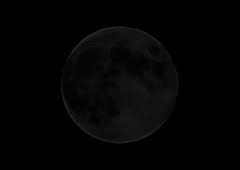
Name the moon phase
a)
First Quarter
b)
Last Quarter
c)
New Moon
d)
Full Moon
20.

Name the phase of the moon for letter a
a)
First Quarter
b)
Last Quarter
c)
Waxing Gibbous
d)
Waning Gibbous
21.

Name the moon phase
a)
waning crescent
b)
waxing crescent
c)
waning gibbous
d)
waxing gibbous
22.
During which two moon phases do Spring Tides take place?
a)
New and Full
b)
1st and 3rd Quarters
c)
Waxing and Waning
d)
1st Quarter and Full
23.
From a New moon to Full moon, what happens to the amount of light we see?
a)
It increases
b)
It decreases
c)
Nothing changes
24.
When the amount of light we see from the moon appears to be shrinking, it is
a)
Waxing
b)
Waning
c)
Gibbous
d)
Crescent
25.
Why do we experience the changing of the season on the earth?
a)
distance from the sun
b)
rotation of the earth
c)
change in solar output
d)
tilt of the earth's axis
26.
On two days each year, around June 22 and December 22, the noon sun is overhead at either 23.5° north or south. Each of these days is known as a __________.
a)
equinox
b)
solstice
c)
vacation
d)
day
27.
1. What is gravity?
a)
A type of rock
b)
A type of plate boundary
c)
When two objects are attracted to each other.
28.

What is this moon?
a)
Full Moon
b)
Waxing Gibbous
c)
First Quarter Moon
d)
Waxing Crescent
29.
How much time does a entire moon phase take?
a)
27 days
b)
37 days
c)
6 years
d)
1 day
30.
A __________________ tide occurs during a_______________________ moon and a __________________________moon.
a)
Spring, 1st quarter, 3rd/last quarter
b)
Moon, 1st quarter, 3rd/last quarter
c)
Neap, 1st quarter, 3rd/last quarter
d)
Beach, 1st quarter, 3rd/last quarter
31.

Does this picture represent a waxing or waning moon?
a)
waxing
b)
waning
32.

Which moon phase is visible at position 4?
a)
new moon
b)
1st quarter
c)
full moon
d)
3rd quarter
33.
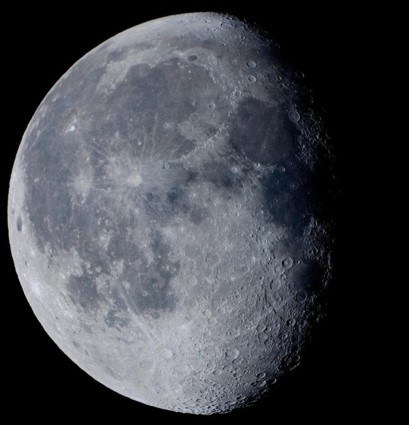
Name this phase
a)
Waxing Crescent
b)
Waxing Gibbous
c)
Waning Crescent
d)
Waning Gibbous
34.
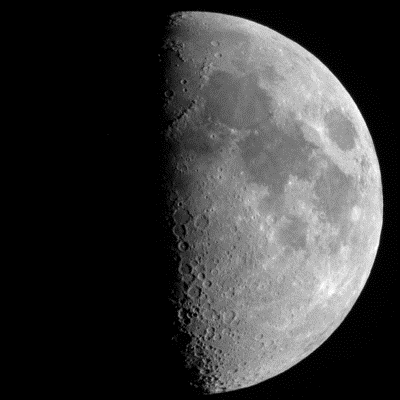
Name this phase
a)
Waxing Gibbous
b)
First Quarter
c)
Waning Gibbous
d)
Last Quarter
35.
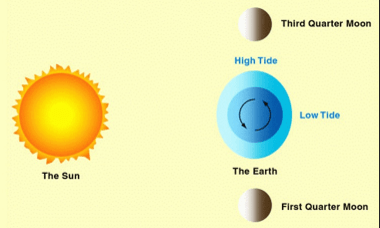
Which tide occurs during the quarter Moon phases?
a)
Highest high tide
b)
Lower high tide
36.
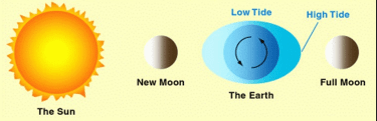
Which tide occurs during the Full or New Moon phase?
a)
Lower high tides
b)
Highest high tides
37.

When the visible (lit) portion of the moon is increasing, the moon is:
a)
waning
b)
full
c)
waxing
d)
new
38.
Changes in the moon's appearance are
a)
phases
b)
eclipses
c)
stages
d)
cycle
39.

The moon is covered in round pits called
a)
craters
b)
highlands
c)
mountains
d)
seas
40.

Name the moon phase
a)
Waning Crescent
b)
Waxing Crescent
c)
Waning Gibbous
d)
Waxing Gibbous
41.
What is the correct order of the moon phases?
a)
new, full, 1st quarter, 3rd quarter
b)
new moon, 1st quarter, full moon, 3rd quarter
c)
1st quarter, 3rd quarter, new moon, full moon
d)
new, 1st quarter, 3rd quarter, full
42.

What moon phases will you see at #5?
a)
Full moon
b)
New moon
c)
Waxing crescent
d)
Waning Gibbous
43.
What moon phases will you see at #1?
a)
Full moon
b)
New moon
c)
Waxing crescent
d)
Waning Gibbous
44.
What moon phases will you see at #6?
a)
Full moon
b)
New moon
c)
Waxing crescent
Waxing Crescent
Waxing Crescent
Waxing Crescent
Waxing Crescent
d)
Waning Gibbous
45.
What moon phases will you see at #2?
a)
Full moon
b)
New moon
c)
Waxing crescent
Waxing Crescent
Waxing Crescent
Waxing Crescent
Waxing Crescent
d)
Waning Gibbous
46.

Name the phase of the moon for letter f
a)
Waning Gibbous
b)
Waxing Gibbous
c)
Waning Crescent
d)
Waxing Crescent
47.
Name the phase of the moon for letter a
a)
First Quarter
b)
Last Quarter
c)
Waxing Gibbous
d)
Waning Gibbous
48.

What phase is this?
a)
First Quarter Moon
b)
Last Quarter Moon
c)
Waxing Gibbous Moon
d)
Waning Gibbous Moon
49.

What phase is this?
a)
Waning Gibbous Moon
b)
Waxing Gibbous Moon
c)
Waning Crescent Moon
d)
Waxing Crescent Moon
50.

What is the name for this giant loop of energy leaping from the solar surface?
a)
aurora
b)
prominence
c)
solar flare
d)
sunspot
51.

What is an explosion on the sun that gives out huge amounts of energy?
a)
Sun Spot
b)
Solar Flare
c)
Sun Ray
d)
Sun Gases
52.

Which statement is true about the sun?
a)
It is a star.
b)
It is the largest star in our galaxy.
c)
It is a planet close to Earth.
d)
It is a moon.
53.

What are spots on the sun that are cooler than the rest of the sun?
a)
Solar Flares
b)
Corona
c)
Sun Spots
d)
Sun Rays
54.

Which layer of the sun is the hottest?
a)
Photosphere
b)
Chromosphere
c)
Corona
d)
Core
55.

What is the sun made out of?
a)
fire and lava
b)
gases
c)
magma
d)
flames
56.

What happens in the convective zone of the sun?
a)
convection
b)
conduction
c)
evaporation
d)
precipitation
57.

The most common elements in the SUN are
a)
carbon and oxygen
b)
water and carbon dioxide
c)
calcium and potassium
d)
hydrogen and helium
58.
In the convection zone, you would expect to find _____
a)
Rotating cycles of hot and cool plasma
b)
Fusion of Hydrogen atoms
c)
Energy "radiating" out towards the surface
d)
Solar storms, like solar flares
59.
Light from the Sun is created in the _____
a)
Photosphere
b)
Convection Zone
c)
Core
d)
Sun Spots
60.
Explosions of radiation coming from sun spots on the Sun's surface are known as _____
a)
Solar Flares
b)
Convections
c)
Prominences (Promini?)
d)
Fusions
61.
Fusion is a process where _____
a)
Hydrogen atoms collide, giving off energy
b)
Helium atoms break down, giving off energy
c)
Carbon-14 atoms break down into Carbon-12
d)
Hydrogen atoms split apart, giving off energy
62.
The layer of the Sun where fusion happens
a)
Core
b)
Radiation Zone
c)
Convection Zone
d)
Fusion Zone
63.

Label Part 2
a)
#2 Core
b)
#2 Radiation zone
c)
#2 Convection zone
d)
#2 Corona
64.

Label Part 3
a)
#3 Chromosphere
b)
#3 Radiation zone
c)
#3 Convection zone
d)
#3 Photosphere
65.

Label part 4
a)
#4 Chromosphere
b)
#4 Radiation zone
c)
#4 Convection zone
d)
#3 Photosphere
66.

Label part 6
a)
#6 Prominences
b)
#6 Corona
c)
#6 Sunspots
d)
#6 Photosphere
67.

Label part 5
a)
#5 Chromosphere
b)
#5 Radiation zone
c)
#5 Convection zone
d)
#5 Photosphere
68.

The hemisphere where you live
a)
equator
b)
southern
c)
northern
d)
eastern
69.

Which season(s) have the same amount of daylight hours as nighttime hours?
a)
More hour of light during spring, less in fall
b)
More hours of light during summer, less in winter
c)
None of the seasons have equal daylight hours
d)
All are equal
70.

In winter, the axis of the earth is pointed away or toward the sun?
a)
towards
b)
up
c)
down
d)
away
71.

In summer, the axis of the earth is pointed away or toward the sun?
a)
towards
b)
up
c)
down
d)
away
72.

In spring/summer, the axis of the earth is pointed away or toward the sun?
a)
towards
b)
Neither away or toward
c)
away
73.

Why is it warmer in the summer?
a)
Closer to the sun
b)
More direct light from Earth's tilt
c)
Stronger light from the sun
d)
Earth spins slower
74.

What season is depicted in the picture?
a)
summer
b)
winter
c)
fall
d)
spring
75.

What season is depicted in the picture?
a)
summer
b)
winter
c)
fall
d)
spring
76.

Which season is taking place in the Southern Hemisphere in Position 1?
a)
Winter
b)
Spring
c)
Summer
d)
Fall
77.

Which season is taking place in the Northern Hemisphere in Position 1?
a)
Winter
b)
Spring
c)
Summer
d)
Fall
78.

Which season is taking place in the Northern Hemisphere in Position 3?
a)
Winter
b)
Spring
c)
Summer
d)
Fall
79.

Which season is taking place in the Northern Hemisphere in Position 4?
a)
Winter
b)
Spring
c)
Summer
d)
Fall
80.
If its ____ in the Northern hemisphere, then its fall in the Southern hemisphere.
a)
spring
b)
summer
c)
fall
d)
winter
81.
Where is the equator?
a)
at the North Pole
b)
halfway between the North and South Poles
c)
at the South Pole
d)
in the Western hemisphere
82.
What causes more heat, indirect sunlight or direct sunlight?
a)
indirect
b)
direct
83.
What is the longest day of the year?
a)
winter solstice
b)
summer solstice
c)
fall equinox
d)
spring equinox
84.
When are the equinoxes?
a)
June & December
b)
July & January
c)
April & October
d)
March & September
85.
How long does it take the earth to revolve once around the sun?
a)
12 hours
b)
24 hours
c)
30 days
d)
365.25 days
86.
Earth's axis is tilted at -
a)
23.5 degrees
b)
33.5 degrees
c)
28 degrees
d)
90 degrees
87.
When the Northern Hemisphere learns toward the sun, daylight is -
a)
shorter
b)
longer
c)
equal
88.
When the Northern Hemisphere learns toward the sun, daylight is -
a)
shorter
b)
longer
c)
equal
89.
When the Northern Hemisphere leans toward the sun, the northern part gets -
a)
more sunlight
b)
less sunlight
c)
to be winter
d)
cooler
90.

What happens when the area in which you live tilts away from the sun?
a)
It is summer.
b)
It is spring.
c)
It is winter.
d)
It is fall.
91.

What season is letter A in the northern hemisphere?
a)
Winter
b)
Summer
c)
Spring
d)
Fall
92.
First day of fall
a)
Autumnal Equinox
b)
Summer Solstice
c)
Winter Solstice
d)
Vernal Equinox
93.
First day of spring
a)
Autumnal Equinox
b)
Summer Solstice
c)
Winter Solstice
d)
Vernal Equinox
94.
Imaginary line that runes through Earth.
a)
orbit
b)
day
c)
tilt
d)
axis
95.
____ comes before Winter in the Southern hemisphere.
a)
summer
b)
spring
c)
fall
96.
Australia is in the ____ hemisphere.
a)
northern
b)
southern
97.
The next season in the Northern hemisphere after spring is ____.
a)
fall
b)
summer
c)
winter
98.
Path an object revolves around another object.
a)
axis
b)
orbit
c)
tilt
99.
The hemisphere where you live
a)
northern
b)
southern
100.
If its ____ in the Northern hemisphere, then its fall in the Southern hemisphere.
a)
spring
b)
summer
c)
fall
d)
winter
100 %

