
 Worksheets
Unit 3- Heat and Temperature
Total questions: 85
Worksheet time: 1hrs 4mins
Name
Class
Date
1.
As the kinetic energy of the particles in a substance increases, the temperature of the substance __________.
a)
increases
b)
decreases
c)
stays the same
d)
Does a little dance
2.
Energy is transferred as heat between two objects of ___________ temperatures.
a)
different
b)
same
3.
The average speed of all the particles within an object is called ____________.
a)
temperature
b)
conduction
c)
radiation
d)
heat
4.
A(n) _____________ is a device for measuring temperature.
a)
thermometer
b)
barometer
c)
anemometer
d)
psychrometer
5.
Absolute zero is...
a)
-273º C
b)
0º C
c)
-373º C
d)
273º C
6.
The temperature at which an object's particles stop moving is called ____________.
a)
absolute zero
b)
minimum temperature
c)
zero
7.
In which state of matter are particles moving the slowest?
a)
solid
b)
liquid
c)
gas
d)
all of the above
8.
Insulation is used in the walls of a building to ____.
a)
trap solar energy
b)
keep thermal energy from moving through the walls
c)
conduct thermal energy
d)
keep cold air from moving through the walls
9.
Specific heat of water is 4.18 J/g°C. Specific heat of wood is 1.760 J/g°C What material needs more heat energy to raise the temperature?
a)
Water
b)
Wood
c)
Both are same
10.
A high specific heat means...
a)
It heats up quickly with energy added
b)
It requires more energy to change temperature
11.
What has particularly high specific heat?
a)
Water
b)
Gases
c)
Metals
d)
Poptarts
12.
Compared to metal, water seems to have a ___________ specific heat.
a)
High, it takes a lot of energy to heat up and change temperature
b)
Low, because it does not require a lot of energy to change temperature
13.
Heat transfer by conduction occurs when...
a)
particles bump into each other
b)
large numbers of atoms move from place to place
c)
atoms give off heat in the form of electromagnetic waves
d)
electromagnetic waves travel from place to place through a vacuum
14.

Thermal energy always moves:
a)
From a high energy source to a low energy source.
b)
From a lower energy source to a high energy source.
c)
From an object with lower kinetic energy to an object with higher kinetic energy.
d)
From an object of higher mass to an object of lower mass.
15.

High temperature is connected to:
a)
Low kinetic energy.
b)
High kinetic energy.
c)
Zero net energy.
d)
Equal kinetic energies.
16.

When thermal energy is added to a substance, the substance's particles move:
a)
More rapidly at an increased distance from each other.
b)
More rapidly with less distance between each other.
c)
More slowly with a greater distance between each other.
d)
More slowly with a reduced distance between each other.
17.
The transfer of thermal energy through a substance by direct contact
a)
thermal conduction
b)
thermal insulation
c)
convection
d)
radiation
18.
Railroad tracks have gaps between rails so they don't buckle in hot weather because
a)
thermal conductivity
b)
specific heat
c)
thermal expansion
d)
thermal insulation
19.
Heat is being transferred through electromagnetic waves. This is known as ...
a)
Conduction
b)
Convection
c)
Radiation
d)
Internal energy
20.
The measure of average kinetic energy of all the particles within an object is called ____________.
a)
temperature
b)
conduction
c)
radiation
d)
heat
21.
Absolute zero is...
a)
-273º C
b)
0º C
c)
-373º C
d)
273º C
22.
what is the meaning of convection?
a)
cold rises heat falls
b)
heat
c)
cold
d)
hot rises cold falls
23.
In which state of matter are molecules moving the slowest?
a)
solid
b)
liquid
c)
gas
d)
all of the above
24.
what kind of heat is happening when the sun heats your body
a)
conduction
b)
convection
c)
density
d)
radiation
25.
heat is energy
a)
false
b)
true
26.
you get sunburned because of _______
a)
conduction
b)
convection
c)
radiation
27.

This is a lava lamp. When the light bulb heats the wax, the wax rises. When the wax cools, it falls. This cycle of rising/falling is an example of:
a)
Conduction.
b)
Convection.
c)
Radiation.
28.

The baby chickens are kept warm from the heat lamps demonstrates this type of heat transfer.
a)
conduction
b)
convection
c)
radiation
29.

Warm air rises and the cool air sinks demonstrates this type of heat transfer.
a)
conduction
b)
convection
c)
radiation
d)
Insolation
30.
Is Iron a Conductor or Insulator?
a)
Conductor
b)
Insulator
31.
Which is NOT an insulator.
a)
Wool
b)
Plastic
c)
Copper
d)
Glass
32.
A metal spoon that gets warm when used to stir hot soup is an example of:
a)
Conduction
b)
Convection
c)
Radiation
33.
Mittens help keep your hands warm in winter because:
a)
They are conductors of heat.
b)
They are fuzzy.
c)
They are conductors of electrical energy.
d)
They are insulators.
34.
What is the transfer of heat between two objects that are touching?
a)
Conduction
b)
Radiation
c)
Convection
d)
Concentration
35.
As the kinetic energy of the molecules in a substance increases, the temperature of the substance __________.
a)
increases
b)
decreases
36.
What happens when an object reaches absolute zero?
a)
The molecules stop moving
b)
The molecules move faster
c)
Water freezes
37.
An insulator keeps things hot because it:
a)
Is a poor conductor
b)
Transfers heat easily
c)
Is made of metal
d)
Allows energy to pass through easily
38.
Which substance would be the best insulator for hot soup?
a)
A metal can
b)
A glass bowl
c)
A plastic thermos
39.

Which substance is the gas?
a)
A
b)
B
c)
C
40.
Which phase change happens when gas turns to liquid?
a)
Freezing
b)
Melting
c)
Boiling
d)
Condensing
41.

Which state of matter exits at point E and beyond?
a)
Solid
b)
Liquid
c)
Gas
42.

Which state of matter exists between point A and B?
a)
Solid
b)
Liquid
c)
Gas
43.

Which states of matter exist between points D and E?
a)
Solid and liquid
b)
Liquid and gas
c)
Solid and gas
44.

Which phase change occurs between points B and C if heat is REMOVED
a)
Freezing
b)
Boiling
c)
Melting
d)
Condensing
45.

Which states of matter exist between points B and C?
a)
Solid and liquid
b)
Liquid and gas
c)
Gas and solid
46.

What phase change occurs between points B and C if heat is added?
a)
Freezing
b)
Melting
c)
Boiling
d)
Condensing
47.
Which phase change causes solid to change to liquid?
a)
Freezing
b)
Melting
c)
Boiling
d)
Condensing
48.

The people tanning at the beach is an example of:
a)
Conduction
b)
Convection
c)
Radiation
49.

The pot on the stove burner is an example of?
a)
Conduction
b)
Convection
c)
Radiation
50.
Heat flows from...
a)
hot to cold.
b)
cold to hot.
c)
hot to hot.
d)
cold to cold.
51.
Water boils at...
a)
373º C
b)
32º C
c)
100º C
d)
200º C
52.

The diagram is an example of which of the following?
a)
Convection
b)
Conduction
c)
Radiation
53.

The diagram is an example of which of the following?
a)
Convection
b)
Conduction
c)
Radiation
54.

The diagram is an example of which of the following?
a)
Convection
b)
Conduction
c)
Radiation
55.
What is the unit that energy is measure in?
a)
Joule
b)
Calorie
c)
Degree
d)
Kalorie
56.

Which has the most thermal energy?
a)
The teacup.
b)
The bucket.
57.

The average kinetic energy in an object.
a)
convection
b)
temperature
c)
Heat
d)
radiation
58.
Thermal energy is...
a)
Heat radiating
b)
Heat from the motion of the particles
c)
the particles slowing down
d)
heat from the particles slowing down
59.
All objects emit infrared radiation (T/F)
a)
True
b)
False
60.
Which of the following is the best at absorbing infrared radiation?
a)
Dark, matt surface
b)
Light, shiny surface
c)
Dark, shiny surface
61.
Which part of a thermostat senses the temperature change?
a)
mercury capsule tilting
b)
machine turning on or off
c)
(dis)connecting the electrical current
d)
bimetallic strip coiling or uncoiling
62.
A bimetallic strip will bend because
a)
they both expand and contract at the same rate, so the strip bends
b)
one metal contracts more than the other so a bend natural happens
c)
one metal expands and contracts faster than the other, causing it to bend
d)
a bimetallic strip will not bend.
63.
Which is NOT part of the Particle Model of Matter?
a)
Energy cannot be created or destroyed
b)
particles are always moving
c)
There is always space between the particles
d)
Everything is made of particles, too small to be seen
64.
Which is NOT a behavior of particles in a gas?
a)
there is lots of space between the particles
b)
they fill their container
c)
they are not attracted to one another
d)
there is not much space between the particles
65.
Energy is...
a)
transferred from a low to a high energy source
b)
what happens when the particles slow down
c)
somethings inability to do work
d)
somethings ability to do work
66.
Which of the following does NOT need to happen for energy be transferred
a)
energy always goes from a high to a low energy source
b)
energy travels AWAY from the high energy source
c)
energy travel TOWARDS the high energy source
d)
there must be a difference in energy
67.
Which is NOT part of the Law of Conservation of Energy?
a)
energy cannot be created or destroyed
b)
Energy can be transformed from one type of energy to another type of energy
c)
Only transpiration can transfer energy
d)
Energy can be transferred from one thing to another
68.
Convection is heat transfer by-
a)
Touch an object
b)
The heating and cooling of a fluid
c)
Electromagnetic Waves
69.

Warm air rises and the cool air sinks demonstrates this type of heat transfer.
a)
conduction
b)
convection
c)
radiation
d)
Insolation
70.

The heat from a hot burner to a pot is transferred by ______.
a)
convection
b)
insulation
c)
radiation
d)
conduction
71.

When the 2nd story of a house is warmer than the 1st floor of a house is heat transfer through
a)
conduction
b)
convection
c)
radiation
d)
thermal equilibrium
72.

Heat transfer through electromagnetic waves is called
a)
conduction
b)
convection
c)
radiaton
d)
thermal
73.
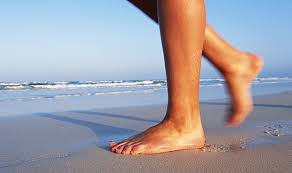
Walking on the warm sand sand with your bare feet demonstrates this type of heat transfer.
a)
conduction
b)
convection
c)
radiation
74.
What type of heat transfer takes place in solids?
a)
Conduction
b)
Convection
c)
Radiation
75.
Mittens help keep your hands warm in winter because:
a)
They are conductors of heat.
b)
They are fuzzy.
c)
They are conductors of electrical energy.
d)
They are insulators.
76.
Conduction, Convection and Radiation are three types of...
a)
Electrical energy
b)
Thermal Energy
c)
Chemical Energy
d)
Sound Energy
77.
The Law of Conservation of Energy states:
a)
Energy can created or destroyed but not transformed
b)
Energy cannot be created or destroyed, it can only transformed
c)
Energy can't be created, destroyed or transformed
78.
An object that doesn't conduct heat well is known as:
a)
a conductor
b)
an insulator
c)
conduction
d)
insulation
79.
Conductors are materials that...
a)
Allow heat to pass through
b)
Stop heat from passing through
c)
Allow cold to pass through
d)
Stop cold from passing through
80.
Poor conductors like wood and plastic are called:
a)
conductors
b)
insulators
c)
burners
81.
The most common temperature scale used in the world where water freezes at 0 degrees and boils at 100 degrees is called the __________________ scale.
a)
Celsius
b)
Fahrenheit
c)
Pound
d)
Kelvin
82.
_________________________ is a measure of the average kinetic energy of the particles in a material.
a)
thermal
b)
friction
c)
temperature
d)
expansion
83.
The most common temperature scale used in the physical sciences where temperatures are 273 degrees more than temperatures on the Celsius scale is called the _______________ scale.
a)
Fahrenheit
b)
Kelvin
c)
Pound
d)
Celsius
84.
Thermal energy always moves from ____________ objects to ______________ objects.
a)
cooler, warmer
b)
warmer, cooler
c)
faster, slower
d)
slower, faster
85.
Thermal energy stops moving when the objects have the same temperature.
a)
True
b)
False
100 %

