
 Worksheets
The Water Planet
Total questions: 83
Worksheet time: 1hrs 19mins
Name
Class
Date
1.

What is a river?
a)
A large body of freshwater
b)
A saltwater inlet of the ocean
c)
A natural large stream of flowing freshwater
d)
An underground waterway
2.
What is it called when smaller streams join together to make a larger river?
a)
Tributaries
b)
Topography
c)
Watershed
d)
Groundwater
3.
What is a watershed?
a)
Water in an area
b)
Water that flows into a river or stream
c)
Land that water flows over and through
d)
Water that is salty
4.
Where would you find brackish water?
a)
Wetlands
b)
Aquifers
c)
Glaciers
d)
Estuaries
5.
Brackish water is:
a)
Salty
b)
Fresh
c)
Found only in extremely cold water
d)
A mix of salty and fresh
6.
The transition zone between dry areas of land and bodies of water are called:
a)
Wetlands
b)
Watersheds
c)
Divides
d)
Estuaries
7.
What two elements make up water?
a)
Helium and oxygen
b)
Hydrogen and oxygen
c)
helium and carbon
d)
oxygen and carbon
8.
Why can water have no net charge but have slight charges in different parts of the molecule?
a)
The oxygen end is slightly negative and the hydrogen end is slightly positive
b)
The hydrogen end is slightly negative and the oxygen end is slightly positive
c)
The hydrogen and oxygen ends change in polarity
d)
Because it is hydrophobic
9.
What property of water allows it to be such a versatile solvent that it is often called the "universal solvent?"
a)
Purity
b)
Polarity and high surface tension
c)
High heat capacity
d)
Expansion upon freezing
10.
Large bodies of water do not quickly fluctuate in temperature. Why?
a)
Water is a solvent.
b)
Water has a high heat capacity.
c)
Water acts as a buffer.
d)
Water is non-polar.
11.
What are water's unique properties?
a)
It is what humans drink.
b)
It is everywhere.
c)
It is clear.
d)
It can be all 3 states of matter.
12.
What is a water molecule composed of?
a)
1 Hydrogen atom and 2 Oxygen atoms
b)
2 Hydrogen atoms and 1 Oxygen atom
c)
3 Oxygen atoms
d)
2 Helium atoms and 1 Oxygen atom
13.
What is a divide?
a)
a natural stream of water of considerable volume
b)
a continuous ridge that separates a watershed
c)
small rivers or streams that flow into a larger river or stream
d)
a body of fresh water found in low lying areas
14.
What is the energy source for the water cycle?
a)
the sun
b)
the earth
c)
water
d)
the moon
15.
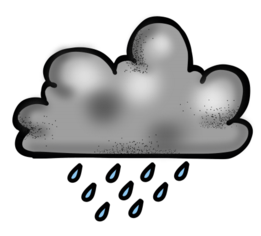
What part of the water cycle does this picture show?
a)
condensation
b)
precipitation
c)
evaporation
16.
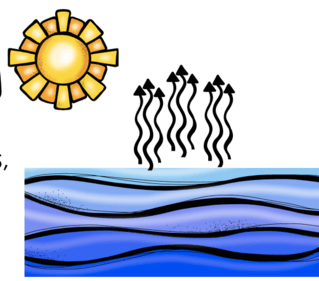
What part of the water cycle does this picture show?
a)
condensation
b)
precipitation
c)
evaporation
17.
What is evaporation?
a)
The part of the water cycle when the sun heats up water, turning it from a liquid into water vapor or steam. It rises from the ground into the air.
b)
The part of the water cycle when the water vapor in the air gets cold. The water turns back into a liquid and forms clouds.
c)
The part of the water cycle when clouds get heavy and can no longer hold the liquid water. This causes the water to fall from the sky to the earth as rain, snow, sleet, or hail.
18.
What is condensation?
a)
The part of the water cycle when the sun heats up water, turning it from a liquid into water vapor or steam. It rises from the ground into the air.
b)
The part of the water cycle when the water vapor in the air gets cold. The water turns back into a liquid and forms clouds.
c)
The part of the water cycle when clouds get heavy and can no longer hold the liquid water. This causes the water to fall from the sky to the earth as rain, snow, sleet, or hail.
19.
What is precipitation?
a)
The part of the water cycle when the sun heats up water, turning it from a liquid into water vapor or steam. It rises from the ground into the air.
b)
The part of the water cycle when the water vapor in the air gets cold. The water turns back into a liquid and forms clouds.
c)
The part of the water cycle when clouds get heavy and can no longer hold the liquid water. This causes the water to fall from the sky to the earth as rain, snow, sleet, or hail.
20.

When water condenses, the water vapor in the air gets ___________ and changes back into liquid.
a)
cold
b)
hot
c)
warm
d)
solid
21.
When water condenses, the liquid water forms ______________.
a)
water vapor
b)
steam
c)
air
d)
clouds
22.

Precipitation happens when clouds of water droplets are too ______________.
a)
cold
b)
light
c)
heavy
d)
hot
23.
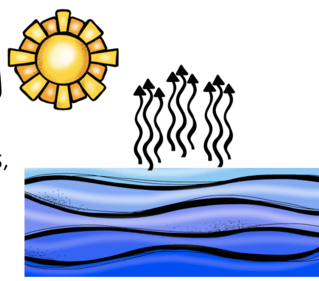
Evaporation happens when the sun ___________ water and turns it into vapor.
a)
cools
b)
heats up
c)
freezes
d)
lights up
24.
Which of these is an example of precipitation?
a)
snow
b)
air
c)
clouds
d)
vapor
25.

What is the water cycle?
a)
the 3 forms of water
b)
the movement of water on, above, or below the surface of the Earth
c)
when water melts
d)
when clouds form
26.
Where is most water found on Earth?
a)
glaciers
b)
lakes
c)
rivers
d)
oceans
27.
River, streams and oceans are all points of _____________ in the water cycle.
a)
collection
b)
precipitation
c)
condensation
d)
evaporation
28.
Which type of rainfall would be most helpful to farmers?
a)
rainfall that evaporates quickly
b)
rainfall that runs off the land quickly
c)
rainfall that soaks into the soil slowly
d)
very little rainfall
29.
What controls whether water is a gas, liquid, or solid ice?
a)
the shape or size of the cup
b)
where it has been stored
c)
if it is being used for irrigation
d)
what its temperature is
30.
Does the water cycle ever end?
a)
Yes, once water evaporates it is gone forever
b)
Yes, when it rains, the water goes into the ground forever
c)
No, once it evaporates the water fairies come and sing a rainy day song.
d)
No, the water cycle has been going on for billions of years, and will continue on forever.
31.
What follows evaporation during the water cycle?
a)
Water evaporates into water vapor
b)
Water vapor condenses and forms a cloud
c)
Water precipitates to the ground
d)
Water runs down into the hydrosphere
32.
What is water vapor?
a)
Water on the lan
b)
Water in the air
c)
Water in plants
d)
Water in the water (hydrosphere)
33.
Which is the opposite of condensation?
a)
runoff
b)
evaporation
c)
precipitation
d)
transpiration
34.
Which best explains why runoff is important?
a)
It returns water to other locations on Earth
b)
It increases the chance of flooding
c)
It makes evaporation occur faster
d)
It increases condensation
35.
Snow, sleet, hail, and rain are all examples of ________________.
a)
evaporation
b)
condensation
c)
accumulation
d)
precipitation
36.

What is it called when WATER is FORMED from an LIQUID to a WATER VAPOR Oor an [GAS]?
a)
EVAPORATION
b)
PRECIPITATION
c)
TRANSPIRATION
37.

What does groundwater do?
a)
It sends water to our buildings, houses, and water transplant places
b)
to the sky
c)
to the sun
d)
To the Earth's surfaces
38.

After the rain falls down onto Earth's surface, what most likely happens? What is it called?
a)
1. The remains of the water is soaked into the ground.
2.Groundwater
2.Groundwater
b)
1. Groundwater
2. The remains of the water is soaked into the ground.
2. The remains of the water is soaked into the ground.
c)
1. Groundwater
2. Transpiration happens to the plants.
2. Transpiration happens to the plants.
d)
1. The liquid turns into an gas or an water vapor
2. Evaporation
2. Evaporation
39.

What is it called when plants give off water vapor as a waste product?
a)
condensation
b)
evaporation
c)
sublimation
d)
transpiration
40.
When water _________, dew forms.
a)
Melts
b)
Evaporates
c)
Condenses
d)
Precipitates
41.
What is the water cycle?
a)
the 3 forms of water
b)
the movement of water on, above, or below the surface of the Earth
c)
when water melts
d)
when clouds form
42.
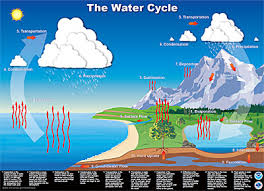
During which stage do clouds form?
a)
condensation
b)
evaporation
c)
precipitation
43.
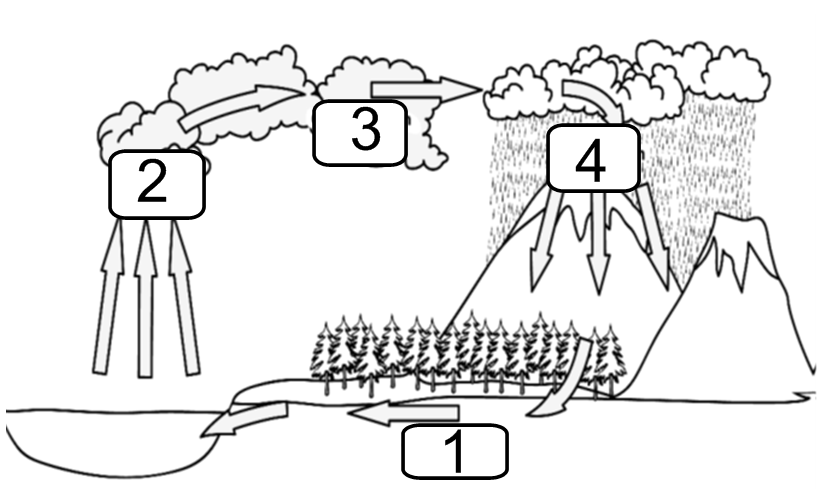
Which stage does the #2 show in the diagram?
a)
condensation
b)
evaporation
c)
precipitation
d)
run off
44.

Which stage does the #3 show in the diagram?
a)
condensation
b)
evaporation
c)
precipitation
d)
run off
45.

what does the #4 show in the diagram?
a)
condensation
b)
evaporation
c)
precipitation
d)
run off
46.
The first step in the water cycle
a)
evaporation
b)
condensation
c)
precipitation
d)
there is no first step
47.
What is the process during which water cools and turns from a gas to a liquid?
a)
Codensation
b)
Runoff
c)
Precipitation
d)
Evaporation
48.
The ________ is the driving force of the earth's surface.
a)
sun
b)
moon
c)
stars
49.
Any type of liquid or solid water that falls to earth's surface
a)
evaporation
b)
condensation
c)
precipitation
d)
runoff
50.
The water cycle has no start or end
a)
true
b)
false
51.
Precipitation occurs because
a)
the droplets evaporate in the air
b)
the droplets are too light for the air to hold
c)
the droplets are too heavy for the air to hold
52.
The water cycle is also known as ..........
a)
Hypertonic Solution
b)
Hydrological Cycle
c)
Hyperlogical Cycle
d)
None of these
53.
What is a man-made hole drilled below water table?
a)
natural spring
b)
lake
c)
wetlands
d)
well
54.
What is a huge, slow-moving mass of ice and snow called?
a)
well
b)
glacier
c)
river system
d)
geyser
55.
What is a huge, slow-moving mass of ice and snow called?
a)
well
b)
glacier
c)
river system
d)
geyser
56.
What is a layer of rock or sediment that holds water?
a)
glacier
b)
well
c)
aquifer
d)
natural spring
57.
97% of the Earth's water is located in....
a)
ground wat
b)
the ocean
c)
lakes, rivers, and streams
d)
glaciers
58.

What is A?
a)
Solid
b)
Liquid
c)
Gas
59.

What is B?
a)
Solid
b)
Liquid
c)
Gas
60.

What is C?
a)
Solid
b)
Liquid
c)
Gas
61.
The molecular formula for water is
a)
W
b)
H2O
c)
2HO
d)
H2O
62.
Which is NOT a property of water that helps or bodies function properly?
a)
Water is a natural antibiotic substance
b)
Water dissolves many substances
c)
Water cools when it evaporates
d)
Water can hold heat (maintain temperature)
63.
If you made blue paint by dissolving dry blue paint powder into water, the liquid blue paint you made is a
a)
ion
b)
solute
c)
solution
d)
concentration
64.
If you dissolve blue paint powder into water, the paint powder is the...
a)
ion
b)
solute
c)
solution
d)
solvent
65.
Water dissolves ionic compounds, like NaCl, because water molecules...
a)
are non polar
b)
have a pH value of 14
c)
Have partially charged ends that interact with ions
d)
do not contain atoms
66.
Which combination when referring to salt water is correct in terms of solutes/solvents?
a)
solute: table salt solvent: saltwater
b)
solute: table salt solvent: water
c)
solute: water solvent: table salt
d)
solute: saltwater solvent: water
67.
Water is cohesive, the molecules are attracted to one another because of hydrogen bonds. This attraction helps create...
a)
surface action
b)
surface tension
c)
ice
d)
solvents
68.
A water molecule is polar. Its bent shape results in the following...
a)
slightly positive charge on hydrogen and slightly negative charge on oxygen
b)
slightly positive charge on hydrogen and slightly positive charge on oxygen
c)
slightly negative charge on hydrogen and slightly positive charge on oxygen
d)
no change because its neutral
69.
When water travels up the stem of a plant, this is a result of
a)
surface tension
b)
capillary action and adhesion
c)
capillary action and cohesion
d)
capillary action, cohesion and adhesion
70.
Water helps maintain homeostasis in an organism, which of the following hold true to that?
a)
Its high specific heat
b)
Its ability to dissolve substances
c)
Its ability to be a polar molecules and have a pH of 7
d)
all of these
71.

What property of water is being shown?
a)
polarity
b)
freezing point
c)
hydrogen bonds
d)
solution/universal solvent
72.

What property of water is being shown?
a)
cohesion
b)
adhesion
c)
polarity
d)
freezing point
73.

What property of water is being shown?
a)
solution
b)
adhesion
c)
freezing point
d)
specific heat
74.

What property of water is being shown?
a)
cohesion
b)
hydrogen bonds
c)
adhesion
d)
polarity
75.

What property of water is being shown?
a)
polarity
b)
hydrogen bonds
c)
surface tension
d)
capillary action
76.

What property of water is being shown?
a)
cohesion
b)
adhesion
c)
freezing point
d)
capillary action
77.

What property of water is being shown?
a)
specific heat
b)
surface tension
c)
polarity
d)
solution
78.

What property of water is being shown?
a)
cohesion
b)
specific heat
c)
capillary action
d)
hydrogen bonds
79.

What causes water vapor to move?
a)
wind
b)
snow
c)
water
d)
lava
80.

Is humidity the amount of water in the air?
a)
Yes
b)
No
81.

Does warm water evaporate quicker than cold water?
a)
Yes
b)
No
82.
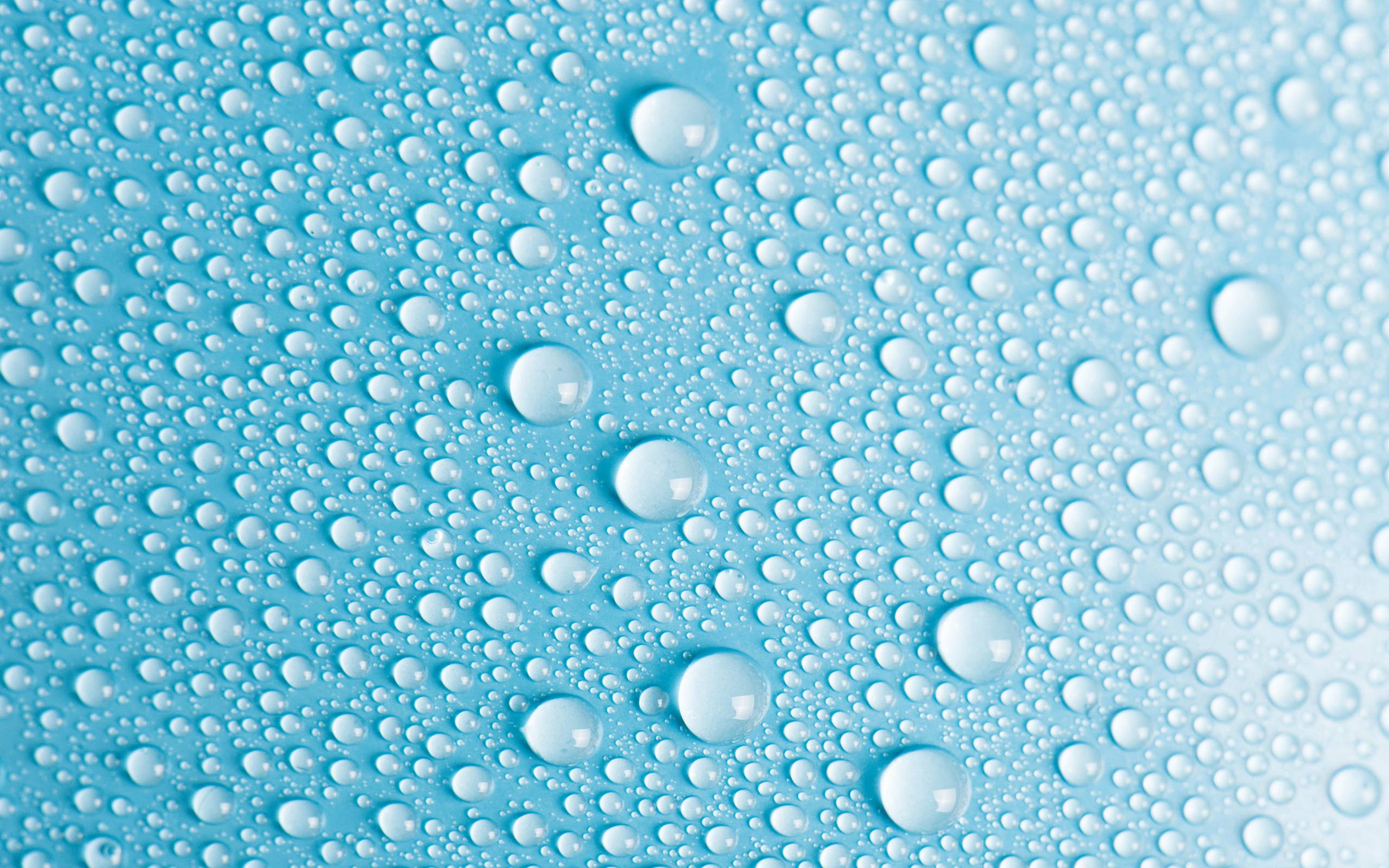
When water _________, dew forms.
a)
Melts
b)
Evaporates
c)
Condenses
d)
Precipitates
83.

Which is the opposite of condensation?
a)
runoff
b)
evaporation
c)
precipitation
d)
transpiration
100 %

