
 Worksheets
review unit 1
Total questions: 79
Worksheet time: 2hrs 3mins
Name
Class
Date
1.
A possible explanation to a problem that has not yet been tested.
a)
data
b)
theory
c)
hypothesis
d)
fact
2.
This variable in an experiment is the one being deliberately changed by the scientist.
a)
dependent variable
b)
independent variable
c)
data
d)
control group
3.
Should experiments be repeated over and over to see if the results are the same each time?
a)
yes
b)
no
4.
The summary at the end of an experiment that explains the results.
a)
conclusion
b)
procedures
c)
materials
d)
responding variable
5.
A series of steps used by scientists to solve a problem or answer a question.
a)
scientific method
b)
recipe
c)
data collection
d)
metric system
6.
In a controlled experiment, how many independent variables can be worked with at a time?
a)
one
b)
none
c)
two or more
d)
how ever many makes sense.
7.
A list of the steps anyone could follow to conduct an experiment.
a)
obervations
b)
question/problem
c)
materials
d)
procedures
8.

Which statement is an inference about this picture?
a)
The van is tan.
b)
The van ran into KFC.
c)
The driver was hungry.
d)
Red and white are part of the KFC building.
9.
Mr. S. sets up an experiment to see how the mass of a ball affects the distance it rolls off a ramp. Identify the independent variable.
a)
distance traveled by the ball
b)
height of the ramp
c)
mass of the ball
d)
weight of the ball
10.
Mr. S. sets up an experiment to see how the mass of a ball affects the distance it rolls off a ramp. Identify the dependent variable.
a)
height of the ramp
b)
distance traveled by the ball
c)
mass of the ball
d)
weight of the ball
11.
A student is planning an experiment to find out how the height from which he drops a ball affects how high the ball bounces. The dependent variable is the _____.
a)
Diameter of the ball
b)
Force acting on the ball
c)
Height that the ball bounces
d)
Height from which the ball is dropped
12.
When experimenting with the growth of a plant, a scientist uses three (of the same type of) plants, two different fertilizers, equal light, and equal water. What type of variable is the fertilizer?
a)
Dependent
b)
Independent
c)
Control
d)
Compound
13.
An experiment is performed on plants to see how different liquids affect plant growth. Each plant in the experiment is given a different liquid; water, apple juice, or milk. Each plant has the same amount of soil, sunlight, and listens to the same music. In this investigation, what is the dependent variable?
a)
Type of plant
b)
Water, apple juice, milk
c)
Plant growth
d)
Color of the plant's leaves
14.
Science is a continually ongoing process.
a)
True
b)
False
15.
If I study for my scientific method quiz, then I will have a better test score. What is the dependent variable?
a)
Scientific Method
b)
Studying
c)
Independent variable
d)
Test score
16.
What is a hypothesis?
a)
A hypothesis is the right answer to an experiment.
b)
A hypothesis is the wrong answer to an experiment.
c)
A hypothesis is an educated guess.
d)
I don't know.
17.
Which is NOT a step in the scientific method?
a)
Make observation
b)
Form a theory
c)
Collect data
d)
Form a hypothesis
18.
What step does every scientific experiment begin with?
a)
hypothesis
b)
question/problem
c)
procedures
d)
conclusion
19.
This part of the experiment serves as a basis of comparison; the one variable being tested has been omitted.
a)
experimental group
b)
control group
c)
data
d)
variables
20.
Which of these contains steps in the right order?
a)
Ask a question, state your hypothesis, research, experiment, analyze, make a conclusion
b)
State your hypothesis, ask a question, research, experiment, analyze, make a conclusion
c)
Ask a question, research, state your hypothesis, experiment, analyze, make a conclusion
d)
State your hypothesis, ask a question, research, make a conclusion, experiment, analyze
21.
Worn to protect eyes
a)
graduated cylinder
b)
pan balance
c)
gloves
d)
goggles
22.
Tall cylinder-shaped container used to measure liquid to an nearest mL
a)
beaker
b)
pan balance
c)
graduated cylinder
23.
Used to measure an object's mass in grams balancing three bars
a)
pan balance
b)
spring scale
c)
triple beam balance
24.

What does this tool measure?
a)
volume
b)
weight
c)
mass
d)
temperature
25.

What property of liquid does this measure?
a)
mass
b)
density
c)
volume
d)
liquid
26.

What does this tool measure?
a)
speed
b)
density
c)
volume
d)
length
27.

What does this tool measure?
a)
temperature
b)
height
c)
weight
d)
distance
28.

What liquid measurement is being observed?
a)
height
b)
space
c)
volume
d)
density
29.

What unit of measurement is this measured in?
a)
millimeters
b)
kilometers
c)
milliliters
d)
grams
30.

What unit of measurement would be used?
a)
centimeters
b)
milligrams
c)
volume
d)
liters
31.

What is this science tool used for?
a)
To make objects appear larger
b)
To protect your eyes
c)
To help you see better
d)
To make you look cooler
32.

What is this science tool?
a)
sun glasses
b)
safety goggles
c)
hand lenses
d)
beaker
33.
The base unit of metric length.
a)
Meter
b)
Liter
c)
Kilogram
d)
milligram
34.
The basic unit of metric volume is called a_____.
a)
Kilogram
b)
milligram
c)
Liter
d)
milliliter
35.

Calculate the volume of the rock
a)
10.0 cm3
b)
16.0 cm3
c)
30.0 cm3
d)
40.0 cm3
36.

What is the volume of the fish?
a)
18.0 cm3
b)
6.0 cm3
c)
38.0 cm3
37.
Using your senses to gather information.
a)
hypothesis
b)
observation
c)
seeing
d)
guessing
38.

a)
206.0
b)
260.0
c)
200.6
39.

a)
439.02
b)
437.21
c)
437.02
40.

a)
221g
b)
221.5g
c)
20g
41.

a)
270g
b)
202g
c)
272.5g
42.

a)
506.1g
b)
576.1g
c)
570.1g
43.

a)
40g
b)
1g
c)
401g
d)
41g
44.

What is the volume of the liquid in the cylinder?
a)
20.5 mL
b)
25 mL
c)
22 mL
d)
20.4 mL
45.

What is the volume of the liquid in the cylinder?
a)
9 mL
b)
10 mL
c)
8 mL
d)
6 mL
46.

What is the volume of the liquid in the cylinder?
a)
14 mL
b)
16 mL
c)
15 mL
d)
12 mL
47.

What is the volume of the liquid in the cylinder?
a)
15 mL
b)
16 mL
c)
17 mL
d)
14 mL
48.

Which of the following is an observation of the picture?
a)
The person is wearing a T-shirt
b)
It is a sunny day
c)
The person is going to a birthday party
d)
The gift is a DVD player
49.

What is an observation for this picture?
a)
The man is scared
b)
The man is going to get eaten
c)
There is a man in a kayak
d)
The man is paddling fast
50.
1m = ?cm
a)
10
b)
1000
c)
100
d)
160
51.

What is the length of the straw?
a)
8 cm
b)
0 cm
c)
7 cm
d)
1 cm
52.

What type of measurement is used with this instrument?
a)
volume
b)
length
c)
mass
d)
weight
53.

What is the length of this object to the nearest centimeter?
a)
5 cm
b)
4 cm
c)
3 cm
d)
1 cm
54.
The basic unit of length in the metric system
a)
Centimeter
b)
Millimeter
c)
Meter
d)
Decimeter
55.
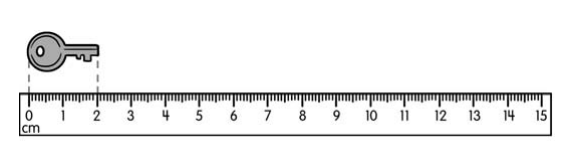
What is the length of the key?
a)
2 cm
b)
0 cm
c)
4 cm
d)
1 cm
56.

Measure the object to the nearest centimeters.
a)
5 in.
b)
6 cm.
c)
4 cm.
d)
7 cm.
57.

Measure the object to the nearest centimeter.
a)
8 cm.
b)
9 cm.
c)
10 centimeters
d)
11 centimeters
58.

Measure the object to the nearest centimeter.
a)
7 in.
b)
7 inches
c)
7 centimeters
d)
6 cm.
59.
A measure of how hot or cold something is; specifically a measure of the average kinetic energy of the particles in an object.
a)
Thermometer
b)
Temperature
c)
Absolute Zero
d)
Specific Heat
60.

An instrument that measure and indicates temperature.
a)
Thermometer
b)
Temperature
c)
Energy
d)
Kinetic Energy
61.
Water boils at 100 degrees on which scale?
a)
Farenheit
b)
Celsius
c)
Kelvin
62.
Water freezes at 0 degrees on which scale?
a)
Farenheit
b)
Celsius
c)
Kelvin
63.

Select the temperature in °C
a)
30°C
b)
100°C
c)
90°C
d)
40°C
64.

Select the temperature in °C
a)
50°C
b)
10°C
c)
20°C
d)
60°C
65.

Select the temperature in °C
a)
0°C
b)
30°C
c)
40°C
d)
10°C
66.
You should never ______ chemicals in the lab.
a)
taste
b)
touch
c)
smell
d)
all of the above
67.
If you are not sure what to do during a lab activity:
a)
guess
b)
change lab partners
c)
ask a teacher
d)
just sit quietly and do nothing
68.
I can perform my own experiments with lab materials ___.
a)
I am sure it is safe to do so.
b)
Whenever I want to.
c)
When all of my group is ready.
d)
Never.
69.
Disrupting other students in the laboratory with horseplay in the lab is:
a)
helpful.
b)
allowed
c)
dangerous.
d)
the quickest way to do a job.
70.
Which of the following IS considered safety equipment in our classroom?
a)
Eyewash Station
b)
Emergency Shower
c)
Fire Extinguisher
d)
All of the Above.
71.
You should report accidents to the teacher __.
a)
after the class is over
b)
immediately
c)
the following day
d)
never
72.
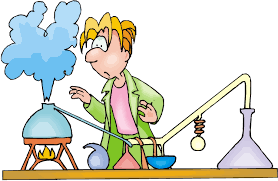
When is it OK to eat or drink in the lab?
a)
Always
b)
Never
73.

It's fine to smell chemicals directly from their containers.
a)
True
b)
False
74.

What is this science tool?
a)
jar
b)
beaker
c)
thermometer
d)
ruler
75.

This piece of lab equipment is called a ___________________.
a)
triple beam balance
b)
spring scale
c)
thermometer
d)
graduated cylinder
76.

This piece of lab equipment is called a _______________.
a)
beaker
b)
spring scale
c)
graduated cylinder
d)
thermometer
77.

The triple beam balance tool measures what
a)
Mass
b)
Temperature
c)
Volume
d)
Capacity
78.

What safety device is this student missing?
a)
lab coat
b)
hair tie
c)
goggles
d)
all of the above
79.

What is the best measurement for the graduated cylinder?
a)
63
b)
63.5
c)
64
d)
64.1
100 %

