
 Worksheets
Body Tissues
Total questions: 21
Worksheet time: 14mins
Name
Class
Date
1.
Which of the following tissues allows materials to pass through diffusion and filtration?
a)
stratified squamous
b)
simple cubiodal
c)
simple columnar
d)
simple squamous
2.
Which of the following tissues would be found in the walls of kidney tubules?
a)
simple cuboidal
b)
stratified cuboidal
c)
simple squamous
d)
stratified columnar
3.
Which of the following structures increases surfaces area for absorption?
a)
cilia
b)
microcilia
c)
microvilli
d)
goblet cells
4.
Which of the following tissues would be found in lining the esophagus?
a)
simple columnar
b)
fibrocartilage
c)
dense irregular
d)
stratified squamous
5.
What type of cell is located near blood vessels and releases heparin?
a)
macrophage
b)
mast cell
c)
fibroblast
d)
red blood cell
6.
What type of fiber is flexible and easily stretched?
a)
elastic fiber
b)
collagen fiber
c)
reticular fiber
d)
ground fiber
7.
What type of tissue binds underlying organs to skin?
a)
elastic connective tissue
b)
fibrocartilage
c)
areolar tissue
d)
dense regular connective tissue
8.
What type of tissue has a fluid-like matrix?
a)
bone tissue
b)
cartilage
c)
blood
d)
epithelial tissue
9.
What type of tissue contains WBC, RBC, and platelets?
a)
epithelial
b)
bone
c)
blood
d)
cartilage
10.
What are the four main tissues found in the body?
a)
Epithelial, Connective, Bone, Blood
b)
Muscle, Connective, Blood, Epithelial
c)
Nervous, Muscle, Connective, Epithelial
d)
Nervous, Muscle, Connective, Bone
11.
Which of the following is NOT considered a function of epithelial tissue?
a)
protection
b)
secretion
c)
absorption
d)
communication
12.
What type of cartilage can be found in the larynx?
a)
fibrocartilage
b)
hyaline cartilage
c)
elastic cartilage
d)
basal cartilage
13.
Where is epithelial tissue found?
a)
glands
b)
covering body surfaces
c)
lines organs
d)
all of the above
14.
Absorbs nutrients in the digestive tract
a)
Columnar
b)
Cuboidal
c)
Simple Squamous
d)
Pseudostratified
15.
Found in organs like the bladder that need to stretch
a)
Areolar
b)
Stratified squamous
c)
Pseudostratified
d)
Transitional
16.

Identify:
a)
Pseudostratified
b)
Smooth Muscle
c)
Transitional
d)
Stratified Squamous
17.

Identify:
a)
Columnar
b)
Cuboidal
c)
Transitional
d)
Simple Squamous
18.

Identify:
a)
Areolar
b)
Smooth Muscle
c)
Transitional
d)
Simple Squamous
19.

Identify:
a)
Smooth Muscle
b)
Columnar
c)
Transitional
d)
Pseudostratified
20.

Identify:
a)
Simple squamous
b)
Cuboidal
c)
Transitional
d)
Pseudostratified
21.
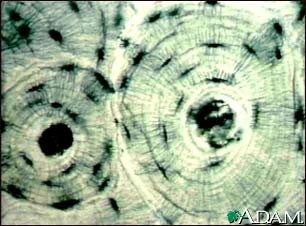
a)
smooth muscle
b)
bone
c)
nerve
d)
blood
100 %

