
 Worksheets
Science DCA Unit 1 and 2 Review
Total questions: 56
Worksheet time: 2hrs 44mins
Name
Class
Date
1.
Rain washing away soil from a hillside
a)
Weathering
b)
Erosion
c)
Deposition
2.
Waves dropping sand on the beach
a)
Weathering
b)
Erosion
c)
Deposition
3.
Wind blasting sand at rock and carving out arches
a)
Weathering
b)
Erosion
c)
Deposition
4.
Flood waters moving soil from one location to another
a)
Weathering
b)
Erosion
c)
Deposition
5.
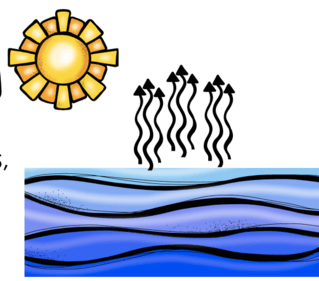
What part of the water cycle does this picture show?
a)
condensation
b)
precipitation
c)
evaporation
6.
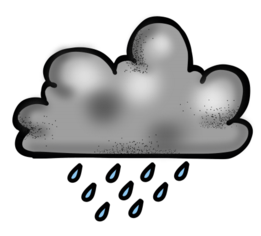
What part of the water cycle does this picture show?
a)
condensation
b)
precipitation
c)
evaporation
7.
What part of the water cycle does this picture show?
a)
condensation
b)
precipitation
c)
evaporation
8.

When water condenses, the water vapor in the air gets ___________ and changes back into liquid.
a)
cold
b)
hot
c)
warm
d)
solid
9.
Which of these is an example of precipitation?
a)
snow
b)
air
c)
clouds
d)
vapor
10.

Does evaporation happen before or after condensation?
a)
before
b)
after
c)
during
11.

What is the water cycle?
a)
the 3 forms of water
b)
the movement of water on, above, or below the surface of the Earth
c)
when water melts
d)
when clouds form
12.

What is a mixture?
a)
elements chemically combined
b)
a combination of different things
c)
it is found on the Periodic Table
d)
it is made of chemical
13.
Which of the following is the largest particle in soil?
a)
sand
b)
silt
c)
humus
d)
clay
14.
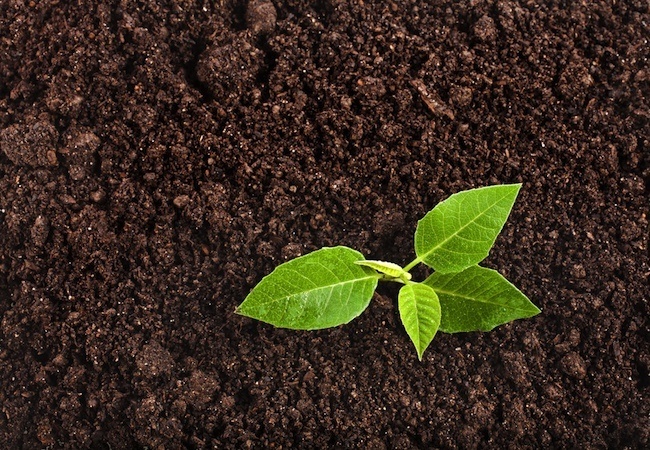
Which of the following is NOT one of the three types of soil?
a)
clay
b)
sand
c)
silt
d)
mud
15.
When plants, animals, and other organisms die, they break down and become part of the soil. What is this part of the soil called?
a)
sand
b)
silt
c)
clay
d)
humus
16.
Which type of soil can hold the greatest amount of water?
a)
sand
b)
silt
c)
clay
d)
loam
17.

Wind blowing dirt and sand through the air is an example of...
a)
weathering
b)
erosion
18.

Water gets into the cracks of rock and freezes, causing the rock to break. What is this an example of?
a)
erosion
b)
weathering
19.
Soil is a ___________ resource.
a)
Renewable
b)
Nonrenewable
c)
Conservation
d)
Human
20.
It is important for soil to retain water to
a)
withstand weathering
b)
erode more slowly
c)
help plants to grow
d)
keep it from being dry
21.
What is the best soil to grow plants in?
a)
sand
b)
silt
c)
loam
d)
clay
22.
How do you determine the texture of soil?
a)
use a spring scale
b)
observe color of particles
c)
rub particles between fingers
d)
taste particles
23.
This type of soil is sticky when wet and hard when dry.
a)
clay
b)
silt
c)
sand
d)
gravel
24.
This type of soil is best for plant growth.
a)
rock
b)
sand
c)
loam
d)
clay
25.
This type of soil is best for plant growth.
a)
rock
b)
sand
c)
loam
d)
clay
26.
This type of soil is made of tiny pieces of rock.
a)
sand
b)
clay
c)
humus
d)
loam
27.
What physical property of soil determines if it retains water?
a)
color
b)
particle size
c)
texture
d)
weight
28.
No water stays in this when poured through.
a)
loam
b)
clay
c)
gravel
d)
topsoil
29.
How can carpooling or walking help conserve nonrenewable resources?
a)
It is less expensive than driving alone.
b)
We would build more bicycles.
c)
We would use less gas and oil so need less fossil fuels.
d)
We would cause less pollution.
30.
How could you conserve a renewable resource?
a)
Drive electric cars so you won't use gasoline.
b)
Melt aluminum cans to make new ones.
c)
Make diamonds in a lab instead of mining them.
d)
Cut down fewer trees by recycling paper.
31.
We use pencils each day in class. Which part is made from a renewable material?
a)
The eraser, made from fossil fuel.
b)
The shaft made from wood.
c)
The graphite made from a mineral.
d)
The ferrule, made from metal.
32.
Coal is an example of a nonrenewable resource. Why is it considered nonrenewable?
a)
It is dangerous and expensive to dig coal in a mine.
b)
The process for making coal no longer happens.
c)
The plants that make coal are extinct.
d)
It takes millions of years to make coal.
33.
Which of the following is a renewable resource.
a)
air
b)
coal
c)
minerals
d)
natural gas
34.
The class brainstormed nonrenewable resources. Which list is correct?
a)
coal, minerals, gold, oil
b)
trees, wind, animals, water
c)
diamonds, ice, plastic, tomatoes
d)
oil, natural gas, trees, silver
35.
Which is not a way to conserve resources.
a)
recycle paper
b)
lower your thermostate in winter to use less heat
c)
car pool or use your bicycle
d)
quit eating broccoli and spinach
36.

Plants, water, solar energy are examples of what kind of resources?
a)
renewable
b)
soil and land
c)
nonrenewable
d)
biosphere
37.

The Jones family care about the environment. They run their dishwasher only when it is full. Which of the following best explains why they do this?
a)
to conserve water
b)
to save money
c)
to recycle dish soap
d)
to reduce sewage
38.
Which of the following means of transportation uses a renewable resource for its energy source?
a)
horse and wagon
b)
coal powered train
c)
gasoline truck
d)
natural gas car
39.

What should be shown in picture 2 to show that trees are a renewable resource?
a)
young sapling trees have been planted
b)
there is a pond in which fish live
c)
a log cabin has been built within the trees
d)
the stumps are removed from the leveled land
40.
to spin on an axis
a)
tilt
b)
revolve
c)
rotate
d)
system
41.
a shaded area made when light is blocked
a)
shadow
b)
axis
c)
system
d)
rotate
42.
How many times a day does High tide occur?
a)
once
b)
twice
c)
three
d)
never
43.
You measure your shadow at 9 AM and again at noon. What do you notice about your shadow?
a)
Your shadow decreased.
b)
Your shadow increased.
c)
Your shadow is the same.
d)
Your shadow disappeared.
44.
What causes seasons?
a)
The timing of the tides.
b)
The Earth's tilt toward/away from the sun along its axis.
c)
The Earth's proximity to the sun.
d)
The phases of the moon.
45.

In which diagram does POINT A experience high tide?
a)
1st - A is at the top of the earth (North)
b)
2nd - A is on the East side of Earth
c)
3rd - Moon is between Sun and Earth -A is South East
d)
4th - Moon is over Earth, A is on the North West side
46.

A student has been measuring and recording changes in weather. Her data is shown in the chart below.
Which statement is best supported by the data on the chart?
Which statement is best supported by the data on the chart?
a)
Higher wind speeds blow mostly to the north.
b)
The middle of the week is always the warmest.
47.

From the weather map above you can predict that the weather over the Great Lakes will be getting —
a)
snow
b)
ice storm
c)
colder
d)
warmer
48.

In August a class observed the changes in the length of the shadow of a meter stick. The measurement at 8:00 am is shown in at the top with the yellow sun.
Which picture underneath shows how the meter stick’s shadow most likely looked at 5:00 pm?
Which picture underneath shows how the meter stick’s shadow most likely looked at 5:00 pm?
a)
1
b)
2
c)
3
d)
4
49.

Which of the following pictures represents low tide?
a)
A
b)
B
c)
C
d)
D
50.
Which of the following statements is true about shadows?
a)
The length of shadows increases all day long
b)
The length of shadows decreases all day long
c)
The length of shadows do not change
d)
The length of shadows are longest in the morning and evening
51.
How does the Sun's position in the sky effect the length of a shadow?
a)
It determines the length of the shadow.
b)
It makes shadows appear super large.
c)
It helps you to see your shadow.
d)
It blocks all shadows, so you cannot see them.
52.
At ____ the length of a shadow is the shortest.
a)
8am
b)
5pm
c)
midday
53.
Day and night is caused by the _____________ of earth on its axis.
a)
revolution
b)
orbit
c)
rotation
54.
One complete revolution of the Earth around the sun takes about
a)
one rotation
b)
half a year
c)
one year
d)
one season
55.
Forces can change the ________ of a moving object.
a)
direction
b)
push
c)
pull
d)
friction
56.

The steam coming off the pot of boiling water is an example of....
a)
a solid becoming a liquid
b)
a liquid becoming a solid
c)
a liquid becoming a gas
d)
a gas becoming a liquid
100 %

