
 Worksheets
STAAR Science Review
Total questions: 85
Worksheet time: 3hrs 37mins
Name
Class
Date
1.
This part of the atom has very little mass but takes up most of the space of the atom (contains negatively charged particles).
a)
Positron
b)
Proton
c)
Electron
d)
Neutron
2.
Which of the following is the best example of an element, not a compound?
a)
NO
b)
BR2
c)
NH3
d)
CO2
3.
Which of the following could be an organic compound?
a)
NH3
b)
H2O
c)
CaCl2
d)
CH4
4.

How Many Valence Electrons does this family of elements have?
a)
1
b)
2
c)
3
d)
4
5.

Where are the Halogens located on the periodic table?
(Look at the picture)
(Look at the picture)
a)
A
b)
B
c)
C
d)
D
6.
The part of a Cell in a Eukaryote that contains the genetic information is called
a)
Cell Membrane
b)
Vacuole
c)
Nucleus
d)
Mitochondria
7.

Which organism is the producer in this food web?
a)
Zooplankton
b)
Small Fish
c)
Filter Feeders
d)
Phytoplankton
8.
What does cell theory say?
a)
All Living things are made of cells
b)
All cells come from pre-existing cells
c)
cells are the basic unit of life
d)
All of these answers are correct
9.
Mistletoe is a plant that grows attached to the branches of trees or shrubs. The presence of mistletoe negatively affects the growth of trees because it robs the tree of nutrients and water. Which of the following correctly describes the role of mistletoe?
a)
Parasite
b)
Prey
c)
Host
d)
Predator
10.
What energy transformation occurs in a flashlight that is powered by batteries
a)
Mechanical-> Electrical-> Radiant
b)
Chemical-> Electrical-> Radiant
c)
Electrical-> Chemical -> Radiant
d)
Radiant -> Chemical -> Electrical
11.
A space shuttle only has enough fuel to get it out of Earth’s atmosphere. Once the space shuttle is in space (where there is no friction/ air resistance) it will continue moving even without any fuel because of ________.
a)
Newton's First Law
b)
Newton's Second Law
c)
Newton's Third Law
d)
The Law of Space and Redundancy Law
12.

What is the average speed walked in the walk-a-thon?
a)
810 m/s
b)
90 m/s
c)
10 m/s
d)
9 m/s
13.
Which of the following is the best model of earth’s revolution?
a)
A spinning top
b)
a marble traveling around a beach ball at an angle
c)
a basketball spinning on an 8th grader's finger
d)
a cat chasing a squirrel
14.

At which two letters above are the north and south hemispheres experiencing equal hours of day and night because neither pole is tilted toward or away from the sun?
a)
A and B
b)
C and D
c)
B and D
d)
A and C
15.
What lunar phase would occur a week after a new moon?
a)
Last Quarter
b)
Full Moon
c)
New Moon
d)
First Quarter
16.

This picture shows the moon and the earth during a _______ Moon and a ______ Tide.
a)
Full....Neap
b)
New...Spring
c)
Full...Spring
d)
New...Neap
17.
Students drew contour lines over landforms in science class. The V shapes formed when the lines meet a river bend to indicate...
a)
how fast the river is moving
b)
where the river started
c)
Which direction the river is flowing
d)
whether or not the river will bend
18.

What geographic feature can be indicated by the arrow on the map?
a)
Gradual Drop
b)
Flat Land
c)
Cliff
d)
Depression
19.
Seafloor spreading and rift valleys occur at _________ plate boundaries
a)
Convergent
b)
Divergent
c)
Transform
d)
Subduction Zones
20.
Fault lines occur at ______ plate boundaries.
a)
Convergent
b)
Divergent
c)
Transform
d)
Subduction Zones
21.
Which 2 cell structures are the main difference between plant cells and animal cells?
a)
Cell wall and Cell Membrane
b)
Vacuole and Mitochondria
c)
Cell Wall and Chloroplast
d)
Nucleus and Cytoplasm
22.
This movement of air as it heats and cools (due to the uneven heating of the earth by the sun) is responsible for the creation of wind.
a)
Conduction
b)
Radiation
c)
Convection
d)
Jetstream
23.

How did the weather in Texas change as a result of the front that just came through?
a)
Temperatures dropped and there were storms
b)
Temperatures rose and there was light rain
c)
Temperatures rose and skies were sunny and clear
d)
The weather remained the same
24.
All weather on earth is due to the uneven heating of the earth by …
a)
Your Microwave
b)
Wind
c)
Greenhouse Gases
d)
The Sun
25.
The part of a cell that contains the chromosomes (wound up DNA) in eukaryotic cells.
a)
Chloroplasts
b)
Cell Wall
c)
Nucleus
d)
Homeostasis
26.
The genetic code for all of your traits.
a)
Nucleus
b)
DNA
c)
Chloroplast
d)
Recessive gene
27.
The organelle inside a plant cell that converts sunlight into energy.
a)
Chloroplast
b)
Photosynthesis
c)
Parasite
d)
Cell Wall
28.
The part of a plant cell that is rigid & permeable.
a)
Chloroplast
b)
Turgor Pressure
c)
Cell Wall
d)
Phototropism
29.
The term used to define a cell that has a nucleus containing DNA.
a)
Prokaryote
b)
Eukaryote
c)
Autotroph
d)
Homeostasis
30.
A force exerted outward on a cell wall by the water contained on a cell.
a)
Turgor Pressure
b)
Adaptation
c)
Cell Wall
d)
Photosynthesis
31.
The building up of an ecosystem after lava or glaciers have left nothing but rock.
a)
Secondary Succession
b)
Primary Succession
c)
Natural Selection
d)
Adaptation
32.
A cell without a nucleus.
a)
Eukaryotic
b)
Prokaryotic
c)
Heterotroph
33.
Organisms who receive energy from dead or decaying matter.
a)
Prokaryotic
b)
Omnivore
c)
Heterotrophic
d)
Decomposers
34.
Rebuilding an ecosystem after a catastrophic event has occurred and soil is present.
a)
Primary Succession
b)
Secondary Succession
c)
Natural Selection
d)
Adaptations
35.
The trait that is always expressed. It will hide or mask the other trait.
a)
Recessive
b)
Dominant
c)
Natural Selection
d)
Homeostasis
36.
Behavior patterns, or internal and external structures which allow an organism to survive and reproduce in their environment successfully.
a)
Adaptations
b)
Homeostasis
c)
Recessive traits
d)
Natural Selection
37.
The trait that is hidden or masked by the other trait.
a)
Dominant
b)
Eukaryotic
c)
Recessive
d)
Homeostasis
38.
Organisms who make their own energy by taking in light or chemicals.
a)
Heterotroph
b)
Phototropism
c)
Autotroph
d)
Heterotroph
39.
Successful traits are passed onto offspring through natural circumstances.
a)
Natural Selection
b)
Primary Succession
c)
Secondary Succession
d)
Dominant
40.
The response of a plant due to the stimuli of light energy.
a)
Parasitic
b)
Chloroplast
c)
Photosynthesis
d)
Phototropism
41.
This type of organism feeds on a host organism, causing harm to the host.
a)
Decomposer
b)
Parasite
c)
Heterotroph
d)
Carnivore
42.
The organism's ability to maintain equilibrium in their body.
a)
Homeostasis
b)
Heterotroph
c)
Prokaryotic
d)
Autotrophic
43.
The process where plants use the light from the sun to convert carbon dioxide and water into glucose.
a)
Phototropism
b)
Chloroplast
c)
Photosynthesis
d)
Prokaryotic
44.
Organisms who receive their energy by consuming other organisms.
a)
Chloroplast
b)
Heterotroph
c)
Autotroph
d)
Phototropism
45.
The living organisms in an ecosystem such as plants and animals
a)
adaptation
b)
biotic
c)
decomposer
d)
abiotic
46.
The non-living factors in an ecosystem such as rocks, water and temperature.
a)
natural selection
b)
biotic
c)
biodiversity
d)
abiotic
47.
Organisms that make their own food. Also called autotrophs.
a)
Producer
b)
Parasite
c)
Scavenger
d)
Decomposer
48.
Organisms that eat other organisms (heterotroph).
a)
Producer
b)
Parasite
c)
Consumer
d)
Scavenger
49.
Organisms that digest dead producers and consumers such as mold, fungus, bacteria and worms.
a)
Producer
b)
Parasite
c)
Decomposer
d)
Consumer
50.
Organisms, such as vultures, that feed on dead animals.
a)
Producer
b)
Scavenger
c)
Consumer
d)
Parasite
51.
Organisms that live in or on another organism and benefit at the host's expense.
a)
Parasite
b)
Producer
c)
Scavenger
d)
Decomposer
52.
Struggle between organisms of the same or different species for food, space, light, water, etc.
a)
Interdependence
b)
Natural Selection
c)
Adaptation
d)
Competition
53.
Process by which an animal or plant species becomes fitted to its environment to help them survive.
a)
Interdependence
b)
Natural Selection
c)
Adaptation
d)
Competition
54.
Photosynthetic plant that is the beginning of the food chain for many aquatic animals.
a)
Phytoplankton
b)
Parasite
c)
Producer
d)
Consumer
55.
Mutual dependence between organisms in order to help them survive.
a)
Competition
b)
Interdependence
c)
Adaptation
d)
Natural Selection
56.
Variety of life
a)
Natural Selection
b)
Ecological Succession
c)
Interdependence
d)
Biodiversity
57.
Gradual and orderly process of change in an ecosystem until a stable community is established.
a)
Ecological Succession
b)
Biodiversity
c)
Adaptation
d)
Competition
58.
Process by which organisms that are suited to a particular environment are better able to survive and reproduce than other organisms that are not.
a)
Ecological Succession
b)
Biodiversity
c)
Natural Selection
d)
Producer
59.
What is the formula for density?
a)
density = mass x volume
b)
density = mass / volume
c)
density = mass + volume
d)
density = mass - volume
60.
In general what is the most dense form of matter?
a)
Solid
b)
Liquid
c)
Gas
d)
Plasma
61.
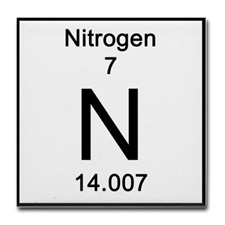
What is the number of protons that the element in this image contain?
a)
14
b)
7
c)
15
d)
18
62.
The positive particles of an atom are called:
a)
electrons
b)
positrons
c)
neutrons
d)
protons
63.
Which answer best fits a description of why Alfred Wegener is famous?
a)
German meteorologist that proposed the idea of continental drift
b)
proposed sea floor spreading
c)
Canadian geophysicist who combined sea floor spreading and continental drift into Plate Techtonics Theory
d)
theory that new seafloor is formed when magma is forced upward toward the surface at a mid ocean ridge
64.
Subduction is:
a)
process by which ocean crust is taken into the trenches and back to the mantle
b)
theory that new seafloor is formed when magma is forced upward toward the surface at a mid ocean ridge
c)
plates slide past each other in opposite directions
d)
a gradual movement of the continents across the Earth's surface over time
65.
Tectonic plates are:
a)
largest section of Earth's layers - composed of three layers
b)
Earth's crust and part of the upper mantle that are broken into sections
c)
lowest or deepest layer of the mantle - semi rigid
d)
landmass in which all continents were once joined together
66.
Which description best describes the crust?
a)
smallest section of Earth's layers
b)
the plastic like or tar like layer below the lithosphere - middle layers of the mantle
c)
largest section of Earth's layers - composed of three layers
d)
lowest or deepest layer of the mantle - semi rigid
67.
Mantle is:
a)
molten and is composed of iron and nickle
b)
largest section of Earth's layers - composed of three layers
c)
smallest section of Earth's layers
d)
solid, dense and is composed of iron and nickle
68.

Asexual reproduction that produces two identical daughter cells is called what?
a)
Meiosis
b)
Mitosis
c)
biotechnology
d)
cellular respiration
69.

Sexual reproduction that produces four genetically different gametes (sperm and egg).
a)
Meiosis
b)
Cancer
c)
Mitosis
d)
Virus
70.
The genetic make-up of an organism is known as:
a)
Heredity
b)
Phenotype
c)
Genotype
d)
Genetics
71.
The physical appearance of an organism is known as:
a)
Heredity
b)
Phenotype
c)
Genotype
d)
Genetics
72.
What makes it possible for you to see the surface of the moon from Earth?
a)
The moon gives off its own light.
b)
Light from Earth is reflected by the moon's surface.
c)
Light from Sun is reflected by the moon's surface.
d)
The moon absorbs sunlight during the day and glows at night.
73.
A _______ is a reflecting surface that curves outward like the back of a spoon.
a)
convex mirror
b)
concave
c)
cracked mirror
d)
concave lens
74.
A _______ is a reflecting surface that curves outward like the inside of a spoon.
a)
convex mirror
b)
concave mirror
c)
cracked mirror
d)
concave lens
75.
Which type of reaction does the following equation represent?
CO2 → C + O2
CO2 → C + O2
a)
Synthesis
b)
Decomposition
c)
Single Displacement
d)
Double Displacement
76.
What is a substance with a pH of 7 most likely to be?
a)
water
b)
soda
c)
bleach
d)
ammonia
77.
2H2O + 2N → 4H + 2NO
The chemical symbols on the RIGHT are called:
The chemical symbols on the RIGHT are called:
a)
products
b)
reactants
c)
yields/produces
78.
2H2O + 2N → 4H + 2NO
The chemical symbols on the LEFT are called:
The chemical symbols on the LEFT are called:
a)
products
b)
reactants
c)
yields/produces
79.
What is the atomic number of an atom with 13 protons, 14 neutrons, and 10 electrons?
a)
1
b)
13
c)
27
d)
37
80.
A change in pitch or frequency that occurs when a source of sound is moving away from or toward a listener is known as?
a)
Doppler effect
b)
Dapple effect
c)
Digger effect
d)
Big Bang theory
81.
The path of food energy from the sun to the producer then transferred to a series of consumers is known as a?
a)
Food Web
b)
Food Chain
c)
Energy Line
d)
Energy Transformation
82.
Which best explains what happens when a solid changes into a liquid?
a)
Molecules move closer together and give off heat.
b)
Slower moving molecules cause a chemical change.
c)
As energy increases, temperature decreases.
d)
As molecules absorb heat, they move faster and spread apart.
83.
Balanced forces would describe objects that_____
a)
move at a constant speed
b)
change speed
c)
travel at a slower speed
d)
change direction
84.
Groups on the periodic table..........
a)
are horizontal
b)
are rows
c)
are from left to right
d)
go up and down
85.
If the same amount of force is applied to a car with a small mass that is applied to a car that is much heavier, what would happen?
a)
the small car will accelerate faster
b)
the small car will accelerate slower
c)
the heavier car will accelerate faster
100 %

