
 Worksheets
Science QCA # 4 Review
Total questions: 78
Worksheet time: 54mins
Name
Class
Date
1.
Which two organ systems work together to control the rate of a person’s breathing?
a)
Digestive & Respiratory
b)
Circulatory & Skeletal
c)
Nervous & Respiratory
2.
The reactants of cellular respiration are also the products of
a)
fermentation
b)
osmosis
c)
transpiration
d)
photosynthesis
3.
The part of a chromosome that carries information for a particular trait is called a
a)
protein
b)
gene
c)
nucleus
d)
gamete
4.

What gas does X represent?
a)
Carbon Dioxide
b)
Nitrogen
c)
Water Vapor
d)
Oxygen
5.

What is the function of this organelle?
a)
store water
b)
absorb energy from the sun
c)
create proteins
d)
release ATP
6.

Which of the following elements is required in an organic compound?
a)
nitrogen
b)
oxygen
c)
carbon
d)
sodium
7.
All of the following elements are common to organic compounds EXCEPT
a)
iodine
b)
hydrogen
c)
phosphorous
d)
oxygen
8.

What is the length of this object?
a)
5.0 cm
b)
5.1 in
c)
5.3 cm
d)
5.1 cm
9.

What unit should be used when reading this scientific instrument?
a)
gram
b)
kilogram
c)
centimeter
d)
millimeter
10.

What units should be used when reading this scientific tool?
a)
milliliter
b)
Liter
c)
centimeter
d)
gram
11.
Mr. Z was trying to figure out if plants grew better with blue light shinning on them. What is the independent variable?
a)
the color of light
b)
the plant height
c)
the type of plant
d)
the soil
12.
A student is planning an experiment to find out how the height from which he drops a ball effects how high the ball bounces. The dependent variable is the _____.
a)
Diameter of the ball
b)
Force acting on the ball
c)
Height that the ball bounces
d)
Height from which the ball is dropped
13.
Mrs. Ahlborn wanted to see if her running shoes were the fastest. She tried three different brands. What is the dependent variable?
a)
the different brands of shoes
b)
the speed
c)
the amount of time
d)
shoe size
14.
What are the things that stay the same in an experiment?
a)
independent variables
b)
dependent variables
c)
constants
d)
control
15.
The control in an experiment is the group that IS NOT experimented on.
a)
true
b)
false
16.

What is the mass?
a)
272.1 cm
b)
270.2 g
c)
272.1 g
d)
270.1 g
17.

What is the mass?
a)
540.5 g
b)
45.2 g
c)
540.2 g
d)
545.2 g
18.
Asexual reproduction in organisms produce offspring that are______________
a)
different from the parent
b)
identical to the parent
c)
highly charged organism
d)
not like the parent
19.
Through which process do plants make food?
a)
Transpiration
b)
Photosynthesis
c)
Respiration
d)
Precipitation
20.
The human body is complex, consisting of many types of cells. Each cell plays a specific role in maintaining the body’s internal balance. This internal balance is called___________
a)
Internal equilibrium
b)
Homeostasis
c)
Balance
d)
A good state
21.

This organelle is a stiff outer barrier of a plant cell; protects the cell and gives it structure
a)
Cell Wall
b)
Cell Membrane
c)
Vacuole
d)
Cytoskeleton
22.

The nucleus contains
a)
a brain
b)
DNA
c)
mitochondria
d)
chloroplasts
23.
What system receives oxygen and gets rid of carbon dioxide?
a)
Heart
b)
Muscular System
c)
Veins
d)
Respiratory System
24.
What system breaks food down into smaller molecules for the cells to use?
a)
Stomach
b)
Digestive System
c)
Respiratory system
d)
Lungs
25.
Which of the following is in the correct order from smallest to largest?
a)
tissue-organ-system-cell
b)
cell-organ-tissue-system
c)
system-tissue-cell-organ
d)
cell-tissue-organ-system
26.
How does the circulatory system and the skeletal system work together?
a)
the circulatory system makes cells while the skeletal system transports the cells where the need to go
b)
the skeletal system makes cells while the circulatory system transports them where the need to go
c)
The circulatory system produces energy for the body and the skeletal system makes cells for the body
d)
The skeletal system digests food and the circulatory system brings air into the body
27.

What level consumer is the deer?
a)
Primary
b)
Secondary
c)
Primary & Secondary
d)
Producer
28.

Which of the following best describes the blue bird's (in the middle) role in this ecosystem?
a)
carnivore
b)
omnivore
c)
herbivore
d)
decomposer
29.

An organism that gets energy from eating other organisms is a ______________.
a)
producer
b)
consumer
c)
decomposer
d)
prey
30.

An organism that gets energy from breaking down dead organisms, non-living material or waste is a(an) ___________.
a)
producer
b)
consumer
c)
decomposer
d)
autotroph
31.

What is a carnivore?
a)
an animal that gets energy by eating other animals
b)
an animal that gets energy by eating only plants
c)
an animal that gets energy by eating both plants and animals
d)
an animal that makes its own energy through photosynthesis
32.
How does biodiversity contribute to the sustainability of an ecosystem?
a)
There are few organisms to compete with one another.
b)
The more variety there is, the better it can survive change.
c)
The less variety there is, the better it can survive change.
d)
Biodiversity has no effect on an ecosystem.
33.
What word describes a trait that helps an organism survive in its environment?
a)
natural selection
b)
mutation
c)
camouflage
d)
adaptation
34.
Why are advantageous traits more likely to be passed onto offspring?
a)
They are more likely to survive and reproduce.
b)
They come from dominant alleles.
c)
They come from recessive alleles.
d)
The trait is an acquired phenotype.
35.

A dichotomous key for trees is provided. Hikers found a tree that has large brown cones and single sharp needles. What species of tree have the hikers found?
a)
Juniper
b)
Pine
c)
Spruce
d)
Fir
36.

A dichotomous key for insects is given. To what order does an insect with two pairs of scaly wings belong?
a)
Coleoptera
b)
Heteroptera
c)
Diptera
d)
Lepidoptera
37.

A student discovers an arachnid with a segmented abdomen, long legs, and a tail with no stinger. The student uses the dichotomous key below to identify it. Which arachnid has the student found?
a)
Whip Scorpion
b)
Wind Scorpion
c)
Daddy long legs
d)
Scorpion
38.
The better adapted organisms survive to pass traits along to offspring.
a)
Evolution
b)
Natural Selection
c)
Extinction
d)
Artifical Selection
39.
What is the advantage of having different shaped beaks?
a)
To look different from other species.
b)
To be able to eat the food readily available in the environment.
c)
To protect itself against predators.
d)
To protect itself against prey.
40.
The purpose of selective breeding is to
a)
get bigger animals
b)
get smaller animals
c)
create animals with desirable traits
d)
create animals with bad traits
41.
Where humans have bred organisms together based on traits we like.
a)
Evolution
b)
Natural Selection
c)
Extinction
d)
Artificial Selection
42.
Genetic differences between organisms of the same species
a)
Variation
b)
Adaptation
c)
Behavior
d)
Environment
43.
What did Darwin conclude about the finches on the Galapagos Islands?
a)
They evolved from a common ancestor on the main land
b)
They evolved from many different types of birds
c)
They all came from different countries and continents
d)
They developed from other types of organisms
44.
Why did the population of peppered moths in England change from light to dark after the Industrial Revolution?
a)
Darker moths were not seen as easily and survived and reproduced.
b)
Light moths were killed by soot
c)
The birds that ate the dark moths were killed by soot
d)
Dark moths were produced by industrial processes
45.
Modern whales developed their traits through natural selection. What occurs during the process of natural selection?
a)
Organisms choose mates from other species to create new species
b)
Breeders selectively cross organisms with desired traits
c)
The fittest organisms can survive and reproduce
d)
Organisms remain exactly the same over time.
46.

What is the volume of the fish?
a)
18.0 cm3
b)
6.0 cm3
c)
38.0 cm3
47.

Sponge Bob's volume equals
a)
0.5 mL
b)
1.0 mL
c)
2.0 mL
d)
3.0 mL
48.

The green jade sample has a volume of
a)
Cannot be determined
b)
10.5 cm3
c)
50.0 cm3
d)
60.5 cm3
49.

What is the volume of Object X?
a)
10.0 cm3
b)
15.0 cm3
c)
20.0 cm3
d)
25.0 cm3
50.
Succession that occurs in an area with NO SOIL
a)
royal succession
b)
primary succession
c)
secondary succession
d)
pioneer species
51.
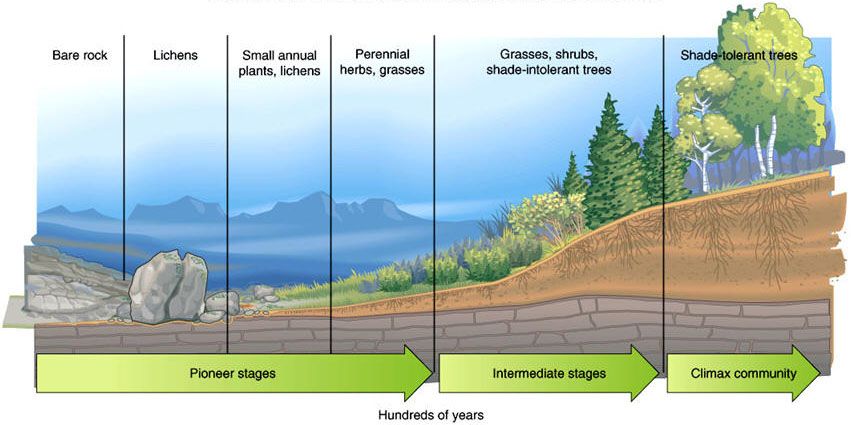
The picture shows what type of succession?
a)
primary
b)
secondary
c)
tertiary
d)
quaternary
52.
Starts with BARE ROCK followed by lichen
a)
primary succession
b)
secondary succession
c)
both types of succession
53.
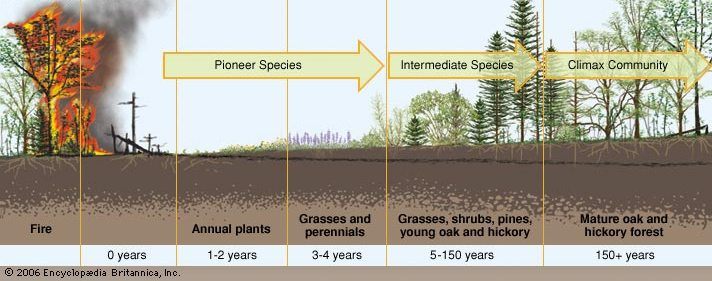
The picture shows what type of succession?
a)
primary
b)
secondary
c)
tertiary
d)
quaternary
54.
The final stable community of plants and animals is called:
a)
pioneer community
b)
farmland
c)
climax community
d)
old field
55.
How do lichens contribute to primary succession?
a)
Lichens decompose organic matter from animals and plants
b)
Lichens begin to break down rock to form soil
c)
Lichens are nitrogen fixing bacteria
d)
Lichens convert carbohydrates into fossil fuels.
56.
Reaches a climax community quicker because soil is already present
a)
primary succession
b)
secondary succession
c)
both types of succession
57.
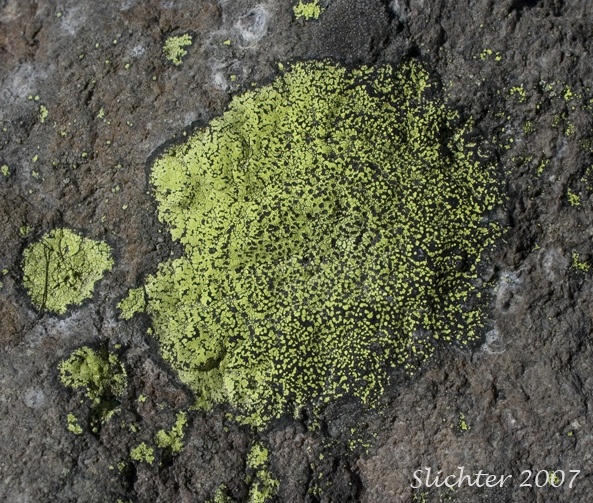
What is the first species you will see after a primary succession? (in picture)
a)
lichens
b)
grasses
c)
small plants
58.
Biodiversity can affect the ________ of ecosystems and the _________ of populations.
a)
sustainability and stability
b)
stability and sustainability
c)
life and existence
d)
existence and life
59.

Which of the following is an example of chemical weathering?
a)
A rock being cracked by tree roots
b)
Animals burrowing in the soil.
c)
Ice wedging
d)
Carbon dioxide combining with rain to form carbonic acid that slowly dissolves rock.
60.
____________ is the breaking of rock into smaller pieces
a)
Weathering
b)
Erosion
c)
Deposition
d)
Cementation
61.

During a drought, which force of nature tends to cause the most soil erosion?
a)
runoff
b)
wind
c)
gravity
d)
glaciers
62.

____________ is the grinding of rock particles against other rock particles.
a)
ice wedging
b)
root wedging
c)
oxidation
d)
abrasion
63.

Which force of erosion causes sediment to move from high elevations to low elevations?
a)
Wind
b)
Waves
c)
Gravity
d)
Water
64.

A ___________________ is the area of land that drains a river system.
a)
rill
b)
gully
c)
stream channel
d)
watershed
65.
___________ is the most powerful force of weathering and erosion because it can cause both chemical and mechanical weathering as well as erosion.
a)
Wind
b)
Water
c)
Gravity
d)
Ice
66.

Which type of weathering is shown in the picture?
a)
chemical, ice wedging
b)
mechanical, ice wedging
c)
chemical, abrasion
d)
mechanical, abrasion
67.
The use of pesticides and fertilizers is carefully monitored because of the effect they can have on the environment.
Which of the following is a possible negative effect of the use of these chemicals on the environment?
Which of the following is a possible negative effect of the use of these chemicals on the environment?
a)
Runoff carries these chemicals into lakes and streams.
b)
Theses chemicals cannot be purchased in large bulk.
c)
These chemicals are expensive to produce.
These chemicals are expensive to produce.
d)
Storage space for these chemicals is limited.
68.
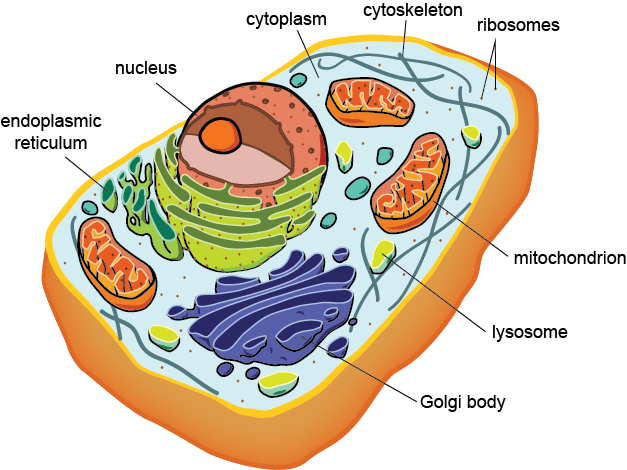
Which of the following statements is not part of the cell theory?
a)
Cells are the basic unit of structure and function in all living things.
b)
All cells are produced from other cells.
c)
Only animal cells are composed of cells.
d)
All living things are composed of cells.
69.

What is one way in which all living things on Earth are alike?
a)
All living things have hair.
b)
All living things are made of cells and come from other cells.
c)
The cells of all living things have chloroplasts.
d)
All living things can move.
70.
What structures distinguish a plant cell from an animal cell?
a)
Plant cells have cell walls and ribosomes.
b)
Plant cells have cell walls and chloroplasts.
c)
Plant cells have chloroplasts and ribosomes.
d)
Plant cells have chloroplasts and mitochondria.
71.
Which of the following shows the correct order of the energy transformations that occur when green plants produce their food from the Sun’s energy?
a)
Chemical --> thermal
b)
Radiant (solar) --> chemical
c)
Thermal --> radiant (solar)
d)
Chemical --> electrical
72.
The sun’s energy used by green plants to produce food is an example of light energy being converted to what other form of energy?
a)
kinetic energy
b)
heat energy
c)
mechanical energy
d)
chemical
73.
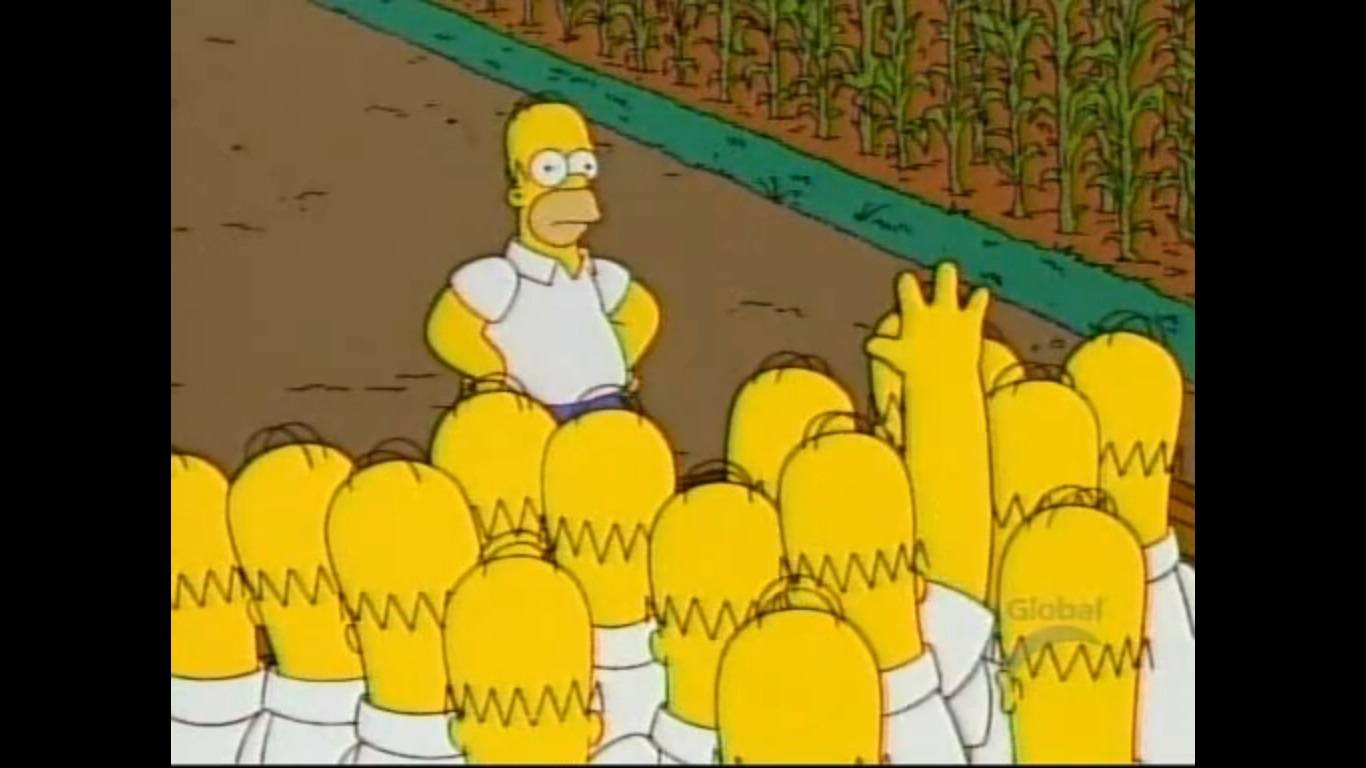
All of the offspring of an organism have the same genetic material, which is identical to the parent organism. From this, we can conclude that this organism -
a)
makes its own food
b)
is unicellular
c)
reproduces sexually
d)
reproduces asexually
74.
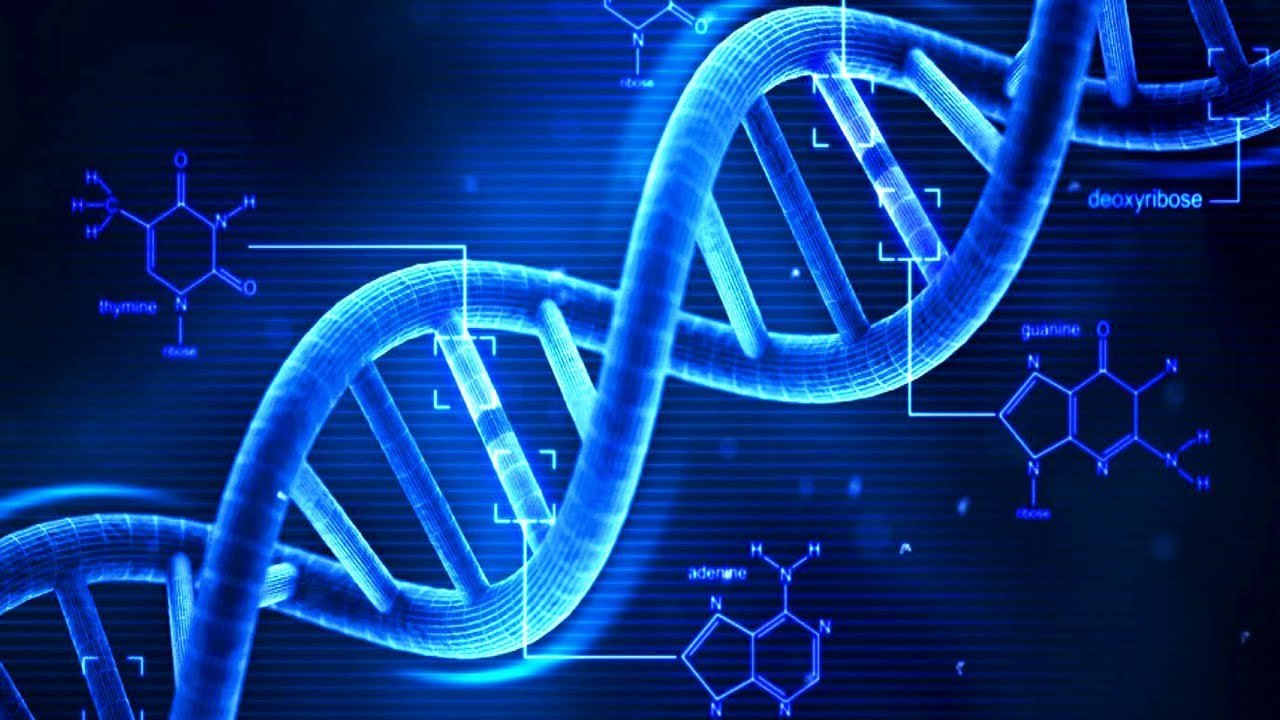
When comparing the offspring of sexually and asexually reproducing organisms, we would expect the genetic material (DNA) of the sexually reproducing organism to -
a)
contain fewer mutations
b)
be lesser in quantity
c)
be simpler overall
d)
show more variation
75.
What are some of the facts about asexual reproduction?
a)
Takes only one mate to reproduce and takes a longer time to reproduce
b)
Takes a shorter amount of time to reproduce and it takes two mates to reproduce
c)
Reproduces diverse offspring and takes a longer time to reproduce
d)
Takes only one mate to reproduce and takes a shorter time to reproduce
76.
What are some of the facts about sexual reproduction?
a)
Takes two mates to reproduce and takes a longer time to reproduce
b)
Takes one mate to reproduce and takes a shorter amount of time to reproduce
c)
Takes two mates to reproduce and takes a shorter amount of time to reproduce
d)
Takes one mate to reproduce and takes a shorter amount of time to reproduce
77.
Where does an offspring get its traits in asexual reproduction?
a)
From both parents
b)
From only one parent
c)
From neither parent
d)
There are no traits handed down
78.
What is an advantage of sexual reproduction?
a)
Allows genetic variation
b)
Only needs one parent
c)
Happens very quickly
d)
Offspring are exact copies of parent
100 %

