
 Worksheets
Ecology
Total questions: 80
Worksheet time: 1hrs 12mins
Name
Class
Date
1.

symbiotic relationship in which both organisms benefit
a)
competition
b)
Mutualism
c)
nitrogen fixation
d)
energy pyramid
2.

A living relationship between two species in which one organism is harmed is called...
a)
mutualism
b)
commensalism
c)
parasitism
d)
niche
3.

What does a food web represent?
a)
All connections of energy flow throughout all organisms in a habitat.
b)
The specific ways that mutualism is carried out.
c)
A single pathway or energy flow between organisms.
d)
How carnivores get their food.
4.

The image provided is an example of a(n):
a)
Carnivore
b)
Herbivore
c)
Producer
d)
Autotroph
5.
The amount of energy that usually transfers from one trophic level to the next...
a)
10%
b)
20%
c)
80%
d)
50%
6.
An illustration that uses arrows to show the many possible directions in which matter and energy can pass through the organisms in an ecosystem.
a)
Food chain
b)
Food web
c)
Energy Pyramid
d)
Succession Map
7.
The nonliving aspects of an ecosystem.
a)
Abiotic factors
b)
Biotic factors
8.
The living portions of the ecosystem.
a)
Biotic factors
b)
Abiotic factors
9.
Water temperature would be an example of ...
a)
A biotic factor
b)
An abiotic factor
10.
A place where an organism lives.
a)
Terrain
b)
Habitat
c)
Community
d)
Population
11.
Organisms that can capture energy from inorganic, nonliving sources.
a)
Producers
b)
Consumers
c)
Detritivores
d)
Carnivores
12.
Organisms that feed on both living producers and other consumers.
a)
Carnivores
b)
Omnivores
c)
Herbivores
d)
Detritivores
13.
The general name for organisms like animals and fungi that get their energy from eating other organisms.
a)
Producers
b)
Consumers
c)
Detritivores
d)
Carnivores
14.
True or False: It is possible for a carnivore to be a producer.
a)
False
b)
True
15.
What does every food chain start with? (Even if it's not drawn or written there!)
a)
producers
b)
sun
c)
consumer
d)
decomposers
16.
Consumer that eats plants
a)
heterotroph
b)
herbivore
c)
producer
d)
community
17.

The rabbit in this food web would be considered a:
a)
Decomposer
b)
Producer
c)
Secondary Consumer
d)
Primary Consumer
18.

What are the Abiotic factors in this image?
a)
water, sunlight, dirt, air
b)
birds and plants
c)
birds, water, dirt
d)
plants, water
19.

All of the living and nonliving things in an area that interact with each other are called a/an ______.
a)
community
b)
habitat
c)
population
d)
ecosystem
20.

Cattle egrets forage (feed) in fields among cattle. The egret gets easy access to flying insects stirred up by the cattle, and the cattle don't care if they are there or not.
a)
mutualism
b)
commensalism
c)
competition
d)
parasitism
21.
A relationship between two organisms in which one organism benefits and the other is unharmed...
a)
Mutualism
b)
Competition
c)
Parasitsm
d)
Commensalism
22.
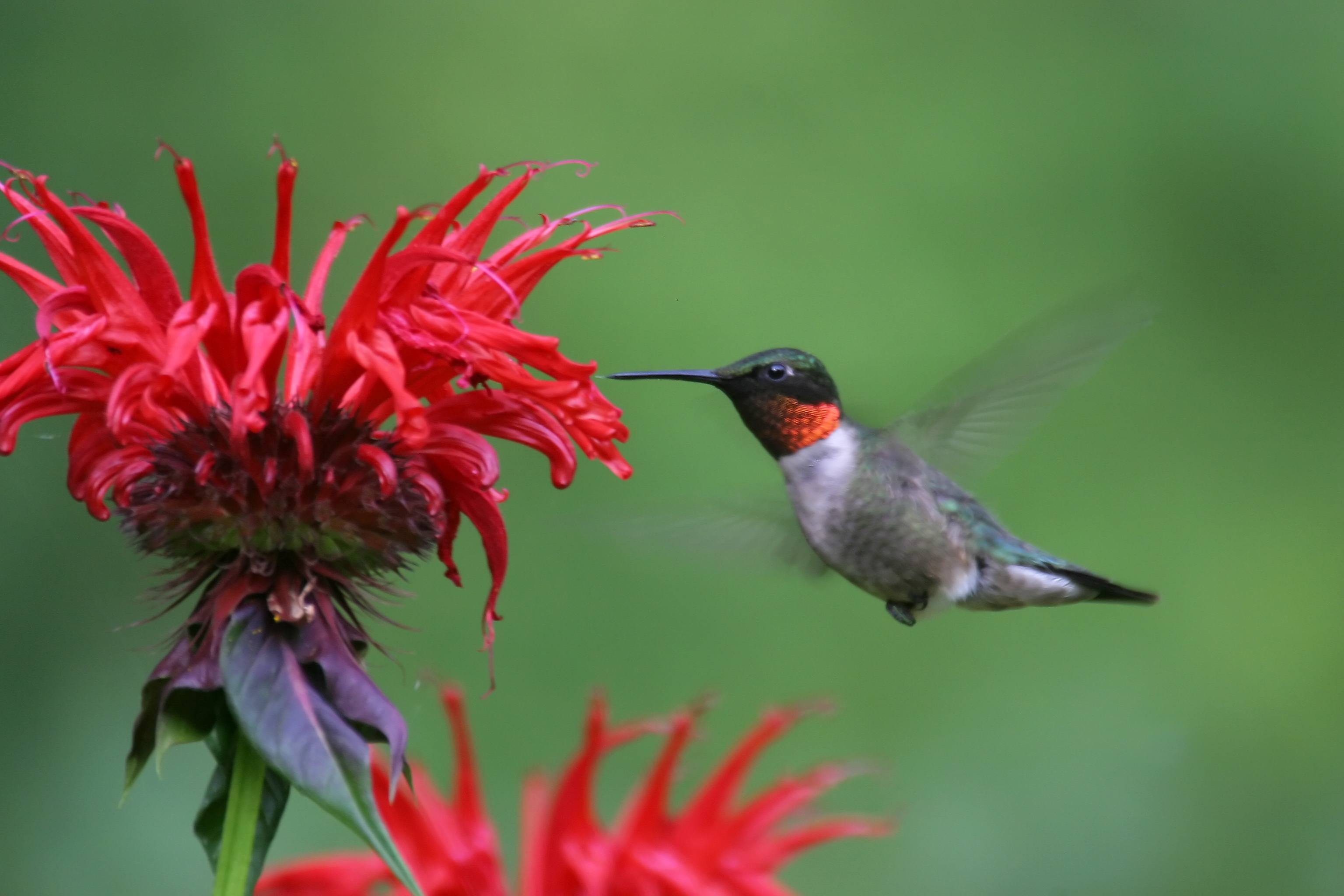
What type of symbiosis? Hummingbirds feed on nectar from flowers. The flowers are pollinated by hummingbirds as they move from flower to flower.
a)
commensalism
b)
mutualism
c)
parasitism
d)
predation
23.
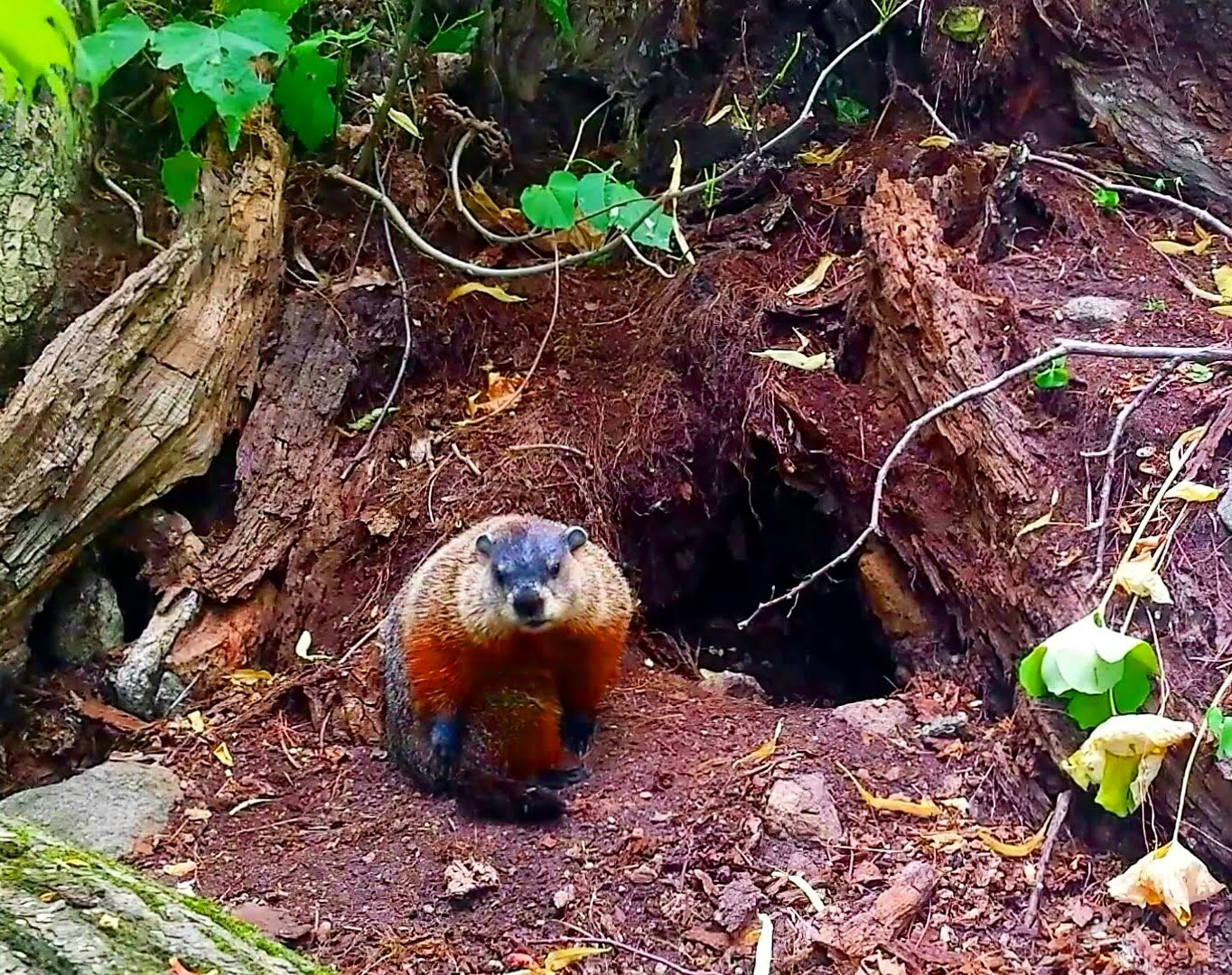
What type of symbiosis? Skunks often live in burrows that have been dug and abandoned by woodchucks.
a)
commensalism
b)
mutualism
c)
parasitism
d)
predation
24.
Which symbols best describe parasitism?
a)
+,+
b)
+,-
c)
+,0
d)
-,0
25.
How many types of symbiosis are there?
a)
5
b)
7
c)
3
d)
If you pick this you're silly
1000
1000
26.
A tick and a dog have this type of relationship.
a)
mutualism
b)
commensalism
c)
neutralism
d)
parasitism
27.
A frog eats a fly. The frog and fly are demonstrating ________.
a)
mutualism
b)
competition
c)
predator/prey
d)
parasitism
28.
One reason the African Elephant is going extinct is due to high demand of...
a)
their ivory tusks.
b)
their leathery hides.
c)
their long snouts.
d)
their huge feet.
29.
Which one of these things is a threat to natural habitats?
a)
Animalistic takeover
b)
Weather
c)
Hunters
d)
Human Activity
30.
A community of plants and animals and their habitat is known as....
a)
A Hydrosystem
b)
An Ecosystem
c)
A Habitat
d)
An Environment
31.
If one ecosystem dies, it has no affect surrounding ecosystems.
a)
True
b)
False
32.
Scientists believe that the destruction of the rainforests has led to global climate change.
a)
True
b)
False
33.
In 1973, Congress passed the __________________________, which protects specific habitats.
a)
Animal Rights Act
b)
Act of Morale Apptitude
c)
Habitats for Humanities Act
d)
Endangered Species Act
34.
Conservation is the act of conserving, or protecting the environment, plants, and animals. Why is this so important? What are some things you can do to help conserve our environment?
a)
leave water on, leave TV on, run dishwasher with 1 plate
b)
run the washing machine with 1 shirt
c)
leave the refrigerator door open
d)
turn off water, turn off lights, turn off TV
35.
In which way do humans have a negative impact on the environment?
a)
burn fossil fuels
b)
recycle cans
c)
reuse a paper bag
36.
An endangered species is
a)
One whose numbers are so small that it is at risk of extinction
b)
One whose not been spotted after many years.
c)
One whose numbers are abundant.
37.
Which of these describes a species that has become extinct?
a)
fewer members of the species are dying than being born
b)
more members of the species are dying than being born
c)
very few members of a species are alive
d)
all members of a species have died
38.
Extinction rates are significantly __________ in recent decades than before.
a)
Lower
b)
Higher
39.
Humans are one major reason for many of the extinctions we see today.
a)
True
b)
False
40.
Programs that breed animals in captivity then release them to the wild are called...
a)
Kidnapping
b)
Breeding Buildings
c)
Captive Breeding Programs
d)
Catch and Release Programs
41.
The species that plays the biggest role in the habitat is?
a)
Smaller species
b)
Larger species
c)
Keystone Species
d)
Evolving species
42.
Do fish lay eggs or give birth?
a)
Give Birth
b)
Lay Eggs
43.
Food provides animals with the materials and energy they need for growth, warmth, and motion. Plants get material for growth mostly from air and water, and obtain energy from sunlight.
Producers provide food to consumers because ―
Producers provide food to consumers because ―
a)
many animals prefer eating plants to eating meat
b)
plants can easily make food from soil and water
c)
animals cannot produce their own food
d)
plants are more abundant in ecosystems
44.
The illegal capture or killing of an organism, often for money, is called...
a)
poaching
b)
harvesting
c)
fragementation
d)
extinction
45.

A drought has hit this grassland biome. How will this effect the rabbit population?
a)
The rabbits will increase in number.
b)
The rabbit population will stay the same.
c)
The rabbit population will decrease.
d)
The rabbit population will become extinct immediately.
46.

In this tundra food web, if grasses were removed what would happen to the sustainability of the ecosystem?
a)
There would be an overpopulation of arctic hares and lemmings.
b)
Polar bears would move to a new ecosystem
c)
The ecosystem would collapse because it lost its main producer
d)
Wildflowers would die out from the ecosystem
47.
What is an invasive species?
a)
A native (naturally found) species which are added to an area.
b)
A non-native (not naturally found) species added to an area.
c)
A keystone species in an environment
d)
none of the above
48.
Environmental factors that keep a population from increasing.
a)
Carrying Capacity
b)
Limiting Factors
49.
Which is NOT an example of a limiting factor.
a)
Climate
b)
Available Food & Water
c)
Available Space & Shelter
d)
Species color
50.
What are vulnerable or candidate species?
a)
not in immediate danger but could be soon
b)
species that are no longer endangered
c)
species that have already become extinct with no hope of coming back
d)
none of the above
51.
Who can help save endangered species?
a)
environmentalist
b)
you
c)
scientists
d)
all of the above!
52.

What is a conservation program?
a)
Something once lived but no longer exists.
b)
Animals that is at risk of extinction.
c)
Place that protects animals at risk.
53.
Which of the following are ways humans can cause an animal to become extinct?
a)
Over Hunting
b)
Deforestation
c)
Pollution
d)
All of the above
54.

Yellowstone National Park is an example of
a)
Habitat Destruction
b)
Habitat Preservation
c)
Captive Breeding
d)
Pollution
55.

The number of different species in an area.
a)
poaching
b)
captive breeding
c)
niche
d)
biodiversity
56.
High levels of biodiversity tend to
a)
have little or no effect on ecosystems
b)
decrease an ecosystem's resistance
c)
make an ecosystem less resilient
d)
increase the stability of an ecosystem
57.
An indicator species would be
a)
A species with a loud cry that clearly indicates when something is wrong
b)
A species that is more sensitive to environmental toxins that other species
c)
The same as a keystone species
58.
An organism that hunts and feeds on another organism is a ______________________.
a)
prey
b)
producer
c)
predator
d)
decomposer
59.
An animal that is hunted as food
a)
prey
b)
predator
c)
decomposer
d)
producer
60.
An inherited trait that helps those organisms that have it to survive
a)
niche
b)
structure
c)
characteristic
d)
adaptation
61.

Coloring or another physical characteristic that help an organism blend in with its environment
a)
mimicry
b)
camouflage
c)
hibernation
d)
migration
62.
An example of a physical adaptation is...
a)
a turtle hiding inside its shell
b)
The spikes on a porcupine fish
c)
a rabbit burrowing underground
d)
a viper biting when threatened
63.

Cactus has spines instead of leaves. The spines reduces water loss through the stomata.
a)
Structural
b)
Behavioural
64.

Some plants have small leaves that help them do which of these?
a)
grow tall
b)
save water
c)
make seeds
make seeds
make seeds
d)
fall off in winter
65.

A nice smell is an adaptation that __________________.
a)
helps the plant keep water inside the leaves.
b)
pokes animals that try to eat the plant.
c)
attracts pollinators to the plant.
66.
Which of the following is a physical adaptation for the underlined animal?
a)
A butterfly has bright colors to warn predators that it is poisonous.
b)
A hognose snake rolls over, slows its breathing, and hangs its tongue out to play dead.
c)
A herd of buffalo encircle their young to protect them from a pack of wolves.
d)
A dung beetle rolls a piece of dung across the desert.
67.
How do adaptations help animals?
a)
To escape animals
b)
to hunt for food
c)
to survive in their habitats
d)
All of these are correct
68.

Hummingbirds have long thin beaks that are great for extracting pollen. What is the purpose of the short, rounded beak of the cardinal?
a)
cracking seeds open.
b)
for tearing flesh like a hawk.
c)
for probing in mud to find insects.
d)
for stabbing its prey.
69.
Which biome is characterized by low temperatures and low amounts of rainfall?
a)
tundra
b)
desert
c)
temperate deciduous forest
d)
tropical rain forest
70.
Which biome, because of its climate, has the largest number of species of plants and animals?
a)
tundra
b)
desert
c)
tropical rainforest
d)
pine forest
71.
Which type of trees is found in a temperate forest?
a)
deciduous
b)
evergreen
c)
ginko
d)
palm
72.
Which major biome is home to cacti, mesquite, white thorn, pack rats, small reptiles, and coyotes?
a)
desert
b)
taiga
c)
tundra
d)
grassland
73.
Which biome contains large populations of grazing herbivores, few species of birds, and deep, rich soil?
a)
taiga
b)
tundra
c)
deciduous forest
d)
grassland
74.
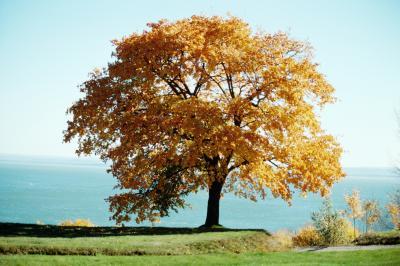
The biome known for trees with broad leaves that fall off the trees in the winter.
a)
Coniferous Forests
b)
Deciduous Forests
c)
Deserts
d)
Tropical Rain Forests
75.
Areas defined by their geographical location and ecological similarity are called?
a)
ecozones
b)
biotopes
c)
biomes
d)
biodomes
76.
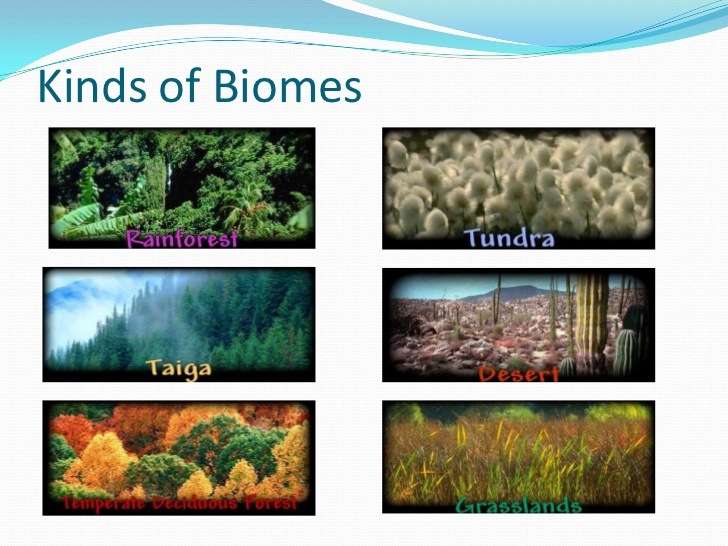
What is the main factor that separates the biomes?
a)
Land
b)
Water
c)
Climate
d)
Longitude
77.
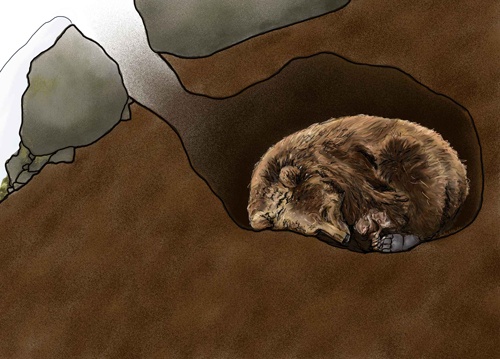
Which biome could an animal who hibernates in the winter to survive the cold live in?
a)
Grasslands
b)
Taiga
c)
Desert
d)
Rainforest
78.

What biome?
a)
Savannah
b)
Temperate Rainforest
c)
Tiaga
d)
Desert
79.
Which of the following relationships demonstrates a prey-predator relationship in the tropical savanna?
a)
Raccoon and Wolf
b)
Cheetah and Lion
c)
Gazelle and Cheetah
d)
Timur and Gazelle
80.
Highways allow people to travel between towns and cities. These highways also divide ecosystems into smaller pieces. Animals can become separated from lakes they use for breeding. For example, tiger salamanders travel long distances to breed at lakes. How could highway systems affect animals such as tiger salamanders?
a)
Tiger salamanders may be cut off from important resources
b)
Tiger salamander could improve their ability to remember roads
c)
Tiger salamander's habitat within ecosystems could become larger
d)
Tiger salamanders habitat may be exposed to less pollution
100 %

