
 Worksheets
Cardiovascular and Respiratory System Review
Total questions: 85
Worksheet time: 1hrs 2mins
Name
Class
Date
1.

Name the organ label # 6.
a)
alveoli
b)
bronchi
c)
trachea
d)
lungs
2.

Name the structure labeled 8
a)
lungs
b)
trachea
c)
diaphragm
d)
alveoli
3.
The process by which oxygen and carbon dioxide are exchanged between cells, the blood, and air in the lungs is called
a)
emphysema
b)
cellular respiration
c)
systemic circulation
d)
respiration
4.
After air moves through the pharynx it continues downward. The _____, or windpipe, directs the air into 2 separate branches or tubes.
a)
mucus
b)
trachea
c)
larynx
d)
epiglottis
5.
a chamber behind the nose and mouth that leads to the trachea
a)
pharynx
b)
trachea
c)
epiglottis
d)
larynx
6.
known as the voice box
a)
windpipe
b)
larynx
c)
pharynx
d)
epiglottis
7.
an inflammation in the bronchial tubes that causes a person to have a nagging cough
a)
bronchitis
b)
emphysema
c)
pneumonia
d)
cystic fibrous
8.

Within the lungs, the exchange of oxygen and carbon dioxide occurs between the ___ and the capillaries.
a)
trachea
b)
bronchi
c)
alveoli
d)
diaphragm
9.

The air sacs that are covered with capillaries where gas exchange takes place
a)
bronchi
b)
lungs
c)
oxygen
d)
alveoli
10.

When you breathe, your lungs take in ___ and remove ___.
a)
air/oxygen
b)
oxygen/carbon dioxide
c)
carbon dioxide/waste
d)
waste/air
11.
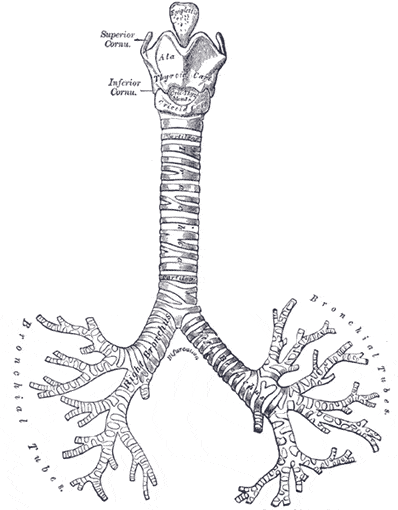
What is tube that is also known as your wind pipe?
a)
esophogus
b)
bronchi
c)
trachea
d)
alveoli
12.

A chronic disorder of the lungs called ____ causes the bronchi to become restricted (get smaller) so air can't get to the lungs.
a)
asthma
b)
cold
c)
influenza
d)
bronchitis
13.
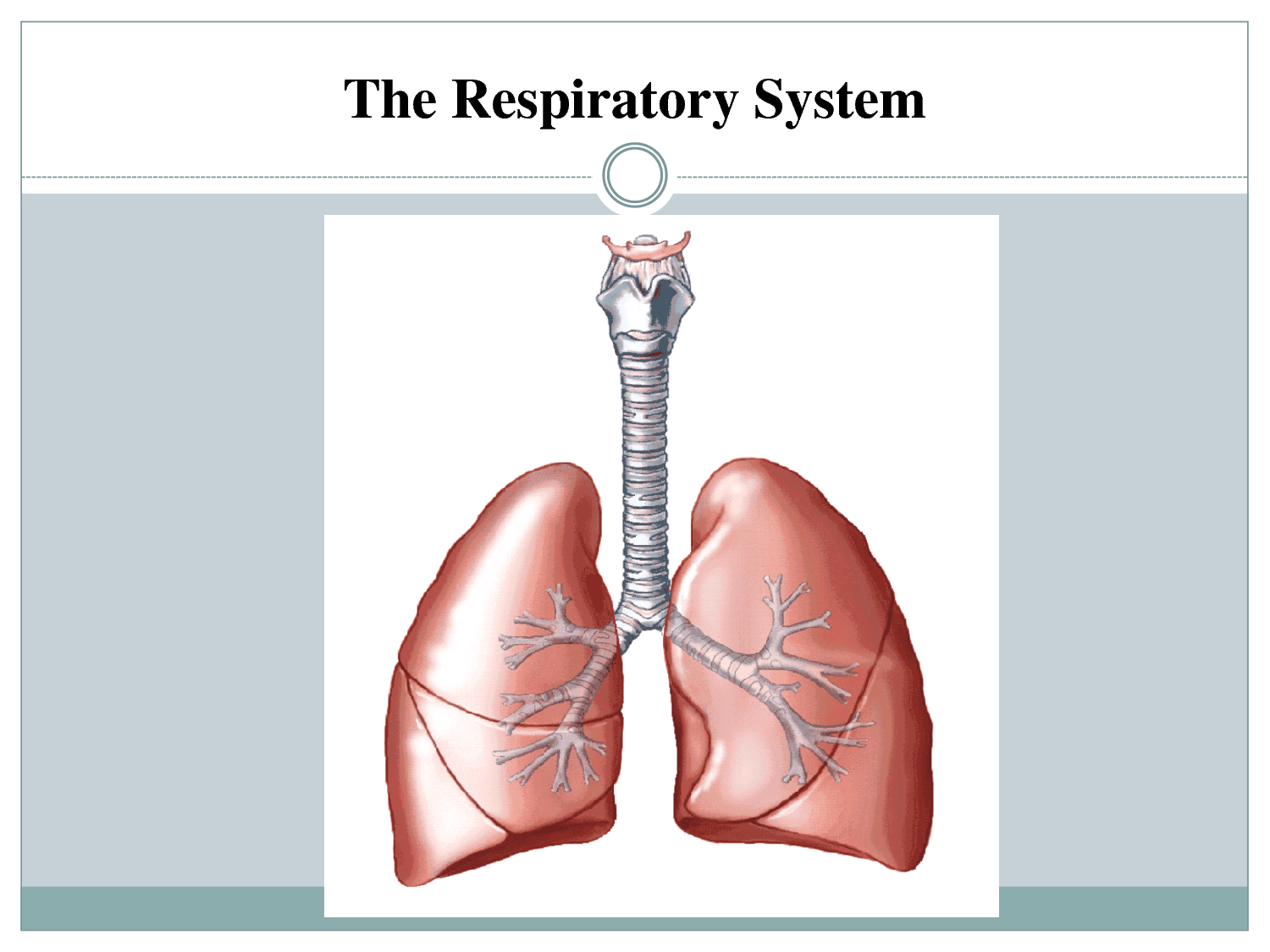
Within the lungs, the exchange of oxygen and carbon dioxide occurs between the ___ and the capillaries.
a)
trachea
b)
bronchi
c)
alveoli
d)
diaphragm
14.
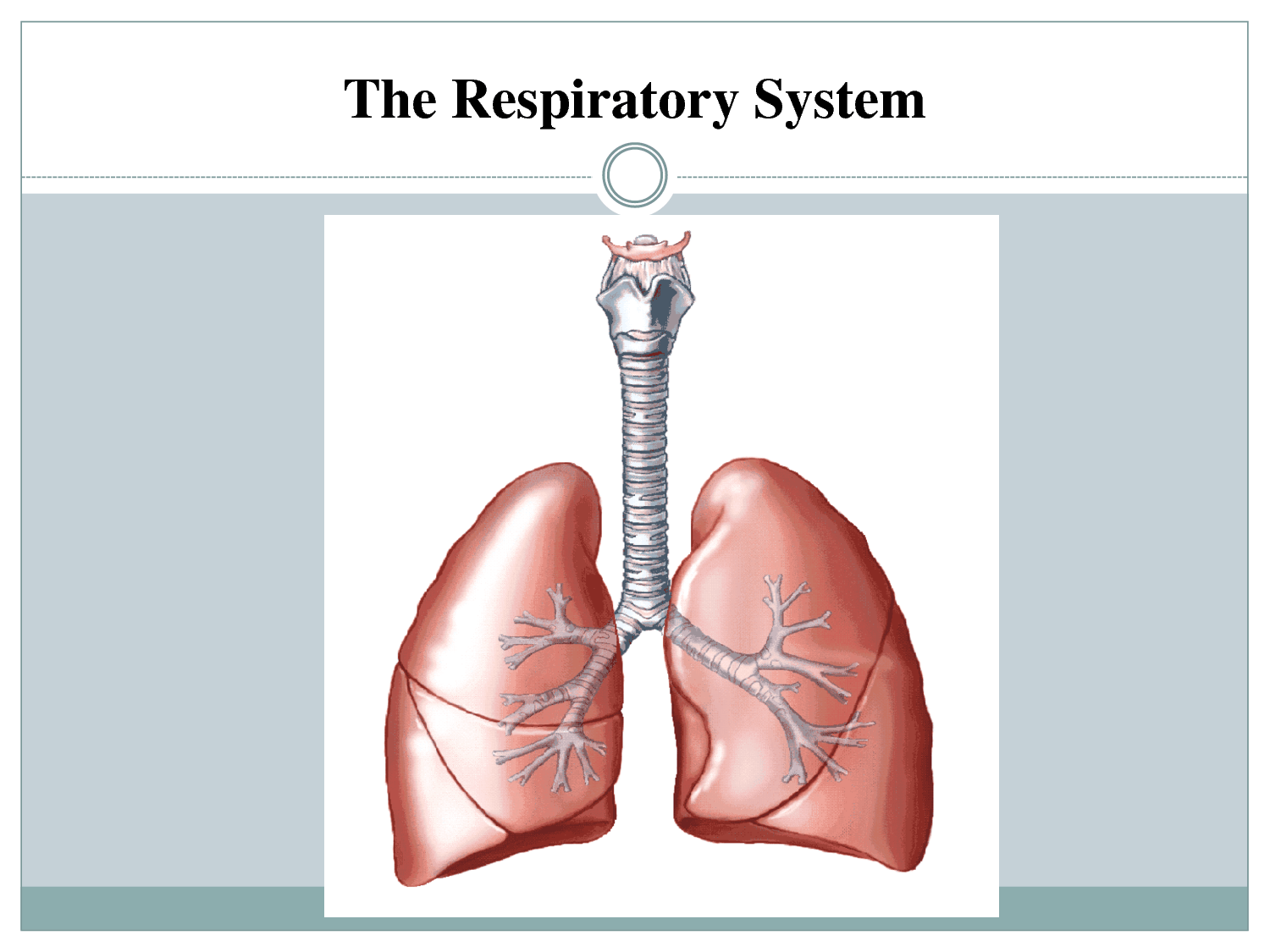
What is the main function of the respiratory system?
a)
to provide oxygen and remove carbon dioxide from the body
b)
to bring oxygen to the body
c)
to break down food and absorb nutrients
d)
to remove oxygen from the body and deliver carbon dioxide
15.
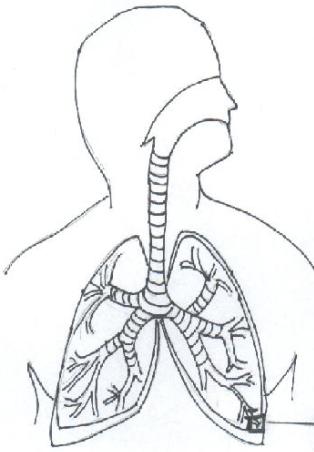
What is the function of the bronchi?
a)
Transport air from nose to lungs
b)
Transport air from trachea to lungs
c)
Transport air from lungs to alveoli
d)
Transport air from alveoli to blood
16.
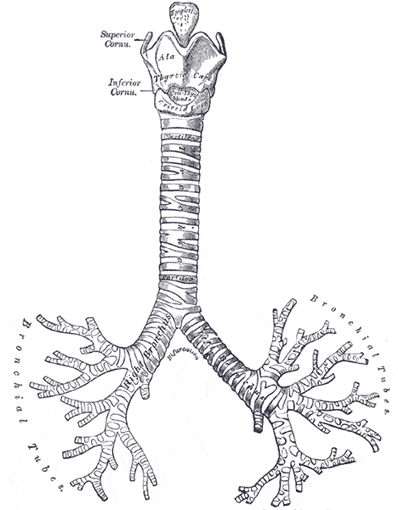
The two main branches from the trachea (one to each lung)
a)
bronchi
b)
alveoli
c)
capillaries
d)
bronchioles
17.
What are the main organs of gas exchange in the respiratory system?
a)
diapragm
b)
lungs
c)
trachea
d)
bronchi
18.
What is the name of the muscle below the lungs that helps with breathing?
a)
trachea
b)
alveoli
c)
diaphragm
d)
bronchi
19.
Given the following structures:
1. larynx
2. nasal cavity
3. pharynx
4. trachea
Which of the following is the correct order that air would flow during inhalation.
1. larynx
2. nasal cavity
3. pharynx
4. trachea
Which of the following is the correct order that air would flow during inhalation.
a)
1,2,3,4
b)
2,3,1,4
c)
2,1,3,4
d)
4,2,3,1
20.
Cellular respiration needs two reactants.
They are....
They are....
a)
Carbon dioxide and water
b)
energy and food
c)
glucose and oxygen
d)
nitrogen and fluid
21.
6. Why do you need oxygen in your blood?
a)
In order to do mitosis
b)
In order to do cellular respiration
c)
In order to do transpiration
22.
The air sacs that are covered with capillaries where gas exchange takes place
a)
bronchioles
b)
pulmonary vein
c)
pulmonary artey
d)
alveoli
23.
How many chambers in the heart?
a)
1
b)
2
c)
3
d)
4
24.
Blood enters the heart through which vessels
a)
Superior and Inferior Vena Cava
b)
Pulmonary Artery
c)
Pulmonary Vein
d)
Tricuspid Valve
25.
The right side of the heart carries oxygenated blood
a)
True
b)
False
26.
Pulmonary Artery
a)
carries oxygenated blood to atrium
b)
carries deoxygenated blood to lungs
c)
carries oxygenated blood to lungs
d)
none of the above
27.
Pulmonary vein
a)
carries oxygenated blood to left atrium
b)
carries deoxygenated blood to left ventricle
c)
carries oxygenated blood to left ventricle
d)
carries deoxygenated blood to left atrium
28.
What is the function of the cardiovascular system
a)
carries oxygen and nutrients to body
b)
carries waste to excretory system
c)
defense against disease
d)
all of the above
29.
The largest artery in the body
a)
Aorta
b)
Superior Vena Cava
c)
Inferior Vena Cava
d)
Pulmonary Artery
30.
What are the pumping chambers
a)
Atria
b)
Ventricles
c)
Bicuspid
d)
Tricuspid
31.
The left side of the heart pumps deoxygenated blood
a)
True
b)
False
32.
Types of blood vessels:
a)
arteries,veins,bronchioles
b)
arteries,veins,neurons
c)
arteries, veins, capillaries
d)
arteries,veins,aorta
33.
____________carry blood away from the heart
a)
bronchioles
b)
arteries
c)
veins
d)
capillaries
34.
________carry blood back to the heart
a)
arteries
b)
capillaries
c)
veins
d)
arterioles
35.
A condition in which the artery of the brain becomes blocked or breaks is called a
a)
heart attack
b)
stroke
c)
hypertension
d)
arterioclerosis
36.
The top 2 chambers of the heart ___ blood and are called atria.
a)
pump
b)
atria
c)
receive
d)
ventricles
37.
Which blood type is the universal recipient?
a)
Type A
b)
Type AB
c)
Type O
d)
Type B
38.

Name the part of the heart with the arrow pointing.
a)
right atrium
b)
right ventricle
c)
left atrium
d)
left ventricle
39.

Name the part of the heart with the arrow pointing.
a)
right atrium
b)
right ventricle
c)
left ventricle
d)
left atrium
40.
When the blood flow of the heart slows or stops completely, resulting in damage to the mucle of the heart, it is called a
a)
heart attack
b)
hypertension
c)
stroke
d)
artherosclerosis
41.
When someone takes the blood of another person, it is called
a)
a retriever
b)
a donor
c)
an infusion
d)
a transfusion
42.
Which blood type is the universal donor?
a)
Type O
b)
Type A
c)
Type B
d)
Type AB
43.
What is the function of the heart?
a)
to get rid of O2 and pick up CO2
b)
to get rid of CO2 and pick up O2
c)
to pump blood throughout the body
d)
to fight diseases
44.
A condition in which a person's blood pressure stays at a level that is higher than normal is called
a)
heart attack
b)
arteriosclerosis
c)
hypertension
d)
artherosclerosis
45.
What do white blood cells do?
a)
Fight infection and disease
b)
Carry oxygen
c)
Carry nutrients
d)
Absorb carbon dioxide
46.
Which of the following helps form scabs?
a)
Red Blood cells
b)
White blood cells
c)
Platelets
d)
Plasma
47.
Which of the following delivers oxygen to cells?
a)
Red Blood cells
b)
White blood cells
c)
Platelets
d)
Plasma
48.
Which of the following are the blood vessels that helps blood flow to the cells?
a)
Veins
b)
Arteries
c)
Cappillaries
49.

What is the name of the part labelled 1?
a)
Right Atrium
b)
Left Atrium
c)
Right Ventricle
d)
Left Ventricle
50.

What is the name of the part labelled 2?
a)
Right Atrium
b)
Left Atrium
c)
Right Ventricle
d)
Left Ventricle
51.

What is the name of the part labelled 3?
a)
Right Atrium
b)
Left Atrium
c)
Right Ventricle
d)
Left Ventricle
52.

What is the name of the part labelled 4?
a)
Right Atrium
b)
Left Atrium
c)
Right Ventricle
d)
Left Ventricle
53.

a)
Pulmonary veins
b)
Pulmonary artery
c)
Aorta
d)
Vena cava
54.

Name the part.
a)
Pulmonary vein
b)
Right atrium
c)
Aorta
d)
Pulmonary artery
55.

Name this part.
a)
Superior vena cava
b)
Right ventricle
c)
Inferior vena cava
d)
Pulmonary vein
56.
Freshly oxygenated blood is delivered to the _____________ and then it passes into the __________ to be pumped to the entire body.
a)
right ventricle; right atrium
b)
left ventricle; left atrium
c)
left atrium; left ventricle
d)
right atrium; right ventricle
57.
The upper chambers of the heart are the...
a)
artery
b)
ventricle
c)
vesticle
d)
atrium
58.
The lower chambers of the heart are called the ...
a)
artery
b)
ventricle
c)
atrium
d)
vesticle
59.
Would a person with type B blood be able to receive type AB blood from a transfusion?
a)
yes, because they both have the B antigen
b)
yes, because the person has B antibodies
c)
no, because the person has A antibodies
d)
no, because the person has B antibodies
60.

Jim has type AB+ blood. His dad could be type O+.
a)
True
b)
False
61.

What is the function of the blood component that is circled in yellow?
a)
Transport oxygen, glucose and other needed materials to the cells.
b)
To fight bacteria and diseases
c)
It is the liquid part of the blood
d)
To help form clots
62.

The function of the structure circled in yellow is to ____
a)
Transport oxygen and other needed materials to the body's cells
b)
To help fight bacteria and other infectious organisms
c)
To help form clots
d)
It is the liquid part of the blood
63.

The small cell fragments circled in yellow function to __
a)
Transport oxygen to the body's cells
b)
Take carbon dioxide to the lungs
c)
To fight infection and bacteria that invade the body
d)
To help form clots
64.
chronic obstructive pulmonary disease
a)
COP
b)
cop
c)
copd
d)
COPD
65.
ANTIGENS on RBC for blood type A
a)
A
b)
B
c)
AB
d)
O
66.
Blood type A- can receive blood types
a)
O-, A-
b)
O+, A+
c)
O+, A-
d)
O-, A+
67.
What blood type can accept all of the following: O-,O+,B-,B+
a)
B-
b)
B+
c)
O-
d)
A+
68.
Blood type B- can receive
a)
O-,B+
b)
O-,B-
c)
O+,B+
d)
O+,B-
69.
Blood type O+ can receive
a)
A+, A-, O-,O+
b)
B+, B-, O-,O+
c)
AB-, AB+, O-,O+
d)
O-,O+
70.
Blood type O- can receive
a)
O+
b)
AB-
c)
O-
d)
All blood types
71.
Blood type A+ can donate to
a)
A-, AB+
b)
A+,AB+
c)
A+,AB-
d)
A-,AB-
72.

a)
A -
b)
A +
c)
B -
d)
B +
73.

a)
B -
b)
B +
c)
AB -
d)
AB +
74.

a)
AB -
b)
AB +
c)
O +
d)
O -
75.

Mike has type O+ blood. Mike is a Universal Recipient.
a)
True
b)
False
76.
Mike has type O+ blood. Mike can donate blood to someone who is type AB-.
a)
True
b)
False
77.
Mike has type O+ blood. Mike can receive blood from someone who has Type A or Type B.
a)
True
b)
False
78.

Someone with type A blood can receive blood from someone who is type AB.
a)
True
b)
False
79.

Mike has type O+ blood. Mike has A,B and Rh antibodies.
a)
True
b)
False
80.

Someone who is B+ has A and Rh antibodies.
a)
True
b)
False
81.
What part of blood is responsible for carrying wastes, nutrients, and minerals?
a)
Red Blood Cells
b)
White Blood Cells
c)
Platelets
d)
Plasma
82.
Type B- blood would have which antibodies?
a)
A
b)
Rh
c)
O
d)
A and Rh
83.

Normal blood pressure is...
a)
120/80 mmHg
b)
80/120 mmHg
c)
140/90 mmHg
d)
80/140 mmHg
84.

Chronic high BP is called...
a)
Hypertrophy
b)
Atrophy
c)
Hypertension
d)
Hyperatrophy
85.

For a blood pressure reading, the number on top measures...
a)
Diastolic Pressure
b)
Systolic Pressure
c)
Diastemic Pressure
d)
Systemic Pressure
100 %

