wayground logo

Free Printable Worksheets

Font size

S
M
L
XL
Worksheets

Learning Checkpoint 1 Review

Total questions: 80

Worksheet time: 1hrs 7mins
Name
Class
Date
1.
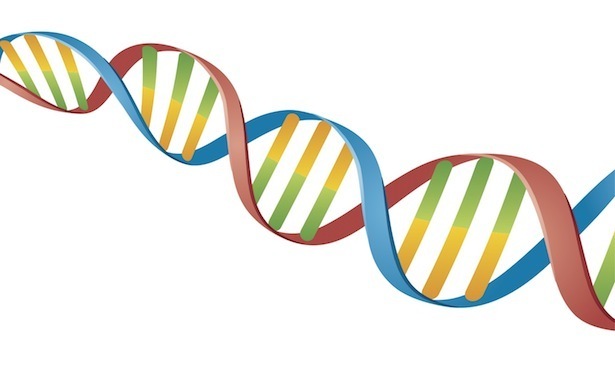
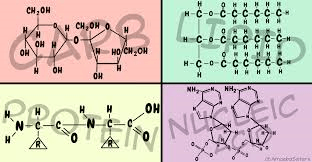
Which biomolecule is made of nucleotides and include your DNA? (Hint: they carry genetic information)
a)
Carbohydrate
b)
Lipids
c)
Protein
d)
Nucleic Acid
2.
Which biomolecule is responsible for insulation and LONG term energy storage?
a)
Proteins
b)
Nucleic Acids
c)
Lipids
d)
Carbohydrates
3.
Which biomolecule includes sugars and starches? (Hint: simple or complex)
a)
Lipids
b)
Proteins
c)
Carbohydrates
d)
Nucleic Acids
4.
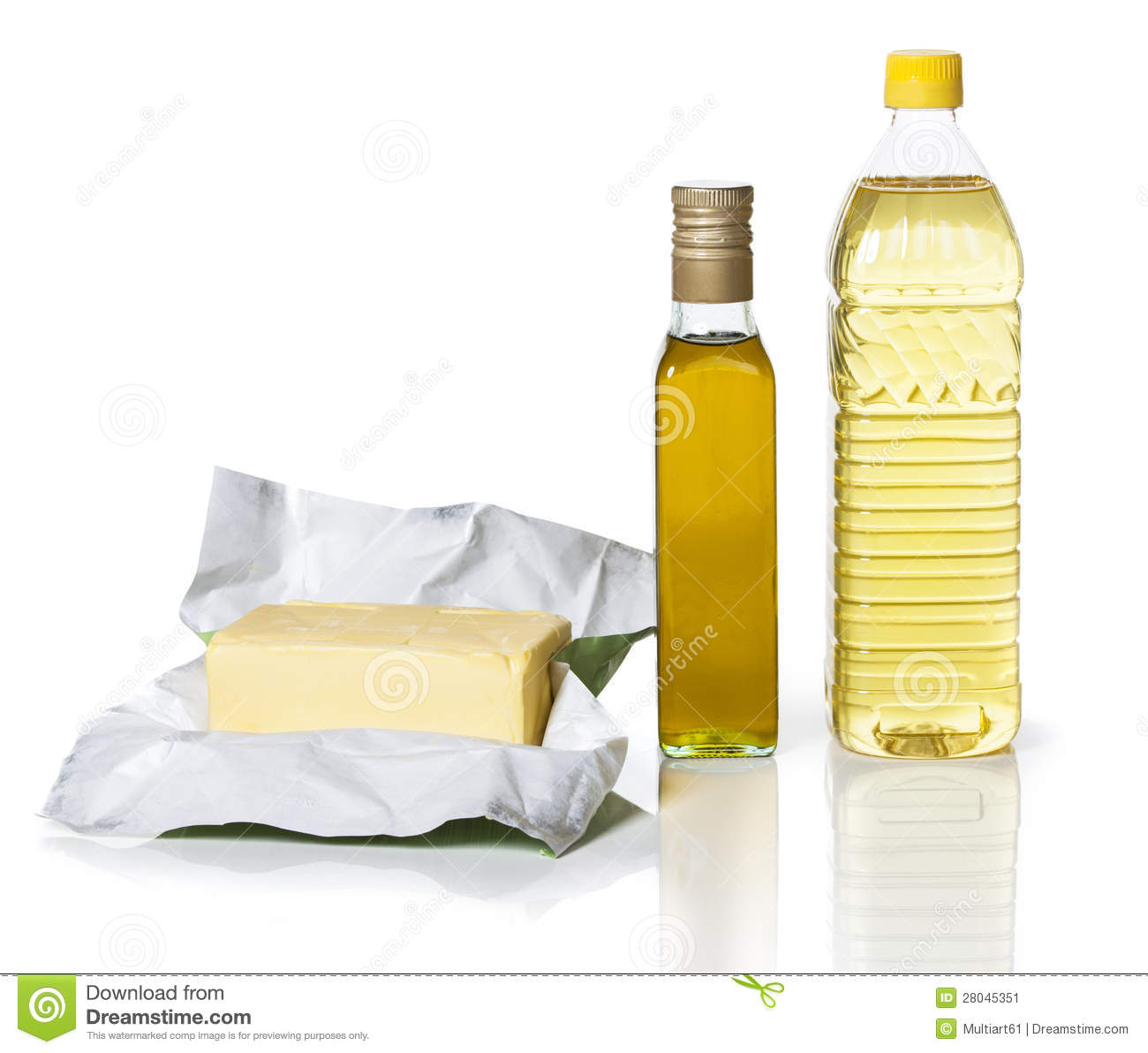
Which biomolecule group includes fats, oils, and waxes?
a)
Proteins
b)
Nucleic Acid
c)
Lipids
d)
Carbohydrate
5.
The monomer (building block) of a nucleic acid is
a)
Monosaccharide
b)
Amino Acid
c)
Nucleotide
d)
Polysaccharide
6.
ALL polymers (large molecules) are made up of...
a)
monosaccharides
b)
monomers
c)
proteins
d)
None of these
7.
Which of the following is NOT a biomolecule?
a)
Water
b)
Nucleic Acid
c)
Protein
d)
Lipid
8.
Lipids can be digested into what smaller subunits?
a)
nucleic acids
b)
amino acids
c)
fatty acids
d)
glucose
9.
Which 2 molecules contains the elements C-H-O and function pertains to energy?
a)
Lipids and Protein
b)
Carbohydrates and Nucleic Acids
c)
Protein and Carbohydrates
d)
Carbohydrates and Lipids
10.
What biomolecule do enzymes belong to? 
a)
Carbohydrate
b)
Lipid
c)
Nucleic Acid
d)
Protein
11.
Which biomolecule is a main source of quick energy?
a)
Nucleic Acid
b)
Protein
c)
Lipid
d)
Carbohydrate
12.
Which biomolecule is found in fats, oils, and waxes and is a source of long-term energy
a)
Proteins
b)
Nucleic Acid
c)
Lipids
d)
Carbohydrate
13.
What is the function of a nucleic acid?
a)
Stores genetic information
b)
Stores energy
c)
Quick source of energy
d)
Builds structures
14.
Carbon, Hydrogen, Oxygen and Nitrogen are elements in what biomolecule?
a)
Carbohydrate
b)
Lipid
c)
Protein
d)
Nucleic acid
15.

Which biomolecule helps form muscles?

a)

Nucleic Acid

b)

Carbohydrate

c)

Protein

d)

Lipids

16.
What elements are common to all 4 biomolecules?
a)
Carbon, hydrogen, nitrogen
b)
Carbon, Nitrogen, Phosphorus
c)
Carbon, Hydrogen, Oxygen
d)
Carbon, Hydrogen, Phosphorus
17.
A monomer is ...
a)
a single atom
b)
a building block for polymers
c)
a single element
d)
is an inorganic molecule
18.
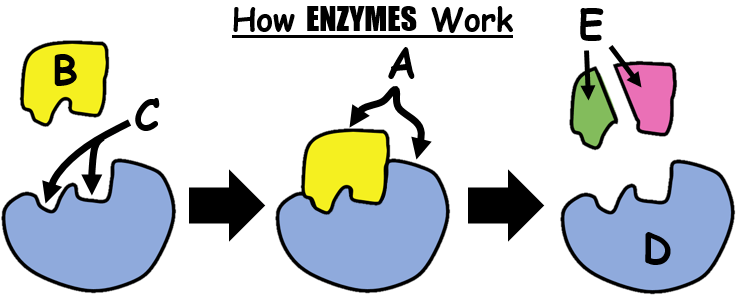
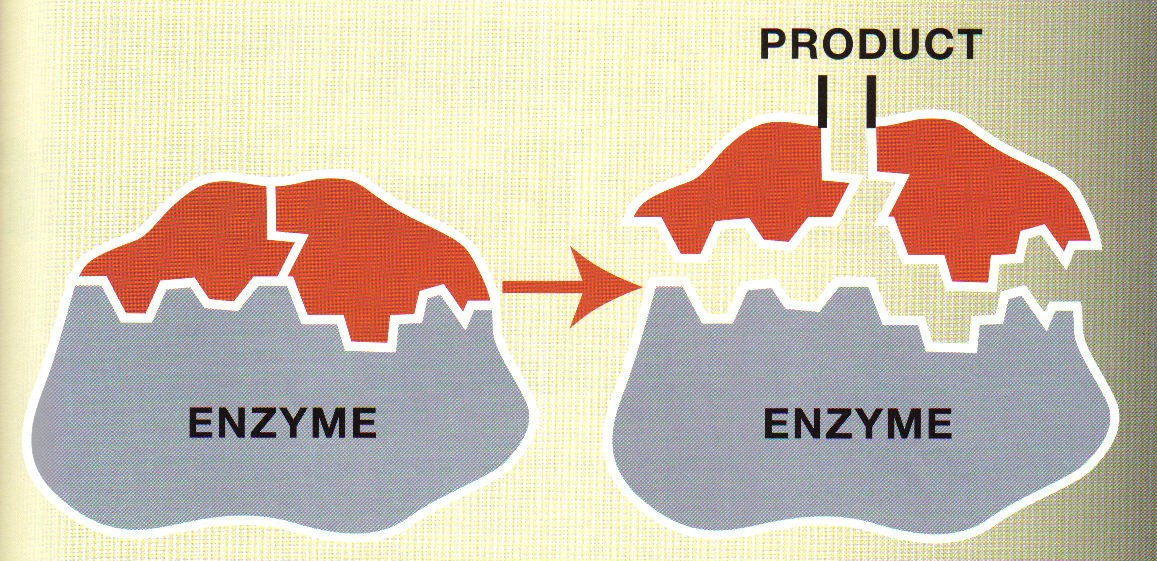
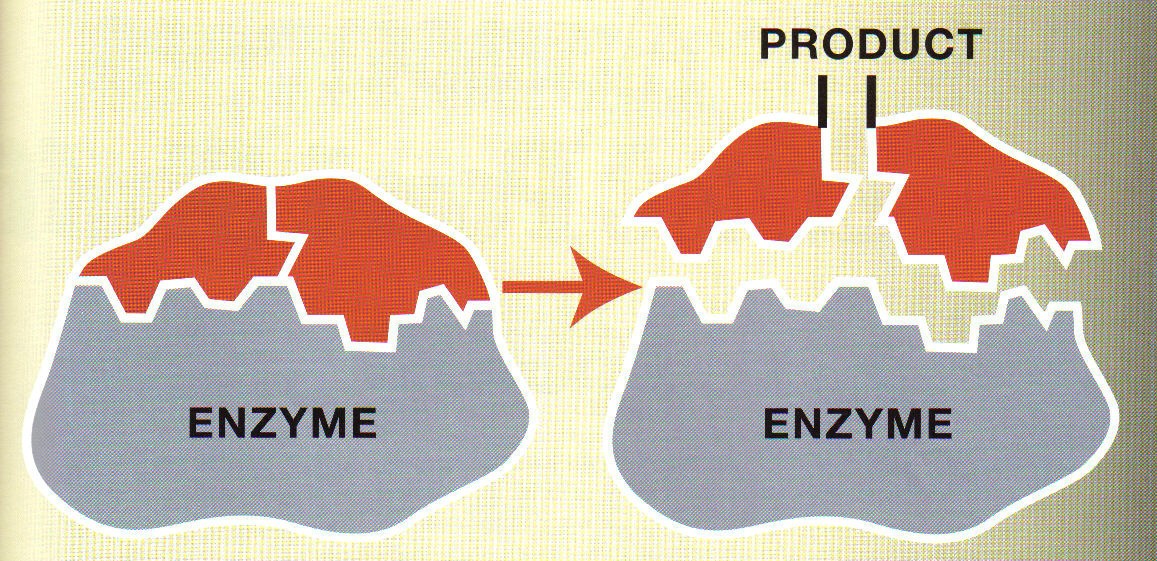
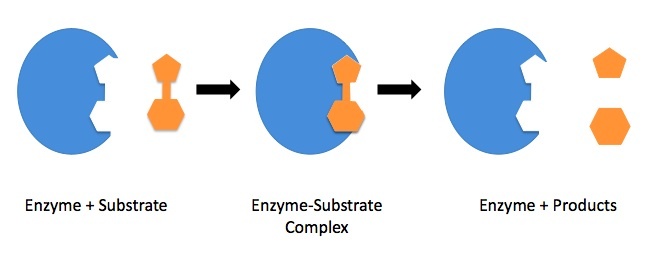
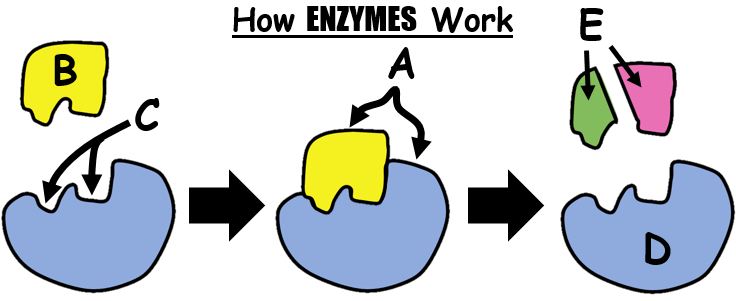
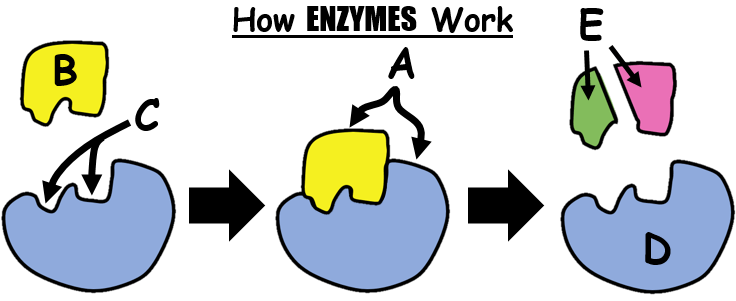
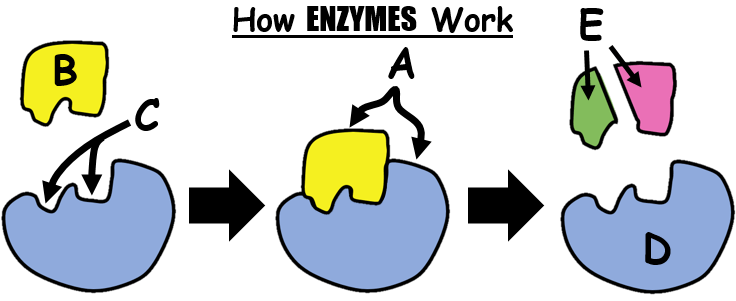
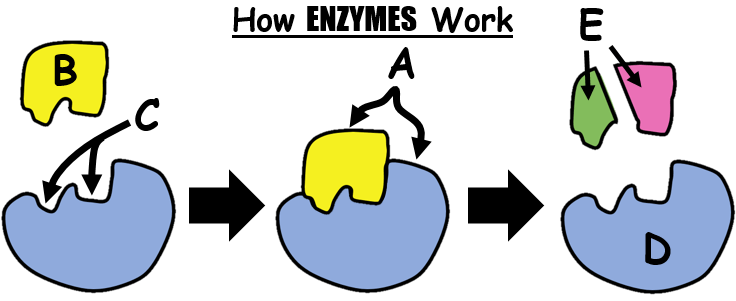
Letter D...
a)
active site
b)
enzyme
c)
substrate
d)
products
19.
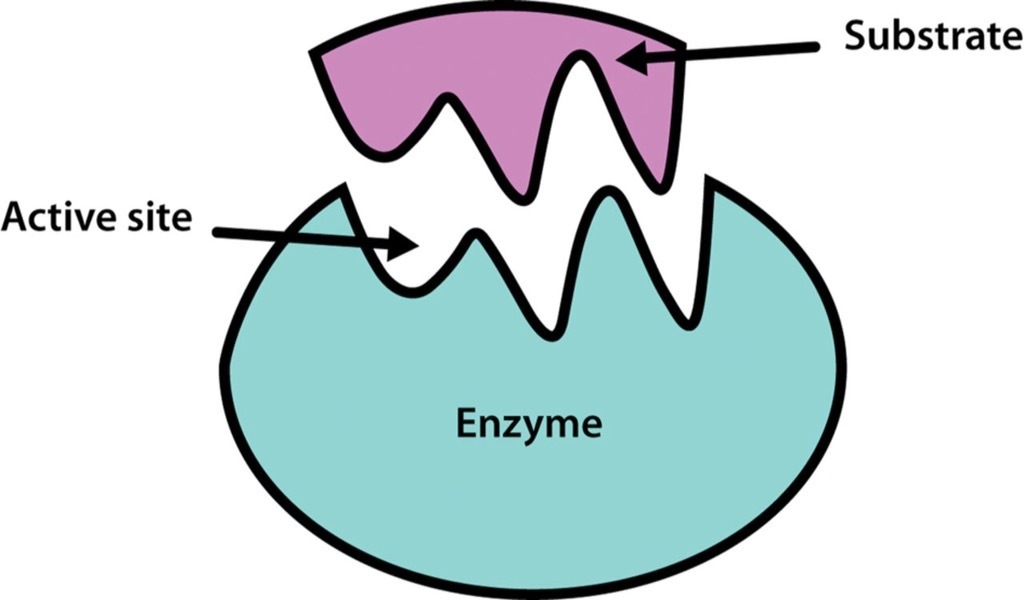
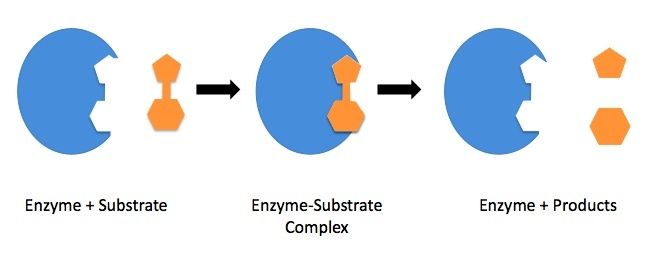
The area that the substrate fits into on the enzyme is called the:
a)
Active Site
b)
Allosteric Site
c)
DiSulphide Bridge
d)
β-Pleated Sheet
20.
Enzymes speed up reaction rates by changing:
a)
Activation Energy
b)
pH
c)
Hydrogen Bonds
d)
Kinetic Energy
21.
At high temperatures enzyme activity declines because of:
a)
Denaturation
b)
Decreased Kinetic Motion
c)
Increased H-Bonding
d)
Dissociation of Ionic Compounds
22.
Most enzymes have the ending:
a)
-ase
b)
-ose
c)
-ic acid
d)
-ate
23.
The molecule an enzyme is working on is called the:
a)
Substrate
b)
Solvent
c)
Allosteric Inhibitor
d)
CoEnzyme
24.
A receptor site that a molecule can bind to that changes the shape of the active site is called a(n):
a)
Allosteric Site
b)
Active Site
c)
DiSulphide Bridge
d)
MHC Receptor
25.
What is the purpose  of an enzyme?
a)
give permission for the reaction
b)
raise activation energy
c)
speed up reactions
d)
control how many reactions occur
26.
Enzymes are capable of increasing the rate of a chemical reaction within a living cell.  Enzymes accomplish this through which of the following means?
a)
reducing the number of products   
b)
reducing the activation energy
c)
increasing the temperature of the cell
d)
increasing the concentration of reactants 
27.
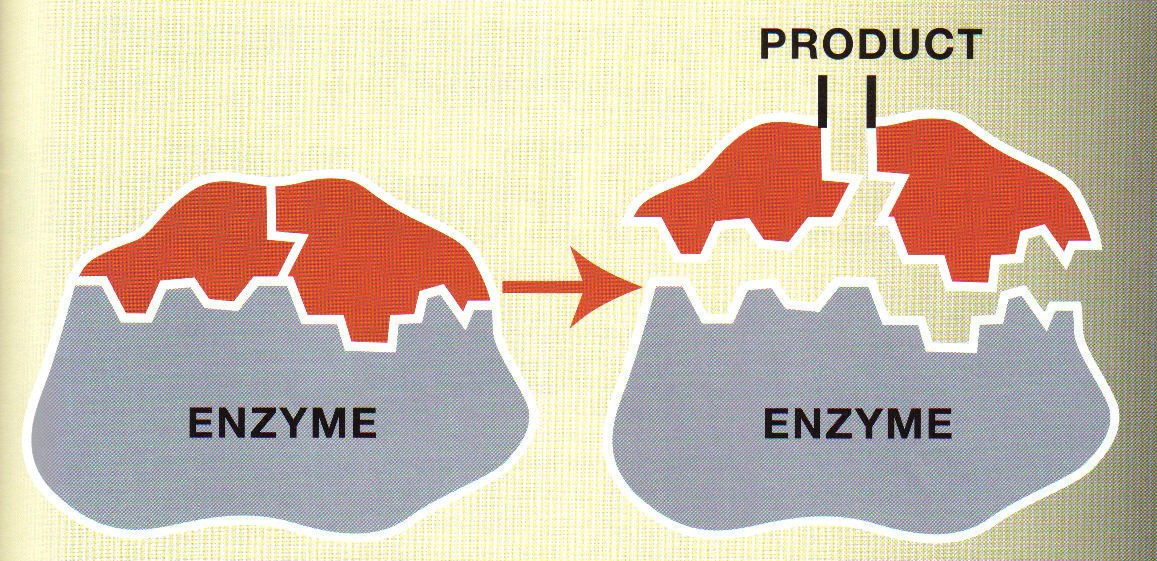
After the enzyme and substrate bind together and perform the reaction, what does the substrate become?
a)
a substrate
b)
an enzyme
c)
a product
d)
an active site
28.
In the diagram, what is letter A? 
a)
product
b)
substrate
c)
enzyme-substrate complex
d)
active site
29.
Letter B...
a)
active site
b)
enzyme
c)
substrate
d)
products
30.
Letter C...
a)
active site
b)
enzymes
c)
substrate
d)
products
31.
Letter E...
a)
active site
b)
enzyme
c)
substrate
d)
products
32.
In a chemical reaction, bonds are broken and new bonds are formed that create new substances. The bonds that are broken are called what?
a)
Reactants
b)
Products
c)
Atoms
d)
Catalysts
33.
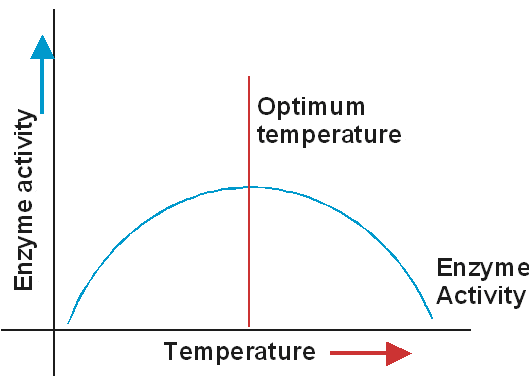
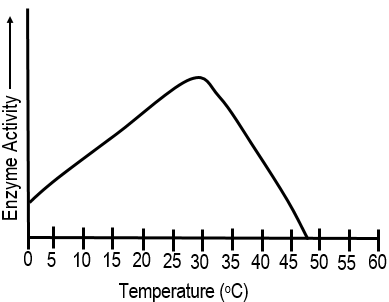
Based on the graph, what is the optimal temperature for this enzyme? 
a)
15oC
b)
40oC
c)
30oC
d)
35oC
34.
An enzyme speeds up a chemical reaction in the cell but can only be used once.  True or False? 
a)
true
b)
false
35.
What is the job of the mitochondria?
a)
Makes Energy
b)
Uses Sunlight in Plants
c)
Creates Protein
d)
Protects the cell
36.
Where can you find the chloroplast? 
a)
Only Plants
b)
Only Animals
c)
Plants & Animals
d)
Animals & Bacteria
37.
What organisms have a cell wall? 
a)
Only Plants
b)
Only Animals
c)
Plants & Animals
d)
Animals & Bacteria
38.
Where in the cell are proteins made? 
a)
Ribosome
b)
Cell Membrane
c)
Chloroplast
d)
Nucleus
39.
Why is the nucleus important? 
a)
It give the cell its energy
b)
It stores genetic information
c)
It uses sunlight for food
d)
It makes the proteins
40.
What does the cell membrane do for cells? 
a)
Allows things in and out
b)
Protection & structure for plant cells
c)
Controls the cell
d)
Holds DNA 
41.
What does the chloroplast do in cells? 
a)
Allows things in and out of cell
b)
Controls the whole cell
c)
Uses sunlight for photosynthesis
d)
Makes energy for the cell
42.
What does the cell wall do for the cell?
a)
Allows things in and out
b)
Provides protection and structure
c)
Controls the cell
d)
Makes protein 
43.
If a cell had the following organelles: nucleus, mitochondria, ribosome, and cell membrane. And DID NOT have a chloroplast and cell wall, what kind of organism is the cell found in? 
a)
Animals only
b)
Plants only
c)
Both plants and animals
d)
Bacteria
44.
Bacteria is what kind of cell?
a)
Eukaryotic
b)
Prokaryotic
45.
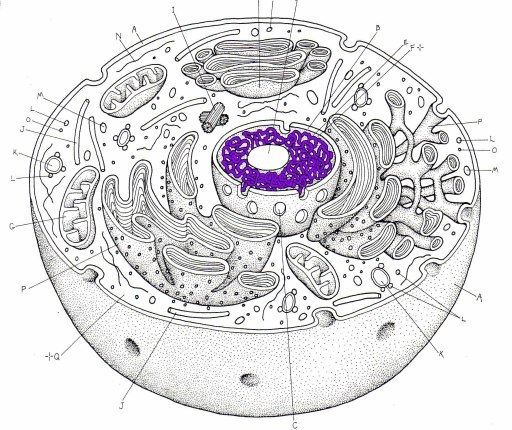
What kind of cell is this?
a)
Eukaryotic
b)
Prokaryotic
46.
All living things are made of...
a)
atoms 
b)
cells 
c)
bacteria 
d)
plants 
47.
What is unicellular? 
a)
one cell 
b)
many cells 
c)
no nuclues 
d)
DNA 
48.
All cells come from other...
a)
cells 
b)
plants 
c)
nucleus 
d)
microscopes 
49.
What type of cell does not have a nucleus?
a)
eukaryotic 
b)
prokaryotic 
50.
Bacteria and Archaea are classified as?
a)
eukaryotes
b)
nucleoid
c)
prokaryotes
d)
proteins
51.
cells of animals, plants, fungi, and protists are all?
a)
nucleoid
b)
prokaryote
c)
archaea
d)
eukaryotes
52.
Four common components of a cell are?
a)
plasma membrane, cytoplasm, DNA, and ribosomes.
b)
archaea, bacteria, nucleoid, protiens
c)
plants, fungi, protists, and animals
53.
cytoplasm....
a)
consisting of a jelly-like cytosol within the cell in which other cellular components are found.
b)
an outer covering that seperates the cell's interior from its surrounding environment
c)
the genetic material of the cell
d)
synthesize proteins
54.
All living things want to remain in...
a)
chaos
b)
homeostasis
c)
limbo
d)
plasmolysis
55.
This is a ____.
a)
Golgi body
b)
plasma membrane
c)
lysosome
d)
cell wall
56.
Water has diffused ___________ of this cell.
a)
into 
b)
in and out of
c)
out of
57.
If the sodium concentration inside a cell is greater than outside the cell, how can a cell take in more sodium?
a)
osmosis
b)
diffusion
c)
active transport
d)
passive transport
58.
Which is an example of how humans maintain homeostasis in bad environmental conditions?
a)
sweating in the heat
b)
shivering in the heat
c)
digesting amino acids
d)
regulating glucose levels
59.
Which process involves the movement of molecules from high concentration to low concentration?
a)
Endocytosis
b)
Active transport
c)
osmosis
d)
phagocytosis
60.
if you put a plant in salt water it will ...
a)
swell because water diffuses into the cells
b)
swell because water diffuses out of the cell
c)
shrivel because water diffuses out of the cell
61.
Two different solutions are separated by a membrane permeable only to water. How will molecules move?
a)
solutes will move by dissolving
b)
water will move by active transport
c)
solutes will move by osmosis
d)
water will move by osmosis
62.
When the concentration of particles inside of a cell is the same as the concentration of particles outside of the cell. 
a)
active transport
b)
concentration
c)
diffusion
d)
equilibrium
63.
Osmosis is the movement of _____ across a membrane.
a)
food
b)
energy
c)
oxygen
d)
water
64.
Permeable means
a)
things can pass through
b)
the concentration levels are different
c)
it is permanent
d)
things are stuck
65.
What is the definition of  Selective Permeability?
a)
The movement of materials across the cell membrane that requires NO ENERGY from the cell.
b)
The movement of materials through (or across) the cell membrane
c)
The ability of the cell membrane to allow some things to pass through while preventing other things from passing through.
d)
The movement of molecules from an area of high concentration to a area of low concentration 
66.
Passive transport requires no
a)
concentration gradients
b)
osmosis
c)
motion
d)
energy
67.
The picture is an example of...
a)
active tranport
b)
passive transport
c)
diffusion
d)
osmosis
68.
Large particles enter the cell by which process...
a)
exocytosis
b)
endocytosis
c)
exoskeleton
d)
osmosis
69.
Where will the water go?
a)
Into the cell
b)
Out of the cell
c)
Equally in & out - it's isotonic
d)
There is no water
70.
A blood cell is placed into the jar, as seen. Where will the water go?
a)
Into the cell
b)
Out of the cell
c)
Equally in & out - it's isotonic
d)
The water is a lie
71.
 If a cell containing 5% salt is placed into a glass of water with 20% salt, the water is _______ compared to the cell.
a)
hypertonic
b)
hypotonic
c)
isotonic
72.
What happens if someone gives you a 90% salt saline drip?
a)
Your cells will shrivel and you'll die
b)
Your cells will swell and you'll die
c)
Nah you'll be fine.
73.
Why can't you drink salt water?
a)
It's hypertonic to your cells
b)
It's hypotonic to your cells
c)
It's isotonic to your cells
d)
It's paratonic to your cells
74.

If the percentage represents sugar, what direction will water flow?

a)

Into the cell

b)

Out of the cell

c)

Into and out equally (equilibrium)

75.

If the miligrams are referring to the amount of sugar, what direction will water flow?

a)

Into the cell

b)

Out of the cell

c)

Into and out equally (equilibrium)

76.

Which cell would water move into?

a)
b)
c)
d)
77.

Which cell would water move out of?

a)
b)
c)
d)
78.

A substance that can be dissolved by a solvent to create a solution

a)

Solvent

b)

Solute

c)

Solution

79.

What are TWO ways you can predict the movement of water?

a)

from a [High] of water to a [Low] of water

b)

towards the [Lower] of solutes

c)

towards the [Higher] of solutes

d)

from a [Low] of water to a [High] of water

80.

What is Phagocytosis?

a)

Eating

b)

Drinking

c)

A cell taking in a large object that it will eventually digest

d)

The act of grabbing some liquid