
 Worksheets
AP biology Unit 2
Total questions: 82
Worksheet time: 1hrs 28mins

What type of cell is shown in the diagram?
prokaryotic
eukaryotic
plant
animal
What type of cell is being described?
has a nucleus and complex organelles and is multicellular
prokaryotic
bacteria
plant
none of the above
This organelle controls what can enter and exit the cell.
lysosome
peroxisome
plasma membrane
nuclear envelope

What type of molecule is this?
carbohydrate
protein
phospholipid
steroid
Which part of a phospholipid is polar?
the phosphate head
the lipid tail
both are polar
neither are polar
Which part of the phospholipid points outward toward the watery environments?
the polar head
the nonpolar head
the polar tails
the nonpolar tails
All of the following are part of a prokaryotic cell EXCEPT _____.
a cell wall
a plasma membrane
ribosomes
an endoplasmic reticulum
Cell size is limited by _____.
the number of proteins within the plasma membrane
the surface area of mitochondria in the cytoplasm
surface to volume ratios
the size of the endomembrane system
Which structure is common to plant and animal cells?
chloroplast
central vacuole
mitochondrion
cell wall
What is the function of the nuclear pore complex found in eukaryotes?
It regulates the movement of proteins and RNAs into and out of the nucleus
It synthesizes the proteins required to copy DNA and make mRNA.
It selectively transports molecules out of the nucleus, but prevents all inbound molecules from entering the nucleus.
It assembles ribosomes from raw materials that are synthesized in the nucleus.
Large numbers of ribosomes are present in cells that specialize in producing which of the following molecules?
lipids
glycogen
proteins
nucleic acids
Which organelle often takes up much of the volume of a plant cell?
lysosome
vacuole
Golgi apparatus
peroxisome
A cell with an extensive area of smooth endoplasmic reticulum is specialized to _____.
play a role in storage
synthesize large quantities of lipids
actively export protein molecules
import and export protein molecules
Which structure is NOT part of the endomembrane system?
nuclear envelope
chloroplast
Golgi apparatus
plasma membrane
Which of the following produces and modifies polysaccharides that will be secreted?
lysosome
mitochondria
Golgi apparatus
peroxisome
What is the most likely pathway taken by a newly synthesized protein that will be secreted by a cell?
ER → Golgi → nucleus
Golgi → ER → lysosome
ER → Golgi → vesicles that fuse with plasma membrane
ER → lysosomes → vesicles that fuse with plasma membrane
Which organelle is the primary site of ATP synthesis in eukaryotic cells?
lysosome
mitochondrion
Golgi apparatus
endoplasmic reticulum
Suppose a cell has the following molecules and structures: enzymes, DNA, ribosomes, plasma membrane, and mitochondria. It could be a cell from _____.
a bacteria
an animal but not a plant
nearly any eukaryotic organism
a plant but not an animal
Mostly water, full of dissolved ions, provides a medium for chemical reactions to occur
nucleus
vacuoles
ribosome
cytosol
Where is DNA stored in eukaryotic cells?
mitochondria
vacuole
nucleus
cytosol
Which substances can go through the nuclear membrane? Choose all that are correct.
ribosomes
RNA
DNA
This organelle builds new phospholipids.
rough endoplasmic reticulum
smooth endoplasmic reticulum
Golgi apparatus
ribosome
What is the site of protein synthesis?
smooth endoplasmic reticulum
vacuoles
mitochondria
ribosomes
Which of the following is NOT true about the smooth endoplasmic reticulum?
makes proteins
makes hormones
makes steroids
stores calcium
What is the function of vesicles?
transports materials within the cell
breaks down drugs and alcohol in the body
metabolizes carbohydrates
sorts and modifies proteins
Which organelle makes lipids, breaks down drugs & alcohol, metabolizes carbohydrates, and stores calcium?
rough endoplasmic reticulum
lysosomes
peroxisomes
smooth endoplasmic reticulum

What is this diagram showing?
macromolecules being stored in a vacuole
lysosomes releasing enzymes to break down macromolecules
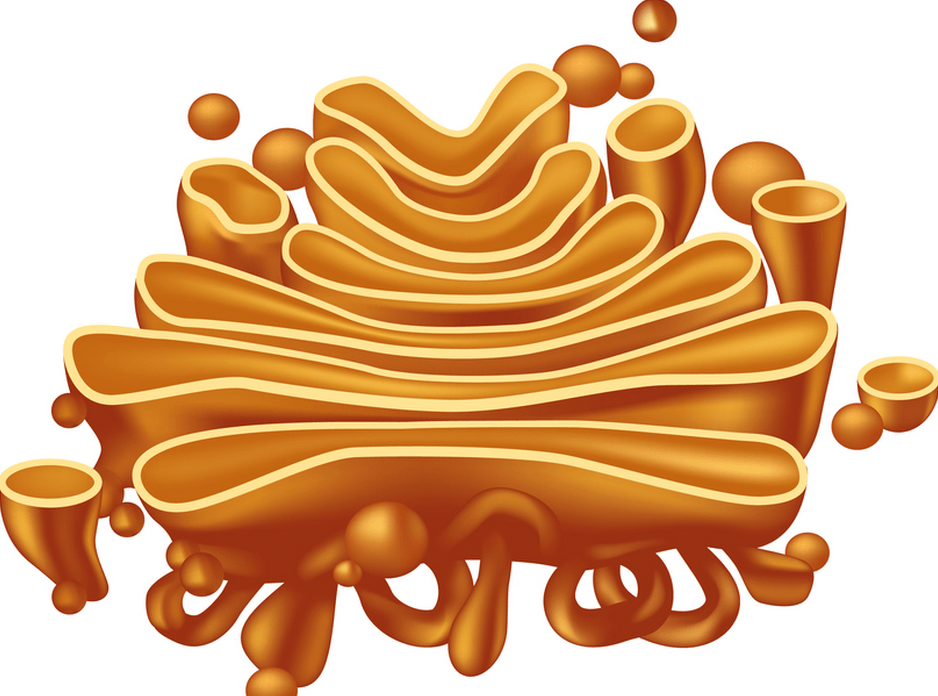
the Golgi apparatus is sorting materials
the mitochondria creating energy for the cell
The function of the Golgi apparatus is to _____.
synthesis proteins
synthesize lipids
store calcium
sort and deliver proteins
Plant and animal cells both go through cellular respiration.
true
false

What is this organelle?
nucleolus
mitochondria
lysosome
vacuole

What is the function of this organelle?
stores water
breaks down fatty acids
converts sunlight to glucose
makes proteins
Which organelle is NOT part of the endomembrane system?
nuclear envelope
plasma membrane
endoplasmic reticulum
vesicles
lysosomes


Carrot and potato cores were placed in various sucrose solutions for 24 hours and the % change in mass was recorded and graphed. The temperature in the room was 24 degrees celcius. Sucrose is too large of a molecule to cross the membrane of potato and carrot cells. Calculate the water potential for the carrot cells. The ionization constant for sucrose is 1.0 M. The pressure potential is 0.
-7.4 bars
-8.1 M
8.1 bars
-3.5 bars




To transport water from the root into the shoot does the water potential in the xylem need to become more positive or negative?
Positive
Negative
Neither positive nor negative
What will happen?

Assume that the “cell” below is permeable to sucrose, glucose, and water but impermeable to starch. Which of the following statements is correct?
(A) Starch will diffuse into the cell.
(B) Starch will diffuse out of the cell.
(C) There will be no net movement of glucose
(D) Glucose will diffuse into the cell
(E) Sucrose will diffuse into the cell

Assume the “cell” is permeable to water only. If the cell contains a 0.3 M solution of glucose and the environment contians a 0.1 M solution of glucose, which of the following statements would be true?
(A) The cell will decrease in volume.
(B) Glucose will enter the “cell.”
(C) Pinocytosis will occur.
(D) There would be a net movement of water into the “cell.”
(E) There would be no net movement of water.
Which of the following molecules pass easily through the cell membrane, requiring little extra help or energy? Select all that apply.
sodium
glucose
oxygen
carbon dioxide
Which of the following molecules don't pass easily through the cell membrane, requiring extra help or input of energy?
sodium
glucose
oxygen
carbon dioxide


