wayground logo

Free Printable Worksheets

NEW

Font size

S
M
L
XL
Worksheets

Biology 1st 6 Weeks Exam

Total questions: 77

Worksheet time: 2hrs 59mins
Name
Class
Date
1.
Who are the three scientists credited with creating the Cell Theory?
a)
Schlieden, Schwann, Virchow
b)
Schindler, Schmeil, Vanderhoot
c)
Schwimmer, Shanazzek, Van Halen
2.
All cells come from___________ cells.
a)
pregnant
b)
pre-existing
c)
paternal
d)
pin size
3.
______________ are the basic unit of life.
a)
DNA
b)
RNA
c)
Cells
d)
Takis
4.
When observing cells, which of the following pieces of equipment is most appropriate?
a)
Hand lens
b)
Telescope
c)
Petri dish
d)
Microscope
5.
Which of the following is NOT one of the basic points of Cell Theory?
a)
All living things are made of cells.
b)
The cell is the smallest living thing that can perform all the functions of life.
c)
Cells are too small to see without a microscope.  
d)
All cells must come from pre-existing cells.
6.
All organisms are made of:
a)
organelles
b)
cytoplasm
c)
DNA
d)
cells
7.
Anton van Leeuwenhoek made his own version of the microscope and discovered something very odd when he looked a the gunk on his teeth. What did he discover?
a)
Cells
b)
Bacteria
c)
Cavities
d)
Influenza
8.
This scientist concluded that animals and, in fact, all living things are made of cells:
a)
Hooke
b)
Leeunwenhoek
c)
Schleiden
d)
Schwann
9.
This scientist concluded that plants are made of cells:
a)
Virchow
b)
Schwann
c)
Schleiden
d)
Leeunwenhoek
10.
Who looked at cork and named the cell?
a)
Robert Hooke
b)
Van Leeuwenhoek
c)
Robert Brown
d)
Francesco Redi
11.
Which biomolecule contains pastas and breads?
a)
Lipid
b)
Protein
c)
Nucleic Acid
d)
Carbohydrate
12.
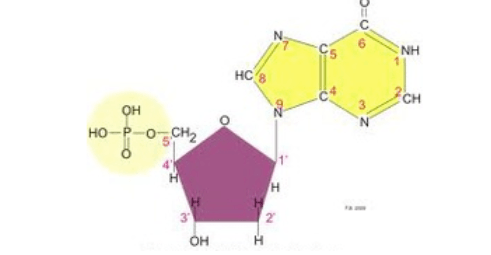
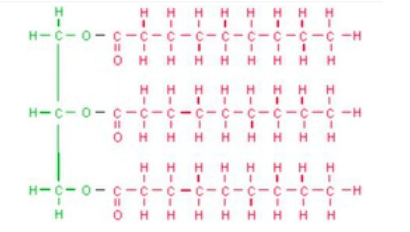
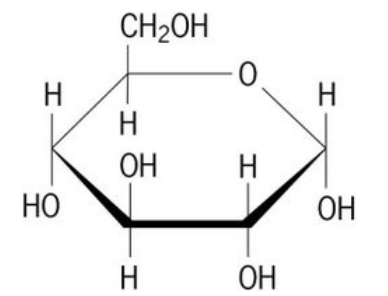
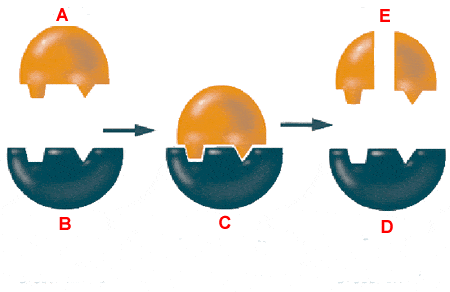
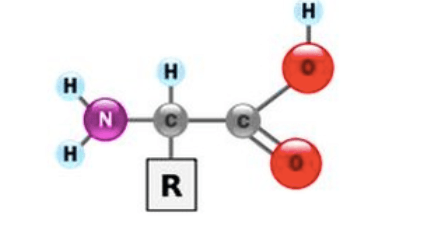
Which biomolecule is this a picture of?
a)
Protein
b)
Nucleic Acid
c)
Lipid
d)
Carbohydrate
13.
Which biomolecule is this a picture of?
a)
Protein
b)
Nucleic Acid
c)
Lipid
d)
Carbohydrate
14.
Which biomolecule contains fats, oils, and waxes?
a)
Proteins
b)
Nucleic Acid
c)
Lipids
d)
Carbohydrate
15.
Which biomolecule is this a picture of?
a)
Protein
b)
Nucleic Acid
c)
Lipid
d)
Carbohydrate
16.
Which biomolecule is this a picture of?
a)
Protein
b)
Nucleic Acid
c)
Lipid
d)
Carbohydrate
17.
Which biomolecule is made of nucleotides and contain you DNA?
a)
Carbohydrate
b)
Lipids
c)
Protein
d)
Nucleic Acid
18.
Which biomolecule contain your genetics?
a)
Carbohydrate
b)
Lipid
c)
Nucleic Acid
d)
Protein
19.
Which biomolecule is your main source of energy?
a)
Nucleic Acid
b)
Protein
c)
Lipid
d)
Carbohydrate
20.
Which is a Carbohydrate's monomer?
a)
Sugar
b)
Amino acids
c)
Monosacharide
d)
Nucleotide
21.
Which biomolecule does the subunit amino acids belong to?
a)
Lipids
b)
Proteins
c)
Carbs
d)
Nucleic Acids
22.
What are the four biological molecules?
a)
proteins, carbohydrates, lipids, nucleic acids
b)
A, T, C, G
c)
water, air, earth, and fire
d)
Joe, Nick, and Kevin Jonas
23.

Which biomolecule makes up cell membranes?

a)

Protein

b)

Carbohydrate

c)

Lipid

d)

Nucleic acid

24.
Enzymes catalyze reactions by ___________ Activation Energy.
a)
Increasing
b)
Decreasing
25.

What is the MONOMER (building block) for LIPIDS?

a)

Monosaccharides

b)

Fatty Acids and Glycerol (aka Triglycerides)

c)

Amino Acids

d)

Nucleotides

26.

What is the MONOMER (building block) for CARBOHYDRATES?

a)

Monosaccharides

b)

Fatty Acids and Glycerol (aka Triglycerides)

c)

Amino Acids

d)

Nucleotides

27.
What is the monomer of nucleic acids?
a)
Glycerol
b)
Monosaccharides
c)
Amino Acids
d)
Nucleotides
28.
What biologist call the large moelcules that make up the "big 4" 
a)
Monomer
b)
Macromoleucles 
c)
Monosaccharide
d)
Polysaccharide
29.

What is the fundamental element found in all organic compounds studied by chemists?

a)

carbon

b)

hydrogen

c)

oxygen

d)

nitrogen

30.
Which biomolecule is used as a fast energy source?
a)
carbohydrates
b)
lipids
c)
proteins
d)
nucleic acids
31.
What are many monosaccharides together called?
a)
glucose
b)
polysaccharides
c)
glycogen
d)
cellulose
32.

Which biomolecule helps form muscles?

a)

Nucleic Acid

b)

Carbohydrate

c)

Protein

d)

Lipids

33.

Which biomolecule has sugars and starches?

a)

Lipids

b)

Proteins

c)

Carbohydrates

d)

Nucleic Acid

34.

How do you spell Coach's last name?

a)

Hiyaski

b)

Hayawsky

c)

Hajovsky

d)

Hayowski

35.
NaCl or sodium chloride (salt) is an example of which level of organization?
a)
Element
b)
Compound
c)
Organelle
36.
An organelle is 
a)
A specialized part of a tissue that has a specific function.
b)
A specialized part of a cell that has a specific function.
c)
A specialized part of an organ that has a specific function.
37.
Which of the following has the Levels of Organization of an organism listed in the correct order from smallest to largest and includes all the levels?
a)
cells -> organ -> tissue -> organism
b)
cells -> tissue -> organ -> organ system -> organism
c)
organ -> tissue -> cells -> organism
d)
organism -> organ system -> organ -> tissue -> cells
38.
Which of the following lists the Levels of Organization of an ecosystem correctly from smallest to largest?
a)
community -> population -> ecosystem -> biosphere
b)
population -> ecosystem -> community -> biosphere
c)
organism -> community -> population -> ecosystem
d)
organism -> population -> community -> ecosystem -> biosphere
39.

Balance in an organism is called...

a)

stimulus

b)

response

c)

homeostasis

40.
A(n) _____________ is made up of only biotic factors and includes all of the different populations in an area.
a)
Population
b)
Biosphere
c)
Ecosystem
d)
Community
41.
What word describes a single living thing?
a)
Organism
b)
Tissue
c)
Organ System
42.
something causes a reaction
a)
stimulus
b)
response
c)
homeostasis
43.
a reaction
a)
stimulus
b)
response
c)
homeostasis
44.
Which is the most complex of the choices below?
a)
cell
b)
tissue
c)
organ
d)
organ system
45.
What is the most basic unit of life?
a)
cell
b)
tissue
c)
organ
d)
organ system
46.
It is hot outside. You start sweating. In this case, the hot weather is the...
a)
stimulus
b)
response
c)
cause and effect
d)
responder
47.
Which kind of living things have DNA in their cells?
a)
producers
b)
consumers
c)
decomposers
d)
Trick question! All living things have DNA in their cells 
48.

A group of cells that have similar functions? Examples are nervous, epithelial, muscle and connective

a)

cell

b)

tissue

c)

Organ

d)

Organ system

49.

A group of tissues that perform a similar function is called_____. (Examples include the heart, lungs or stomach)

a)

cells

b)

tissues

c)

organs

d)

organ systems

50.

What is the smallest unit of an element that has the properties of that element

a)

atom

b)

compound

c)

homogeneous mixture

d)

heterogeneous mixture

51.
Biotic includes all the following exempt:
a)
Plants
b)
Microrganism
c)
Sunlight
d)
Humans
52.
Earth is also known as a 
a)
A gas giant
b)
Fourth rock from the sun
c)
Biosphere 
d)
A star 
53.
All living things are composed of cells. 
a)
True
b)
False
54.
Non-Living or Living?
a)
Living
b)
Non-Living
55.
During ___________ conditions inside our body are kept stable (the same)
a)
metabolism
b)
growth and development
c)
homeostasis
d)
stimulus
56.
Maintaining a stable internal environment.
a)
Homeostasis
b)
Metabolism
c)
Stimulus
d)
DNA
57.

__________ is the study of life

a)

Biology

b)

Science

c)

Psychology

d)

Chemistry

58.

Lab safety is the responsibility of the

a)

teacher and student

b)

parent and teacher

c)

student and parent

d)

custodian and teacher

59.

A fire erupts in the classroom. You should immediately...

a)

notify the teacher.

b)

run for the fire extinguisher.

c)

throw water on the fire.

d)

open the windows.

60.

Approved eye protection (such as goggles) are worn in the laboratory...

a)

to avoid eye squinting.

b)

to improve your vision.

c)

only if you do not have glasses.

d)

any time chemicals, heat, or glassware are used.

61.

If you do not understand a direction or part of a laboratory procedure, you should...

a)

figure it out as you do the lab.

b)

try several methods until something works.

c)

ask the teacher before proceeding.

d)

skip it and go on to the next.

62.

If you have been injured in the laboratory (cut, burned, etc.), you should...

a)

visit the school nurse after class.

b)

see a doctor after school.

c)

tell the teacher at once.

d)

apply first aid yourself.

63.

Long hair in the laboratory must be...

a)

cut short.

b)

held away from the experiment with one hand.

c)

always neatly groomed.

d)

tied back of kept entirely out of the way with a hair band, etc.

64.

Which of the following should not be worn during a laboratory activity?

a)

loose clothing

b)

dangling jewelry

c)

sandals

d)

All of the above

65.

Horseplay, practical jokes, or pranks in the classroom are...

a)

Always against the rules.

b)

okay.

c)

not dangerous.

d)

okay if you are working alone.

66.

The following activity is permitted in the laboratory:

a)

chewing gum

b)

eating

c)

drinking

d)

none of the above

67.
Flammable materials, like alcohol, should never be dispensed or used near
a)
an open door
b)
an open flame
c)
another student
d)
 a sink
68.
You are heating a substance in a test tube. Always point the open end of the tube 
a)
away from all people
b)
toward another classmate
c)
toward your lab partner
d)
toward yourself
69.
 The following footwear is best in the laboratory. 
a)
shoes appropriate for the weather
b)
open-toed shoes
c)
closed-toed shoes
d)
sandals
70.
If an acid is splashed on your skin, wash at once with 
a)
weak base
b)
soap
c)
plenty of water
d)
oil
71.
Hot glass looks the same as cold glass.
a)
True
b)
False
72.
Return all unused chemicals to their original containers.
a)
True
b)
False
73.
All chemicals in the lab are to be considered dangerous
a)
True
b)
False
74.
Work areas should be kept clean and tidy
a)
True
b)
False
75.
Chipped or cracked glassware is okay to use.
a)
True
b)
False
76.
Read all procedures thoroughly before entering the laboratory
a)
True
b)
False
77.
Never leave a lit burner unattended.
a)
True
b)
False