wayground logo

Free Printable Worksheets

NEW

Font size

S
M
L
XL
Worksheets

Biology EOC

Total questions: 72

Worksheet time: 1hrs 7mins

Name
Class
Date
1.

The cell theory is...

a)

All living organisms are composed of at least one cell.

b)

building blocks of life. All cells come from

c)

All of the above

d)

Cells arise only from previously existing cells.

2.

The cell membrane main purpose is...

a)

Selective Permeability

b)

Energy Production

c)

Locomotive

d)

Looking good

3.
Where in the cell does cell respiration occur?
a)
chloroplast 
b)
central vacuole 
c)
mitochondria
d)
cell membrane
4.
This organic molecule is the main component of biological membranes.....
a)
carbohydrates
b)
lipids 
c)
proteins 
d)
nucleic acids
5.
Which of the following is found in plant cells but not in animal cells? 
a)
Cytoplasm
b)
Mitochondria
c)
Cell Wall 
d)
Ribosomes 
6.
What plant organelle is used to make sugars?
a)
Cell wall 
b)
Mitochondria 
c)
Chloroplast 
d)
Vacuole
7.
Which organelle uses energy from sunlight to make sugar?
a)
mitochondria
b)
nucleus
c)
chloroplasts
d)
vacuoles
8.
A coyote captures, kills, and eats a rabbit. What type of symbiotic relationship is this?
a)
mutualism
b)
commensalism
c)
parasitism
d)
predation
9.
A mite lives in the base of the eyelashes of people who use mascara. It feeds on the mascara; it does not seem to harm people. What type of symbiotic relationship is this?
a)
mutualism
b)
commensalism
c)
parasitism
d)
predation
10.

True or False: Lipids are insoluble

a)

True

b)

False

11.

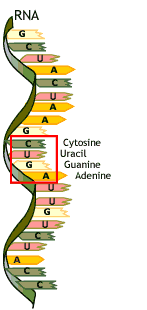
TRANSCRIBE this DNA sequence into RNA: AUG CGC TCT

a)

AUG CAA UGA

b)

ATG CAA TGA

c)

UAC GCG AGA

d)

TAC GTT ACT

12.

What is the difference between the sugar in DNA and RNA?

a)

In DNA, the sugar is Deoxyribose while in RNA the sugar is Ribose

b)

In DNA, the sugar is Ribose while in RNA the sugar is Deoxyribose

c)

In DNA, it is a 5 carbon sugar while in RNA it is only a 4 carbon sugar.

d)

There is no difference between the sugars

13.

Where does transcription take place in PROKARYOTIC cells?

a)

nucleus

b)

cytoplasm

c)

ribosome

14.
In RNA, Uracil pairs with ______. 
a)
cytosine
b)
adenine
c)
guanine
d)
thymine
15.

How many nucleotides equal make up a codon?

a)

1

b)

2

c)

3

d)

4

16.
Amino acids are the building blocks of... 
a)
DNA
b)
RNA
c)
Atoms
d)
Proteins
17.
Instrument used to see the first cell.
a)
microscope
b)
telescope
c)
binoculars
d)
magnifying glass
18.
The parts of cells.
a)
moelcules
b)
organelles
c)
cells
d)
tissues
19.
Carrier of Bubonic Plague in Europe in the 17th century.
a)
flea
b)
tick
c)
mammal
d)
minnow
20.
The control center of a cell.
a)
mitochondria
b)
nucleus
c)
channel
d)
quarks
21.

Which of these is most commonly the largest structure inside an animal cell?

a)

endoplasm

b)

nucelus

c)

DNA

d)

ribosomes

22.

Where do new cells come from?

a)

other cells

b)

nucleus

c)

Golgi body

d)

macrophages

23.
Which of the following is an example of qualitative data?
a)
the color of the fur of an animal
b)
the mating behavior of an animal
c)
the average number of offspring that an organism has
d)
the description of an odor that a chemical produces
24.
There are two types of data. Which type of data involves descriptions that cannot be counted or measured?
a)
qualitative
b)
quantitative
25.
What is the Responding (Dependent) Variable in this graph?
a)
Plant Growth
b)
Growth (cm)
c)
Hours
d)
15
26.

All of the body systems work together to maintain stability and balance in the body. Another word for this is...

a)

homeostasis

b)

hypothesis

c)

stimulus

d)

holographic

27.

Which system works to transport oxygen and other nutrients throughout the body?

a)

nervous

b)

circulatory

c)

excretory

d)

muscular

28.

Which gas do humans breathe in so our cells can make energy?

a)

oxygen

b)

carbon dioxide

c)

nitrogen

d)

water vapor

29.

The variable that is measured throughout the experiment is the ________________

Hint: What you are testing and change as a result of your testing.

a)

Controlled Variable

b)

Responsive Variable

c)

Dependent Variable

d)

Independent Variable

30.
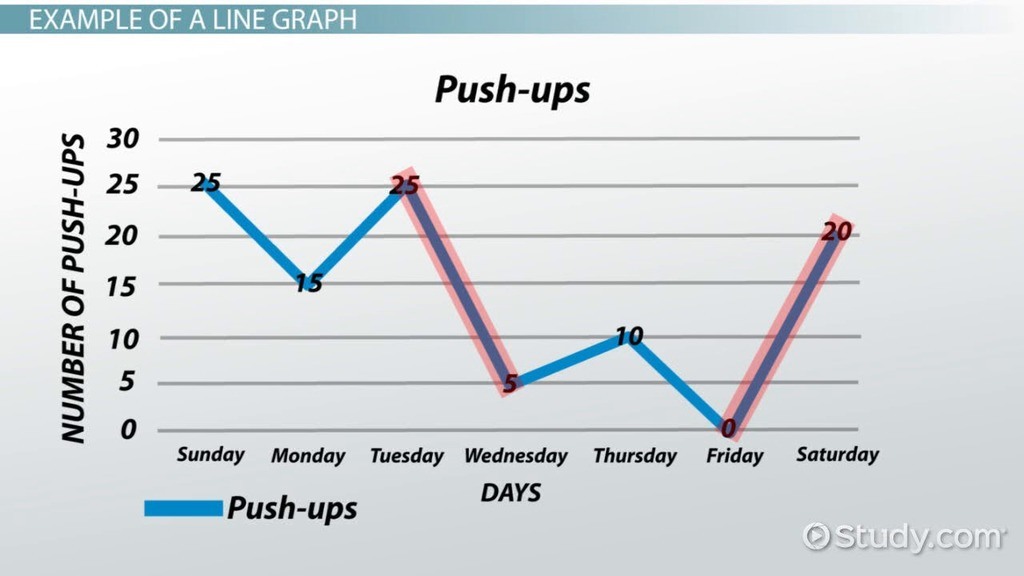
How many push-ups were done on Monday?
a)
5
b)
10
c)
15
d)
20
31.
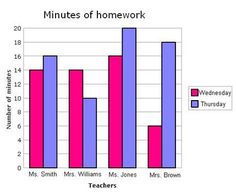
Which day had more minutes of homework?
a)
Wednesday
b)
Thursday
c)
Friday
d)
Ms. Jones
32.

True or false: Animals and people breathe in CO2 (carbon dioxide), and plants breathe in Oxygen.

a)

True

b)

False

33.
The diagram shows fossils in different rock layers. Which of these statements about the age of these fossils is most likely correct?
a)
Fossil A and C are the same age
b)
Fossil B is older than fossil C
c)
Fossils A is older than fossil B
d)
Fossil D is older than fossil C
34.

Artificial selection is a result of

a)

The environment

b)

Human behavior

c)

Mutation

d)

Gene Flow

35.
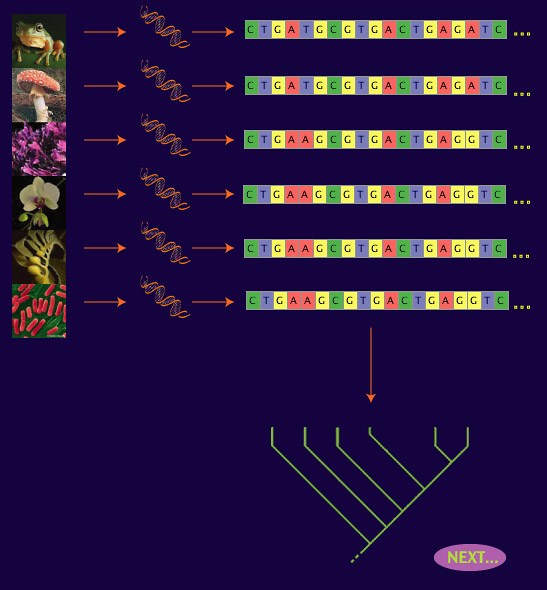
Two organisms that are closely related would have
a)
very similar DNA sequence
b)
exactly the same DNA sequences
c)
no proteins in common
d)
completely different DNA sequence
36.
The gradual change in species over time is...
a)
Evolution
b)
Nucleotide 
c)
Adaptation
d)
Natural Selection
37.
Darwin referred to this as survival of the fittest. Over time, it results in changes in the inherited characteristics of a population because organisms with adaptations that make them fit for their environment will survive and reproduce better than those without favorable traits.
a)

Natural Selection

b)

Genetic Variation

c)

Homologous Structures

d)

Struggle for Existence

38.
What characteristic did Darwin observe about the finches on the Galapagos Islands?
a)
Their feathers 
b)
Genotypes 
c)
Their beaks
d)
Their body sizes
39.

Darwin's expedition was called the Voyage of the _________.

a)

Mayflower

b)

Beagle

c)

World

d)

Galapagos

40.
Which of the following is the smallest unit of life that can carry out all life functions?
a)
the mitochondria
b)
the vacuoles
c)
the nucleus
d)
the cell
41.
To convert the energy of glucose into  the  usable form of ATP is a function of _________.
a)
Cell Wall
b)
Cytoplasm
c)
Nucleus
d)
Mitochondria
42.

A student noticed that the freshwater plant, Elodea, produced bubbles when placed in direct light. What could the student most likely conclude?

a)

Bubbles of carbon dioxide were produced as a result of photosynthesis.

b)

Bubbles of oxygen were produced as a result of photosynthesis.

c)

Bubbles of carbon dioxide were produced as a result of cellular respiration

d)

Bubbles of oxygen were produced as a a result of cellular respiration

43.

Which statement best explains how sweating during exercise maintains homeostasis?

a)

It regulates mineral concentrations in cells.

b)

It regulates body temperature.

c)

It maintains water balance.

d)

It maintains sugar balance in cells.

44.

Which word equation best represents the process of cellular respiration?

a)

carbon dioxide + glucose --> oxygen + water

b)

carbon dioxide + water --> glucose + oxygen

c)

glucose + oxygen ---> carbon dioxide + water

d)

oxygen + water ---> carbon dioxide + glucose

45.

Which molecules are joined together to make proteins?

a)

fatty acids

b)

nucleic acids

c)

amino acids

d)

acetic acids

46.
Leaves are part of a plant’s shoot system. The xylem tissue in leaves transports —
a)
the bacteria needed for nitrogen fixation in root nodules
b)
the wax required to coat the surface of actively growing tissue
c)
 the water and minerals that are absorbed by the roots
d)
the oxygen that regulates the rate of carbohydrate production
47.
What type of cell has a nucleus? 
a)
eukaryotic
b)
prokaryotic 
48.
A fossilized cell is discovered, and evidence suggests it reproduced on its own and had DNA, but a membrane did not enclose its DNA. Which type of organism would this most likely be?
a)
prokaryote
b)
eukaryote
c)
plant cell
d)
animal cell
49.

The _____________ is a gel-like fluid that fills plant and animal cells. It holds the organelles in place and gives each cell its shape.

a)

Cytoplasm

b)

Cell Membrane

c)

Cell Wall

d)

Chloroplast

50.
What organelle is called the "powerhouse" of a cell?

a)
Endoplasmic Reticulum
b)
Nucleus
c)
Mitochondria
d)
Nucleolus
51.
An experiment is performed on plants to see how different liquids affect plant growth. Each plant in the experiment is given a different liquid; water, apple juice, or milk. Each plant has the same amount of soil, sunlight, and listens to the same music. In this investigation, the independent variable is ...
a)
The type of plant
b)
The amount of sunlight
c)
The type of music
d)
The type of liquid
52.
The light reactions occur in the ________ and the dark reactions take place in the ________.
a)

Chloroplast / thylakoid membrane

b)

stroma / thylakoid

c)

mesophyl / stomata

d)

thylakoid / stroma

53.

What is the primary function of the light reactions of photosynthesis?

a)

To produce glucose

b)

To produce ATP

c)

To use ATP

d)

To produce RuBP

54.
Which of the following best describes photosynthesis?
a)
Photosynthesis converts radiant energy into chemical energy.
b)
Photosynthesis produces carbohydrates.
c)
Plants need sunlight, carbon dioxide, water, nutrients, and chlorophyll to complete photosynthesis.
d)
Plants use chlorophyll, water, and carbon dioxide to make sugar.
55.
Oxygen is...
a)
needed for photosynthesis to occur
b)
a product of cellular respiration
c)
a product of photosynthesis
d)
deadly to humans
56.

Which of the following is the correct formula for photosynthesis?

a)

CO+ H2O --> O+ C6H12O6

b)

light + H2O + O2 --> CO+ C6H12O6

c)

CO+ C6H12O6 --> O+ H2O

d)

CO+ O2 + H2O --> C6H12O6

57.

Carries water up the roots, through the stem, and to the leaves.

a)

Phloem

b)

Stomata

c)

Chloroplast

d)

Xylem

58.

During photosynthesis, energy is released as -

a)

CO2 and glucose

b)

O2 and glucose

c)

H2O and C6H12O6

d)

H2O and CO2

59.
Similar organisms that can reproduce by interbreeding belong to the same _________.  
a)
ecosystem.
b)
environment.
c)
habitat.
d)
species
60.

Salivary amylase is an enzyme in humans that breaks down starches. What substance would humans have difficulty digesting with this enzyme?

a)

lipids

b)

nucleic acids

c)

proteins

d)

carbohydrates

61.
Which type of cell?
a)
Prokaryote
b)
Eukaryote
c)
Mixed
62.
Which type of cell?
a)
Prokaryote
b)
Eukaryote
63.
Cattle egrets forage (feed) in fields among cattle. The egret gets easy access to flying insects stirred up by the cattle, and the cattle don't care if they are there or not.
a)
mutualism
b)
commensalism
c)
competition
d)
parasitism
64.
The white feathers of a snowy owl allow it to blend in with its environment during the winter months (snow). This is an example of ________________
a)
Species
b)
Environmental Change
c)
Adaptation
d)
Variation
65.
What is occurring in this picture?
a)
Translation
b)
Replication
c)
Translocation
d)
Transcription
66.
Which RNA bases would pair with TACGAA in transcription
a)
AUGCUU
b)
ATGCTT
c)
GCATCC
d)
GCAUCC
67.
How many amino acids are coded for by this sequence of nucleotides:
ATG GGA ACT CCA
a)
4
b)
2
c)
6
d)
12
68.

This is a dichotomous key for selected arthropods. To which order does the caddis fly belong?

a)

Acarina

b)

Diptera

c)

Siphonaptera

d)

Trichoptera

69.
An experiment is performed on plants to see how different liquids affect plant growth. Each plant in the experiment is given a different liquid; water, apple juice, or milk. Each plant has the same amount of soil, sunlight, and listens to the same music. In this investigation, the independent variable is ...
a)
The type of plant
b)
The amount of sunlight
c)
The type of music
d)
The type of liquid
70.
The amount of energy that usually transfers from one trophic level to the next...
a)
10%
b)
20%
c)
80%
d)
50%
71.
What are the two reactants of cellular respiration?
a)
C6H12O6 & 6CO2
b)
6 CO2 & 6H2O
c)
C6H12O& 6O2
d)
6CO2 & 6O2
72.
Name structure #5.
a)
rough ER
b)
nucleus
c)
vesicle
d)
cytoplasm