
NEW
Font size
S
M
L
XL
 Worksheets
CH 8/9 Review
Total questions: 61
Worksheet time: 2hrs 20mins
Name
Class
Date
1.
What does "geo-" mean?
a)
Earth
b)
sun
c)
Center
2.

This image shows the:
a)
Geocentric Solar System
b)
Heliocentric Solar System
3.

What model does this represent?
a)
Geocentric
b)
Heliocentric
4.
Galileo used ______ to develop the heliocentric theory.
a)
predictions
b)
the scientific method
c)
theories
d)
guesses
5.

A model of the solar system in which Earth and the other planets revolve around the SUN.
a)
Heliocentric
b)
Geocentric
6.
What does "helios" mean?
a)
Earth
b)
center of
c)
sun
d)
moon
7.
This person was a Greek philosopher who believed the universe centered around the Earth in a perfect circle
a)
Copernicus
b)
Ptolemy
c)
Aristotle
d)
Galileo
8.
This person believed that planets move on small circles that move on larger circles
a)
Ptolemy
b)
Copernicus
c)
Galileo
d)
Aristotle
9.
This person discovered moons on Jupiter, which helped to support the heliocentric theory
a)
Aristotle
b)
Copernicus
c)
Ptolemy
d)
Galileo
10.
This person was the first to use a telescope to make observations in the sky -
a)
Aristotle
b)
Ptolemy
c)
Copernicus
d)
Galileo
11.
For over 1,000 years, the church supported this theory -
a)
Geocentric
b)
Heliocentric
12.
This person developed the heliocentric theory and was considered the founder of modern astronomy.
a)
Aristotle
b)
Copernicus
c)
Ptolemy
d)
Galileo
13.
What is in the center of the Heliocentric Model?
a)
Sun
b)
Comet
c)
Jupiter
d)
Earth
14.
The path that a body follows as it travels around another body.
a)
Solar System
b)
Prominence
c)
Orbit
d)
Geocentric
15.
Sun Centered
a)
Heliocentric
b)
Geocentric
c)
Aphelion
d)
Perihelion
16.
A force of attraction between objects that is due to their masses.
a)
Solar Flare
b)
Orbit
c)
Gravity
d)
Centripetal Force
17.
Earth Centered
a)
Heliocentric
b)
Geocentric
c)
Gravity
d)
Centripetal Force
18.

This astronomer thought that all of the planets revolve around the sun in elliptical orbits, and that the sun is not in the exact center of the orbits:
a)
Kepler
b)
Brahe
c)
Galileo
d)
Newton
19.
The sun and all of the planets and other bodies that travel around it.
a)
Geocentric
b)
Centripetal Force
c)
Sunspot
d)
Solar System
20.
Built a telescope and made discoveries which changed astronomy; discovered 4 moons of Jupiter
a)
Galileo Galilei
b)
Aristotle
c)
William Herschel
d)
Claudius Ptolemy
21.
The four terrestrial planets all have
a)
Rocky surfaces
b)
Hot temperatures
c)
Deep atmospheres
d)
Large size
22.
One of the main differences between the outer and inner planets is __________.
a)
The inner planets all have water
b)
the inner planets are much bigger than the outer planets
c)
the outer planets are gas planets
d)
the outer planets have rings, and the inner planets don't
23.
Which planet has extreme temperatures because it has no atmosphere?
a)
Earth
b)
Jupiter
c)
Saturn
d)
Mercury
24.
Which shows the inner planets correctly ordered from farthest to closest from the sun?
a)
Mars, Earth, Venus, Mercury
b)
Mars, Venus, Mercury, Earth
c)
Venus, Mercury, Earth, Mars
d)
Earth, Mercury, Mars, Venus
25.
What do Jupiter, Saturn, Uranus, and Neptune have in common?
a)
They all have rocky surfaces
b)
They all appear to be similar to Earth
c)
They are all gaseous planets
d)
They all appear to be made of rock and ice
26.
Which is the largest planet in our solar system?
a)
Mars
b)
Venus
c)
Jupiter
d)
Pluto
27.

I am the brightest of the planets, and am 2nd from the sun. Who am I?
a)
Earth
b)
Mars
c)
Venus
d)
Saturn
28.
fastest moving planet, rotates once every 59 Earth days, year lasts 88 Earth days, craters and flat areas, almost no atmosphere, no moons, hot and cold
a)
Earth
b)
Mars
c)
Mercury
d)
Saturn
29.
one moon, rotates once in 24 hours, year lasts 365 Earth days, mild surface temperature, dense atmosphere, much water, supports life
a)
Earth
b)
Mars
c)
Mercury
d)
Saturn
30.
greenish blue, rotates on its side, ring system, at least 22 moons, year lasts 84 Earth years, rotates once in 17 hours
a)
Jupiter
b)
Venus
c)
Neptune
d)
Uranus
31.
Largest planet, colorful storm bands, rotates once in 10 hours, Great Red Spot, faint rings, at least 60 moons, one moon with active volcanoes
a)
Mercury
b)
Jupiter
c)
Neptune
d)
Earth
32.
thin rings of ice particles and dust, rotates once in 11 hours, 31 known moons, one moon has an atmosphere, stormy bands of clouds, second largest planet, tilted on its axis
a)
Earth
b)
Mars
c)
Mercury
d)
Saturn
33.
Mercury, Venus, Earth and Mars are all ____________ planets
a)
Inner
b)
Outer
34.
Jupiter, Saturn, Uranus, Neptune
a)
Inner
b)
Outer
35.
What holds the solar system together
a)
hope
b)
mass
c)
gravity
d)
light
36.
In the universe, what is the body that includes the sun, all 8 planets, their moons, and all objects that revolve around the sun?
a)
solar system
b)
galaxy
c)
planet
d)
universe
37.

Where is the energy for the Sun get created?
a)
in the radiation zone
b)
in the convection zone
c)
in the core
d)
in the Sun's atmosphere
38.
What heat transfer method is used by the Sun to transfer the heat from its core to its surface?
a)
conduction
b)
convection
c)
radiation
39.
The main component of Mars’ atmosphere is
a)
nitrogen
b)
oxygen
c)
carbon dioxide
d)
sulfuric acid
40.
Which planet is closest to the sun?
a)
Mercury
b)
Jupiter
c)
Earth
d)
Mars
41.
Is jupiter a terrestrial planet?
a)
Yes
b)
No
42.
How many terrestrial planets are there?
a)
4
b)
9
c)
1
d)
35
43.
Which terrestrial planet supports life?
a)
Earth
b)
Venus
c)
Mars
d)
Mercury
44.
Which terrestrial planet is the largest?
a)
Earth
b)
Venus
c)
Mars
d)
Mercury
45.
Which is the hottest terrestrial planet?
a)
Venus
b)
Mercury
c)
Mars
d)
Jupiter
46.

Earth and Venus are often called sister planets because they have similar...
a)
atmospheres
b)
size, density and composition
c)
surface temperature and pressure
d)
cloud composition and meteorology
47.
What are the four gas giant planets?
a)
Jupiter, Saturn, Uranus, and Neptune
b)
Jupiter, Mercury, Venus, and Earth
c)
Saturn, Neptune, Mars, and Mercury
d)
Earth, Uranus, Pluto, and Mars
48.
Which 3 gas giant planets have rings?
a)
Saturn, Uranus, Jupiter
b)
Neptune, Saturn, Jupiter
c)
Uranus, Saturn, Neptune
d)
Jupiter, Uranus, Neptune
49.
Which gas giant planet is a big blue ice giant?
a)
Saturn
b)
Neptune
c)
Uranus
d)
Jupiter
50.
What gas giant planet is the farthest from the sun?
a)
Saturn
b)
Uranus
c)
Jupiter
d)
Neptune
51.
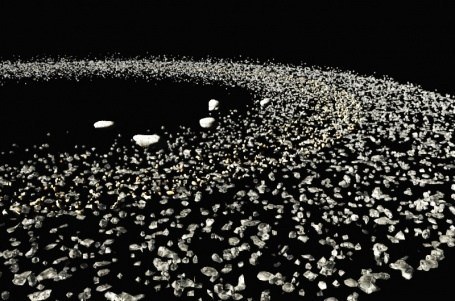
The Asteroid Belt can be found between which two planets?
a)
Earth and Mars
b)
Venus and Earth
c)
Saturn and Uranus
d)
Mars and Jupiter
52.
Why don't the gases escape from the gas giants
a)
because they are cold
b)
because they have massive gravitational fields
c)
god seriously get this question right i know its gonna be on the test
53.

Earth is an outer planet?
a)
true
b)
false
54.
Which of the following planets cannot support life?
a)
Mars
b)
Jupiter
c)
Neptune
d)
All of the above
55.
FILL IN THE BLANK
THE ___ IS THE SPHERICAL REGION THAT SURROUNDS THE SOLAR SYSTEM AND EXTENDS MALMOST HALFWAY TO THE NEAREST STAR
THE ___ IS THE SPHERICAL REGION THAT SURROUNDS THE SOLAR SYSTEM AND EXTENDS MALMOST HALFWAY TO THE NEAREST STAR
a)
KUIPER BELT
b)
OoRT CLOUD
c)
METEORITE
d)
ASTEROID
56.
FILL IN THE BLANK
A REGION OF THE SOLAR SYSTEM THAT EXTENDS FDROMT HE ORBIT OF NEPTUNE TO ABOUT TWICE THE ORBIT OF NEPTUNE IS THE______
A REGION OF THE SOLAR SYSTEM THAT EXTENDS FDROMT HE ORBIT OF NEPTUNE TO ABOUT TWICE THE ORBIT OF NEPTUNE IS THE______
a)
COMET
b)
METEORITE
c)
KUIPER BELT
d)
KASHMIERE
57.
FILL IN THE BLANK
MOST___ ARE LOCATED BETWEEN THE ORBITS OF MARS AND JUPITER
MOST___ ARE LOCATED BETWEEN THE ORBITS OF MARS AND JUPITER
a)
METEOR
b)
ASTEROIDS
c)
HAYLEYS COMMENT
d)
NONE OF THESE
58.
FILL IN THE BLANK
A METEROID THAT REACHES EARTH'S SURFACE WITHOUT BURNING UP IS A _____
A METEROID THAT REACHES EARTH'S SURFACE WITHOUT BURNING UP IS A _____
a)
ASTEROID
b)
METEOR
c)
METEORITE
d)
ASTERITE
59.
WHAT IS A MINOR BODY THAT ORBITS OUTSIDE THE ORBIT OF NEPTUNE?
a)
KUIPER STRING
b)
KUIPER BELT
c)
KUIPER THREAD
d)
NONE OF THESE
60.
WHAT IS A SMALL BODY THAT FOLLOWS A HIGHLY ELLIPTICAL ORBIT AROUND THE SUN?
a)
SUN RAY
b)
DEVIL RAY
c)
COMMENT
d)
COMET
61.
WHAT IS THE GLOWING TRAIL THAT RESULTS WHEN A METEOROID BURNS UP IN EARTHS ATMOSPHERE?
a)
ASTEROID
b)
SUN STAR
c)
MOON STAR
d)
METEOR
Reset

