
 Worksheets
Physical Sciences Review SDMS
Total questions: 100
Worksheet time: 2hrs 47mins
Name
Class
Date
1.
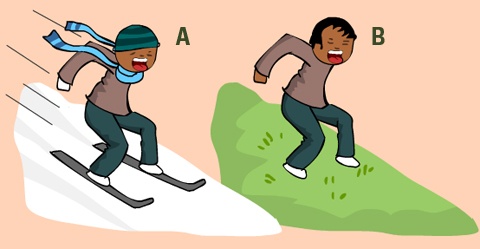
Why is it harder for the boy in Image B to get down the hill?
a)
Motion
b)
Friction
c)
Work
d)
Displacement
2.
Which force produces a change in motion?
a)
unbalanced force
b)
balanced force
c)
gravitational force
d)
frictional force
3.
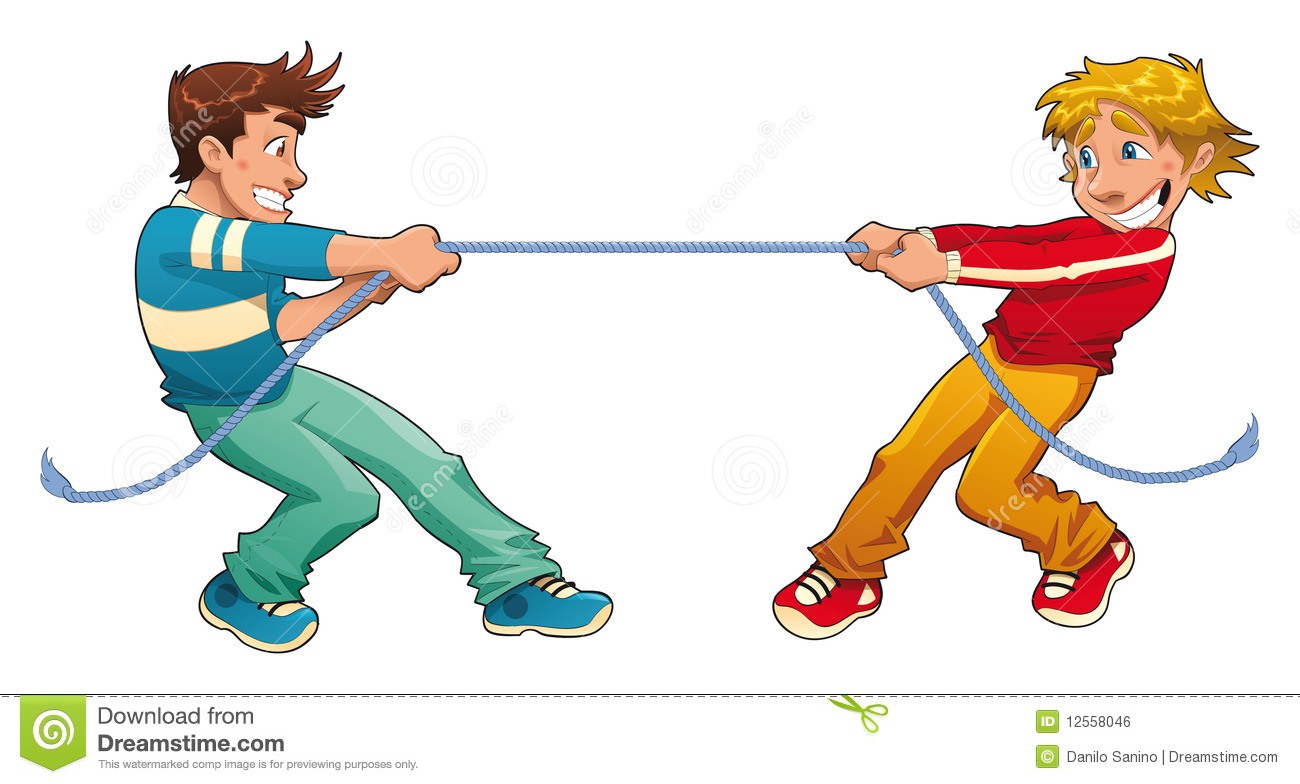
If these boys are pulling with the same amount of force. What will happen?
a)
The boy in blue will win.
b)
They will not move at all.
c)
The boy in red will win.
d)
Both will fall down.
4.
_______________ is how fast an object changes over time.
a)
speed
b)
velocity
c)
momentum
d)
acceleration
5.
What is the formula for force?
a)
F=M/A
b)
F=A/M
c)
F=M*A
d)
F=M*F
6.
Any time the forces are unbalanced, an object will remain at rest. True or false?
a)
true
b)
false
7.
When you tell the direction and speed of an object, you give its
a)
motion
b)
velocity
c)
acceleration
d)
mass
8.
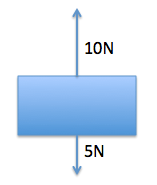
What is the net force on the block? (click on the words to view the picture)
a)
5 Newtons up
b)
5 Newtons down
c)
15 Newtons up
d)
15 Newtons down
9.
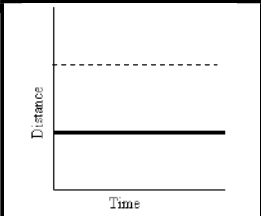
What does this graph represent?
a)
Constant speed
b)
Acceleration
c)
Not moving
10.
Speed is equal to
a)
Distance/Time
b)
Time/Distance
c)
Time x Distance
d)
Acceleration
11.

What is this graph showing?
a)
Constant Speed
b)
Acceleration (speeding up)
c)
Deceleration (slowing down)
d)
No motion
12.

What is happening at E?
a)
Stationary
b)
Accelerating
c)
Fast steady speed; moving away from the starting position
d)
Steady speed; returning to start position
13.

Which runner won the race?
a)
A
b)
B
c)
C
14.

What is happening at D?
a)
Stationary
b)
Accelerating
c)
Fast steady speed; moving away from the starting position
d)
Slower steady speed; moving away from the starting position
15.

Which is true from Newton's Third law of motion?
a)
For every action force there is a smaller reaction force in the opposite direction.
b)
For every action force there is an equivalent reaction force in the opposite direction.
c)
Both 1 and 2
d)
None of the above
16.
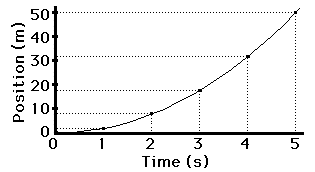
The picture of the position vs. time graph shows an object that is...
a)
accelerating/speeding up
b)
moving at a constant speed
c)
not moving
d)
accelerating/slowing down.
17.
Energy of motion is which type of energy?
a)
Potential
b)
Kinetic
c)
Sound
d)
Gravitational
18.
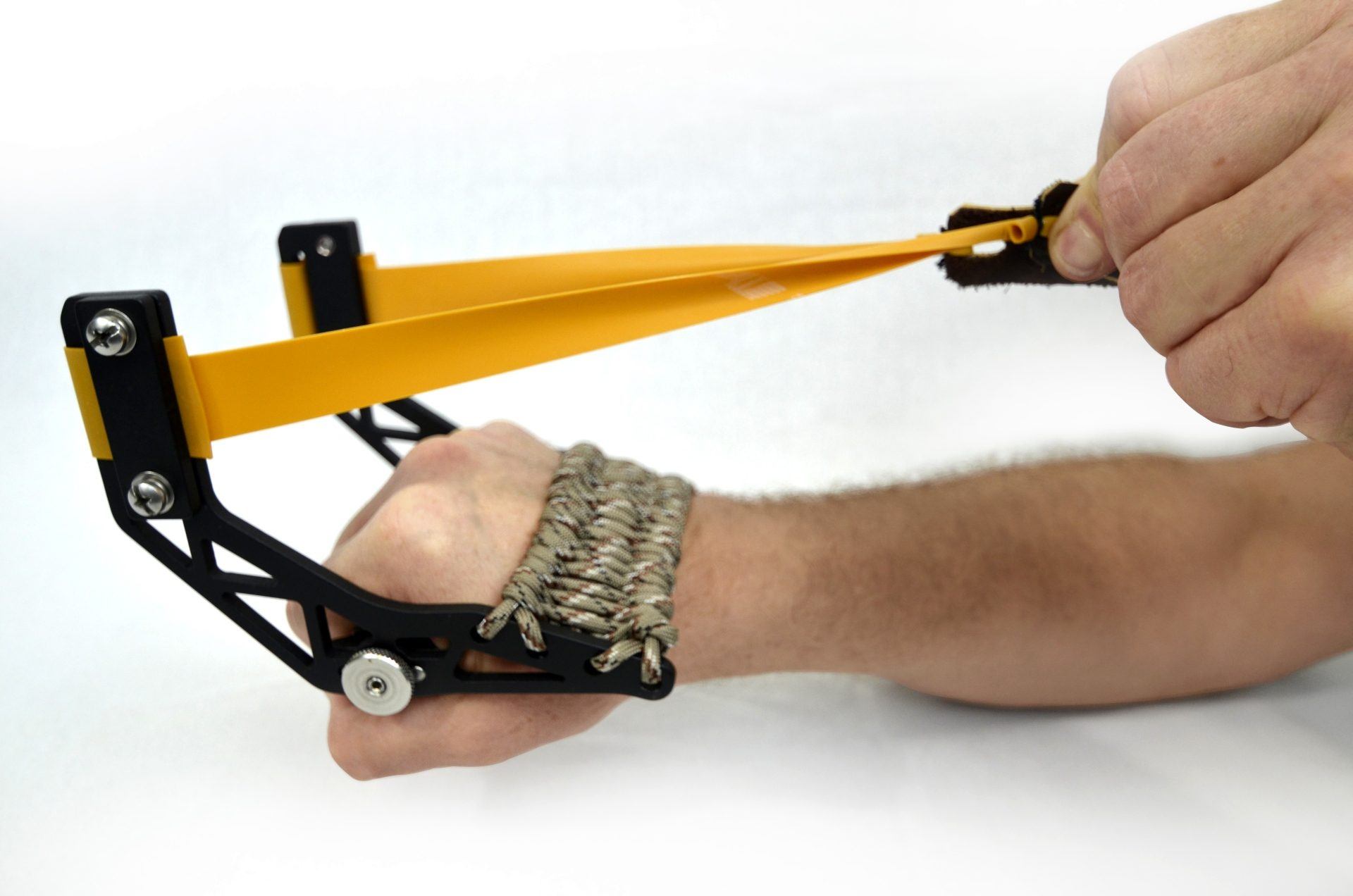
What type of energy is in this picture?
a)
Kinetic
b)
Potential
c)
Chemical
d)
Sound
19.
When plants convert the sun's energy into food, which type of energy is it?
a)
kinetic
b)
chemical
c)
thermal
d)
radiant
20.

A battery converts what type of energy to another?
a)
sound to kinetic
b)
light to heat
c)
mechanical to electrical
d)
chemical to electrical
21.
Work is:
a)
A transfer of energy by a force to move and object
b)
Something you get paid for
c)
Something you take home
d)
Makes you sweat
22.
What machine changes electrical energy into light and sound energy?
a)
battery
b)
lightbulb
c)
alarm clock
d)
apple
23.
On a roller coaster, where is maximum potential energy?
a)
At the bottom of a big hill
b)
When going around a corner
c)
When going upside down
d)
At the top of a big hill
24.
On a roller coaster, where is maximum kinetic energy?
a)
At the bottom of a big hill
b)
When going around a corner
c)
When going upside down
d)
At the top of a big hill
25.
The formula for work is:
a)
d = r x t
b)
p = m x v
c)
f = m x a
d)
w = d x f
26.
Energy caused by the movement in the particles of matter. It is a form of kinetic energy.
a)
Nuclear energy
b)
Sound energy
c)
Light energy
d)
Thermal energy
27.
Which of the following does a simple machine do?
a)
allows the users to apply less force over a longer distance
b)
reduce the amount of force needed to do work
c)
change the direction of the applied force
d)
all of the above
28.
What do you call a machine made up of two or more simple machines?
a)
complicated machine
b)
compound or complex machine
c)
comprehensive machine
d)
constructive machine
29.
The fixed point on the lever is called
a)
load
b)
resistance
c)
bar
d)
fulcrum
30.
The transfer of energy that occurs when a force makes an object move is known as
a)
effort
b)
potential
c)
kinetic
d)
work
31.

Stairs
a)
wedge
b)
pulley
c)
inclined plane
d)
wheel and axle
32.

Lightbulb
a)
wedge
b)
pulley
c)
incline plane
d)
screw
33.

How does a pulley make work easier?
a)
It changes the direction of the input force.
b)
It changes the distance over which the input force is applied.
c)
It changes the amount of the input force applied
d)
It changes direction and increases the effect of your input force
34.

A student uses this tool to build a project made from wood. The student uses Part X to remove a nail from the wood. Part X is being used as a
a)
a lever
b)
a screw
c)
an inclined plane
d)
a wheel and axle
35.
Which two factors affect the gravitational attraction between two objects?
a)
Density and Friction
b)
Mass and Distance
c)
Density and Distance
d)
Mass and Friction
36.
This type of force is an attraction between two objects
a)
contact
b)
gravity
c)
friction
37.
The unit of force is
a)
m/s
b)
m/s^2
c)
newton
d)
kg
38.
Jupiter has about 317 times more mass than Earth. What can you infer from this fact?
a)
That Jupiter’s gravitational force is much weaker than on Earth’s gravitational force.
b)
That Jupiter’s gravitational force is much stronger than Earth’s gravitational force.
c)
That Jupiter’s and Earth’s gravitational forces are equal.
d)
Mass has no effect on the gravitational force between two objects
39.

What type of force?
a)
Magnetic
b)
Gravitational
c)
Applied
d)
Normal
40.

What force holds the planets in motion around the sun?
a)
Magnetic
b)
Electrical
c)
Gravitational
d)
Air Resistance
41.
The force that resists motion between objects is called
a)
force
b)
mass
c)
friction
d)
gravity
42.
_________ is the measure of the force of gravity pulling you toward earth.
a)
volume
b)
height
c)
mass
d)
weight
43.
When dragging an object, if you wanted to move it faster you could reduce _____________
a)
friction
b)
mass
c)
friction and mass
d)
gravitation
44.
If the mass of an object is 1000kg on Earth, what is it's mass on the moon?
a)
10kg
b)
100kg
c)
1000kg
d)
10,000kg
45.
Which is Newtons first law
a)
Force is equal to an objects mass times its velocity
b)
an object in motion stays in motion or an object at rest stays at rest unless acted on by an outside force.
c)
Law of the land
d)
For every action there is an equal and opposite reaction
46.
A material in which electrons are not able to move easily
a)
Circuit
b)
Insulator
c)
Resistance
d)
Conductor
47.
This circuit has more than one loop. When one light goes out, the others stay on.
a)
closed circuit
b)
series circuit
c)
parallel circuit
d)
open circuit
48.

What kind of circuit is this?
a)
series
b)
parallel
49.
Anything that uses electrictiy is a load.
a)
true
b)
false
50.
Iron, Nickel and cobalt are all __________________ materials
a)
Shiny
b)
poles
c)
magnetic
d)
cold
51.
A magnet will attract scissors if the scissors contain:
a)
copper
b)
aluminum
c)
gold
d)
nickel
52.

What kind of energy does an object possess when it's resting on top of the hill?
a)
Potential Energy
b)
None
c)
Kinetic Energy
d)
All
53.

Which specific type of energy is at point A?
a)
Potential Energy
b)
Kinetic Energy
c)
Mechanical Energy
d)
None
54.
Which specific type of energy is at point B?
a)
Potential Energy
b)
Kinetic Energy
c)
Mechanical Energy
d)
None
55.
Which specific type of energy is at point C?
a)
Potential Energy
b)
Kinetic Energy
c)
Mechanical Energy
d)
None
56.
Which specific type of energy is at point D?
a)
Potential Energy
b)
Kinetic Energy
c)
Mechanical Energy
d)
None
57.
At the bottom of the roller coaster, what kind of energy is NEVER present?
a)
Potential Energy
b)
Kinetic Energy
c)
Mechanical Energy
d)
None
58.

What kind(s) of energy is(are) in a person climbing a ladder?
a)
Potential
b)
Kinetic
c)
Both
59.

As a pendulum swings from its highest to lowest position, what happens to its kinetic and potential energy?
a)
The PE and KE increase and decrease together
b)
The PE decreases while the KE increases
c)
Impossible to know without knowing the mass
60.
A change from one form of energy to another is called ___________.
a)
work
b)
power
c)
mechanical
d)
energy transformations
61.
Energy due to motion is ____________ energy.
a)
Potential
b)
Energy
c)
Kinetic
d)
Friction
62.
The faster an object moves, the ________ kinetic energy it has.
a)
more
b)
less
c)
none of the above
d)
all of the above
63.
__________ is stored energy.
a)
Potential
b)
Kinetic
c)
None of the above
d)
All of the above
64.

What kind of energy is in a moving skateboard?
a)
Potential
b)
Kinetic
65.
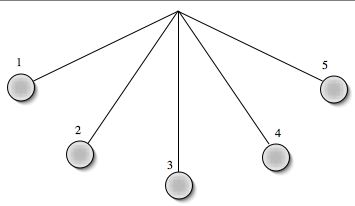
When a pendulum swings, at which point is potential energy at its greatest?
a)
1
b)
2
c)
3
d)
4
66.
Energy can be _____________ or changed from one type to another.
a)
destroyed
b)
transferred
c)
created
d)
ignored
67.
Energy is the ability to do _____________ or cause change.
a)
work
b)
rest
c)
experiments
d)
science
68.
What type of energy is stored in a hair dryer?
a)
Electrical
b)
Heat, sound and kinetic
c)
Light, heat and sound
d)
Electrical, heat, sound, and kinetic
69.
In which form is kinetic energy stored in the brakes of a car?
a)
Sound from the brakes
b)
Light
c)
Thermal from the friction
d)
GPE
70.
A good conductor is...
a)
Glass
b)
Diamond
c)
Metal
d)
Wood
71.
What is an insulator?
a)
Traps thermal energy
b)
Passes on thermal energy
c)
Something you put in your roof
d)
Foil put around runners
72.
What is mass?
a)
Newtons
b)
The force of gravity
c)
kg
d)
The amount of matter you are made of
73.
What is weight?
a)
The force of gravity acting on you
b)
Newtons
c)
kg
d)
The amount of matter you are made of
74.
Which energy transformation below matches?
Green plants?
Green plants?
a)
chemical to mechanical
b)
chemical to heat
c)
solar to chemical
75.
Which energy transformation below matches?
Animals eating food?
Animals eating food?
a)
electrical to potential
b)
chemical to kinetic
c)
potential to chemical
76.
Which energy transformation below matches?
Burning coal or carbon-based fuel at a powerplant?
Burning coal or carbon-based fuel at a powerplant?
a)
chemical to heat to electrical
b)
mechanical to chemical to sound
c)
electrical to chemical to heat
77.
Which energy transformation below matches?
An electrical circuit?
An electrical circuit?
a)
chemical to heat, sound, light, mechanical
b)
solar to heat, sound, light, mechanical
c)
electrical to heat, sound, light, mechanical
78.
Potential or kinetic?
Stretched bow and arrow?
Stretched bow and arrow?
a)
kinetic
b)
potential
79.
Levi is wanting to light a bulb. What does he need to get the bulb to light?
a)
A battery and a paper clip
b)
A battery and a wire
c)
A paper clip and a wire
d)
A switch and a wire
80.
A series circuit has ____ path(s) that the electric current can take.
a)
One
b)
Two
c)
Three
d)
Four
81.
In a parallel circuit, if one connection is broken, all of the connections stop working.
a)
True
b)
False
82.
Which of these objects is an insulator?
a)
Copper Wire
b)
Paper Clip
c)
Steel Pole
d)
Rubber Gloves
83.
An object through which electrons can easily flow is called a(n) ___________.
a)
Conductor
b)
Insulator
84.

Which statement is true?
a)
The light bulb will light up because the circuit is complete.
b)
The light bulb will light up because the circuit is broken.
c)
The light bulb will not light up because the circuit is complete.
d)
The light bulb will not light up because the circuit is broken.
85.
Which one is a conductor?
a)
wood
b)
iron
c)
plastic spoon
d)
paper
86.

Would would best complete this circuit?
a)
A wire
b)
A switch
c)
A battery
d)
A light bulb
87.
Electricity is the flow of _________.
a)
Protons
b)
Neutrons
c)
Electrons
88.

What kind of circuit is this?
a)
series
b)
parallel
89.

What kind of circuit is this?
a)
Series
b)
Consecutive
c)
Parallel
d)
Training
90.
Electrical lights will not come on unless their electrical circuit is a --
a)
parallel circuit
b)
series circuit
c)
closed circuit
d)
short circuit
91.
Which energy transformation most likely occurs in a steam iron?
a)
electrical energy changes to heat energy
b)
electrical energy changes to sound energy
c)
mechanical energy changes to heat energy
d)
mechanical energy changes to light energy
92.

What does this graph represent?
a)
Constant Speed
b)
Acceleration
c)
Not moving
93.

What does this graph represent?
a)
Constant speed
b)
Acceleration
c)
Not moving
94.

What does this graph represent?
a)
Constant speed
b)
Acceleration
c)
Not moving
95.

During the second segment, which is between 50 seconds and 70 seconds, which direction as Tom moving?
a)
Tom was moving back towards his house
b)
Tom was moving down a hill
c)
Tom was moving towards the bus stop
d)
Tom was not moving
96.

Every morning, Tom walks along a straight road from his home to the bus stop. Below, is a graph representing Tom’s trip to school.
- What is the distance covered through the second segment, which is between 50 seconds, and 70 seconds?
- What is the distance covered through the second segment, which is between 50 seconds, and 70 seconds?
a)
40 meters
b)
60 meters
c)
80 meters
d)
20 meters
97.

Every morning, Tom walks along a straight road from his home to the bus stop. Below, is a graph representing Tom’s trip to school.
- What is the average speed of Tom’s complete journey?
- What is the average speed of Tom’s complete journey?
a)
1.6 m/s
b)
1.3 m/s
c)
2.3 m/s
d)
2.8 m/s
98.

How long did one of the runner's rest?
a)
8 seconds
b)
13 seconds
c)
5 seconds
d)
50 seconds
99.

Which runner stopped for a rest?
a)
Albert
b)
Bob
c)
Charlie
100.

At 60 seconds, how far had this object traveled?
a)
0 m
b)
10 m
c)
20 m
d)
40 m
100 %

