
 Worksheets
Living Things Review
Total questions: 40
Worksheet time: 44mins
Name
Class
Date
1.

This picture shows which type of organism?
a)
Amoeba
b)
Diatom
c)
Euglena
d)
Paramecium
2.
This is the structure used to pump excess water out of the cell.
a)
Contractile vacuole
b)
Macronucleus
c)
Food Vacuole
d)
Chloroplast
3.
Which term best describes algae?
a)
animal-like
b)
Plant-like
c)
fungal-like
4.
How are protist classified?
a)
How they move
b)
How they reproduce
c)
What they look like
d)
Whether they have a nucleus or no
5.
Which protist has an eyespot?
a)
Amoeba
b)
Euglena
c)
Paramecium
d)
Slime-molds
6.
What do all protists have in common?
a)
Their cells have nuclei
b)
They can make their own food through photosynthesis
c)
They live in saltwater environments
d)
They are multicellular
7.
A _____ is a temporary projection of cytoplasm that is used for locomotion.
a)
pseudopod
b)
flagella
c)
cilia
d)
trichocyst
8.
The _______ organelle allows Euglena to be autotrophic.
a)
chloroplast
b)
mitochondria
c)
cell membrane
d)
trichocyst
9.
___ are tiny hairs all over the cell that are used for locomotion.
a)
cilia
b)
flagella
c)
pseudopods
d)
trichocysts
10.

Protist?
a)
Euglena
b)
Paramecium
c)
Amoeba
d)
Stentor
11.

Identify the organism pictured.
a)
Amoeba
b)
Paramecium
c)
Euglena
d)
Plasmodium
12.

How does this protist move?
a)
Cilia
b)
Flagellum
c)
It just floats about
d)
Pseudopods
13.

Name this protist?
a)
Amoeba
b)
Euglena
c)
Paramecium
d)
Volvox
14.

Fission, budding, and regeneration are all examples of what kind of reproduction?
a)
Asexual Reproduction
b)
Sexual Reproduction
15.
Which protists are autotrophic?
a)
Euglena and Volvox
b)
Amoeba and Euglena
c)
Volvox and Amoeba
d)
Paramecium Only
16.
Which protists are heterotrophic?
a)
Amoeba and Volvox
b)
Euglena and Paramecium
c)
Paramecium and Ameoba
d)
Euglena and Volvox
17.
This organelle takes food and turns it into ENERGY for plant and animal cells.
a)
Chloroplast
b)
Mitochondria
c)
Lysosome
d)
Ribosome
18.

Directs all cell activities through the DNA located there.
a)
Lysosomes
b)
Nucleus
c)
ribosomes
d)
Mitochondria
19.
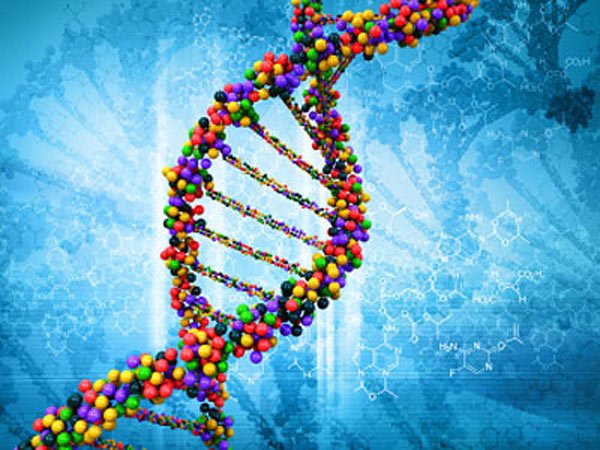
What is the name of the genetic material that is inside the nucleus?
a)
ER
b)
ATP
c)
YOLO
d)
DNA
20.

Which part of the cell is often called "the brain of the cell"?
a)
nuclear membrane
b)
endoplasmic reticulum
c)
nucleus
d)
mitochondria
21.
What is found in both plant and animal cells but is much larger in plant cells?
a)
Nucleus
b)
Mitochondria
c)
Chloroplast
d)
Vacuole
22.

I am the outer most layer of an animal cell. What am I?
a)
cell wall
b)
nucleus
c)
cell membrane
d)
cell skin
23.
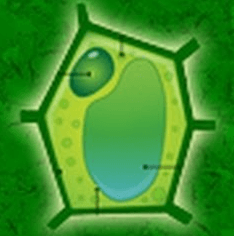
A rigid layer that lies outside the cell's membrane is...
a)
Cytoskeleton
b)
Cilia
c)
Cell Wall
d)
Flagella
24.
What is the gel-like substance inside of cells called?
a)
photoplasm
b)
photosynthesis
c)
cytoskeleton
d)
cytoplasm
25.
Main producer of ATP in all eukaryotes
a)
chloroplast
b)
mitochondria
c)
lysosome
d)
smooth er
26.
Animal and Plant cells are both this type of cell.
a)
Eukaryote
b)
Prokaryote
27.
Bacteria cells are this type of cell.
a)
Eukaryote
b)
Prokaryote
28.
Eukaryotic cells...
a)
do not have a nucleus
b)
have a nucleus and membrane bound organelles
c)
are bacteria
29.
What organelle stores waste and water in both plant and animal cells?
a)
Lysosomes
b)
Golgi Complex
c)
Vacuoles
d)
Endoplasmic Reticulum
30.
SB1c: Cells use passive and active transport to move materials across cell membranes in order to maintain a constant internal environment. What is the process of maintaining a constant internal environment called?
a)
respiration
b)
adapting
c)
homeostasis
d)
photosynthesis
31.
Which 2 organelles are only found in plant cells?
a)
chloroplast and mitochondria
b)
chloroplast and cell membrane
c)
mitochondria and cell wall
d)
chloroplast and cell wall
32.

What would happen to the plant cell without the chloroplasts?
a)
There wouldn't be an organelle that performs photosynthesis
b)
There wouldn't be an organelle that serves as the resevoir for water and waste
c)
There wouldn't be an organelle that regulates what comes in and out of the cell
d)
They wouldn't be an organelle that makes necesary proteins
33.

Robert Hooke, Anton van Leeuwenhoek, Theodor Schwann, Rudolf Virchow, and Matthias Schliden were all responsible for what theory?
a)
The Theory of Gravity
b)
The Theory of Relativity
c)
The Cell Theory
d)
The Theory of Continental Drift
34.
What tool do you use to view the cells?
a)
metric ruler
b)
centrifuge
c)
microscope
d)
pipette
35.
Rocks are not living because
a)
they never move
b)
they aren't needed for humans
c)
they are not made of cells
d)
they don't break down
36.
All cells are produced ____________.
a)
from nothing
b)
from other cells
37.
An organism made of one cell is called
a)
unicellular
b)
multicellular
38.
There are three parts to the cell theory. Which is NOT one of those parts?
a)
All organisms are composed of one or more cells.
b)
The cell is the basic unit of structure and organization in organisms.
c)
Cells spontaneously arise from carbon and nutrients carried in the bloodstream.
d)
All cells come from pre-existing cells.
39.
Which sequence shows the correct body organization?
a)
Cells to tissue to organs to organ system to organism.
b)
Cells to tissue to organ system to organism.
c)
Cell to organs to tissue to ogran system to organism.
d)
Cells, to tissues to organs to gorgeous to systems.
40.
The maintenance of an organism’s internal environment is called:
a)
compensating
b)
homeostasis
c)
balancing
d)
routine
100 %

