
 Worksheets
Stream: Human Body and Genetics Review
Total questions: 50
Worksheet time: 38mins
Name
Class
Date
1.
Which system enables the body to move, moves food through the digestive system, and keeps the heart beating?
a)
skeletal
b)
muscular
c)
digestive
d)
nervous
2.
Which system provides shape and support, enables you to move, protects your internal organs, and stores minerals?
a)
skeletal
b)
muscular
c)
digestive
d)
nervous
3.
Which system takes oxygen into the body and eliminates carbon dioxide?
a)
immune
b)
nervous
c)
respiratory
d)
circulatory
4.
Which system takes food into the body, breaks down food, and absorbs the digested materials?
a)
respiratory
b)
circulatory
c)
digestive
d)
excretory
5.
Which system is made of the smooth, skeletal, and cardiac muscles?
a)
skeletal
b)
muscular
c)
nervous
d)
excretory
6.
Which system detects information from the environment and directs the way your body responds to this information?
a)
excretory
b)
circulatory
c)
respiratory
d)
nervous
7.
Which system includes the nose, trachea and the lungs?
a)
respiratory
b)
circulatory
c)
immune
d)
digestive
8.
Which system includes the mouth, esophagus, and the small and large intestines?
a)
nervous
b)
excretory
c)
respiratory
d)
digestive
9.
Which system fights disease?
a)
excretory
b)
nervous
c)
immune
d)
digestive
10.
Which system collects and removes wastes?
a)
Muscular
b)
Circulatory
c)
Digestive
d)
Excretory
11.
Which system includes the kidneys, ureters, urinary bladder, urethra, lungs and skin?
a)
digestive
b)
excretory
c)
circulatory
d)
muscular
12.
Which system includes the brain, spinal cord, eyes, ears, and skin?
a)
Muscular
b)
Nervous
c)
Respiratory
d)
Skeletal
13.
Which three body systems allow you to move?
a)
muscular, skeletal, digestive
b)
nervous, respiratory, digestive
c)
nervous, muscular, skeletal
d)
Muscular, skeletal, circulatory
14.

This system possesses antibodies and nodes to fight off infections
a)
lymphatic (immune)
b)
respiratory
c)
circulatory
d)
nervous
15.

This system moves the body by pulling on the bones of the skeleton.
a)
muscular
b)
circulatory
c)
excretory
d)
lymphatic (immune)
16.
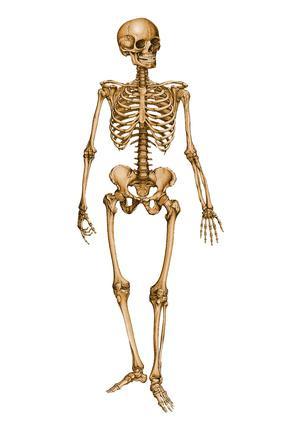
Which system is composed of the bones that support and protect other organs?
a)
skeletal
b)
muscular
c)
lymphatic (immune)
d)
nervous
17.

The brain and spinal cord send impulses and control the senses. Which system are these organs a part of?
a)
Nervous
b)
Muscular
c)
Digestive
d)
Respiratory
18.
What system covers the body, preventing water loss?
a)
integumentary
b)
respiratory
c)
endocrine
d)
skeletal
19.

If green is dominant over purple, then what is the genotype for this individual?
a)
Purple
b)
Green
c)
GG
d)
gg
20.

Which is the correct phenotype for this organism?
a)
BB
b)
blue
c)
green
d)
bb
21.
Which of the following terms refers to the different possibilities of a gene?
a)
chromosome
b)
DNA
c)
Punnett Squares
d)
allele
22.
If something is heterozygous, it is also...
a)
purebred
b)
hybrid
c)
dominant
d)
recessive
23.

This image shows a...
a)
Punnett Square
b)
Phenotype
c)
Genotype
d)
Dominant allele
24.
Recessive alleles are-
a)
capital
b)
lowercase
c)
both
d)
neither
25.
Dominant alleles are-
a)
capital
b)
lowercase
c)
both
d)
neither
26.
If the four existing children in a family are all sons, what chance would there be that the next child would also be a son?
a)
75%
b)
50%
c)
25%
d)
20%
27.
Pairs of genes that control the same trait are known as
a)
allelles
b)
gametes
c)
hybrids
d)
loci
28.
Which of the following genotypes is homozygous recessive?
a)
RR
b)
Rr
c)
rr
d)
None of the Above
29.
Brown (B) is dominant over white (b). Which genotype is a purebred for brown fur?
a)
BB
b)
Bb
c)
bb
d)
All of the above
30.

This is an example of ___________?
a)
Incomplete dominance
b)
Co-Dominance
31.

This type of inheritance pattern is a MIXTURE of both traits.
a)
incomplete dominance
b)
co-dominance
c)
complete dominance
32.

This is an example of ___________.
a)
Incomplete Dominance
b)
Codominance
33.

If you cross a black chicken with a white chicken, only checkered chickens would be produced. What kind of inheritance pattern does this follow?
a)
incomplete Dominance
b)
Co-Dominance
34.
The purpose of meiosis is to form ________ cells.
a)
body
b)
sex
c)
somatic
d)
brain
35.

A human usually has xx amount of chromosomes.
a)
6
b)
22
c)
4
d)
46
36.
How many daughter cells are produced at the end of meiosis?
a)
1
b)
2
c)
3
d)
4
37.
What mutation has occurred here?
T-G-A-C-C-A
T-G-A-G-C-A
T-G-A-C-C-A
T-G-A-G-C-A
a)
Substitution
b)
Deletion
c)
Insertion
d)
Frameshift
38.
Are all mutations bad?
a)
Yes
b)
No
39.
Guanine bonds with ______________.
a)
Adenine
b)
Guanine
c)
Cytosine
d)
Thymine
40.
Adenine bonds with ______________.
a)
Guanine
b)
Thymine
c)
Cytosine
d)
Adenine
41.
I have 2 X chromosomes. What am I?
a)
Male
b)
Female
42.
I have 1 X chromosome and 1 Y chromosome. What am I?
a)
Male
b)
Female
43.
If a gene is found only on the X chromosome and not the Y chromosome, it is said to be what?
a)
sex-linked trait
b)
polygenic trait
c)
codominant trait
d)
incomplete dominance trait
44.
The passing o ftraits from parents to offspring is called
a)
heredity
b)
genetics
c)
reproduction
d)
chromosome
45.
An organism receives chromosomes from
a)
the environment
b)
the atmosphere
c)
its parents
d)
mutations
46.
What science did Mendel's work start?
a)
Science
b)
Biology
c)
Archeology
d)
Genetics
47.
Which statement correctly describes a difference between asexual and sexual reproduction?
a)
Asexual reproduction increases genetic diversity, but sexual reproduction does not
b)
Asexual reproduction involves one parent, and sexual reproduction involves two parents
c)
Asexual reproduction increases a species chances of surviving unfavorable conditions, but sexual reproduction does not
d)
The offspring produced by asexual reproduction are not identical to each other, but those of sexual reproduction are identical to each other
48.

In mitosis, the two resulting cells are
a)
different from the starting cell and identical to each other.
b)
different from the starting cell and different from each other.
c)
identical to the starting cell and different from each other.
d)
identical to the starting cell and identical to each other.
49.

Meiosis makes sperm and egg cells. In humans, sperm and egg cells each have _____ chromosomes. Therefore a fertilized human egg cell (sperm and egg cell combined) would create a cell with _____ chromosomes.
a)
23, 46
b)
46, 23
c)
2, 4
d)
50, 100
50.

Have you ever heard of a skin graft? Skin cells can be harvested from one area and be grown in order to help burn victims or other skin injuries. Which process would result in the development of more skin cells in this treatment?
a)
Mitosis
b)
Meiosis
c)
Crossing Over
d)
Interphase
100 %

