wayground logo

Free Printable Worksheets

Font size

S
M
L
XL
Worksheets

Oceans Test (December 2025)

Total questions: 50

Worksheet time: 36mins

Name
Class
Date
1.

What technology has allowed scientists to make many discoveries about Ocean geography and marine animal migration patterns

a)
Radar
b)

Internet

c)
Sonar
d)

GPS

2.

What happens to the temperature of ocean water as you go deeper below its' surface?

a)
it increases
b)
it decreases
c)
 it remains the same
3.

__________ is the term used to express the amount of dissolved solids (mainly salts) present in ocean water.

a)
saltation
b)
salinity
c)

osmosis

d)

saturation

4.
Seawater is typically denser than freshwater due to seawater’s —
a)
Greater depth
b)
Lower freezing point
c)
Smaller mass
d)
Higher salinity
5.
What happens to pressure as you go deeper into the ocean? 
a)
increases
b)
decreases
c)
stays the same
d)
doubles
6.
Which ocean is the largest?
a)
Southern
b)
Indian
c)
Atlantic
d)
Pacific
7.

Surface waves and currents are a result of

a)
Global Wind Patterns
b)
Earth's Rotation
c)
Density
d)
All of the above
8.
Deep Ocean currents are a result of
a)
Global Wind Patterns
b)
Earth's Rotation
c)
Density
d)
All of the above
9.
The Gulf stream carries _____________ water from the east coast of The United States to the West coast of Europe.
a)
Cold
b)
Warm 
c)
Freezing
d)
Fresh
10.
Warm ocean currents generally come from
a)
The North Pole
b)
The South Pole
c)
The Equator
d)
Both A and B
11.
Cold ocean currents generally come from
a)
The North Pole 
b)
The South Pole
c)
The Equator
d)
Both A and B
12.
What percent of the Earth's surface is covered in water?
a)
71
b)
82
c)
50
d)
63
13.
What is letter C pointing to? 
a)
abyssal plain
b)
seamount
c)
mid-ocean ridge
d)
continental shelf
14.
Which letter is pointing to a trench?
a)
A
b)
D
c)
G
d)
B
15.
What is letter D?
a)
Cont. Shelf
b)
Mid-Ocean Ridge
c)
Volcanic Island
d)
Seamount
16.
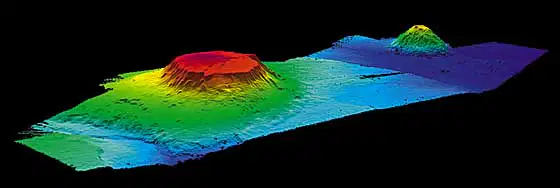
The map below shows a part of Earth’s surface. Points A through D are locations on the ocean floor.
At which location is the temperature of the ocean floor bedrock most likely highest?
a)
A
b)
B
c)
C
d)
D
17.
The California Ocean Current, which flows along the west coast of North America, is a
a)
Cool current, flowing nouth
b)
cool current, flowing south
c)
warm current, flowing north
d)
warm current, flowing south
18.
The image shows the Mid Atlantic Ridge. Which type of boundary occurs at this ridge where the ocean floor is spreading apart? 
a)
convergent
b)
divergent 
c)
transform fault
19.
What is the deepest part of the oceans?
a)
Mid-Atlantic ridge
b)
Pacific rim
c)
Mariana's trench
d)
Gulf of Mexico
20.
How much of Earth is covered in water?
a)
61%
b)
71%
c)
81%
d)
91%
21.
What is the most abundant solid dissolved in seawater?
a)
Magnesium Chloride
b)
Calcium Chloride
c)
Potassium Chloride
d)
Sodium Chloride
22.
What current is closest to Virginia, bringing us warm water from the Equator?
a)
California
b)
North Equatorial
c)
Labrador
d)
Gulf Stream
23.
Fish are abundant in areas where the ocean is upwelling because it -
a)
Causes currents that bring fish to the area
b)

Brings nutrients from the deep up to the Oceans surface
c)
Causes turbulence that attracts fish
d)
Changes tidal flow in that area
24.
London, England is at the same latitude as Alaska, but has a much milder climate. This is because-
a)
It is closer to mainland Europe
b)
It has more geothermal energy
c)
The moderating effect of the Gulf Stream
d)
Global Warming
25.
The highest point on a wave is:
a)
the crest
b)
the trough
c)
the top
d)
the coast 
26.
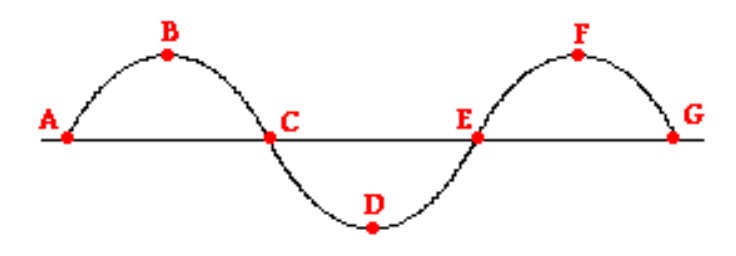
Which letter(s) represent the trough of the wave?
a)
A
b)
B & D
c)
D
d)
C & G
27.

Classify these Ocean dwellers into the correct category

Categorize the following

Killer Whale

Coral

Algae

Submarine

Crab

Sea Horse

Bacteria

Ship Wreck

Benthos
Nekton
Plankton
Abiotic Factor
28.
15. Which of the following organisms is at the top of an ocean food chain?
a)
lobster
b)
plankton
c)
cod
d)
shark
29.
24. Label the Ocean Floor: What is A?
a)
continental shelf
b)
Continental Slope
30.
25. Label the Ocean Floor: What is B?
a)
continental slope
b)
Abyssal Plain
31.
30. Label the Ocean Floor: What is G?
a)
Seamount
b)
Continental Rise
32.

Conditions in the deep-sea environment include very high pressures, total darkness, extremely cold temperatures, and toxic chemicals. Many say that we know more about ​ ​ (a)   than our ​ (b)  

Choose from the below words
space
oceans
fish
birds
rivers
33.

T/F there is only one global ocean, the vast body of water that covers 71 percent of the Earth is geographically?

a)

False

b)

True

34.

On the bottom of the ocean are flat-topped seamounts that may have been islands or a plateau years ago. What are these features called?

a)

underwater plateaus

b)

flat tops

c)

benchmarks

d)

guyots

35.

The bottom of the ocean is just flat.

a)

true

b)

false

36.

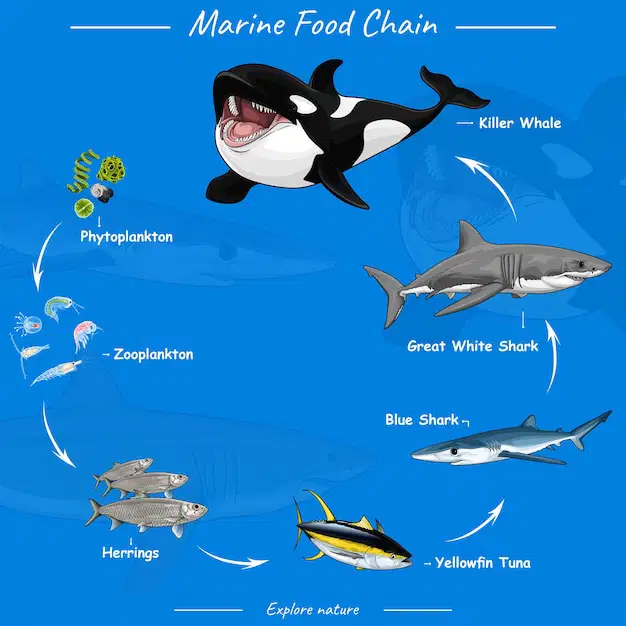
The producers in this marine food chain are which of these pictured creatures

a)

the plankton

b)

The shrimp and plankton

c)

sharks

d)

whale and sharks

37.

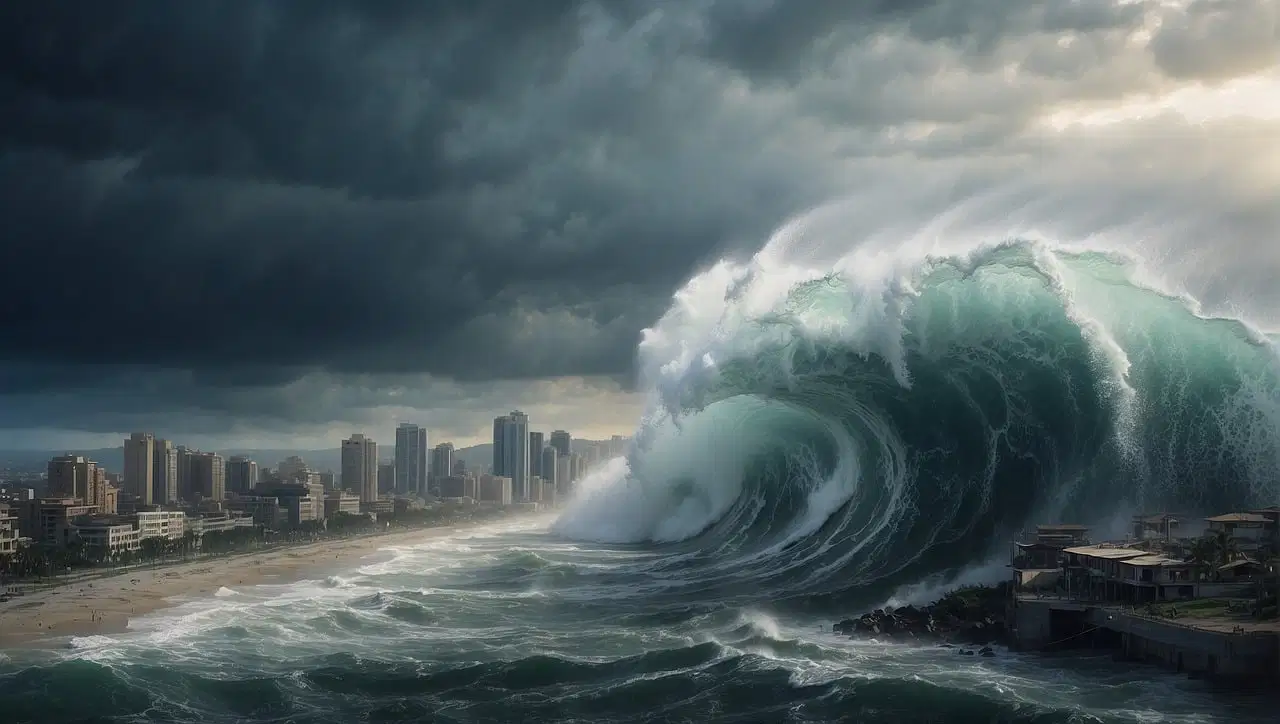
devasting ocean waves that are triggered by large earthquakes, volcanic eruptions or underwater (submarine) landslides are called.

a)

p waves

b)
tsunamis
c)
rip currents
d)
storm surges
38.

What do the arrows on the map represent?

a)

size of waves

b)

water weight

c)

ocean currents

d)

time between tides

39.

Label the parts of the ocean floor.

40.
What kind of water is in the ocean?
a)
fresh water
b)
salt water
c)
groundwater
d)
lake water
41.

What kind of tectonic movement is happening along an ocean ridge?

a)
Convergent tectonic movement
b)
Divergent tectonic movement
c)
Transform tectonic movement
d)
Static tectonic movement
42.

Identify the following ocean:

a)

Indian

b)

Arctic

c)

Southern

d)

Atlantic

43.

Which of the following is a feature found on the ocean floor?

a)

Mountain range

b)

Mid-ocean ridge

c)

Desert

d)

Rainforest

44.

What is the main source of energy for producers in the ocean food chain?

a)

Wind

b)

Volcanic heat

c)

Ocean currents

d)

Sunlight

45.

As you move from the surface to the deep ocean, what happens to the amount of sunlight?

a)

It decreases

b)

It stays the same

c)

It fluctuates randomly

d)

It increases

46.

Which of the descriptions below best describes the effects of El Nino?

a)
El Niño primarily affects ocean currents without impacting weather.
b)

El Niño causes global weather disruptions, including increased rainfall, ocean temerature changes and droughts in other places.

c)
El Niño leads to stable weather patterns and consistent temperatures.
d)
El Niño results in colder winters and less precipitation globally.
47.

Which of the following best explains why current D does not reach the surface?

a)

It contains too few phytoplankton.

b)

It is carrying too much sediment.

c)

It is too cold and dense.

d)

It is too low in salinity.

48.

Which ocean is the smallest?

a)

Pacific Ocean

b)

Atlantic Ocean

c)

Indian OCean

d)

Arctic Ocean

e)

Southern Ocean

49.

Deep sea animals use bioluminescence to:

a)

attract mates

b)

attract prey

c)

see

d)

all of these

50.
Scientists divide the ocean into zones.  Where do 90% of all sea creatures live?
a)
Sunlit zone
b)
Twilight zone
c)
Midnight Zone
d)
New moon zone