
 Worksheets
Science 9 Space
Total questions: 47
Worksheet time: 43mins
Name
Class
Date
1.
Appears as a streak in the sky.
a)
asteroid
b)
meteoroid
c)
comet
d)
meteor
2.
What is an asteroid?
a)
rocky, metallic bodies that orbit the sun
b)
a mixture of ices
c)
a dwarf planet
d)
a chunk of stony matter
3.
What tool would you use to study stars and space?
a)
microscope
b)
oscilloscope
c)
telescope
d)
nanoscope
4.
Which of the following is true?
a)
Earth is the center of the solar system
b)
The sun orbits the earth
c)
Gravity exists only on Earth
d)
The sun is the center of the solar system
5.
A pattern of stars is called what?
a)
constellation
b)
solar system
c)
galaxy
d)
bunch
6.
How long is Earth's revolution?
a)
one day
b)
one year
c)
one decade
d)
one hour
7.
How long is Earth's rotation?
a)
one day
b)
one year
c)
one decade
d)
one hour
8.

How many planets are there?
a)
6
b)
7
c)
8
d)
9
9.
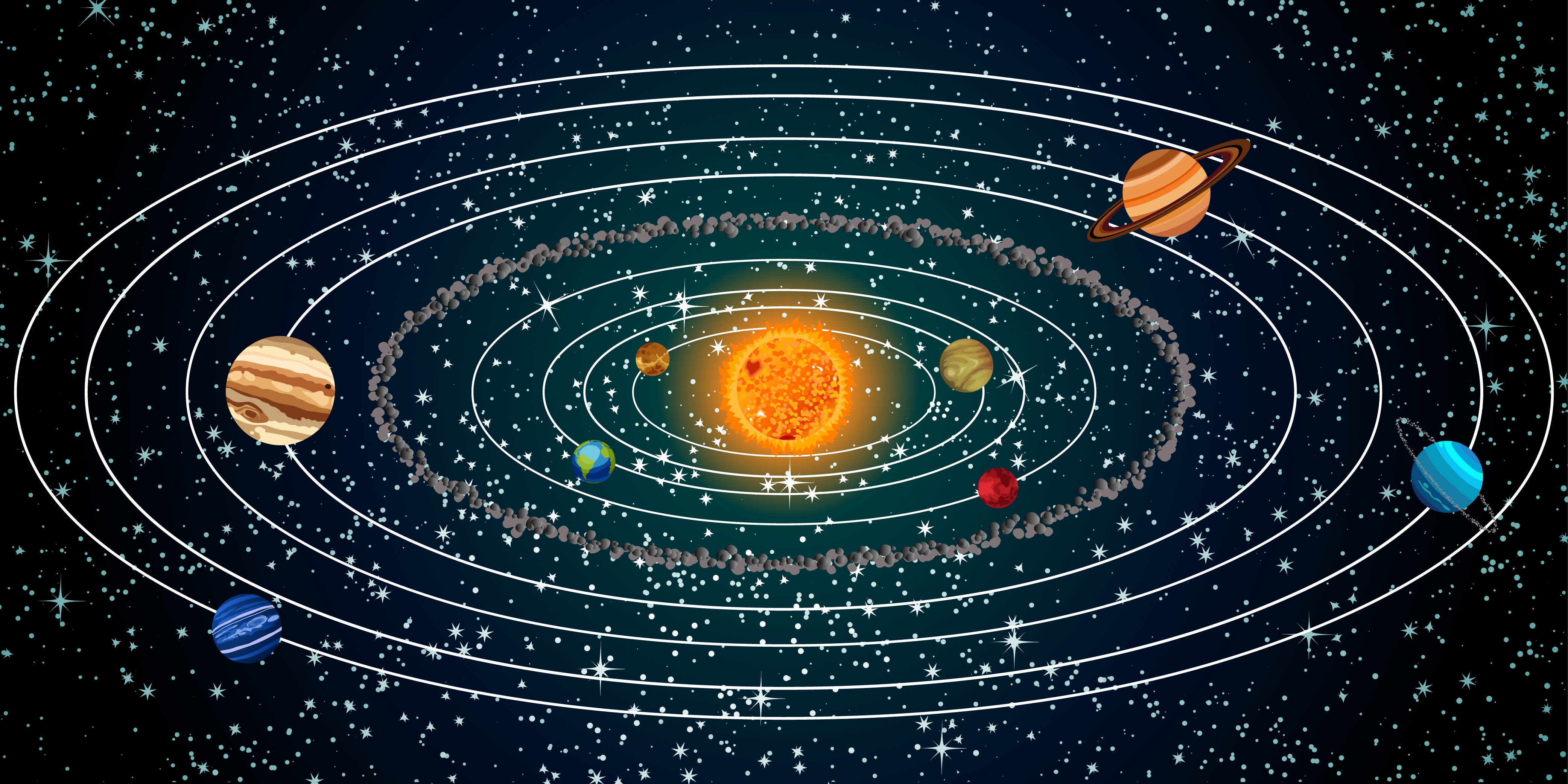
Why do planets orbit the sun (and not float around in space)?
a)
the moons are keeping them in place
b)
They were hit by an asteroid
c)
they were hit by a comet
d)
the sun's gravity keeps them in place
10.

The Sun is a ____________.
a)
planet
b)
star
11.

Which is the largest planet (in terms of diameter)?
a)
Mars
b)
Saturn
c)
Neputne
d)
Jupiter
12.
The path of an object as it revolves around another object in space
a)
path
b)
orbit
c)
ellipse
d)
circle
13.
Pluto is a
a)
dwarf planet
b)
star
c)
comet
d)
giant planet
14.
What is the name of our Galaxy?
a)
Mily Galaxy
b)
Milky Way Galaxy
c)
Andromeda Galaxy
d)
Pinwheel Galaxy
15.
Which choice shows the correct order of the planets?
a)
Mars, Venus, Earth, Mercury, Jupiter, Saturn, Uranus, Neptune
b)
Earth, Venus, Mars, Mercury, Jupiter, Saturn, Uranus, Pluto
c)
Mercury, Venus, Earth, Mars, Jupiter, Saturn, Uranus, Neptune
d)
Saturn, Venus, Mars, Mercury, Jupiter, Neptune Mercury, Uranus
16.
The sun and everything that revolves around it.
a)
solar system
b)
galaxy
c)
universe
d)
rotation
17.
The moon appears to change shape because of _____.
a)
the Moon's revolution around Earth
b)
the seasons of the year
c)
the movement of stars in they sky
d)
Earth's rotation on its axis
18.
A large body made of gas or rock that orbits around a star.
a)
planet
b)
moon
c)
star
d)
super nova
19.
To increase or get bigger.
a)
Waxing
b)
Waning
20.
To decrease or get smaller
a)
waning
b)
waxing
21.
A rocky body that orbits around a planet.
a)
moon
b)
star
c)
axis
d)
Sun
22.
The _________ of a constellation changes during the night.
a)
position in the sky
b)
shape
c)
name
d)
distance
23.
When does a waning moon occur?
a)
just after a full moon
b)
just after a crescent moon
c)
when all of the Moon's near side is dark
d)
between a first-quarter moon and a new moon
24.
Asteroids "hang out" in the Asteroid Belt between the planets of:
a)
Earth and Mars
b)
Mercury and Venus
c)
Saturn and Neptune
d)
Mars and Jupiter
25.
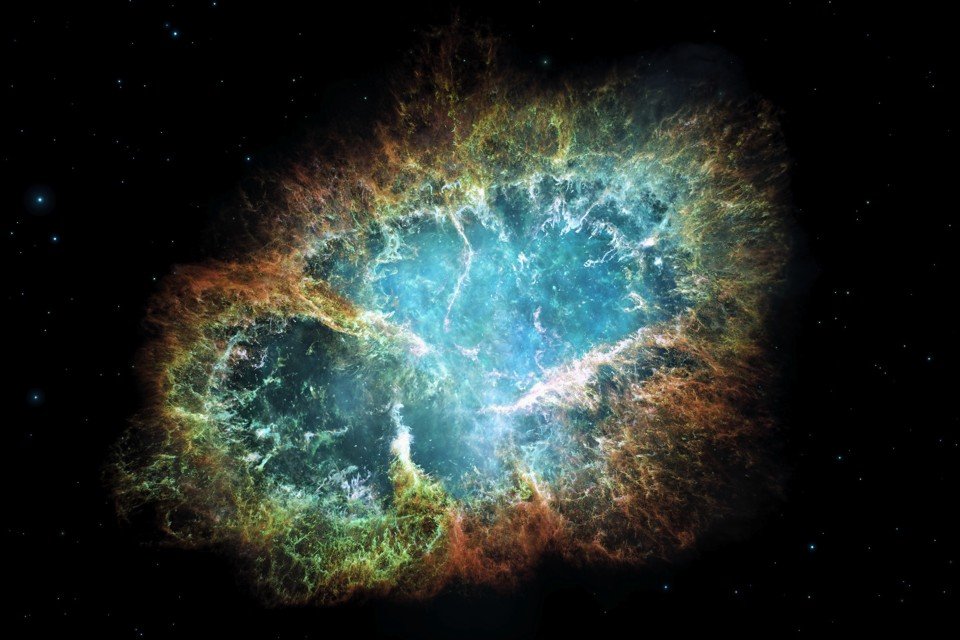
What is the name of the explosion at the death of a massive star?
a)
Supergiant
b)
Supernova
c)
Black Hole
d)
Nebula
26.
The only objects in our Universe that produces and emits its own light is
a)
Nebulas
b)
Comets
c)
Planets
d)
Stars
27.

What is the theory that states the universe began with a huge explosion?
a)
Apparent Magnitude
b)
Light year
c)
Big Bang Theory
d)
Galaxy
28.
What is an object that is so massive and dense that even light can not escape its gravity?
a)
Main-sequence
b)
black hole
c)
Apparent Magnitude
d)
Comet
29.
Which is the smallest of the following: Planets; Solar System; Galaxy; Universe
a)
Universe
b)
Solar System
c)
Planets
d)
Galaxy
30.
What is the smallest planet in our solar system?
a)
Mars
b)
Mercury
c)
Earth
d)
Venus
31.

The only planet that we know of which can sustain life is ____________.
a)
mars
b)
earth
c)
the moon
d)
jupiter
32.

What phase of the moon is
shown?
shown?
a)
A. new moon
b)
B. full moon
c)
C. first quarter moon
d)
D. crescent moon
33.
When we see a full moon from
Earth, how much of the entire
moon are we seeing?
Earth, how much of the entire
moon are we seeing?
a)
A. the entire moon
b)
B. half of the moon
c)
C. a quarter of the moon
d)
D. a sliver of the moon
34.
During the new moon
phase, ___________ .
phase, ___________ .
a)
A. the unlighted half of the
moon faces the sun
moon faces the sun
b)
B. the lighted half of the moon
faces Earth
faces Earth
c)
C. the unlighted half of Earth
faces the sun
faces the sun
d)
D. the unlighted half of the
moon faces Earth
moon faces Earth
35.
A _____ is the phase of the moon when the entire half of the moon that faces Earth is lighted.
a)
quarter moon
b)
first moon
c)
new moon
d)
full moon
36.
What is the 5th planet from the Sun?
a)
Mars
b)
Jupiter
c)
Venus
d)
Earth
37.
What is the farthest planet in our Solar System?
a)
Neptune
b)
Uranus
c)
Pluto
d)
Saturn
38.
Which planet has been re-classified as a dwarf planet?
a)
Mars
b)
Mercury
c)
Neptune
d)
Pluto
39.
To increase gradually in size. The illuminated part of the moon is getting bigger.
a)
Full
b)
Tide
c)
Waxing
d)
Waning
40.
To decrease gradually in size. The illuminated part of the moon is becoming smaller
a)
New
b)
eclispe
c)
waxing
d)
waning
41.
Having concave and convex edges terminating in points
a)
waxing
b)
full
c)
New
d)
crescent
42.

What type of Moon?
a)
New Moon
b)
Full Moon
c)
Crescent
d)
Quarter
43.

What type of Moon?
a)
New Moon
b)
Full Moon
c)
Crescent
d)
Quarter
44.

What type of Moon?
a)
New Moon
b)
Full Moon
c)
Cresent
d)
Quarter
45.

What type of Moon?
a)
New Moon
b)
Full Moon
c)
Cresent
d)
Quarter
46.
Which two planet's orbits is the Asteroid Belt in between?
a)
Mercury and the Sun
b)
Earth and Mars
c)
Mars and Jupiter
d)
Uranus and Pluto
47.
Made of ice, dust and gas
a)
asteroid
b)
meteoroid
c)
comet
d)
meteor
100 %

