
Font size
S
M
L
XL
 Worksheets
Earth Science 2nd Semester Review
Total questions: 123
Worksheet time: 1hrs 16mins
Name
Class
Date
1.
Which gas in our atmosphere is most abundant?
a)
Argon
b)
Oxygen
c)
Nitrogen
d)
Carbon Dioxide
2.
What percentage of our atmosphere is made up of other gases such as argon, water vapor, and carbon dioxide?
a)
1%
b)
21%
c)
78%
d)
90%
3.
What is the percentage of oxygen in Earth's atmosphere?
a)
1%
b)
21%
c)
78%
d)
90%
4.
What is the percentage of nitrogen in Earth's atmosphere?
a)
1%
b)
21%
c)
78%
d)
90%
5.
Which layer of the atmosphere contains the greatest amount of water vapor?
a)
Thermosphere
b)
Troposphere
c)
Mesosphere
d)
Stratosphere
6.
In which layer of the atmosphere does weather occur?
a)
Mesosphere
b)
Thermosphere
c)
Stratosphere
d)
Troposphere
7.
What causes the temperature to increase in the stratosphere?
a)
Nitrogen
b)
Ozone
c)
Water Vapor
d)
carbon dioxide
8.
What decreases as you go up in the atmosphere?
a)
Altitude
b)
Atmosphere
c)
Meteors
d)
Air Pressure
9.
What is the lowest main layer of Earth's atmosphere?
a)
Thermosphere
b)
Troposphere
c)
Stratosphere
d)
Mesosphere
10.
What is the outer most main layer of Earth's atmosphere?
a)
Thermosphere
b)
Troposphere
c)
Stratosphere
d)
Mesosphere
11.
The layers of the atmosphere are classified according to changes in _________.
a)
altitude
b)
density
c)
composition
d)
temperature
12.

Where is the temperature the highest?
a)
1
b)
2
c)
3
d)
4
13.

Where is the air pressure the greatest?
a)
1
b)
2
c)
3
d)
4
14.

Where is the altitude the greatest?
a)
1
b)
2
c)
3
d)
4
15.
Which of the following is the correct order of the atmosphere layers from Earth to space?
a)
troposphere, stratosphere, mesosphere, thermosphere, exosphere
b)
troposphere, mesosphere, thermosphere, exosphere, stratosphere
c)
thermosphere, stratosphere, mesosphere, troposphere, exosphere
d)
troposphere, stratosphere, mesosphere, exosphere, thermosphere
16.
What is the jet stream?
a)
Precipitation in North Carolina
b)
Weather over a long period of time
c)
Strong winds above the Earth's surface
d)
Football flying over the Earth
17.
What flows does the Jet Stream have?
a)
West to East
b)
West to South
c)
North to West
d)
South to East
18.
How does the jet stream affect the weather?
a)
The jet stream transports weather systems that affect us.
b)
The jet stream does not affect the weather.
c)
The jet stream releases oxygen so we can breathe.
d)
The jet stream brings only bad weather.
19.
Nimbostratus and cumulonimbus clouds can signal what type of upcoming weather?
a)
fair skies
b)
hot, sunny weather
c)
windy weather
d)
rainy weather
20.
Cumulus and cirrus clouds can signal what type of upcoming weather?
a)
fair skies
b)
hot, sunny weather
c)
windy weather
d)
rainy weather
21.
Which of the following is an example of a cloud of vertical development?
a)
nimbostratus cloud
b)
cumulonimbus cloud
c)
cirrus cloud
d)
stratus cloud
22.
What are clouds that look like white, puffy cotton balls?
a)
nimbostratus
b)
cumulus
c)
cirrus
d)
altostratus
23.
What are low level clouds that appear to cover the sky in layers?
a)
cirrus
b)
alto
c)
stratus
d)
cumulus
24.
What type of cloud is on the ground?
a)
nimbostratus
b)
stratus
c)
fog
d)
altocumulus
25.
What is the definition of CONDUCTION?
a)
When heat is transferred from objects like rays of light or electromagnetically.
b)
a hot liquid or air that expands, becomes less dense, and rises or becomes more dense, and sinks.
c)
When heat transfers from objects that are touching.
d)
When heat transfers through the heater or AC in your house.
26.
What is the definition of CONVECTION
a)
When heat transfers through waves.
b)
When heat transfers from objects that are touching.
c)
a hot liquid or air that expands, becomes less dense, and rises or becomes more dense, and sinks.
d)
Heat traveling from the sun
27.
What kind of heat transfer happens when the sun is heating your body?
a)
Conduction
b)
Radiation
c)
Convection
d)
Density
28.
Which of the following is an example of convection?
a)
A hair dryer is drying up your hair.
b)
When the AC or heater changes the temperature.
c)
When a car engine turns hot after being turned on.
d)
When you are making soup and the water is rising and lowering.
29.
What heat transfer happens when you burn your hand by touching a fire?
a)
Radiation
b)
Conduction
c)
Convectio
d)
I don't know!!!!!!!!!!!
30.
Which of the following is needed for convection to happen?
a)
Fluid/s
b)
Light in the form or rays
c)
Electromagnetic waves
d)
Fire
31.

The baby chickens are kept warm from the heat lamps demonstrates this type of heat transfer.
a)
conduction
b)
convection
c)
radiation
32.
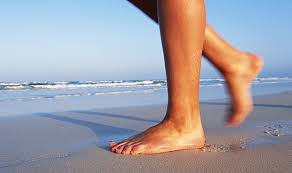
Walking on the warm sand sand with your bare feet demonstrates this type of heat transfer.
a)
conduction
b)
convection
c)
radiation
33.

The Gulf Stream is a current that brings warm ocean water from the south to the north. What type of heat transfer is this?
a)
conduction
b)
convection
c)
radiation
d)
Insolation
34.
Transfer of thermal energy through "flow"
a)
conduction
b)
convection
c)
radiation
35.
Transfer of thermal energy through "touch"
a)
conduction
b)
convection
c)
radiation
36.
When air hits mountains and is forced up.
a)
frontal wedging
b)
orographic lifting
c)
convergence
d)
divergence
37.
A cold, dry air mass would be called -
a)
continental tropic
b)
continental polar
c)
maritime polar
d)
continental maritime
38.
When a warm air mass and a cold air mass meet, but they push at each other and neither one can move, it is called a/an -
a)
warm front
b)
cold front
c)
occluded front
d)
stationary front
39.
When a warm air mass is trapped between two cooler air masses, it is called a/an -
a)
warm front
b)
cold front
c)
occluded front
d)
stationary front
40.
The boundary between two air masses is called a/an -
a)
flood
b)
front
c)
climate
d)
storm
41.
When a cold air mass moves into a warm air mass, it will get colder and we will have severe weather. What type of front is this?
a)
warm front
b)
cold front
c)
occluded front
d)
stationary front
42.
When a warm air mass gently slides on top of a cold air mass, and you have drizzly rain and then warmer weather, what type of front is it?
a)
warm front
b)
cold front
c)
occluded front
d)
stationary front
43.
A/An ____ is a large body of air that has the same properties as the Earth's surface over which it develops.
a)
front
b)
air mass
c)
cloud
d)
tornado
44.
What type of weather would a continental tropical air mass bring?
a)
dry and cold weather
b)
wet and cold weather
c)
dry and warm weather
d)
wet and warm weather
45.
A wet, cold air mass would be -
a)
maritime tropical
b)
maritime polar
c)
continental tropical
d)
continental polar
46.
Where would you find a tropical maritime air mass?
a)
over the ocean, near the equator
b)
over the ocean, near the poles
c)
over a continent, near the equator
d)
over a continent, near the poles
47.

What type of storm front is this?
a)
warm front
b)
cold front
c)
stationary front
d)
occluded front
48.

What type of storm front is this?
a)
warm front
b)
cold front
c)
stationary front
d)
occluded front
49.

What does symbol # 3 mean?
a)
stationary front
b)
occluded front
c)
warm front
d)
cold front
50.

What does symbol # 4 mean?
a)
stationary front
b)
occluded front
c)
warm front
d)
cold front
51.

What does symbol # 1 mean?
a)
stationary front
b)
occluded front
c)
warm front
d)
cold front
52.

What type of air mass is the highlighted arrow?
a)
cold/dry
b)
cold/humid
c)
warm/dry
d)
warm/humid
53.

What type of air mass is the highlighted arrow?
a)
cold/dry
b)
cold/humid
c)
warm/dry
d)
warm/humid
54.

What type of front is this?
a)
Warm Front
b)
Cold Front
c)
Stationary Front
55.
What type of weather does a low pressure system bring?
a)
stormy, cloudy weather
b)
clear skies
56.
A violent, dangerous, rotating column of air that is in contact with both the surface of the earth and a cloud.
a)
Hurricane
b)
Tornado
c)
Thunderstorm
57.
A heavy storm that is accompanied by rain, thunder, lightning, and strong winds.
a)
Hurricane
b)
Tornado
c)
Thunderstorm
58.

a)
hurricane
b)
tornado
c)
thunderstorm
59.

a)
hurricane
b)
tornado
c)
thunderstorm
60.

a)
hurricane
b)
tornado
c)
thunderstorm
61.
Develops in 3 stages in which warm moist air rises forming tall cumulonimbus clouds and updrafts, while heavy rain produces downdrafts.
a)
hurricane
b)
tornado
c)
thunderstorm
62.
Damage caused by storm surge, which results in coastal flooding.
a)
Hurricane
b)
Tornado
c)
Thunderstorm
63.
A severe storm that develops over tropical oceans
a)
hurricane
b)
tornado
c)
thunderstorm
64.
What do greenhouse gases do?
a)
absorb Earth's outgoing infrared radiation
b)
reflect Earth's incoming infrared radiation
c)
magnify ultraviolet radiation in the atmosphere
d)
block the Sun's infrared radiation
65.
Climates are classified by ____
a)
plants and animals
b)
altitude and latitude
c)
bodies of water and ocean currents
d)
temperature and precipitation
66.

Which climate zone is found at the blue X?
a)
Tropical
b)
Temperate
c)
Polar
67.

Which climate zone is found at the red star?
a)
Tropical
b)
Temperate
c)
Polar
68.

Which climate zone is found at the green smiley?
a)
Tropical
b)
Temperate
c)
Polar
69.
What is weather over a long period of time?
a)
A tropical vacation
b)
Weather
c)
Climate
d)
Science
70.
During Orographic Effect, the leeward side is cool and moist.
a)
True
b)
False
71.
During Orographic Effect, the windward side is warm and dry.
a)
True
b)
False
72.
Over the past 75 years, measurements from Mauna Loa Observatory have shown that Carbon DIoxide (CO2) levels have _____
a)
Increased
b)
Stayed the same
c)
Decreased
73.
What model is where the earth is in the middle of our universe?
a)
Heliocentric Model
b)
Geocentric Model
c)
Moon phases
d)
Tidal Phases
74.
What Model is where the sun is the center of the universe?
a)
Geocentric
b)
Heliocentric
c)
Earth's rotations
d)
Earth's planets
75.
During a full moon what eclipse do we see?
a)
Solar
b)
Lunar
c)
Full Moon
d)
No eclipse
76.
During a new moon what eclipse do we see?
a)
Solar eclipse
b)
Lunar eclipse
c)
New Moon
d)
Full Moon
77.
This person believed that planets move on small circles that move on larger circles
a)
Ptolemy
b)
Copernicus
c)
Galileo
d)
Aristotle
78.
This person discovered moons on Jupiter, which helped to support the heliocentric theory
a)
Aristotle
b)
Copernicus
c)
Ptolemy
d)
Galileo
79.
This person was the first to use a telescope to make observations in the sky -
a)
Aristotle
b)
Ptolemy
c)
Copernicus
d)
Galileo
80.
For over 1,000 years, the church supported this theory -
a)
Geocentric
b)
Heliocentric
81.
This person developed the heliocentric theory and was considered the founder of modern astronomy.
a)
Aristotle
b)
Copernicus
c)
Ptolemy
d)
Galileo
82.
What is the closest planet to the Sun?
a)
Mercury
b)
Mars
c)
Venus
d)
Earth
83.
Which of the following planets is farthest from the Sun?
a)
Mars
b)
Mercury
c)
Venus
d)
Earth
84.
What are the inner planets composed of?
a)
gases and ice
b)
rock and ice
c)
gases and rock
d)
rock
85.
What is earth's twin?
a)
Uranus
b)
Jupiter
c)
Mars
d)
Venus
86.
What are the Inner Planets?
a)
Mercury, Mars, Earth, and Venus
b)
Earth, the Moon, Mars
c)
Neptune, Pluto, Earth
d)
:)
87.
What causes a high surface temperature on Venus?
a)
the density of its atmosphere
b)
the acid content of its atmosphere
c)
the fast period of rotation
d)
its retrograde spin on the axis
88.
The inner planets are called terrestrial planets because
a)
they are very hot
b)
the can support life
c)
they have massive gas atmosphere
d)
they are very dense and rocky
89.
The kind of rotational spin that causes the sun to appear to rise in the west and set in the east
a)
period of revolution
b)
period of rotation
c)
prograde rotation
d)
retrograde rotation
90.
Glowing trails that result when bodies burn up in the solar system
a)
metoerites
b)
meteors
c)
meteoroids
d)
comets
91.
Rocky Bodies that Reach Earth's Surface
a)
Meteorites
b)
Meteoroids
c)
Meteors
d)
Comets
92.
A region of space between the orbits of Mars and Jupiter
a)
asteroid belt
b)
comets
c)
galaxy
d)
asteroids
93.
Small loosely packed bodies of ice, rock and cosmic dust
a)
meteoroid
b)
Comets
c)
meteors
d)
asteroids
94.
Small rocky bodies that revolver around the sun
a)
Asteroids
b)
Meteorites
c)
Meteoroids
d)
Near Earth Asteroid
95.
Why is it useful to study the smaller objects in the solar system?
a)
They orbit farther out than humans can see with a telescope
b)
They form a region just beyond Neptune
c)
They are important to all living things
d)
They help scientists learn the history of the solar system
96.
Many scientists think that comets originate in
a)
the asteroid belt
b)
the Oort cloud
c)
Neptune
d)
another solar system
97.
What is the belt between Mars and Jupiter called?
a)
solar nebula
b)
Oort Cloud
c)
Kuiper Belt
d)
Asteroid Belt
98.
What are the different appearances of the moon as it revolves around Earth called?
a)
phases
b)
satellites
c)
nebulas
d)
eclipses
99.
An outer planet known for the ring system
a)
Saturn
b)
Mercury
c)
Jupiter
d)
Neptune
100.
The outer planets that have a massive gas atmospheres are called
a)
meteors
b)
solar nebula
c)
gas giants
d)
terrestrial planets
101.

Label letter D
a)
White Dwarf
b)
Supernova
c)
Black Hole
d)
Neutron Star
102.
Label letter B
a)
Red Giant
b)
Supernova
c)
Red Supergiant
d)
Planetary Nebula
103.
Label letter A
a)
Stellar Nebula
b)
Supernova
c)
Black Hole
d)
Planetary Nebula
104.
Which star would be hottest?
a)
Orange
b)
Yellow
c)
White
d)
White-Blue
105.

Which letter would show a bright, hot star?
a)
A
b)
B
c)
C
d)
D
106.
Which letter would show a dim, hot star?
a)
A
b)
B
c)
C
d)
D
107.
An average sized star like the Sun will eventually become a _________________ before becoming a planetary nebula.
a)
Red Giant
b)
Blue Giant
c)
Jolly Green Giant
d)
Red Supergiant
108.
The true brightness of a star is its ___________________.
a)
Apparent Magnitude
b)
Absolute Magnitude
c)
Alphabetical Magnitude
d)
Brightness Index
109.
The brightness a star appears from Earth is its ___________________.
a)
Apparent Magnitude
b)
Absolute Magnitude
c)
Alphabetical Magnitude
d)
Brightness Index
110.
The moon probably formed when...
a)
A piece of the Earth broke off due to it's fast rotation
b)
A Mars-sized object rammed into the Earth
c)
Earth captured the moon gravitationally as it attempted to pass by.
d)
the molten bubble of the Earth budded.
111.
Nebula's are mixtures of gases and what?
a)
clouds
b)
stars
c)
tiny particles
d)
dust
112.
How long ago was our sun formed?
a)
10 million years ago
b)
5 million years ago
c)
4.5 billion years ago
d)
2 billion years ago
113.
What is the nebular hypothesis?
a)
Prediction about how the universe was formed
b)
Prediction of how the moon was formed
c)
Prediction of how comets were formed
d)
Prediction of how the Solar System was formed
114.
Nebulae are primarily composed of what element?
a)
Hydrogen
b)
Helium
c)
Other hard elements
d)
Zinc
115.
A group of stars that form a galaxy is called what?
a)
cluster
b)
planet
c)
universe
d)
gravity
116.
Our galaxy is called the
a)
Earth Nebula
b)
The Hubble Galaxy
c)
The Milky Way
d)
The Snickers
117.
Galaxies are composed of (best answer)
a)
stars
b)
stars and gas
c)
stars, dust, and gas
d)
stars, dust, and gas held together by gravity
118.
The Milky Way Galaxy is a
a)
spiral
b)
lenticular
c)
elliptical
d)
irregular
119.

What type of galaxy is this?
a)
Spiral
b)
Elliptical
c)
Irregular
d)
Irrational
120.

What type of galaxy is this?
a)
Spiral
b)
Elliptical
c)
Irregular
d)
Irrational
121.
Distance measurement used by astronomers for distant objects.
a)
Kilometers
b)
Light Years
c)
Miles
d)
Light Seconds
122.

What type of galaxy is this?
a)
Spiral
b)
Elliptical
c)
Irregular
d)
Irrational
123.
The type of galaxy that is composed of the older stars and low-mass stars.
a)
Spiral
b)
Elliptical
c)
Irregular
d)
Constellation
Reset

