
 Worksheets
Course 2 - After SOL 5 2016-2017
Total questions: 28
Worksheet time: 1hrs 2mins
Name
Class
Date
1.

Is the relation a function? Why.
a)
Yes, because the x-value 11 has two y-values pair with it.
b)
Yes, because each x-value has only one y-value paired with it.
c)
No, because the x-value 11 has two y-values pair with it.
d)
No, because each x-value has only one y-value paired with it.
2.

Is this relation a function?
a)
Yes
b)
No
3.

a)
Yes
b)
No
4.

Which of these tables represent a function?
a)
A
b)
B
c)
C
d)
D
5.

Does the graph represent a function?
a)
Yes, because the vertical line test shows there are no repeating input values
b)
No, because the vertical line test shows there are repeating input values
6.

Is this graph a function or not a function?
a)
Function
b)
Not a Function
7.

Is this graph a function or not a function?
a)
Function
b)
Not a Function
8.

Is this graph a function or not a function?
a)
Function
b)
Not a Function
9.

Is this graph a function or not a function?
a)
Function
b)
Not a Function
10.

Is this set of ordered pairs a function or not a function?
a)
Function
b)
Not a function
11.
What is the definition of function?
a)
Has inputs and outputs
b)
Every input has only ONE output
c)
Inputs have different outputs every time
d)
x-values and y-values
12.

What is the domain of the graph?
a)
1≤ x ≤ 4
b)
1 < x < 4
c)
1≤ y ≤ 4
d)
1 < y < 4
13.
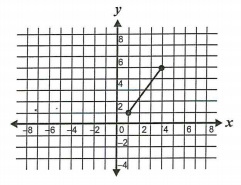
What is the range of the graph?
a)
1 ≤ x ≤ 5
b)
1 < x < 5
c)
1 ≤ y ≤ 5
d)
1 < y < 5
14.

a)
Function
b)
Not a Function
15.

Mi a függvény értelmezési tartománya?
a)
{-1, 1, 2, 0, 3}
b)
{-1, 0, 1, 3}
c)
{0, 2, 3}
d)
{4}
16.
What is the collection of output values of a function called?
a)
Range
b)
Input
c)
Domain
d)
Function
17.
What is the collection of input values in a function called?
a)
Range
b)
Output
c)
Domain
d)
Ordered Pair
18.

a)
{1, 2, 3, 4, 5}
b)
{-1, 1, 2, 3}
c)
{1, 2, 3, 5}
d)
[1, 5]
19.
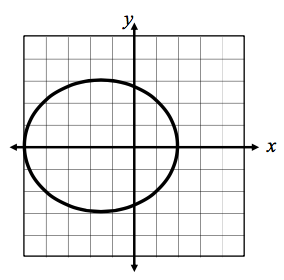
Is this graph a function or not a function?
a)
Function
b)
Not a Function
20.
What is the range of the following relation:
(9, -2) (4, 3) ( 8, 10) ( -4, 8)
(9, -2) (4, 3) ( 8, 10) ( -4, 8)
a)
{-4, 4, 8, 9}
b)
{-2, 3, 8, 10}
c)
{(9, -2) ( 4, 3)}
d)
{(8, 10) (-4, 8)}
21.

What is the Domain of this linear function?
a)
-6 ≤ x ≤ 6
b)
0 ≤ x ≤ 7
c)
2 ≤ x ≤ 7
d)
No Solution
22.

What is the Domain of this linear function?
a)
-3 < x ≤ 5
b)
x = -1
c)
5 < x ≤ -3
d)
-2 < x ≤ 6
23.

What is the RANGE of this graph?
a)
-7<x<5
b)
-7≤x<5
c)
-3<x<1
d)
-3≤x<1
24.
Combine like terms
3x + 2x + 3y - 7y
a)
5x + 10y
b)
5x + 4y
c)
5x - 4y
d)
5x -10y
25.
Find the difference.
(7p + 4p3 - 8) - (-3p2 + 2 - 9p)
(7p + 4p3 - 8) - (-3p2 + 2 - 9p)
a)
-3p2 + 4p3 -15 + 9
b)
3p3 + 4p2 - p + 3
c)
4p3 -3p2 +16p -10
d)
4p3 +3p2 + 16p + 10
26.
Add or Subtract to Simplify:
(4x - 2x3) + (5x3 - 4x + 5)
(4x - 2x3) + (5x3 - 4x + 5)
a)
3x3 + 5
b)
3x3 + 8x + 5
c)
3x2 + 5
d)
7x3 + 8x + 5
27.
Add or Subtract to Simplify:
(x2 + 6x - 8) + (7 - 5x + 9x2)
(x2 + 6x - 8) + (7 - 5x + 9x2)
a)
10x2 - x - 1
b)
10x2 + x - 1
c)
8x2 + 11x - 1
d)
10x2 - 11x - 1
28.
(-8x - 3) + (7x + 5)
a)
-x + 2
b)
-x - 2
c)
x + 2
d)
x - 2
100 %

