
 Worksheets
Earth Science Final Exam Review
Total questions: 42
Worksheet time: 29mins
Name
Class
Date
1.
Earthquakes and volcanoes are most likely found in which locations?
a)
at plate boundaries
b)
in oceans
c)
in the middle of continents
d)
in the middle of plates
2.
Transform boundaries are most likely to produce what phenomenon?
a)
volcanoes
b)
deep sea trenches
c)
underwater mountain ranges
d)
earthquakes
3.
What drives tectonic plate movement?
a)
gravity
b)
coriolis effect
c)
convection currents
d)
the earth's magnetic core
4.
According to Wegener's hypothesis of continental drift,
a)
Earth's surface is made up of seven major landmasses
b)
the continents DO NOT move
c)
Earth is slowly cooling and shrinking
d)
the continents were once joined together in a single landmass
5.
Most geologists rejected Alfred Wegener's idea of continental drift because...
a)
it did not agree with their current theory
b)
Wegener was interested in what Earth was like millions of years ago
c)
Wegener used several different types of evidence to support his hypothesis
d)
Wegener could not identify the force that moved the continents
6.
In Seafloor Spreading, molten material rises from the mantle and erupts or flows out
a)
along the edges of all the continents
b)
along mid-ocean ridges
c)
in the deep ocean trenches
d)
in the north and south poles
7.
Over the past 200 years, the level of carbon dioxide in the atmosphere has
a)
decreased slightly
b)
increased until recently, and then decreased
c)
increased steadily
d)
stayed about the same
8.
This prevents damaging ultraviolet radiation from the sun from reaching the earth.
a)
Stratosphere
b)
Hemisphere
c)
Ozone Layer
d)
Ionosphere
9.
Which is a natural source of greenhouse gases?
a)
aerosols
b)
deforestation
c)
volcanic eruptions
d)
burning fossil fuels
10.
What do greenhouse gases do?
a)
absorb Earth's outgoing infrared radiation
b)
reflect Earth's incoming infrared radiation
c)
magnify ultraviolet radiation in the atmosphere
d)
block the Sun's infrared radiation
11.
About how long does it take the moon to make one complete cycle around the earth?
a)
65 days
b)
8 days
c)
365 days
d)
29.5 days
12.
As the moon's shape appears to get smaller, we say that the moon is _.
a)
swelling
b)
waxing
c)
waning
d)
disappearing
13.

What control does the moon have on Earth?
a)
It controls waves
b)
It controls Earth's rotation
c)
It controls the speed of revolution
d)
It controls the tides
14.
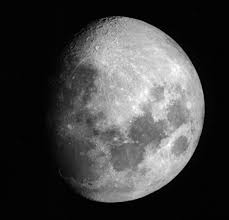
Name the moon phase
a)
waning crescent
b)
waxing crescent
c)
waning gibbous
d)
waxing gibbous
15.
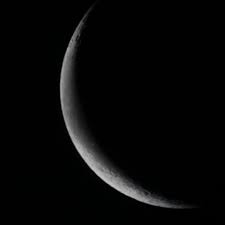
Name the moon phase
a)
waning crescent
b)
waxing crescent
c)
waning gibbous
d)
waxing gibbous
16.
Approximately 75 percent of the Earth's surface is covered in water. So why is water considered such a precious resource?
a)
The greenhouse effect is causing most of the world's freshwater to be trapped in the atmosphere
b)
Only a small fraction of the Earth's water is freshwater available for drinking and irrigation
c)
Each year, more freshwater is being trapped in icecaps located at the North and South Poles
d)
Global warming caused by greenhouse gas emissions will likely cause Earth's oceans to evaporate
17.
What causes smog?
a)
The burning of particulates
b)
The formation of ozone
c)
Acid Rain
d)
the interaction of sunlight with pollutants produced by fossil fuels
18.
When fertilizers run off farmland into streams and ponds, the nitrogen content of the water increases. This can lead to rapid growth of algae in a process called eutrophication. How can this process affect other organisms in the water?
a)
Oxygen is used up as algae is decomposed, reducing the amount available to other organisms.
b)
The water becomes better able to support aerobic organisms.
c)
The algae provide food for fishes and other organisms, leading to decreased algae populations.
d)
The extra nitrogen provides additional food for the other organisms, increasing their population.
19.

The major cause of surface waves in the ocean is —
a)
Earthquakes
b)
Rain
c)
Wind
d)
Gravity
20.

The large, circular surface-current pattern found in each ocean.
a)
California Current
b)
Surface Current
c)
Gyre
d)
Global Conveyor Belt
21.
Temperature and salinity variations in ocean water cause:
a)
Mid-ocean ridges
b)
Horizontal and vertical ocean currents
c)
Refraction of ocean waves
d)
Ebb and flow of the tides
22.
Which process does NOT lead to a decrease in the salinity of water?
a)
runoff from land
b)
precipitation
c)
sea ice melting
d)
evaporation
23.

Approximately what percentage of Earth's surface is covered by oceans?
a)
40%
b)
50%
c)
60%
d)
70%
24.

As you go deeper in the ocean, the water is warmer and less salty.
a)
True
b)
False
25.

Which season is taking place in the Northern Hemisphere in Position 4?
a)
Winter
b)
Spring
c)
Summer
d)
Fall
26.

At position A, which hemisphere would have summer?
a)
Northern hemisphere
b)
Southern hemisphere
27.

Name the phase of the moon for letter a
a)
First Quarter
b)
Last Quarter
c)
Waxing Gibbous
d)
Waning Gibbous
28.
Unlike a total solar eclipse, a total lunar eclipse can be seen anywhere on Earth that the Moon is visible
a)
True
b)
False
29.
The five huge circular-moving systems of ocean surface currents are called
a)
density currents
b)
fetches
c)
drifts
d)
gyres
30.
Water high in salinity ____________ the density of water.
a)
increases
b)
decreases
31.

Subsurface ocean currents continually circulate from the warm waters near the equator to the colder waters in other parts of the world. What is the main cause of these currents?
a)
Differences in th
topography along
the ocean floor
topography along
the ocean floor
b)
Movement of the jet stream
c)
Differences in
density of
ocean water
density of
ocean water
d)
Rotation of the Earth on its axis
32.
Which factor is MOST responsible for the ocean tides?
a)
the wind
b)
earthquakes
c)
the moon's gravity
d)
density differences in water
33.
16. An area where freshwater mixes with salt water is called
a)
a river
b)
an estuary
c)
a glacier
d)
a watershed
34.
Which is the heaviest?
a)
Warm Water Low Salinity
b)
Cold Water Low Salinity
c)
Warm Water High Salinity
d)
Cold Water High Salinity
35.
What do geologists call a volcano that is not likely to erupt ever again
a)
extinct
b)
dormant
c)
sleeping
d)
active
36.
A volcano erupts quietly if its magma is which of the following
a)
cool
b)
solid
c)
low in silica
d)
high in silica
37.
The seismic waves that move fastest are
a)
P waves
b)
S waves
c)
surface waves
38.
Where we live.
a)
stratosphere
b)
thermosphere
c)
troposphere
d)
mesosphere
39.
When warm air rises and cools high in the atmosphere and then sinks to the earth creates _________ currents
a)
convection
b)
surface
c)
deep
d)
precipitaiton
40.
The layer of the atmosphere where meteors burn up
a)
mesosphere
b)
thermosphere
c)
troposphere
d)
stratosphere
41.
This is the side of the mountain that is often colder and wetter.
a)
Leeward Side
b)
Wet Lapse Rate
c)
Windward Side
42.
Particles of air in the atmosphere exert pressure on Earth's surface.
a)
True
b)
False
100 %

