
 Worksheets
Bio 2.1, 2.2 Ecosystems EOC Review
Total questions: 20
Worksheet time: 17mins
Name
Class
Date
1.
Which one of these does not add CO2 to the atmosphere?
a)
cooking with gas
b)
planting trees
c)
burning wood
d)
riding in a bus
2.
What does not produce carbon dioxide?
a)
Photosynthesis
b)
Burning Fossil Fuels
c)
Animal respiration
d)
Plants decaying
3.

In the carbon cycle, producers take in the gas __
a)
carbon dioxide
b)
oxygen
c)
nitrogen
d)
carbon monoxide
4.
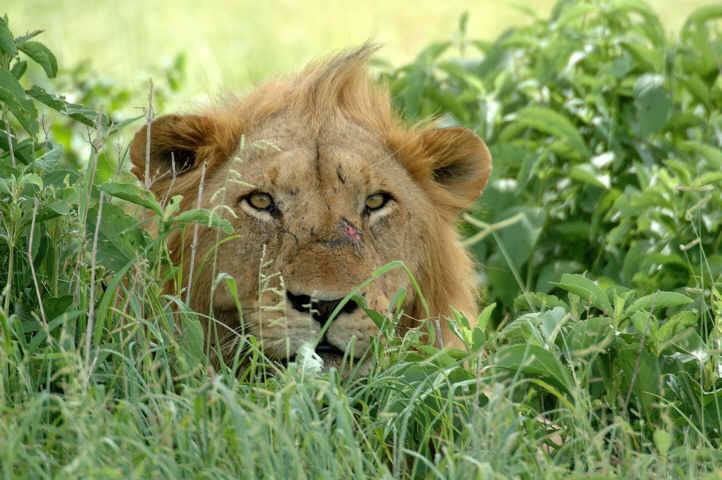
How does the carbon in grass become part of a lion?
a)
The lion eats the grass
b)
Carbon from grass doesn't end up in a lion.
c)
The carbon ends up in the lion's food chain.
d)
The lion breathes in carbon given out by the plant
5.
How nitrogen is "fixed" into useable form for plants...
a)
through action of bacteria only
b)
through lightning only
c)
through action of bacteria & lightning
d)
through photosynthesis
6.

Organisms require nitrogen to make which of the following?
a)
glucose and starch
b)
lipids and nucleic acids
c)
proteins and nucleic acids
d)
carbohydrates and proteins
7.

The process where excess nutrients enter body of water causing overgrowth of aquatic plants and algae...
a)
Eutrophication
b)
Acid Precipitation
c)
Nitrogen Fixation
d)
Decomposition
8.

How do plants get the nitrogen they need?
a)
from the air
b)
from the soil or water in which they live
c)
from the Sun
d)
from broken-down rocks
9.

Organisms that break down dead plants & animals and release nitrogen back into atmosphere...
a)
bacteria
b)
plants
c)
animals
d)
producers
10.
After fertilization what does the ovule develop into?
a)
Fruit
b)
Bud
c)
Seed
d)
Flower
11.
How can a person's muscle cells have the same exact DNA sequences as their nerve cells even though the look and perform completely different?
a)
The two different cells become mutated
b)
The proteins expressed in each cell are different
c)
They actually have different DNA in the two types of cells.
d)
The genome of the different cells changes
12.
A frog eats a fly. The frog and fly are demonstrating ________.
a)
mutualism
b)
competition
c)
predator/prey
d)
parasitism
13.
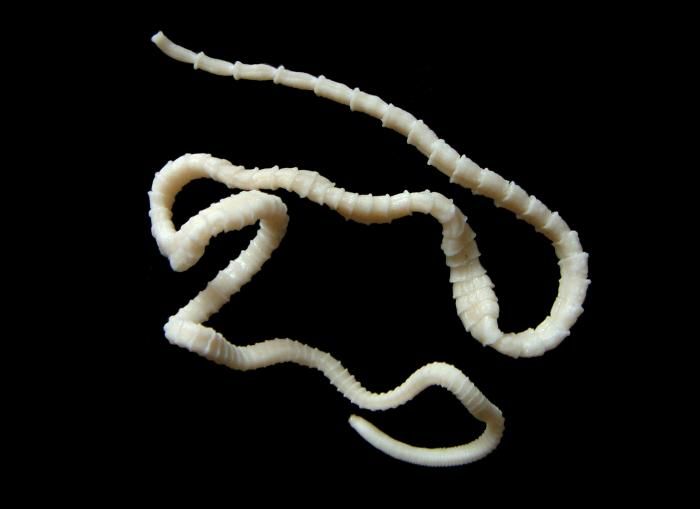
A tapeworm and a cat have this type of relationship.
a)
mutualism
b)
parasitism
c)
commensalism
d)
competition
14.
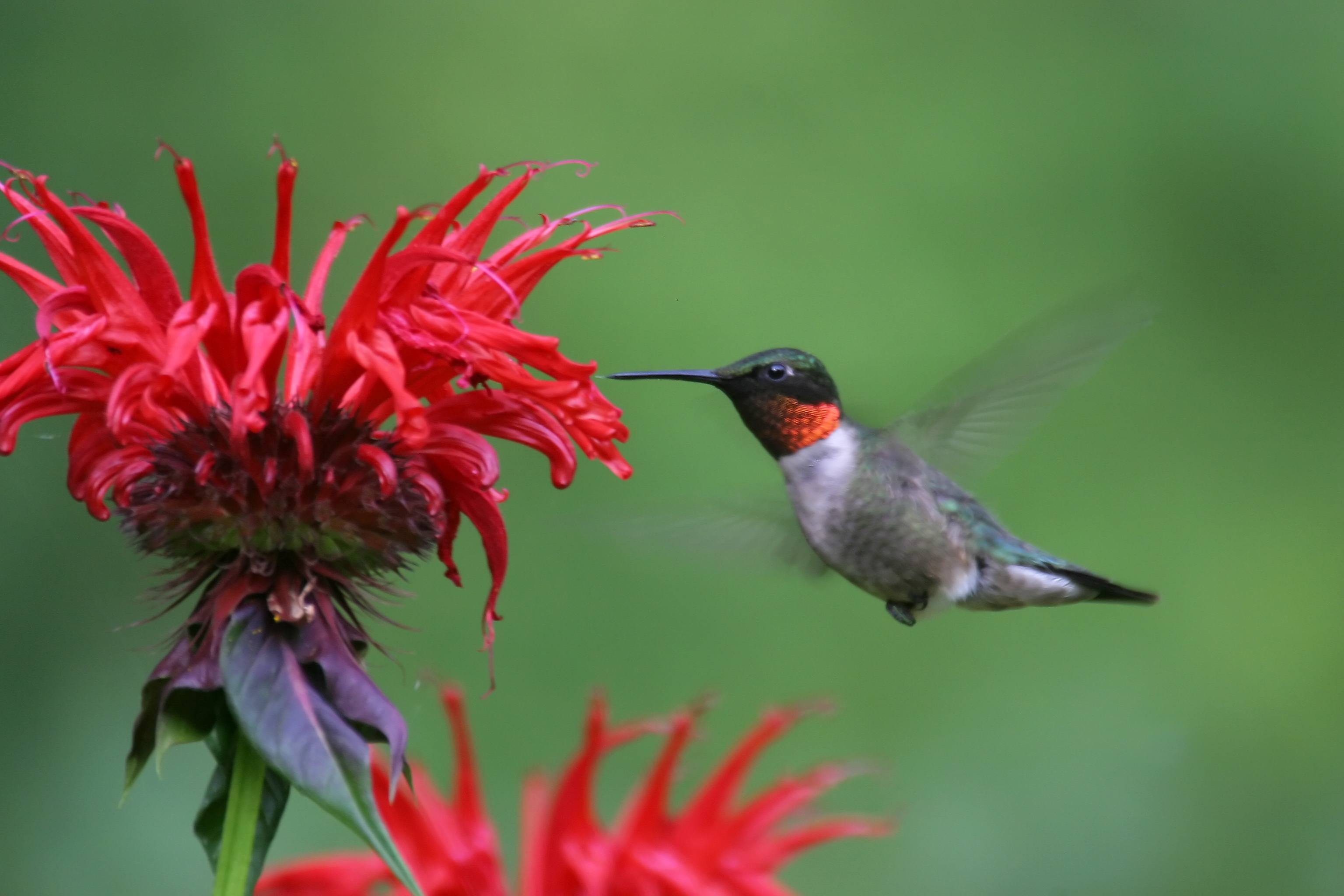
What type of symbiosis? Hummingbirds feed on nectar from flowers. The flowers are pollinated by hummingbirds as they move from flower to flower.
a)
commensalism
b)
mutualism
c)
parasitism
d)
predation
15.

What type of graph is this?
a)
exponential growth
b)
logistical growth
16.
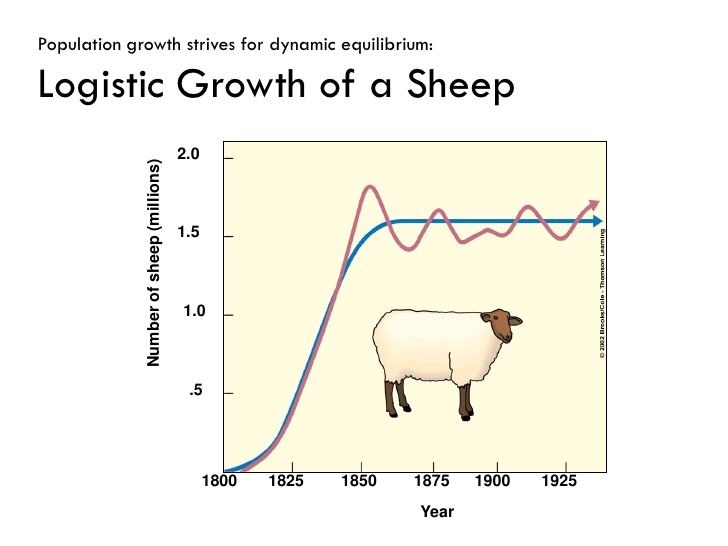
What is the carrying capacity for this sheep population?
a)
1.8 million
b)
1.25 million
c)
1.6 million
d)
1.o million
17.

a relationship that occurs when two or more organims of the same species need the same resource at the same time
a)
competition
b)
symbiosis
c)
predation
18.
How does the concentration of carbon dioxide in the atmosphere affect climate?
a)
As carbon dioxide concentrations increase, temperatures increase
b)
As carbon dioxide concentration increase, temperatures decrease.
c)
Carbon dioxide concentrations have no affect on climate
d)
As carbon dioxide concentrations increase, temperatures become more random.
19.

Which of the following is the best conclusion that can be made from this graph?
a)
atmospheric carbon dioxide levels have been decreasing since 1960
b)
Hawaii has a lot of carbon dioxide
c)
humans have been working hard to decrease carbon dioxide levels
d)
atmospheric carbon dioxide levels have increased steadily since 1960
20.

If a toxic substance built up in this ecosystem, which animal would have the greatest amount in its fat?
a)
Owl
b)
Caterpillar
c)
Frog
d)
Snake
100 %

