
 Worksheets
ECOLOGY TEST REVIEW
Total questions: 47
Worksheet time: 41mins
Name
Class
Date
1.

The study of how living things interact with one another and with their environment.
a)
Biology
b)
Lithology
c)
Ecology
d)
Farmacology
2.
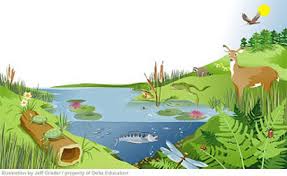
All living things are considered:
a)
biotic factors
b)
abiotic factors
c)
the biosphere
d)
a biome
3.

Any of the non-living factors that make up the environment in which living organisms occur are known as:
a)
biotic factors
b)
abiotic factors
c)
antihistamine
d)
antibiotic
4.
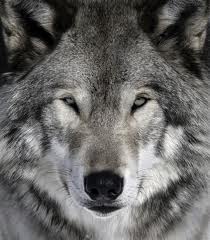
A _____________ is a group of organisms that are able to interbreed and produce young.
a)
species
b)
habitat
c)
niche
d)
community
5.
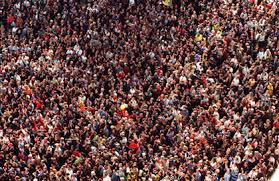
All of the individuals of a given species in a specific area at a certain time makes up a(n):
a)
population
b)
community
c)
ecosystem
d)
biome
6.
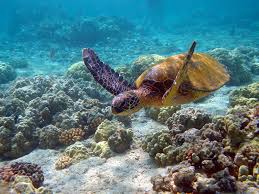
This is the place where an organism lives in order to obtain its food, water, and shelter.
a)
species
b)
habitat
c)
niche
d)
community
7.

The role of an organism in its environment.
a)
habitat
b)
niche
c)
community
d)
species
8.

All the different populations living together in a specific area/region at a certain time.
a)
population
b)
community
c)
ecosystem
d)
biome
9.

A (or more than one) biotic community plus the abiotic features.
a)
population
b)
community
c)
ecosystem
d)
biome
10.

Which of the following best describes a community?
a)
sharks, groupers, anemones and shrimp on a coral reef
b)
decorator crabs on the seafloor
c)
loggerhead sea turtles in Atlantic
d)
prairie grassland in Wyoming
11.

Similar ecosystems on Earth together with similar climates make up:
a)
populations
b)
communities
c)
the biosphere
d)
biomes
12.

The maximum number of organisms that can survive in a particular ecosystem.
a)
carrying capacity
b)
birth rate
c)
limiting factor
d)
death rate
13.

Anything that prevents a population from growing larger.
a)
natural hazard
b)
limiting factor
c)
natural selection
d)
growth
14.

What can limit an area's carrying capacity?
a)
lack of predators
b)
abundance of food
c)
disease
d)
all of the above
15.

Changes in the amount of available resources in an ecosystem is not a limiting factor.
a)
True
b)
False
16.

Organisms require a certain amount of food, water, space, and shelter in order to survive and reproduce.
a)
True
b)
False
17.

If a disease destroying barley plants in a field swept through an ecosystem, what would happen to the barley eating bird population in the the field?
a)
The bird population would stay the same.
b)
The bird population would infinitely increase.
c)
The bird population would decrease.
d)
None of the above.
18.

When a population grows past the ecosystem's carrying capacity, what happens to the population?
a)
The population will continue to grow.
b)
The population starts to die off to return to carrying capacity.
c)
The population will go extinct due to lack of resources.
d)
The population grows then finds a new carrying capacity.
19.

What is the carrying capacity of the graph?
a)
around 500
b)
more than 500
c)
less than 500
d)
around 600
20.

What are the biotic factors in this image?
a)
sunlight, elephants, and grasses
b)
sunlight, water, and air
c)
elephants, plants, and trees
d)
none of the above
21.

What are the abiotic factors in this image?
a)
water, sunlight, dirt, air
b)
birds and plants
c)
water, plants, and birds
d)
all of the above
22.

What is the original source of almost all energy in most ecosystems?
a)
producers
b)
sunlight
c)
consumers
d)
decomposers
23.

An organism that needs to eat other organisms to obtain energy is known as a(n):
a)
autotroph
b)
producer
c)
heterotroph
d)
mutualist
24.

The image provided is an example of a(n):
a)
carnivore
b)
herbivore
c)
producer
d)
autotroph
25.

Due to the plant eating diet of a sloth, it would be classified as what type of consumer?
a)
heterotroph
b)
omnivore
c)
carnivore
d)
herbivore
26.

What does a food web represent?
a)
All connections of energy flow throughout all organisms in a habitat.
b)
The specific ways that mutualism is carried out.
c)
A single pathway or energy flow between organisms.
d)
How carnivores get their food.
27.

The rabbit in this food web would be considered a(n):
a)
decomposer
b)
producer
c)
secondary consumer
d)
primary consumer
28.

A graphic illustration that shows each trophic level and the amount of usable energy contained within.
a)
Food chain
b)
Food web
c)
Energy Pyramid
d)
All of these
29.

The amount of energy that usually transfers from one trophic level to the next represented in an energy pyramid is:
a)
100%
b)
37%
c)
10%
d)
2%
30.

As you move upward, from level to level, in an energy pyramid, energy _____.
a)
increases
b)
decreases
c)
stays the same
d)
increases exponentially
31.

In this energy pyramid, which type of consumer gets only 10% of the energy stored in plants?
a)
herbivore
b)
carnivore
c)
omnivore
d)
secondary consumer
32.

What shows a series of events in which one organism eats another and gets energy?
a)
food chain
b)
food web
c)
energy pyramid
d)
food map
33.

________________ break down dead organisms into decaying matter to release the nutrients back into an ecosystem.
a)
Producer
b)
Consumers
c)
Decomposers
d)
Autotrophs
34.

A relationship between two species in which one organism is harmed is called:
a)
mutualism
b)
commensalism
c)
parasitism
d)
niche
35.

When two organisms are in a symbiotic relationship in which both organisms benefit, this is known as:
a)
competition
b)
mutualism
c)
parasitism
d)
commensalism
36.

What are the products of photosynthesis?
a)
water and carbon dioxide
b)
oxygen and glucose
c)
oxygen and carbon dioxide
d)
oxygen and water
37.

Organisms need this material to make proteins.
a)
carbon
b)
nitrogen
c)
oxygen
d)
ammonia
38.

In the water cycle, rain, snow, sleet and hail are examples of this:
a)
precipitation
b)
condensation
c)
transpiration
d)
evaporation
39.

During the water cycle, heat causes this process:
a)
precipitation
b)
evaporation
c)
transpiration
d)
condensation
40.

Carbon dioxide enters the atmosphere through __________________.
a)
evaporation
b)
consumption
c)
decomposition
d)
cellular respiration
41.

Carbon is absorbed by producers through _____________________.
a)
consumption
b)
photosynthesis
c)
evaporation
d)
transpiration
42.

Some bacteria and fungi provide nutrients to soil. What is the main source of energy that bacteria and fungi need in order to provide nutrients in the soil?
a)
water and sugar
b)
sunlight and nitrogen
c)
dead plant and animal remains
d)
oxygen and carbon
43.

Bacteria are an essential part of the ________________ cycle as this material is a key component in DNA and in the creation of proteins which are the building blocks of cells.
a)
water
b)
hydrogen
c)
nitrogen
d)
carbon
44.

What is a watershed?
a)
Land that collects and channels water from a small body of water to a larger body of water
b)
The shape of the land determined by elevation
c)
A natural stream of water of considerable volume
d)
A river and all its tributaries
45.

Why is gravity a factor in watersheds?
a)
It causes the water to flow away from a watershed.
b)
It causes the water to flow down landforms within the watershed.
c)
Gravity drives the water cycle which impacts a watershed.
d)
Gravity has no effect on watersheds.
46.
The use of pesticides and fertilizers must be carefully monitored because of the effect they can have on the environment.
Which of the following is a possible negative effect of the use of these chemicals on the environment?
Which of the following is a possible negative effect of the use of these chemicals on the environment?
a)
Runoff carries these chemicals into lakes and streams.
b)
Theses chemicals cannot be purchased in large bulk.
c)
These chemicals are expensive to produce.
d)
Storage space for these chemicals is limited.
47.

Macroinvertebrates such as stoneflies, mayflies and water boatmen require high levels of dissolved oxygen and their abundance is an indication of:
a)
dangerous flying conditions for those entering the ozone layer.
b)
poor water quality.
c)
good water quality.
d)
nvertebrates don't tell us anything about water quality.
100 %

