
 Worksheets
water cycle
Total questions: 41
Worksheet time: 45mins
Name
Class
Date
1.
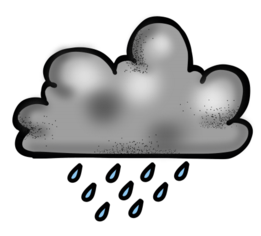
What part of the water cycle does this picture show?
a)
condensation
b)
precipitation
c)
evaporation
2.
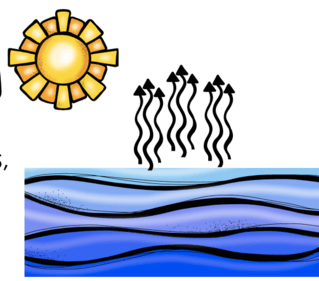
What part of the water cycle does this picture show?
a)
condensation
b)
precipitation
c)
evaporation
3.

When water condenses, the water vapor in the air gets ___________ and changes back into liquid.
a)
cold
b)
hot
c)
warm
d)
solid
4.

Precipitation happens when clouds of water droplets are too ______________.
a)
cold
b)
light
c)
heavy
d)
hot
5.
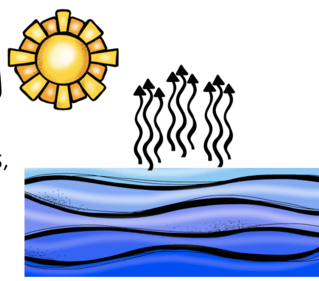
Evaporation happens when the sun ___________ water and turns it into vapor.
a)
cools
b)
heats up
c)
freezes
d)
lights up
6.
Which of these is an example of precipitation?
a)
snow
b)
air
c)
clouds
d)
vapor
7.
When water condenses, the liquid water forms ______________.
a)
water vapor
b)
steam
c)
air
d)
clouds
8.
What is precipitation?
a)
The part of the water cycle when the sun heats up water, turning it from a liquid into water vapor or steam. It rises from the ground into the air.
b)
The part of the water cycle when the water vapor in the air gets cold. The water turns back into a liquid and forms clouds.
c)
The part of the water cycle when clouds get heavy and can no longer hold the liquid water. This causes the water to fall from the sky to the earth as rain, snow, sleet, or hail.
9.

Does evaporation happen before or after condensation?
a)
before
b)
after
c)
during
10.

Does precipitation happen before or after condensation?
a)
before
b)
after
c)
during
11.

What part of the water cycle does this picture show?
a)
condensation
b)
precipitation
c)
evaporation
12.

What is the water cycle?
a)
the 3 forms of water
b)
the movement of water on, above, or below the surface of the Earth
c)
when water melts
d)
when clouds form
13.
Which of these is not an example of precipitation?
a)
rain
b)
clouds
c)
sleet
d)
snow
14.
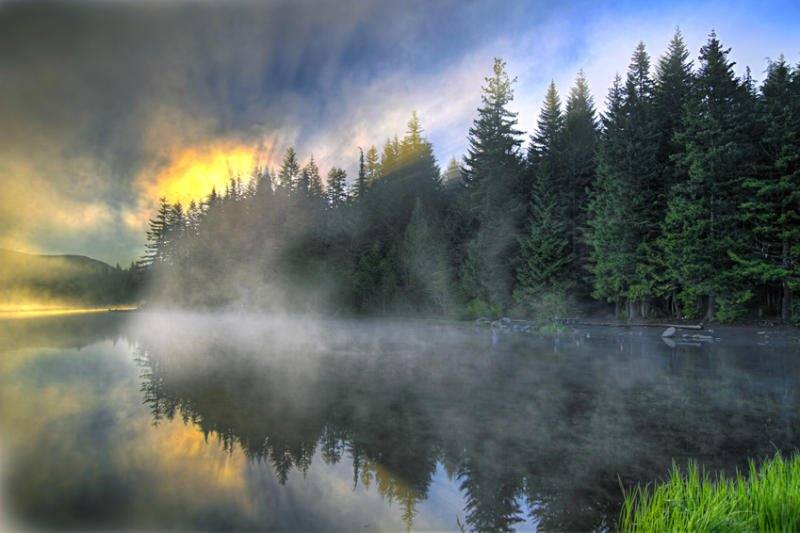
What happens after groundwater at the very end/beginning of the water cycle?
a)
Evaporation
b)
Transpiration
c)
Condensation
d)
Groundwater
15.
what is the main source of freshwater on earth
a)
ocean water
b)
well water
c)
pond water
d)
rainwater
16.
what is the water division of earth
a)
ocean water 97.5 per cent,freshwater frozen as ice 1.5 per cent and freshwater 1 per cent
b)
ocean water-47%,freshwater 50%,freshwater frozen as ice 3%
c)
ocean water 1%,freshwater frozen as ice-90%,freshwater9%
d)
freshwater-33.33%,freshwater frozen as ice 33.33%,ocean water 33.33%
17.

What is water that flows in rivers and streams into the oceans and lakes?
a)
evaporating
b)
condensing
c)
precipitating
d)
runoff
18.
What source of energy evaporates the most water from Earth’s surface?
a)
volcanoes
b)
the sun
c)
lightning
d)
wind
19.
Where is most water found on Earth?
a)
glaciers
b)
lakes
c)
rivers
d)
oceans
20.
What percentage of Earth’s water is freshwater?
a)
75%
b)
3%
c)
1%
d)
97%
21.

What is D?
a)
Evaporation
b)
Condensation
c)
Precipitation
d)
Runoff
22.
What cloud is found at ground level?
a)
Cirrus
b)
Stratus
c)
Culumlus
d)
Fog
23.
What type of precipitation forms when raindrops fall through cold air and freeze before they hit the ground?
a)
Rain
b)
Freezing Rain
c)
Sleet
d)
Snow
24.
On which kind of day would you expect the most evaporation from the surface of a pond?
a)
cold, rainy
b)
cold, sunny
c)
warm, rainy
d)
warm, sunny
25.
Predict what might happen to a river when heavy rains soak the soil near it. The river will
a)
sink
b)
rise
c)
freeze
d)
not change
26.
River, streams and oceans are all points of _____________ in the water cycle.
a)
collection
b)
precipitation
c)
condensation
d)
evaporation
27.
Which type of rainfall would be most helpful to farmers?
a)
rainfall that evaporates quickly
b)
rainfall that runs off the land quickly
c)
rainfall that soaks into the soil slowly
d)
very little rainfall
28.
Precipitation becomes snow when
a)
The clouds get closer to Earth
b)
The clouds get darker
c)
Air temperature gets colder
d)
The wind blows
29.
On which kind of day would you expect the most evaporation from the surface of a pond?
a)
sunny and hot
b)
sunny and cold
c)
rainy and hot
d)
rainy and cold
30.

What is it called when plants give off water vapor as a waste product?
a)
condensation
b)
evaporation
c)
sublimation
d)
transpiration
31.

What is it called when WATER is FORMED from an LIQUID to a WATER VAPOR Oor an [GAS]?
a)
EVAPORATION
b)
PRECIPITATION
c)
TRANSPIRATION
32.

What does groundwater do?
a)
It sends water to our buildings, houses, and water transplant places
b)
to the sky
c)
to the sun
d)
To the Earth's surfaces
33.
What is the water cycle?
a)
the 3 forms of water
b)
the movement of water on, above, or below the surface of the Earth
c)
when water melts
d)
when clouds form
34.
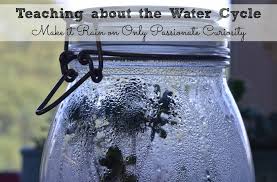
Dew also forms directly onto items, as water droplets. What part of the water cycle is this?
a)
run-off
b)
condensation
c)
evaporation
d)
precipitation
35.
On which kind of day would you expect the most evaporation from the surface of a pond?
a)
sunny and hot
b)
sunny and cold
c)
rainy and hot
d)
rainy and cold
36.
What powers the water cycle?
a)
water
b)
oceans
c)
sun
d)
moon
37.
What percentage of the earth is covered by water?
a)
97%
b)
71%
c)
3%
d)
80%
38.
What Percentage of the earth is salt water?
a)
71%
b)
3%
c)
<1%
d)
97%
39.
What are the 3 states of matter?
a)
solid, freezing, thawing
b)
solid, liquid, gas
c)
Georgia, Florida, South Carolina
40.
River, streams and oceans are all points of _____________ in the water cycle.
a)
collection
b)
precipitation
c)
condensation
d)
evaporation
41.
Many Utah towns use water from wells for drinking. How does water get into wells?
a)
it has to be poured into them from water tanks
b)
rain sinks down through the soil into them
c)
it is pumped by large engines into the well
d)
it evaporates from inside the Earth
100 %

