
 Worksheets
Atoms Molecules Review
Total questions: 25
Worksheet time: 15mins
Name
Class
Date
1.
Which subatomic particle has a negative charge?
a)
Proton
b)
Neutron
c)
Electron
d)
Quark
2.
Which two particles make up the atomic nucleus?
a)
proton, electron
b)
neutron, electron
c)
proton, neutron
d)
electron, quark
3.

What are electrons?
a)
Negatively charged particles
b)
Neutrally charged particles
c)
Positively charged particles
d)
Uncharged particles
4.

What is the tiny, massive central part of the atom?
a)
Neutron
b)
Electron
c)
Proton
d)
Nucleus
5.

What does the nucleus of an atom contain?
a)
Electrons and neutrons
b)
Protons and neutrons
c)
Neutrinos and positrons
d)
DNA and RN
6.
All ____________ are made up of two or more atoms bonded together.
a)
atoms
b)
molecules
c)
electrons
d)
elements
7.
2H2O
How many H2O molecules are present?
How many H2O molecules are present?
a)
1
b)
4
c)
2
d)
8
8.
What are the basic building blocks for all matter?
a)
atoms
b)
elements
c)
compounds
d)
chemicals
9.
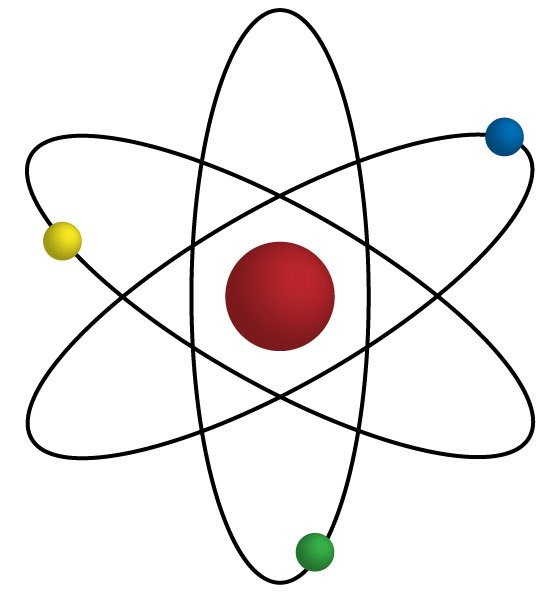
What are the 3 particles that make-up the atom?
a)
protons, neutrons, and isotopes
b)
neutrons, isotopes, and electrons
c)
positives, negatives, and electrons
d)
protons, neutrons, and electrons
10.
A particle that moves around the nucleus is a(n)...
a)
Proton
b)
Neutron
c)
Electron
d)
Quark
11.
A molecule is
a)
two or more atoms bonded together
b)
one type of atom
c)
smaller than an atom
d)
an element
12.
True or False? Neutrons have a negative charge
a)
True
b)
False
13.
A molecule is smaller than an atom.
a)
True
b)
False
14.
Electrons are___________
a)
Extremely small even in comparison to protons.
b)
part of the nuclues.
c)
Super Positive, like cheerleaders!
d)
very large
15.
What charge does a Proton have?
a)
Negative
b)
Positive
c)
Neutral
d)
Contrated
16.
A molecule is________
a)
a glob of gelatinous goo
b)
smaller than an atom
c)
filled with raisons
d)
more than one atom bonded together
17.
How many Hydrogen atoms are in Water (H2O)
a)
1
b)
2
c)
3
d)
4
18.
_________ is anything that takes up space and has mass.
a)
Inertia
b)
Matter
c)
Viscosity
d)
Malleability
19.
the smallest unit of matter is called
a)
at atom
b)
a molecule
c)
a compound
d)
a pure substance
20.
Electrons are
a)
negative and in the nucleus
b)
positive and at the edge of the atom
c)
not in an atom
d)
negative and at the edge of the atom
21.
How does the size of a proton compare to the size of a neutron?
a)
larger
b)
smaller
c)
equal
22.

Which if true about the picture?
a)
It is a model of a molecule.
b)
It is a model of an atom.
c)
It is a model of an electron.
d)
It is not a model.
23.

Which of the following is false?
a)
The "H" stands for Hydrogen.
b)
The "O" stands for Oxygen.
c)
The "C" stands for Carbon.
d)
There are just seven atoms connected in this model.
24.

Which of the following is true about the model?
a)
It is a model of an atom.
b)
It is a model of a molecule.
c)
It is a perfect model.
25.
Which of the follow is the correct order of smallest to largest?
a)
electron, atom, molecule, cell.
b)
molecule, neutron, atom, cell
c)
atom, molecule, electron, cell
d)
electron, nucleus, molecule, atom,
100 %

