
 Worksheets
Unit 1 Review
Total questions: 56
Worksheet time: 10mins
Name
Class
Date
1.
Percussion refers to
a)
using a stethoscope
b)
using the hand to touch the body surface
c)
tapping on the body and listening for an echo
2.
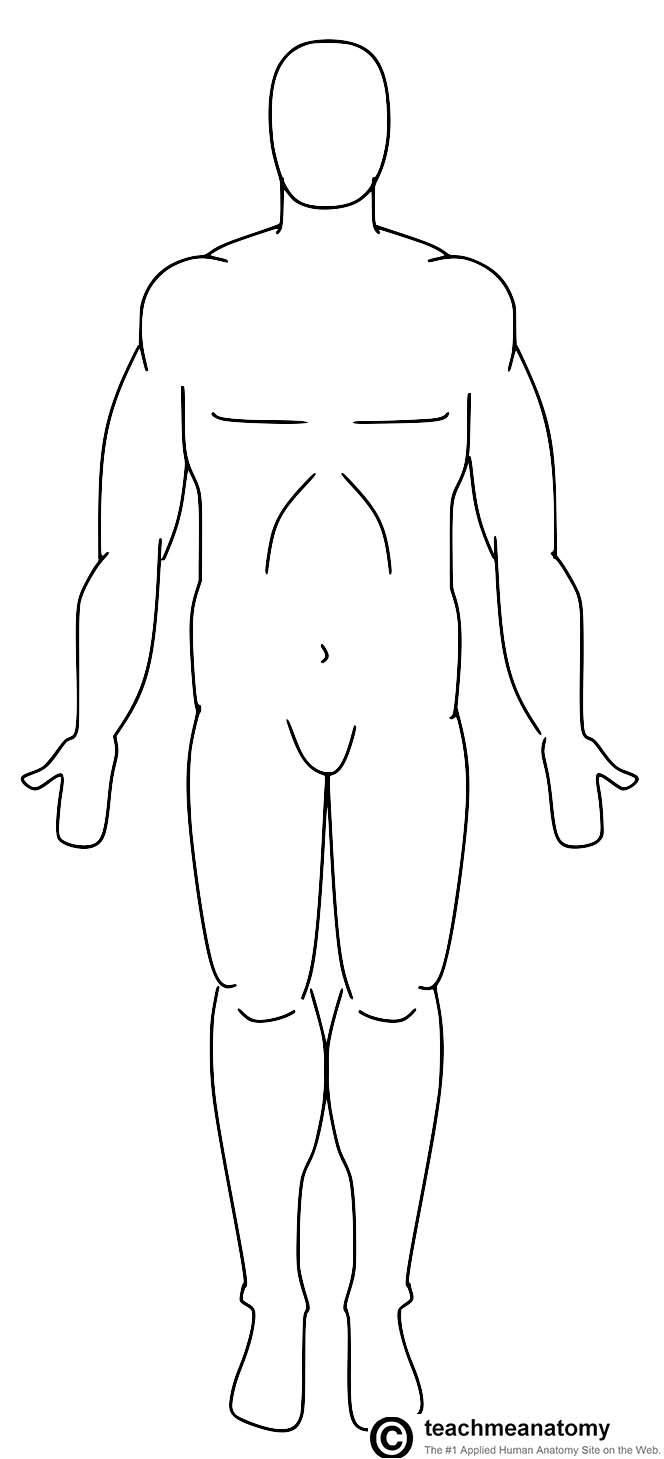
In the anatomical position, the palms are facing-
a)
forward
b)
backward
3.
What is the term used to refer to the front of the body?
a)
cranial
b)
anterior/ventral
c)
posterior/dorsal
d)
proximal
4.
A plane that divides the body into left and right halves.
a)
sagittal
b)
midsagittal
c)
transverse
d)
frontal
5.
A plane that divides the body into anterior and posterior portions.
a)
sagittal
b)
midsagittal
c)
transverse
d)
frontal / coronal
6.
Toward an attachment
a)
proximal
b)
distal
c)
lateral
d)
medial
7.

Away from the origin or trunk
a)
Deep
b)
Distal
c)
Proximal
d)
Posterior
8.
Which of the following correctly describes the antecubital region?
a)
forehead
b)
inferior, posterior region of the skull
c)
point of shoulder
d)
front of the elbow
9.
Which of the following correctly describes the digital region?
a)
ribs
b)
thigh
c)
fingers or toes
d)
hip
10.
Which of the following correctly describes the femoral region?
a)
ribs
b)
thigh
c)
fingers or toes
d)
hip
11.
Which of the following correctly describes the carpal region?
a)
elbow
b)
wrist
c)
abdomen
d)
neck
12.
Which of the following correctly describes the cephalic region?
a)
armpit
b)
upper arm
c)
cheek
d)
head
13.
Which of the following correctly describes the antebrachial region?
a)
forearm
b)
leg
c)
back
d)
reproductive organs
14.

Number 1 refers to which abdominopelvic region?
a)
right hypochondriac
b)
left hypochondriac
c)
right iliac
d)
left iliac
15.
The liver is ____ to the heart
a)
medial
b)
lateral
c)
superficial
d)
inferior
16.
The head is ______ to the chest.
a)
superior
b)
dorsal
c)
inferior
d)
ventral
17.

Which body cavity is labeled A
a)
Cranial
b)
Spinal
c)
Thoracic
d)
Abdominal
18.
Which of the following correctly describes the mental region?
a)
chin
b)
mouth
c)
eye
d)
knee
19.
What is the name of the dome shaped muscle located inferior to the thoracic cavity?
a)
Abdominals
b)
Diaphragm
c)
Bicep
Pectrorals
Pectrorals
d)
Hamstrings
20.

Which abdominal region is labeled 2
a)
Epigastric
b)
Hypogastric
c)
Umbilical
d)
Hypergastric
21.

Which cavity is labeled C
a)
Cranial
b)
Spinal
c)
Thoracic
d)
Abdominal
22.

Which quadrant is labeled 2
a)
Right Upper Quadrant
b)
Right Lower Quadrant
c)
Left Upper Quadrant
d)
Left Lower Quadrant
23.

Which region is labeled 5
a)
Right lumbar
b)
Left illiac
c)
Umbilical
d)
Left Hypochondriac
24.
the lungs are ____ to the heart
a)
lateral
b)
inferior
c)
superior
d)
deep
25.

Which Quadrant is labaled 4
a)
RUQ
b)
LUQ
c)
RLQ
d)
LLQ
26.
Another word for back is
a)
ventral
b)
anterior
c)
dorsal
d)
sagital
27.

Which region is labeled 9
a)
Right Illiac
b)
Right Lumbar
c)
Left Illiac
d)
Left Lumbar
28.
Inferior
a)
Above
b)
Below
c)
Toward Surface
d)
Toward Core
29.

This position is known as?
a)
Resting Position
b)
Directional Terminiology
c)
Anatomical Postion
d)
Standing Position
30.
The whole foot is referred to as
a)
tarsal
b)
hallux
c)
pedal
d)
plantar
31.
The neck
a)
cervical
b)
mental
c)
cephalic
d)
nasal
32.
If the environment gets cold, we will often shiver in order to:
a)
keep body temperature the same as the external temperature
b)
decrease body temperature
c)
increase body temperature
d)
regulate blood pressure
33.
The "effect" of a given stimulus is the...
a)
response
b)
stimulus
c)
cause
d)
result
34.
Superior
a)
Above
b)
Below
c)
Toward Surface
d)
Toward Core
35.
Homeostasis in the human body is often maintained by a:
a)
neutral feedback loop
b)
solar feedback loop
c)
positive feedback loop
d)
negative feedback loop
36.
Positive feedback is when the change caused by the stimulus is
a)
decreased
b)
non existant
c)
increased
d)
changes constantly
37.
which of the following serous membranes lines the abdominal cavity
a)
peritoneum
b)
pleura
c)
pericardium
38.
When many organ systems work together it can form...
a)
a cell
b)
an organ
c)
an organ system
d)
an organism
39.
The maintenance of an organism’s internal environment is called:
a)
compensating
b)
homeostasis
c)
balancing
d)
routine
40.

The thoracic cavity and the abdominopelvic cavity are both contained within the _______ cavity.
a)
dorsal
b)
ventral
c)
cranial
d)
spinal
41.

The cranial cavity and the spinal (vertebral) cavity are both contained within the _______ cavity.
a)
dorsal
b)
ventral
c)
abdominal
d)
throacic
42.

Which body cavity is located above the diaphragm and is surrounded by the rib cage?
a)
abdominal
b)
pelvic
c)
thoracic
43.
Which of the following is the center region of the 9 abdominal regions? (like the middle of a tic-tac-toe board)
a)
epigastric
b)
umbilical
c)
hyopgastric
d)
pelvic
44.
Which body membrane will you find surrounding organs?
a)
Serous
b)
Mucous
c)
Synovial
d)
Integumentary
45.
which of the following serous membranes lines the heart
a)
peritoneum
b)
pleura
c)
pericardium
46.
What is the correct order of organization
a)
cells->tissue->organs->organ systems-> organism
b)
tissue->cells->organs->organ systems-> organism
c)
organs->organ systems-> organism->cells->tissue
d)
cells->tissue->organs->organism->organ system
47.
Medical Imaging is useful because
a)
we can easily cut someone open
b)
don't have to cut someone open
48.
Anatomy is the study of ___ while physiology is the study if ____
a)
functions, cells
b)
cells, functions
c)
function, structure
d)
structure, function
49.
Radiopaque material injected into blood vessels
a)
x-ray
b)
CT scan
c)
PET scan
d)
DSA
50.
Poor resolution on soft tissue: used in osteology
a)
MRI
b)
CT
c)
X-Ray
d)
DSA
51.
High-frequency sound waves emitted by hand held device
a)
DSA
b)
xray
c)
Ultrasound
d)
PET
52.
Gamma rays released and caught as a colored computer image
a)
DSA
b)
MRI
c)
PET
d)
CT
53.
Image of cross sections of the body, ex to view kidneys
a)
CT
b)
MRI
c)
PET
54.
The brain receives a message from the receptors and decides what to do next, the brain is a/an
a)
stimulus
b)
receptor
c)
effector
d)
control center
55.
Blood puts pressure on the artery wall and the receptors scream, "ahhhhh we gotta fix this!" This is an example of
a)
response
b)
control center
c)
stimulus
56.
The 5 components of the feedback loop, in order are:
a)
stimulus, effector, control center, response
b)
stimulus, receptor, control center, response
c)
stimulus, receptor, control center, effector, response
d)
stimulus, receptor, effector, response, control center
100 %

