
 Worksheets
Lab Safety and Equipment
Total questions: 34
Worksheet time: 18mins
Name
Class
Date
1.
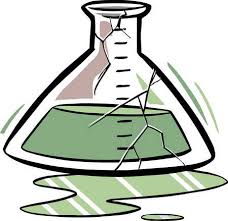
If you break glassware in the lab, you should...
a)
Tell the teacher
b)
Clean it up quickly before the teacher notices
c)
Scream at the top of your lungs
2.

When in the lab...
a)
long sleeves and loose clothing should be rolled up
b)
closed toe shoes should be worn
c)
long hair should be pulled back
d)
all of the above
3.
If you do not understand a direction or part of a lab procedure, you should
a)
skip it and go on to the next part.
b)
ask the instructor before proceeding
c)
try several methods until something works
d)
figure it out as you do the lab
4.
You are heating a piece of glass and now want to pick it up. You should
a)
pour cold water on it
b)
use tongs
c)
pick up the end that looks cooler
d)
use a rag or paper towels
5.
The following footwear is best in the laboratory.
a)
shoes appropriate for the weather
b)
open-toed shoes
c)
closed-toed shoes
d)
sandals
6.
It’s okay to pick up broken glass with your bare hands as long as the glass is placed in the trash.
a)
True
b)
False
7.
Approved eye protection devices (such as goggles) are worn in the laboratory
a)
to avoid eye strain
b)
to improve your vision
c)
only if you don’t have corrective glasses
d)
any time chemicals, heat or glassware are used
8.
If a laboratory fire erupts, immediately
a)
notify your instructor
b)
run for the fire extinguisher
c)
throw water on the fire
d)
open the windows
9.
After completing an experiment, all chemical wastes should be
a)
taken home
b)
dumped in the sink
c)
disposed of according to your instructor’s directions
d)
left at your lab station for the next class
10.
If a lab experiment is not completed, you should
a)
make up some results
b)
come in during lunch and finish while eating lunch
c)
sneak in after school and work alone
d)
discuss the issue with your instructor
11.
You have been injured in the laboratory (cut, burn, etc.). First you should
a)
apply first aid yourself
b)
tell the science instructor at once
c)
see a doctor after school
d)
visit the school nurse after class
12.
When gathering glassware and equipment for an experiment, you should
a)
All of the choices
b)
clean any glassware that appears dirty
c)
examine all glassware to check for chips or cracks
d)
read all directions carefully to know what equipment is necessary
13.
Personal eyeglasses provide as much protection as
a)
none of these answers
b)
splashproof chemical goggles
c)
safety glasses
d)
a face shield
14.
Hot glass looks the same as cold glass.
a)
True
b)
False
15.
Never remove chemicals or other equipment from the laboratory.
a)
True
b)
False
16.
Read all procedures thoroughly before entering the laboratory
a)
True
b)
False
17.
You are allowed to enter the chemical preparation/storage area any time you need to get an item
a)
True
b)
False
18.
Flammable materials, like alcohol, should never be dispensed or used near
a)
an open door
b)
an open flame
c)
another student
d)
a sink
19.
It may be dangerous to taste unknown chemicals, but it is perfectly safe to smell them.
a)
True
b)
False
20.
You should never work alone in the laboratory.
a)
True
b)
False
21.

Identify this piece of equipment.
a)
magnifying glass
b)
coverslip
c)
slide
d)
microscope
22.

Identify this piece of equipment.
a)
microscope
b)
cover slip
c)
magnifying lense or glass
d)
slide
23.
The _________________ is used to simply hold or approximately measure a liquid.
a)
scale
b)
test tube
c)
beaker
d)
thermometer
24.

Name the tool
a)
crucible tongs
b)
metal tongs
c)
forceps
d)
tweezers
25.

What is used to protect your eyes from chemicals, broken glass, and fire?
a)
Fire blanket
b)
Eye wash
c)
Goggles
d)
Flask
26.

What is this?
a)
Measuring tube
b)
Test tube
c)
Graduated Cylinder
d)
Pipette
27.

identify the following lab equipment
a)
glass triangle
b)
funnel
c)
stirring rod
d)
buret
28.

Name this item
a)
Florence flask
b)
Stirring rod
c)
Test tube
d)
Test tube holder
29.

Identify the piece of lab equipment seen in the image.
a)
Pipets
b)
Test Tubes
c)
Forceps
d)
Scoopulas
30.

Identify the primary function of the lab equipment seen in the image.
a)
Transfer small amounts of liquid
b)
Transfer large amounts of liquid
c)
Measure liquid volume
d)
Mixing liquid chemicals
31.

Name this item.
a)
Vernier caliper
b)
Wrench
c)
Jaws of life
d)
Vise grips
32.

Name this item
a)
Electron Scanning Microscope
b)
Electroscope
c)
Comparison Microscope
d)
Stereoscope
33.

Name this item
a)
Comparison Microscope
b)
Compound Light Microscope
c)
Electroscope
d)
Stereoscope
34.

Name this item
a)
Multi-well specimen plate
b)
Watchglass
c)
Hotplate
d)
Funnel
100 %

