
 Worksheets
Layers of The Earth & Seismic Vocabulary
Total questions: 20
Worksheet time: 11mins
Name
Class
Date
1.
the matter that a wave of energy uses to transfer from one location to another location.
a)
Medium
b)
Mantle
c)
Transverse
d)
Longetudinal
2.
A wave that travels in peaks either up and down like an ocean wave or side to side.
a)
Longitudinal Wave
b)
Seismic Wave
c)
Transverse Wave
d)
Compression Wave
3.

What Type of Wave is shown?
a)
Longitudinal Wave
b)
Seismic Wave
c)
Transverse Wave
d)
Compression Wave
4.
travels in the same direction as the disturbance that caused it by compressing the medium to transfer the energy. Also called a compression wave
a)
Longitudinal Wave
b)
Seismic Wave
c)
Transverse Wave
d)
Compression Wave
5.

What type of wave is shown?
a)
Longitudinal Wave
b)
Seismic Wave
c)
Transverse Wave
d)
Compression Wave
6.
the thin and solid outermost layer of the Earth above the mantle.
a)
Lithosphere
b)
Mantle
c)
Asthenosphere
d)
Crust
7.
A rigid layer made up of the uppermost part of the mantle and the crust.
a)
Lithosphere
b)
Mantle
c)
Asthenosphere
d)
Crust
8.
The plastic-like. Flowing layer of the mantle below the uppermost part of the mantle and crust on which the tectonic plates move.
a)
Lithosphere
b)
Mantle
c)
Asthenosphere
d)
Crust
9.
The layer of rock between the Earth's crust and core
a)
Lithosphere
b)
Mantle
c)
Asthenosphere
d)
Crust
10.
the central part of the Earth below the mantle. Has two layers the liquid outer and the solid inner.
a)
Core
b)
Moho Zone
c)
Lithosphere
d)
Asthenosphere
11.
Area within Earth's interior between the Lithosphere and Asthenosphere where seismic waves change their speed and most or all S-Waves disappear.
a)
Core
b)
Moho Zone
c)
Lithosphere
d)
Asthenosphere
12.
also called a Primary wave it is a compression (Longitudinal) wave produced by an earthquake that form when rocks break due to pressure.
a)
Seismic Wave
b)
S-Wave
c)
P-Wave
d)
Ocean Wave
13.
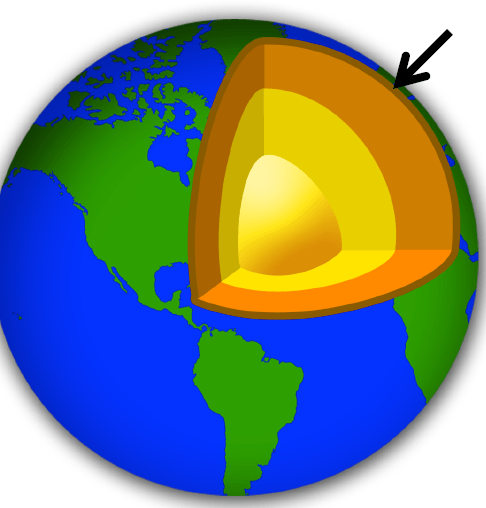
a)
Crust
b)
Mantle
c)
Outer Core
d)
Inner Core
14.
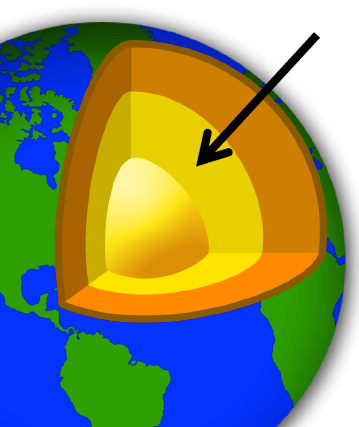
a)
Mantle
b)
Outer Core
c)
Inner Core
d)
Crust
15.
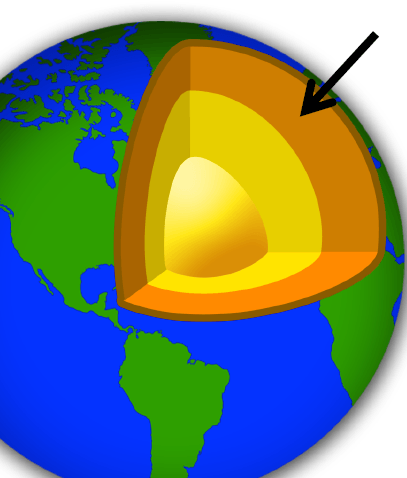
a)
Mantle
b)
Outer Core
c)
Inner Core
d)
Crust
16.
Which seismic waves can travel through all of the layers of the Earth?
a)
S-Waves
b)
P-Waves
c)
Transverse Waves
d)
Rouge Waves
17.
This layer of Earth is solid Iron and Nickel
a)
Outer Core
b)
Mantle
c)
Inner Core
d)
Crust
18.
What describes the outer core?
a)
solid
b)
liquid
c)
viscous
d)
gas
19.
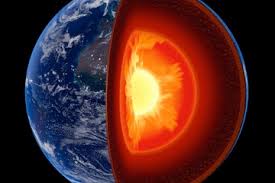
As you travel from the inner core to the crust, how would temperature, pressure and density of the material change?
a)
The would all increase
b)
The would all decrease.
c)
They would stay the same.
d)
Temperature would decrease, but pressure and density would increase.
20.
Which layer of the earth creates the earth's magnetic field?
a)
Crust
b)
Mantle
c)
Outer Core
d)
Inner Core
100 %

